Seasonal storage for a second home in Ajman works when the plan controls heat exposure, humidity exposure, and access frequency. Ajman’s summer can reach about 48°C with humidity above 60% from June to September, which raises risk for adhesives, laminates, leather, and appliance seals. This guide maps seasonal storage decisions to item categories and gives a practical “close and reopen” workflow for weekend homeowners.
Benefits of reading this article:
- A seasonal storage blueprint that reduces furniture warping, odor, and appliance seal failures in hot months.
- A second-home checklist that turns storage into a repeatable routine, not a moving-day scramble.
After the introduction, the guide breaks storage into four modules: climate risk, furniture, appliances, and reopening checks.
What is seasonal storage for a second home in Ajman?
Seasonal storage is a controlled method of parking household assets during low-occupancy months. The method combines item preparation, environment selection, packaging, and access discipline so assets remain usable without repair or deep cleaning on return.
Why does Ajman seasonal storage matter for weekend homeowners?
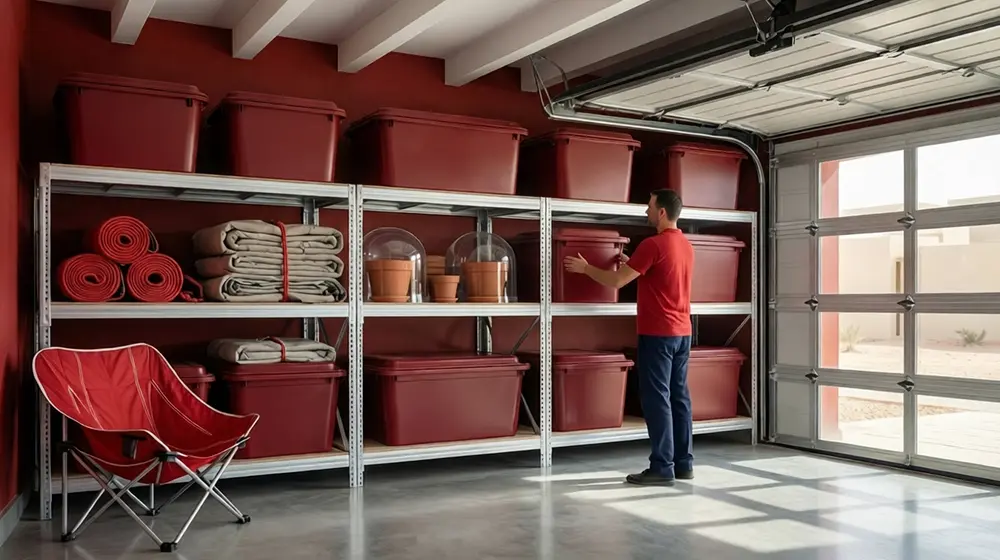
Ajman’s hot and humid season creates predictable material stress. Official visitor guidance describes summer heat up to 48°C with humidity well above 60% from June to September. Weather baselines also show a long hot season and a cooler window in winter, which matches the “weekend resident” pattern where many households spend more time in the UAE winter.
What storage model fits a weekend homeowner in Ajman?
A simple decision splits into two storage models.
What is “in-home seasonal storage”?
In home storage keeps furniture and appliances inside the second home with tighter close-down controls: ventilation settings, moisture control, and surface protection.
What is “off-site seasonal storage”?
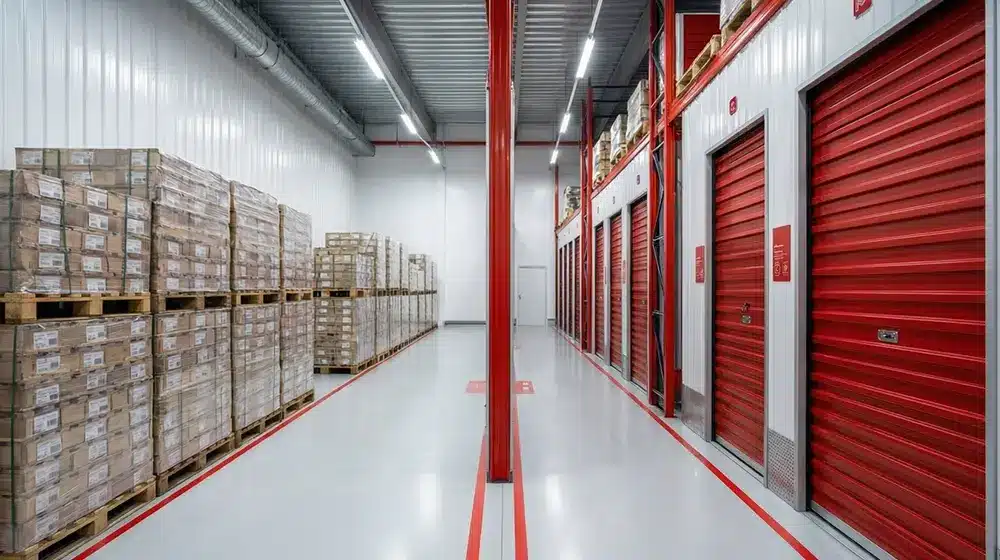
Off-site storage moves selected items into a unit or warehouse for controlled environment and reduced dust exposure, then returns them during the active season.
What is the seasonal calendar that drives storage decisions in Ajman?
Ajman’s summer is described as hot and humid from June to September, with hotel rates often dropping, which signals a lower-occupancy pattern for many households. Weather datasets also place the hottest period in July and August.
Practical storage calendar
- Peak protection window: June to September (highest heat and humidity exposure).
- Lower-risk window: roughly December to March (cooler conditions).
Which furniture categories face the highest seasonal risk in Ajman?
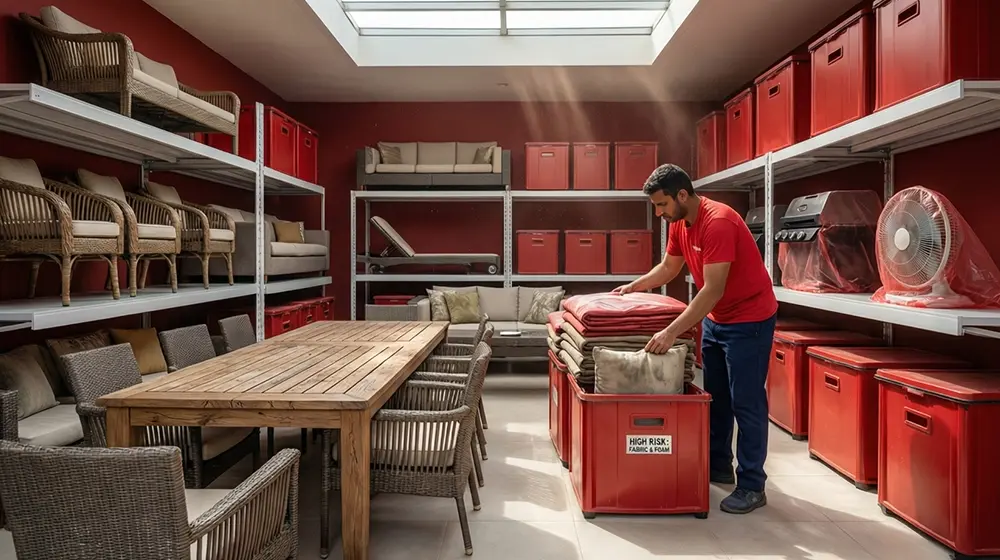
The highest seasonal risk clusters around finishes and soft materials.
Which furniture types degrade fastest in heat and humidity?
- Laminated boards and edge-banding: adhesive stress and edge lift risk
- Wood veneer: expansion and joint stress
- Leather and coated fabrics: odor retention and surface tackiness
- Upholstered sofas and mattresses: moisture odor and dust loading
Ajman’s hot and humid summer conditions provide the environmental driver behind these failure patterns.
What packing method protects furniture for seasonal storage?
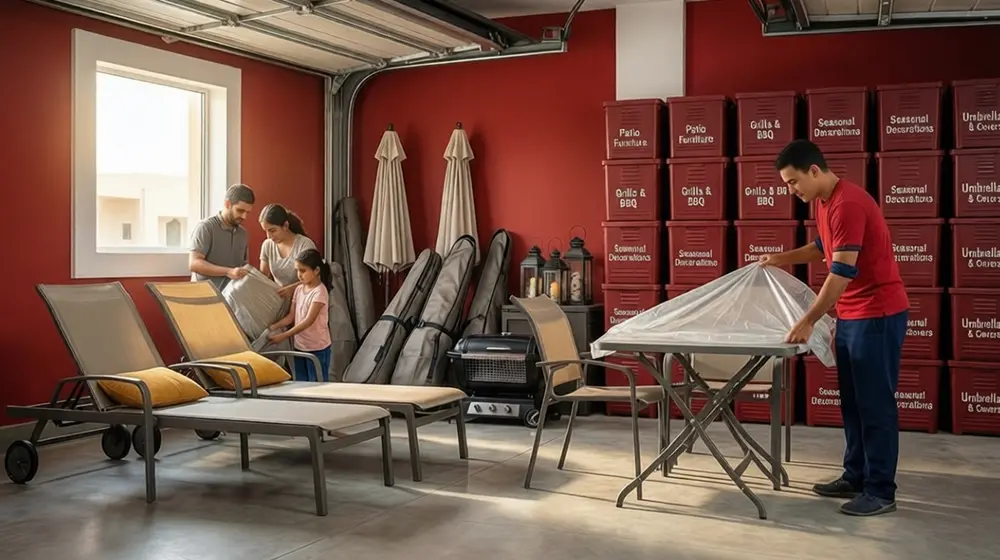
Furniture protection uses three controls: surface barriers, shape retention, and air discipline.
What surface barriers reduce scuff and dust loading?
- Clean and dry surfaces
- Breathable covers for upholstery
- Corner protection on table edges and cabinet corners
- Hardware bagging for removable parts
What shape retention rules reduce dents and warping?
- Keep heavy items off upholstered surfaces
- Keep cushions stored flat or upright with airflow
- Keep flat panels stored vertically with rigid support boards
What air discipline reduces odor?
- Avoid airtight sealing on textiles that retain residual moisture
- Use breathable wrapping for fabrics, tighter wrapping for hard surfaces
What is the correct approach to storing refrigerators and freezers in a second home?
Refrigerator storage succeeds when the process prevents mold, odor, and seal deformation.
What shutdown steps reduce odor and moisture problems?
- Empty and clean interior surfaces
- Dry fully, including gaskets
- Leave door slightly ajar using a door spacer
- Isolate from power if the home remains unoccupied
This method aligns with standard appliance hygiene controls used in seasonal shutdown contexts, where trapped humidity drives odor.
What is the correct approach to storing washing machines and dishwashers?
Wet appliances fail fast when water remains trapped.
Which steps reduce odor and scale issues?
- Drain accessible hoses
- Run a final empty rinse cycle before shutdown
- Dry the door seal area
- Keep the door cracked open for airflow
These steps target moisture retention, the primary driver of odor in closed second-home periods.
What small appliances need special storage treatment?
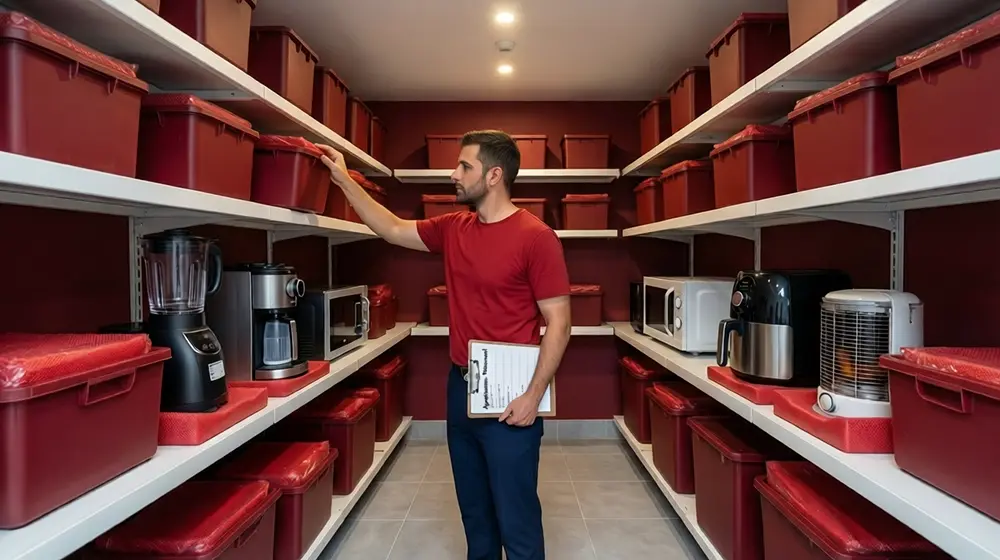
Small appliances often include plastics, seals, and electronics.
High sensitivity categories:
- Coffee machines and grinders
- Air fryers and ovens with grease residue
- Vacuum cleaners with dust and filter loading
- Water dispensers and humidifiers with mineral residue
A clean and dry standard reduces odor and pest attraction during vacancy.
What items belong in climate-controlled storage vs standard storage?
A practical split uses item sensitivity to heat and humidity.
What fits climate-controlled storage?
- Electronics and batteries
- Documents and photographs
- Leather goods and high-value upholstery
- Musical instruments and delicate finishes
What fits standard storage with correct packing?
- Metal frames, sealed plastic goods
- Clean, dry outdoor items with low moisture retention
- Non-sensitive spare furniture with robust finishes
Climate-controlled set points often target controlled temperature bands and humidity ceilings in commercial storage operations, framed as standard practice by storage providers.
How do weekend homeowners reduce pests and odor during vacancy?
Two drivers dominate: food residue and closed-air humidity.
What controls reduce pest attraction?
- Remove all food, including pantry staples
- Clean crumbs and grease residue in kitchen zones
- Seal trash and remove it fully
- Store textiles clean and dry
What controls reduce odor retention?
- Ventilation settings that avoid stagnant air
- Door-ajar method for major appliances
- Fabric covers that breathe, not airtight plastic wraps
Ajman’s hot and humid summer conditions increase odor risk in closed spaces.
What is the “second home close-down kit” for Ajman seasonal storage?
A close-down kit is a standardized pack that makes the shutdown repeatable.
Core kit
- Label tape and marker
- Zip bags for screws and remote controls
- Breathable covers for sofas and mattresses
- Corner guards and foam sheets
- Door spacers for fridge, freezer, washer
- Basic cleaning supplies and microfiber cloths
- Moisture absorbers suited for indoor rooms
What is the “reopening checklist” for weekend homeowners returning to Ajman?
A reopening process reduces re-cleaning and appliance troubleshooting.
Day 1 reopening checks
- Air out rooms and run ventilation
- Inspect for moisture odor hot spots (wardrobes, under sinks)
- Inspect fridge seals and run a short cooling test
- Run a quick rinse cycle for washer and dishwasher
- Wipe dust from kitchen prep surfaces before use
What are common mistakes in seasonal storage for Ajman weekend homeowners?
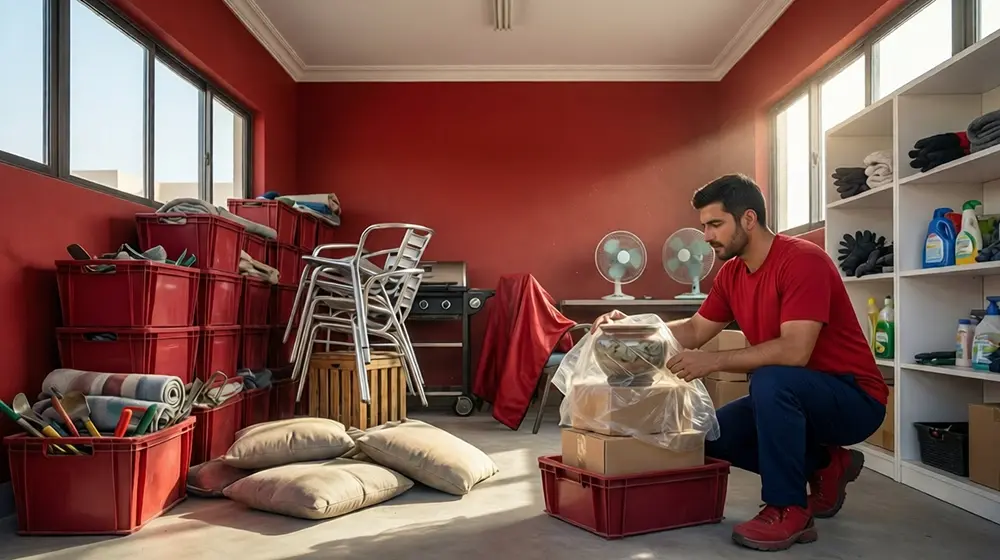
Mistake: sealing damp textiles in airtight plastic
Outcome: odor retention and moisture staining.
Mistake: leaving refrigerators closed after shutdown
Outcome: mold odor and seal stress.
Mistake: storing mixed hardware without labels
Outcome: missing fasteners and reassembly time loss.
Mistake: ignoring the June to September heat and humidity window
Outcome: adhesive, fabric, and seal degradation risk rises in the hottest season.
Conclusion: What makes seasonal storage work for a second home in Ajman?
Seasonal storage works when the process matches Ajman’s heat and humidity exposure profile and uses a repeatable close-down and reopening routine. Summer conditions in Ajman can reach around 48°C with humidity above 60%, which elevates risk for upholstery, laminates, and appliance seals in closed homes. A hybrid plan that moves sensitive categories into controlled storage and keeps robust items protected on-site fits many weekend homeowner patterns.