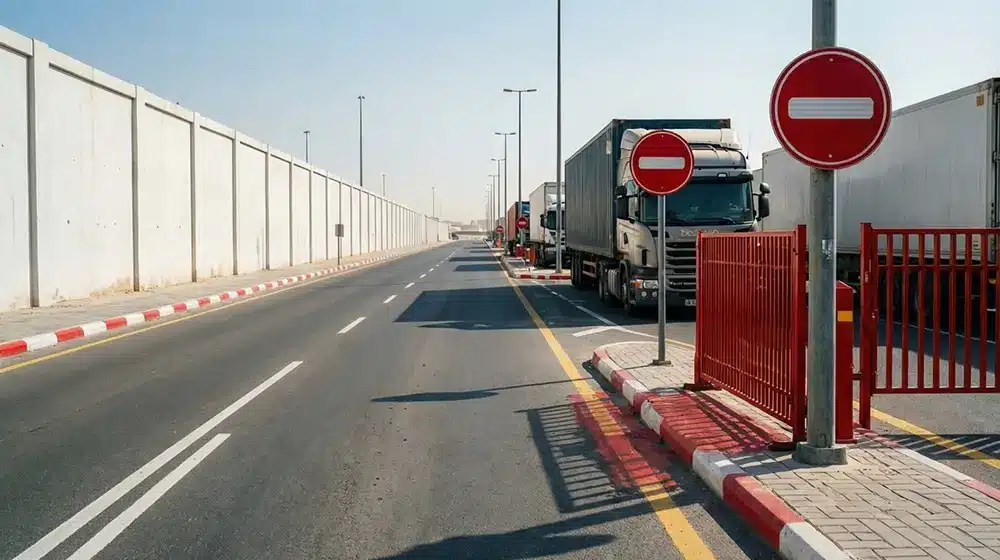

Heavy vehicle restrictions in Abu Dhabi directly affect delivery schedules, labor deployment, fuel planning, and compliance risk. In 2026, operators moving goods within United Arab Emirates must align routing and dispatch with peak-hour access controls, enforcement patterns, and permit frameworks administered by local authorities.
This guide explains Abu Dhabi’s heavy vehicle no-entry timings for 2026, how they interact with arterial roads and residential zones, and how logistics teams can convert restrictions into predictable operating windows.
What Are Heavy Vehicle No-Entry Timings in Abu Dhabi?
Heavy vehicle no-entry timings are time-based access restrictions that limit when trucks and large commercial vehicles may use specific roads or enter certain districts.
In Abu Dhabi, these controls are designed to:
- Reduce congestion during commuter peaks
- Improve road safety in mixed-traffic zones
- Protect residential and institutional areas
- Optimize public transport flow
Enforcement is coordinated primarily through Abu Dhabi Police and the Department of Municipalities and Transport Abu Dhabi.
Why Do Heavy Vehicle Restrictions Matter in 2026?
They matter because Abu Dhabi’s traffic density continues to rise with population growth, infrastructure expansion, and industrial activity.
Operational impacts include:
- Delayed inbound deliveries
- Missed site access windows
- Repeat trips due to violations
- Administrative penalties
- Driver overtime costs
For fleet operators, ignoring timing controls often converts a planned one-day delivery into a two-day cycle.
What Are the Standard Heavy Vehicle No-Entry Timings in Abu Dhabi (2026)?

As of current regulatory practice, Abu Dhabi applies peak-hour movement restrictions for heavy vehicles on major corridors and within urban zones.
Core No-Entry Windows (Typical Pattern)
| Period | Time Band | Status for Heavy Vehicles |
|---|---|---|
| Morning Peak | 06:30 – 08:30 | Restricted |
| Midday Peak | 13:00 – 15:00 | Restricted |
| Evening Peak | 17:30 – 20:00 | Restricted |
Key Note:
Exact enforcement may vary by road class, municipality, and permit status. Operators must verify corridor-specific rules.
Which Vehicles Are Classified as “Heavy Vehicles” in Abu Dhabi?
A vehicle is usually treated as “heavy” when it meets one or more of the following:
- Gross Vehicle Weight (GVW) above regulated thresholds
- Multi-axle commercial trucks
- Trailers and articulated lorries
- Construction and waste carriers
- Large refrigerated or box trucks
Municipal classification overrides manufacturer labeling.
Where Are Restrictions Applied Most Strictly?
Restrictions are strongest in:
- Central Abu Dhabi Island
- Corniche corridors
- School and hospital zones
- Government districts
- High-density residential compounds
- Bridge and tunnel approaches
Abu Dhabi’s Urban and Highway Network
High-volume routes such as E10, E11, and island connectors are closely monitored during peak periods.
How Do No-Entry Timings Affect Logistics Operations?
1. Route Compression
Restricted windows force trucks into narrower operating periods, increasing competition for road space.
2. Yard Congestion
Late departures cause loading bays to back up before allowed movement windows.
3. Fuel Inefficiency
Idling outside access zones increases fuel burn and engine wear.
4. Labor Cost Escalation
Drivers exceeding shift plans trigger overtime and compliance issues.
5. Service-Level Risk
Missed customer slots damage B2B service contracts.
Are There Exemptions to No-Entry Rules?
Yes, exemptions exist but are regulated.
Common Exemption Categories
- Emergency response vehicles
- Municipal service fleets
- Utility maintenance trucks
- Approved construction logistics
- Food and medical supply vehicles
- Government project carriers
Exemptions require prior approval and visible documentation.
How Do Heavy Vehicle Entry Permits Work in Abu Dhabi?

Permits authorize restricted-time or restricted-zone access.
Standard Permit Components
| Field | Description |
|---|---|
| Vehicle plate | Registered fleet ID |
| Company license | Trade authorization |
| Route scope | Approved corridors |
| Time window | Allowed hours |
| Validity | Temporary or long-term |
| Cargo type | Declared goods |
Applications are processed through municipal or police portals, depending on scope.
Which Roads Are Most Sensitive to Restrictions?
High-Control Corridors
- Abu Dhabi Island arterials
- Corniche Road
- Salam Street
- Airport Road
- Sheikh Zayed Bridge approaches
Moderate-Control Zones
- Mussafah industrial routes
- Khalifa City connectors
- Al Raha access roads
Sensitivity increases near schools, hospitals, and government facilities.
How Are Violations Enforced in 2026?
Enforcement uses layered systems:
- Fixed traffic cameras
- Smart plate recognition
- Mobile patrols
- Access gate logs
- Community security reporting
Typical Penalties
| Violation Type | Operational Impact |
|---|---|
| Time breach | Monetary fine |
| Repeat breach | Permit suspension |
| Restricted-zone entry | Vehicle impound risk |
| False permit use | License penalties |
Repeat offenders face audit scrutiny.
How Can Operators Plan Around No-Entry Timings?
1. Time-Window Mapping
Create route plans aligned to permitted hours.
Example:
| Activity | Time |
|---|---|
| Yard loading | 04:30 – 06:00 |
| Dispatch | 06:00 – 06:20 |
| Peak hold | 06:30 – 08:30 |
| Delivery | 09:00 – 12:30 |
2. Multi-Shift Scheduling
Split fleets into:
- Early-morning dispatch
- Midday rotation
- Night delivery teams
This balances utilization.
3. Buffer-Zone Staging
Use holding yards near restricted zones to wait legally until access opens.
4. Permit Portfolio Management
Maintain:
- Route-specific permits
- Backup access approvals
- Emergency override documents
Digitize for audit readiness.
5. Customer Slot Alignment
Align client delivery windows with access rules to reduce penalties.
What Is the Cost Impact of Poor Timing Management?
Poor timing control typically leads to:
| Cost Driver | Effect |
|---|---|
| Storage | Temporary warehousing |
| Labor | Overtime hours |
| Fuel | Idle consumption |
| Fines | Regulatory penalties |
| Vehicle wear | Stop-start stress |
In large fleets, timing errors compound into annual six-figure losses.
How Do Construction and Infrastructure Projects Affect Restrictions?
In 2026, ongoing infrastructure projects may trigger:
- Temporary lane closures
- Revised access hours
- Localized bans
- Night-only delivery mandates
Project logistics teams must track municipal notices weekly.
How Does Abu Dhabi Compare with Other Emirates?

Compared with Dubai and Sharjah, Abu Dhabi typically emphasizes:
- Wider highway capacity
- Stronger island-zone controls
- Higher permit enforcement consistency
This means fewer ad-hoc exceptions and greater predictability.
What Documentation Should Drivers Carry?
Drivers should always carry:
- Vehicle registration
- Trade license copy
- Permit certificates
- Route maps
- Employer authorization
- Contact list for compliance officers
Missing documents increase inspection delays.
What Is the Recommended Compliance Framework for 2026?
Heavy Vehicle Access Control Model
- Route classification
- Permit verification
- Time-window assignment
- Driver briefing
- Dispatch confirmation
- Entry logging
- Post-trip audit
This framework converts regulations into workflow.
How Should Companies Monitor Regulatory Updates?
Best practice includes:
- Subscribing to municipal alerts
- Monitoring police advisories
- Maintaining liaison officers
- Reviewing traffic circulars
- Updating SOPs quarterly
Static policies become outdated quickly.
What Are the Main Risks in Abu Dhabi Heavy Vehicle Operations?
| Risk | Consequence |
|---|---|
| Peak-hour entry | Fines |
| Permit lapse | Route bans |
| Poor staging | Delivery failure |
| Driver ignorance | Repeated violations |
| Manual tracking | Data loss |
Risk management depends on documentation discipline.
Final Takeaway: Compliance Is a Scheduling System
In Abu Dhabi, heavy vehicle no-entry timings are not obstacles. They are structural constraints that define how logistics must operate.
Companies that succeed in 2026:
- Map every route to legal windows
- Maintain verified permits
- Stage vehicles strategically
- Train drivers consistently
- Audit movements weekly
When access rules are embedded into dispatch systems, congestion risk falls, compliance improves, and delivery reliability stabilizes.
Frequently Asked Questions (FAQs)
What are the main no-entry hours for heavy vehicles in Abu Dhabi?
Typically 06:30–08:30, 13:00–15:00, and 17:30–20:00 on major corridors.
Do permits allow entry during restricted hours?
Yes, but only for approved routes and cargo categories.
Are industrial zones fully exempt?
No. Many still follow peak-hour controls.
Who enforces truck movement rules?
Primarily Abu Dhabi Police and municipal transport authorities.
Can violations affect company licenses?
Yes. Repeated breaches can trigger regulatory audits.
Are night deliveries encouraged?
Yes. Night operations reduce congestion and improve compliance.
Do community compounds have separate rules?
Often yes. Many impose stricter access windows.
How often do timings change?
Base rules are stable, but temporary changes occur during projects.
Is GPS routing enough for compliance?
No. GPS does not always reflect municipal restrictions.
What is the safest planning approach?
Use time-window mapping, permit tracking, and buffer staging.