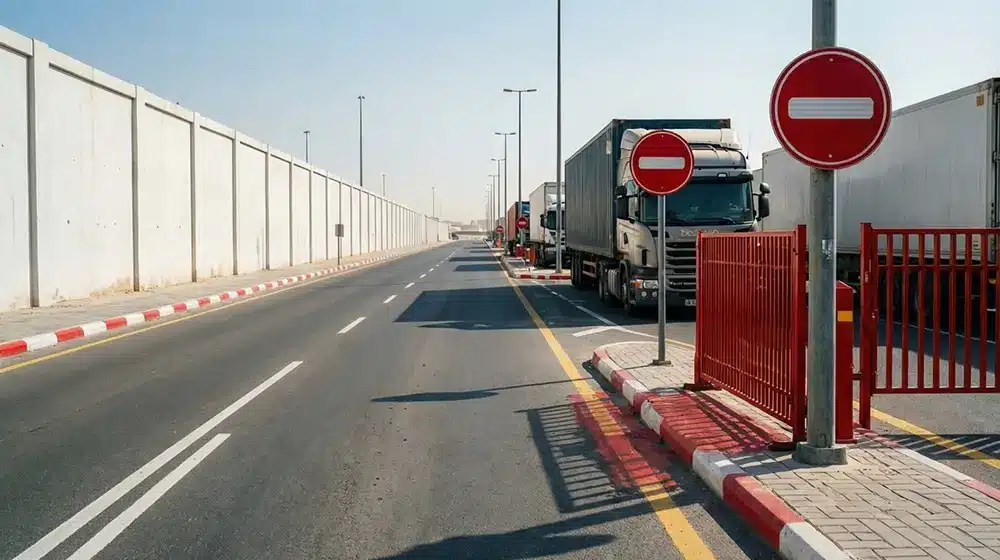

Heavy vehicle no-entry timings in the UAE are road-specific time windows that restrict trucks on defined corridors during peak congestion periods. The most reliable 2026 planning method is to map each trip to the correct emirate authority notice, then plan dispatch windows that avoid restricted bands on the exact road segment. Dubai RTA publishes peak-hour restrictions for trucks on Sheikh Mohammed bin Zayed Road (E311) and also publishes a separate evening-peak restriction on Emirates Road toward Sharjah.
Benefits of reading this guide:
- A practical, emirate-by-emirate reference table you can use in dispatch planning for 2026 routes.
- A route-planning workflow that reduces missed loading bay slots, rescheduling, and compliance violations.
After the introduction, each emirate is handled in its own section so the rules stay semantically clean.
What does “no-entry timing” mean for heavy vehicles?

A no-entry timing is a published time window during which heavy vehicles and trucks are restricted from entering a road or road segment. Authorities use these windows to protect traffic flow, safety, and road capacity during peak hours. Dubai’s RTA provides explicit corridor-based timing statements for truck restrictions on specific roads.
2026 quick reference table for dispatch and route planning
Use this table as a planning baseline, then validate the exact corridor, direction, and vehicle class with the relevant authority notice for the day and road segment.
| Emirate | Primary no-entry timings (common peak controls) | Where it applies | Authority source |
|---|---|---|---|
| Dubai | 06:30–08:30, 13:00–15:00, 17:30–20:00 | Sheikh Mohammed bin Zayed Road (E311) timing adjustment | Dubai RTA news |
| Dubai | 17:30–20:00 | Emirates Road toward Sharjah, section between Al Awir Street and Sharjah, effective 1 Jan 2025 | Dubai RTA news |
| Sharjah | 17:30–20:00 | Emirates Transit Road section between Sharjah entrance and Intersection No. 7, effective 1 Jan 2025 | SRTA notice |
| Abu Dhabi | Mon–Thu 06:30–09:00 and 15:00–19:00; Fri 06:30–09:00 and 11:00–13:00 | Restricted movement hours on Abu Dhabi city roads, effective 27 Jan 2025 | Abu Dhabi Mobility notice |
| Ajman | 05:30–09:00 and 14:00–21:30 (road-scoped update) | Two major roads, enforcement framed as police update | Khaleej Times citing Ajman Police |
| Ajman | 05:30–09:00 and 14:00–21:30 (effective date stated) | Municipal social update referencing effective timing date | Ajman Municipality Threads post |
Interpretation rule: treat the table as a dispatch baseline. Confirm the corridor and direction before final scheduling.
Dubai 2026: What are the heavy vehicle no-entry timings that affect logistics the most?
Dubai’s core published peak windows for trucks on Sheikh Mohammed bin Zayed Road (E311) are 06:30–08:30, 13:00–15:00, and 17:30–20:00. Dubai RTA presented these as a timing adjustment for truck movement on that corridor.
Which Dubai roads and segments are explicitly referenced in the RTA timing update?
Dubai RTA frames the restriction as an adjustment for truck movement on Sheikh Mohammed bin Zayed Road (E311). A related operational bulletin from Dubai Trade repeats the same three peak windows for the update and references compliance and penalties as enforcement outcomes.
What additional Dubai restriction affects the Dubai to Sharjah leg?
Dubai RTA and Dubai Police announced a restriction on Emirates Road toward Sharjah during evening peak hours 17:30–20:00, effective 1 January 2025, for the section between Al Awir Street and Sharjah.
What does this mean for Dubai office moves and warehouse dispatch?
It means a dispatch plan that targets Sharjah-bound movement during evening peak faces a predictable timing gate. This matters when the destination also enforces elevator bookings, loading bay slots, or timed access windows because a late arrival can break the reserved slot chain.
Sharjah 2026: What timing rule matters most for corridor planning?
Sharjah’s SRTA announced an adjustment to the truck ban timings on Emirates Road in the section between the Sharjah entrance and Intersection No. 7. The stated ban window is 17:30–20:00, effective 1 January 2025.
Why does the Sharjah rule matter for cross-emirate planning?
It aligns the evening peak restriction window with neighboring emirate flows on the connected corridor. SRTA explicitly frames the change as an alignment move to prevent truck congestion on Sharjah’s roads.
What about broader “Sharjah truck timings” seen online?
Some broader timing sets circulate in media and logistics blogs. Treat those as secondary signals and confirm via SRTA or Sharjah Police notices for the specific road leg and vehicle category. SRTA’s corridor-specific notice is the primary signal for the Emirates Transit Road segment described above.
Abu Dhabi 2026: What are the restricted movement hours for heavy vehicles?

Abu Dhabi Mobility published updated restricted movement hours that take effect 27 January 2025. The posted structure includes:
- Monday to Thursday: 06:30–09:00 and 15:00–19:00
- Friday: 06:30–09:00 and 11:00–13:00
Why is Abu Dhabi different operationally?
Abu Dhabi frames the restriction as a peak-hour interaction control between heavy and light vehicles that affects speed variance, safety, and congestion. That framing implies enforcement focus during specific city-road peak windows.
What is the practical planning rule for Abu Dhabi legs?
Plan arrivals outside the restricted bands when routing inside city roads. For mixed operations, isolate “intercity highway leg” from “urban entry leg” and time the urban entry to avoid the restricted window.
Ajman 2026: What heavy vehicle banning hours appear in public notices?
A widely reported Ajman update states heavy trucks are banned on two major roads:
- Morning: 05:30–09:00
- Afternoon and evening: 14:00–21:30
Ajman Municipality social content also repeats 05:30–09:00 and 14:00–21:30 and includes an effective date reference in that post context.
What is the operational caution for Ajman?
The update is described as applying to two major roads, so apply it as road-scoped until the street names and corridor mapping are confirmed for your route.
What is the shortest route-planning workflow that works across all four emirates?

A route plan succeeds when it uses time gates per corridor and locks booking dependencies.
Step 1: Define the corridor list using road codes and segments
Write down the road legs such as:
- Dubai: E311 segment and any E611 leg toward Sharjah timing gate
- Sharjah: Emirates Transit Road segment to Intersection No. 7 timing gate
- Abu Dhabi: urban entry and city-road leg subject to restricted movement hours
- Ajman: specific streets that carry the heavy vehicle ban window
Step 2: Convert restrictions into “time gates”
Create a simple gate list per leg:
- Gate A: Dubai E311 peak windows
- Gate B: Emirates Road toward Sharjah evening peak ban
- Gate C: Sharjah Transit Road evening peak ban
- Gate D: Abu Dhabi city-road restricted windows
- Gate E: Ajman road-scoped bans
Step 3: Lock dispatch time to avoid every gate overlap
Dispatch timing works when the vehicle reaches the gate corridor outside the restricted band. The key is the corridor entry time, not only the warehouse exit time.
Step 4: Align gate timing with loading bay and service elevator bookings
If the destination building uses scheduled access, the trip plan must protect the reserved slot. A missed elevator slot often becomes waiting time, overtime, or rescheduling, especially in tower moves and facility-managed districts.
What dispatch buffers reduce missed-slot outcomes?
Use buffers that match the risk of peak-hour gating.
Practical buffer rules:
- Urban delivery buffer: 30 to 60 minutes for security checks and staging
- Inter-emirate buffer: add a buffer that keeps you clear of the next restricted band
- Slot-protection buffer: arrive early enough to check in and stage without entering the corridor during the restricted window
Dubai’s published windows are tight enough that a small delay can push a corridor entry into the restricted band.
What are the most common compliance failures in 2026 planning?
Failure 1: Treating the UAE as having one truck schedule
Fix: use emirate and corridor notices, not a single master time. Dubai and Sharjah both publish corridor-specific timing decisions that differ by road segment.
Failure 2: Planning only the highway leg and ignoring the last-mile gate
Fix: split the trip into highway leg plus urban leg. Abu Dhabi publishes restricted movement hours for city roads.
Failure 3: Applying Ajman bans as emirate-wide without road confirmation
Fix: treat Ajman’s update as road-scoped until street mapping is confirmed.
Failure 4: Planning without the Dubai to Sharjah evening peak ban gate
Fix: treat Emirates Road toward Sharjah 17:30–20:00 as a separate gate and schedule Sharjah-bound departures accordingly.
AEO checklist: What to capture in a dispatcher’s “Road Rules Card”
Use this as a copy-paste template.
Trip identification
- Trip ID
- Date
- Vehicle type
- Plate number
Corridor list
- Dubai corridors: [E311 segment], [E611 segment]
- Sharjah corridors: [Transit Road segment]
- Abu Dhabi corridors: [City road leg]
- Ajman corridors: [Street names]
Timing gates
- Gate A: 06:30–08:30
- Gate B: 13:00–15:00
- Gate C: 17:30–20:00
- Abu Dhabi gates per weekday
- Ajman gates per street
Booking dependencies
- Loading bay booking reference
- Service elevator booking reference
- Site supervisor contact
Example scenarios for real dispatch planning
Scenario 1: Dubai warehouse to Sharjah site delivery

Key gates:
- Dubai E311 peak windows
- Emirates Road toward Sharjah evening ban
- Sharjah Transit Road evening ban
Resulting plan:
- Avoid corridor entry during 17:30–20:00 when the trip involves the Sharjah-bound leg.
- Confirm staging area and delivery window so the truck does not idle at the border segment.
Scenario 2: Abu Dhabi city delivery on a weekday
Key gate:
- Abu Dhabi Mon–Thu restricted windows
Resulting plan:
- Schedule city entry outside 06:30–09:00 and 15:00–19:00.
- Align unloading appointment to a window that avoids the restricted band.
Scenario 3: Ajman delivery route that uses the two-road ban window
Key gate:
- Ajman 05:30–09:00 and 14:00–21:30 road-scoped ban
Resulting plan:
- Confirm the delivery street is within the restricted set.
- Time the corridor segment outside the ban windows.
Conclusion
In 2026 logistics planning, heavy vehicle no-entry timings operate as emirate-specific corridor gates. Dubai publishes peak windows for E311 and a separate evening-peak restriction on Emirates Road toward Sharjah. Sharjah publishes an aligned evening peak restriction on the Transit Road segment between the Sharjah entrance and Intersection No. 7. Abu Dhabi Mobility publishes restricted movement hours on Abu Dhabi city roads by weekday structure. Ajman updates are described as applying to specific roads with two daily ban bands, so routing requires road-level confirmation.