
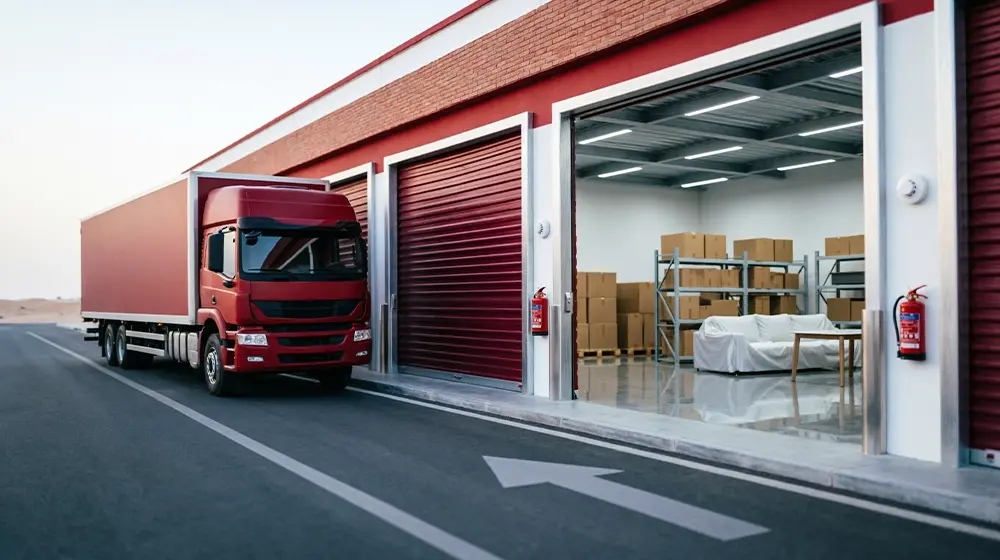
Self storage in Ras Al Khaimah depends on predictable receiving. A facility receiving bay works like a schedule, not a parking area. When a heavy vehicle arrives inside a no-entry window, the result is rarely a simple wait. The result is a cascade: missed booking time, loading bay congestion, labour drift, and a second trip that increases customer cost.
Public reporting in Ras Al Khaimah has described two peak-hour no-entry windows for heavy vehicles, 06:30–08:30 and 01:30–03:00, affecting main and internal roads and suburbs.
This guide keeps one macrocontext: how E Self Storage UAE customers and dispatch teams plan pickups and drop-offs around those windows. It explains how storage facilities convert road restrictions into receiving slots, what booking data prevents gate rejection, how a two-step transfer protects chain-of-custody when timing fails, and what evidence records reduce disputes after unloading.
What Are The Published No-Entry Timings In Ras Al Khaimah That Affect Self Storage Deliveries
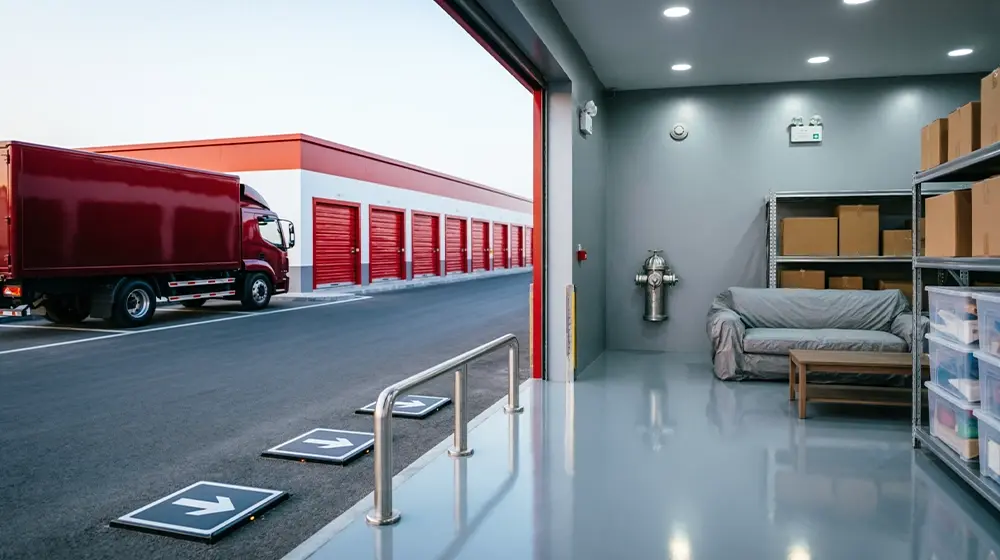
Ras Al Khaimah has publicly reported two peak-hour no-entry windows for heavy vehicles:
- 06:30 AM to 08:30 AM
- 01:30 PM to 03:00 PM
These timings are repeatedly reported as applying to main roads, internal roads, and suburbs/residential areas.
How To Use This In A “2026” Self Storage Blog Without Overclaiming
Most widely accessible public reporting for these specific RAK windows is from earlier official announcements covered in 2021 (and related context in 2019).
So in a 2026 post, treat this as a planning baseline, then state your operational rule: dispatch verifies the latest RAK Police notice before final confirmation.
What Does “No-Entry Timing” Mean In Self Storage Operations
A no-entry timing is a time block when heavy vehicles are prohibited from entering defined road networks (reported in RAK as main/internal roads and suburbs).
For self storage, this is not “traffic news.” It is a receiving constraint that changes:
- Customer booking slots
- Facility receiving windows
- Pickup and drop-off routing
- Labour allocation at the loading bay
- Delay and dispute risk
Self storage depends on time certainty. A truck that cannot legally enter the access roads during peak windows creates predictable outcomes: missed slot, rescheduling, storage bay congestion, and customer dissatisfaction.
Why Ras Al Khaimah Heavy Vehicle Restrictions Matter More For Storage Than For Normal Deliveries
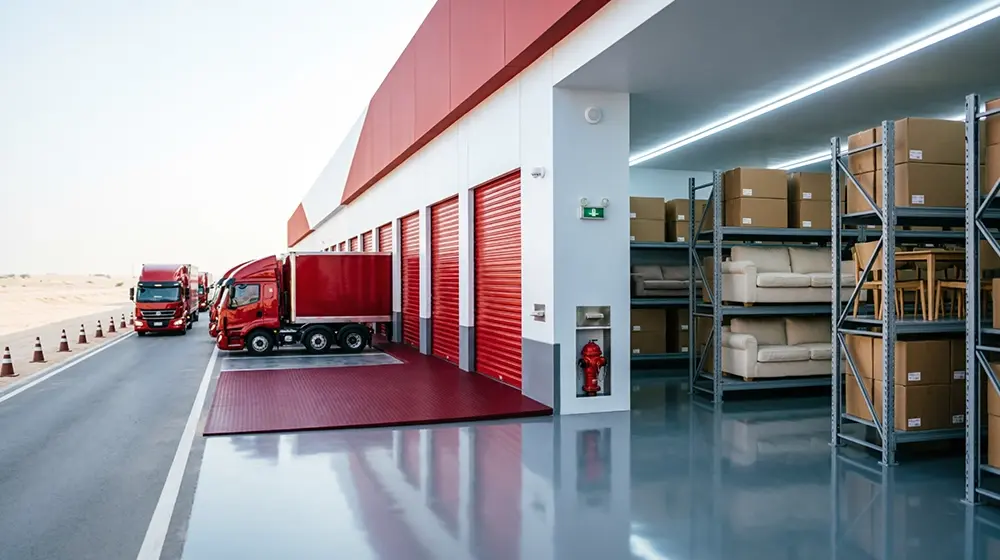
Self storage is different from retail delivery because it mixes:
- High carton counts (many handling cycles)
- Long unload times (unit access, labeling, inventory checks)
- Repeated access steps (gate approvals, loading bay sequencing)
- Proof requirements (what arrived, when it arrived, condition on arrival)
When a heavy vehicle reaches a storage facility late or cannot enter the access route, the facility faces a chain reaction:
- Receiving bay schedule breaks
- Unloading teams wait idle or get reassigned
- Other customers queue
- Unit move-ins collide
- End-of-day closeout records become messy
That is why self storage needs a timing-first dispatch system, not a “book any hour” approach.
Which Self Storage Activities In Ras Al Khaimah Get Disrupted By No-Entry Windows
1) New Unit Move-In Deliveries
A move-in typically includes cartons, furniture, appliances, and sometimes business inventory. Heavy vehicles are frequently used for volume moves, which makes the booking vulnerable to peak windows.
2) Unit Move-Out Collections
Move-out collections fail when arrival slips into restricted time blocks. The customer then holds labour and elevator/gate access with no truck arriving.
3) Business Storage Replenishment
Retailers and contractors often operate on fixed job schedules. Missing a delivery window affects site operations, not only storage.
4) Insurance-Grade Receiving (Condition + Count)
Self storage receiving often requires:
- Count confirmation
- Visible labeling
- Condition notes
- Photo evidence
A rushed unload caused by timing pressure increases damage disputes and missing-item claims.
Which Vehicles Trigger Timing Risk For Storage Deliveries In Ras Al Khaimah
Public reporting frames the restriction as applying to heavy vehicles, and some coverage explicitly references buses and lorries being required to stay off roads during the specified windows.
For self storage planning, the correct approach is operational, not semantic:
Vehicle Types That Create Higher Scheduling Risk
- Large rigid trucks used for villa moves or business stock moves
- Lorries / heavy-duty trucks used for bulk goods
- Fleet vehicles that require suburban/internal road access
Vehicle Types That Reduce Scheduling Risk
- Vans and light commercial vehicles for carton-based transfers
- Box trucks used as an intermediate option for last-mile compliance
Self storage reduces failure by making the booking ask one question upfront:
“What vehicle type is arriving, and does it face entry restrictions during the booked slot?”
Which Roads And Areas Are Typically Covered And Why Storage Facilities Care

RAK announcements were reported as covering main and internal roads and suburbs, which matters because most storage facilities and customer locations require internal road access at the final leg.
Self storage “last-mile” routes often include:
- Internal road segments
- Residential approach roads
- Turning loops near community entries
- Access streets where congestion is highest during peak periods
That is exactly where restrictions hurt the most.
What Exemptions And Special Approvals Mean For Storage Deliveries
Some reporting notes that some vehicles of service establishments may be excluded from the ban. Separately, older RAK reporting references permit frameworks for heavy vehicles in certain situations.
The Self Storage Rule
Self storage should not assume exemption. Self storage should assume verification.
Your booking workflow stays consistent:
- If a job requires a heavy vehicle during sensitive hours, dispatch checks permit status and keeps the proof on file.
What The MOI Heavy Vehicle Permit Entity Adds To Self Storage Compliance
The UAE Ministry of Interior (MOI) provides a service for a Heavy Vehicle Transit Permit with listed fees, including:
- Federal fee: 400 AED
- Local fee for Ras Al Khaimah: 1,000 AED per 3 months
Why This Matters For Storage Logistics
Self storage operations need a clear rule:
- When a heavy vehicle is needed, permit planning becomes part of dispatch readiness (not an afterthought at the gate).
What A Storage Facility Stores As Evidence
Keep a minimal compliance pack per job:
- Permit record (when applicable)
- Vehicle plate details
- Driver contact + ID reference
- Dispatch confirmation timestamp
- Receiving bay appointment record
This converts “he said/she said” into documents.
How A Self Storage Facility Converts No-Entry Windows Into Booking Windows
A storage facility cannot control RAK road restrictions, but it can control its own receiving schedule.
The Facility Scheduling Rule That Prevents Timing Conflict
A self storage facility assigns receiving slots that do not overlap the restricted blocks and includes buffer minutes for:
- Gate entry
- Loading bay queue
- Paperwork (count + condition)
- Unit access
Practical Scheduling Logic (Operational, Not Marketing)
Use a simple risk scoring approach:
- Low risk: light vehicle, short unload, flexible customer
- Medium risk: box truck, moderate unload, fixed slot
- High risk: heavy vehicle, long unload, customer move-out deadline
High risk jobs are booked in the safest windows (outside reported peak blocks).
Receiving Bay SOP For Ras Al Khaimah Timing-Controlled Days
A storage facility’s receiving SOP should be written to protect flow + proof.
Step 1: Verify Vehicle And Slot Before Arrival
- Vehicle type
- Plate number
- ETA window
- Item categories (cartons, appliances, business stock)
- Required equipment (trolleys, pallet jack if used internally)
Step 2: Validate Timing Risk Against No-Entry Blocks
Dispatch checks if ETA overlaps:
- 06:30–08:30
- 01:30–03:00
If overlap is likely, dispatch issues a controlled decision:
- Re-time arrival
- Switch to compliant vehicle
- Use transfer staging method
Step 3: Execute Receiving With Count And Condition Control
A storage facility reduces disputes by using a consistent receiving pattern:
- Count cartons by labeled groups
- Record damaged packaging at intake
- Photograph high-value or fragile items on arrival
- Confirm unit placement and closeout
Step 4: Closeout Proof
Closeout is the difference between a smooth claim resolution and a “no one remembers” dispute:
- Signed receiving record
- Timestamped bay photo
- Confirmed unit number and access log
The Two-Step Transfer Method When Heavy Vehicles Cannot Enter At The Required Time

Self storage uses a two-step transfer when heavy vehicles face timing restrictions:
- Bulk load arrives at a compliant staging point
- Last-mile transfer uses a smaller vehicle that can reach the storage facility inside the allowed window
What Makes Two-Step Transfer “Storage-Safe”
Self storage must preserve chain-of-custody. Use:
- Seal tags (if used)
- Carton count sheet
- Transfer note with timestamps
- Photo log of staging and reload
What Fails Most Often And How Self Storage Prevents It
Failure 1: Truck Arrives During No-Entry Window
Cause: Underestimating travel time and gate delay.
Control: Slot buffers + ETA verification + re-time rule.
Failure 2: Wrong Vehicle Details In Booking
Cause: Customer says “truck” but sends a heavy vehicle.
Control: Booking form captures vehicle type + plate.
Failure 3: Permit Evidence Not Ready When Needed
Cause: Compliance treated as “driver responsibility.”
Control: Facility keeps a permit evidence pack template.
Failure 4: Receiving Bay Conflict
Cause: Overlapping long unloads.
Control: Categorize jobs by unload time and assign bays accordingly.
Failure 5: Disputes After Delay
Cause: No proof of arrival time, counts, and condition.
Control: Closeout documentation + photos + signed receiving sheet.
A Practical Self Storage Timing Table For Ras Al Khaimah Deliveries
Use this table as a planning view (not legal advice; verify latest notices before dispatch):
| Time Block (RAK) | Heavy Vehicle Entry Risk | Storage Booking Meaning |
|---|---|---|
| 06:30–08:30 | High (reported no-entry) | Do not schedule heavy vehicle receiving |
| 08:30–13:30 | Lower | Preferred for heavy-vehicle receiving |
| 13:30–15:00 | High (reported no-entry) | Avoid heavy vehicle arrival/entry |
| 15:00–End of Day | Lower | Preferred for long unload jobs |
The restricted windows are widely reported as 06:30–08:30 and 01:30–03:00.
What Self Storage Customers Need To Provide For A Clean Booking In Ras Al Khaimah

A storage delivery booking becomes predictable when it captures:
- Vehicle type (van / box truck / heavy vehicle)
- Plate number
- Driver contact
- Estimated arrival window
- Unload duration estimate (short / medium / long)
- Item categories (cartons, appliances, business stock)
- Special handling (fragile, high value)
This information is not “extra.” It is what prevents a peak-hour restriction conflict from becoming a dispute.
Conclusion
Ras Al Khaimah’s reported heavy vehicle no-entry windows—06:30–08:30 and 01:30–03:00—are not just transport rules; they are self storage scheduling constraints that shape bookings, receiving bay flow, and dispute prevention.
A storage facility reduces delays by converting road timing into facility timing: slot outside peak blocks, buffer entry time, capture vehicle details, and close out receiving with proof. For higher-risk jobs, the most stable method is operational: pre-verified compliance records and a two-step transfer plan that protects chain-of-custody. When self storage treats timing as part of receiving discipline, deliveries stop being “hope it arrives” and become controlled, auditable, and predictable.
Frequently Asked Questions
What Are The Reported Heavy Vehicle No-Entry Timings In Ras Al Khaimah
The reported peak-hour no-entry windows are 06:30–08:30 and 01:30–03:00, published in multiple RAK restriction announcements.
Do The Restrictions Apply To Internal Roads And Suburbs Used For Storage Access
Yes, reporting describes the restriction as covering main roads, internal roads, and suburbs, which is why last-mile storage access is affected.
What Permit Entity Is Commonly Referenced For Heavy Vehicle Transit
MOI lists a Heavy Vehicle Transit Permit service with fees, including 400 AED federal and 1,000 AED per 3 months local fee in Ras Al Khaimah.
Hayyan is a logistics veteran with over 15 years of experience in facility management and spatial optimization. He specializes in warehouse security, climate-controlled storage protocols, and the technical logistics of large-scale moving. His focus is on helping clients maximize their square footage while ensuring the long-term preservation of their inventory and belongings.
Thuraya is a specialist in home organization and residential transition management. With a background in interior space planning, she helps individuals navigate the complexities of downsizing and relocation. She provides expert advice on packing fragile items, choosing optimal storage unit sizes, and turning the stress of moving into a seamless, organized experience.