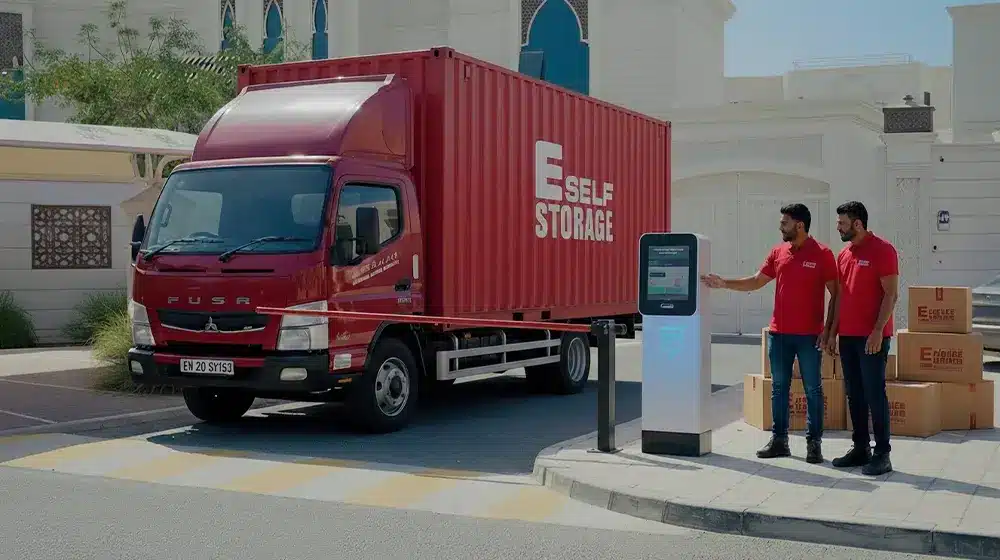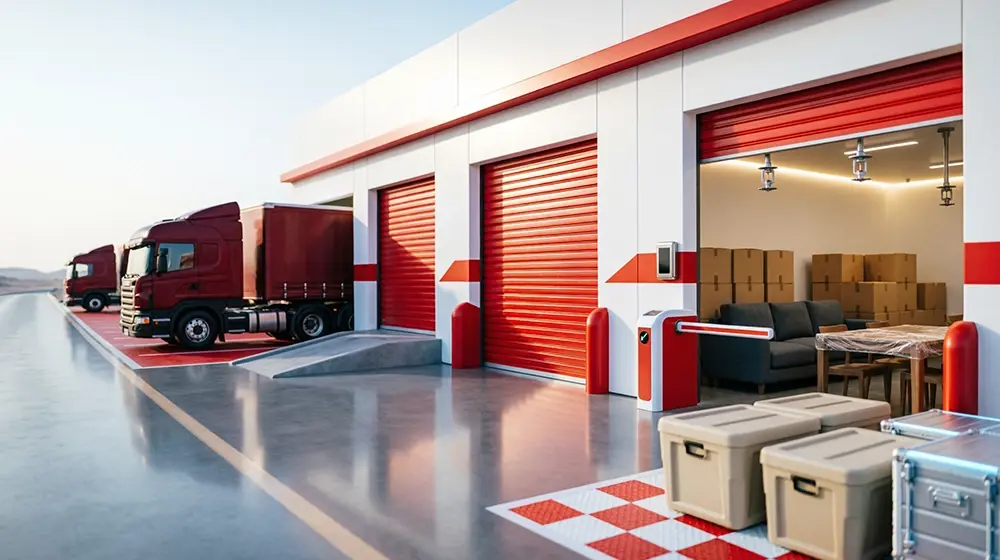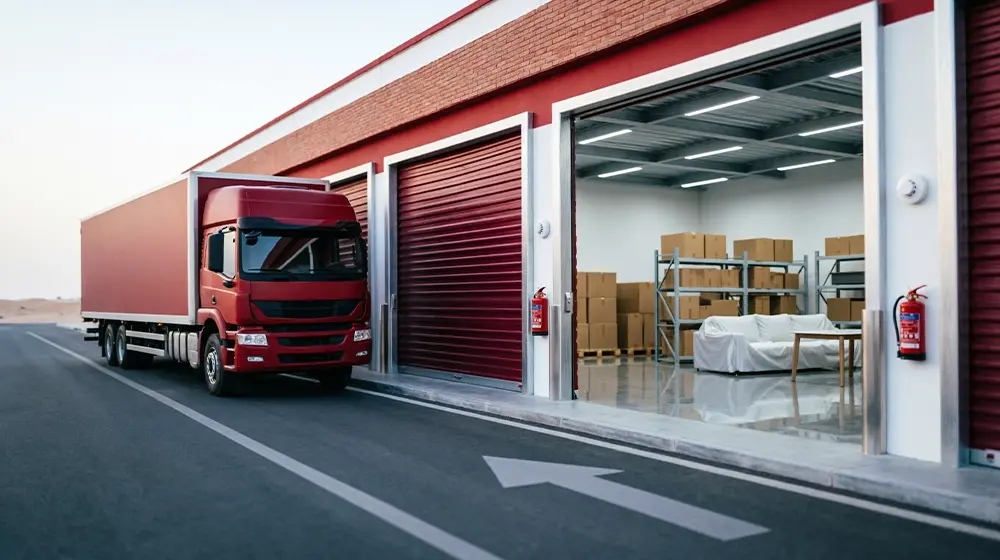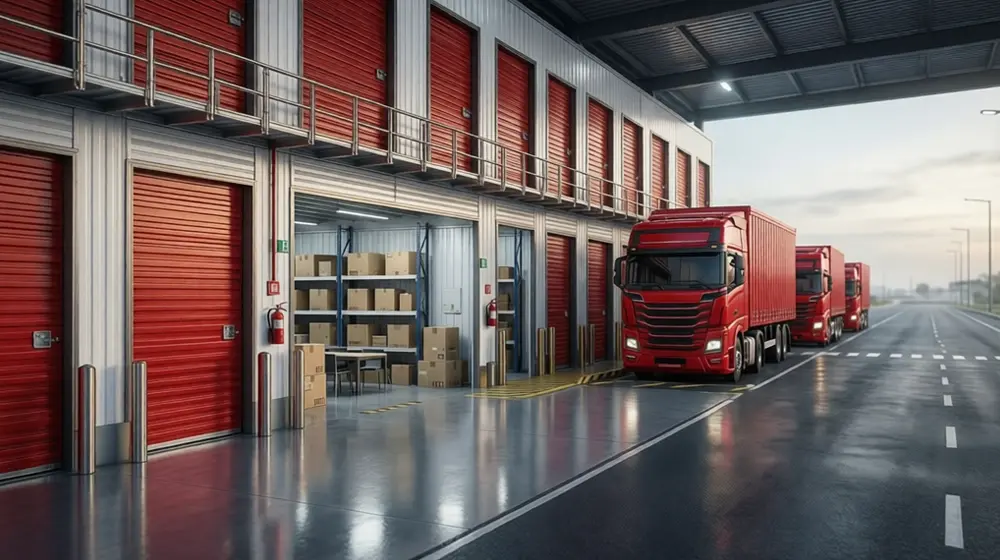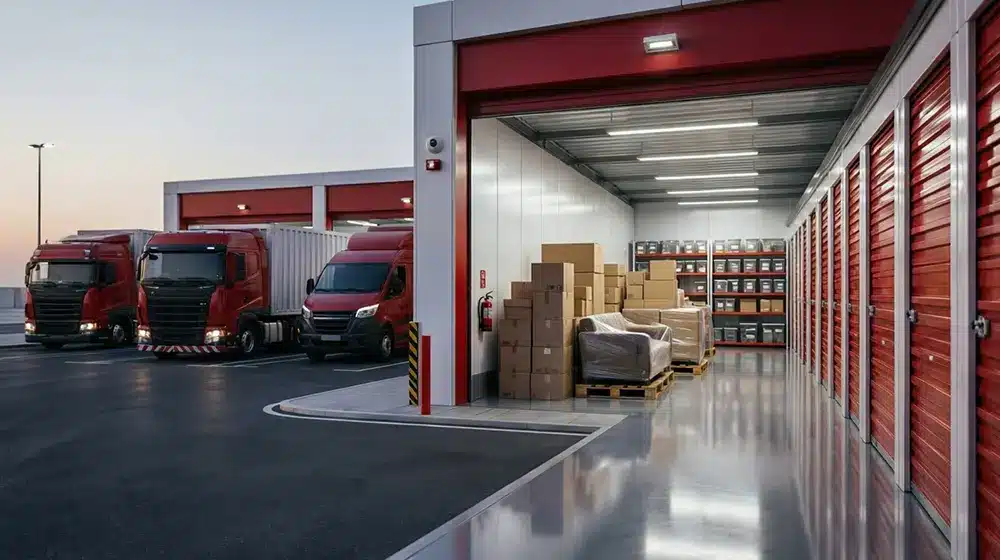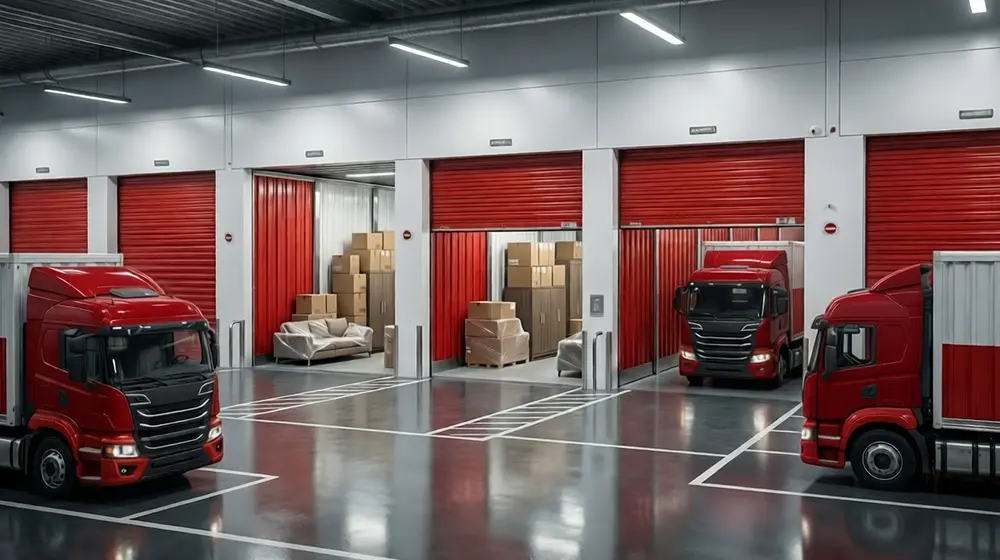
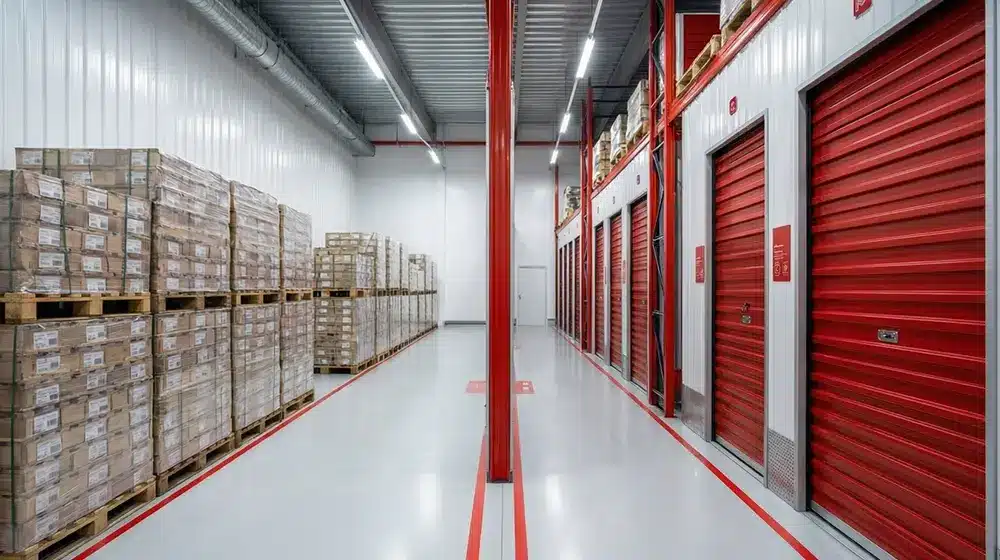
Ajman fits B2B storage planning because it offers two distinct models that solve different operational problems. A warehouse fits palletized inventory, inbound receiving, and dispatch workflows. Self storage fits smaller volumes, short contracts, and fast access without warehouse staffing. This guide compares Ajman warehouse storage and self storage using a decision framework anchored on unit economics, access patterns, compliance evidence, and contract structure. Ajman also shows an affordable warehouse rent signal on market listings, with Ajman Industrial Area warehouse rents starting around AED 42,000 per year and averaging around AED 175,000 per year, with an average size around 2,700 sq ft.
Benefits of reading this article
- A procurement-grade comparison that maps your inventory profile to the correct storage model.
- A copy-paste decision checklist that turns storage selection into auditable criteria for finance and operations.
The next section defines both models in operational terms, then quantifies the decision variables.
What is warehouse storage in Ajman for business inventory?
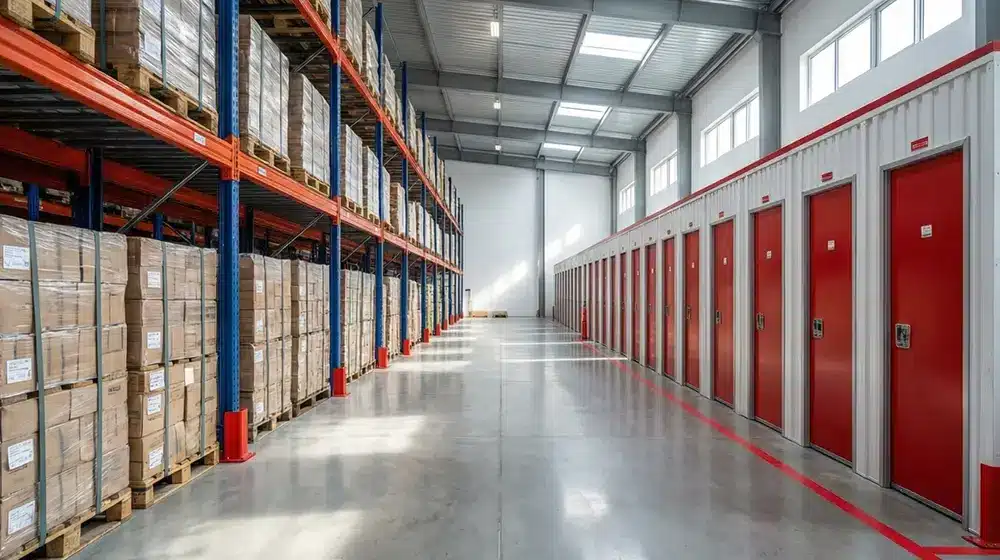
Warehouse storage in Ajman is a commercial space model designed for receiving, storing, and dispatching goods at scale, typically with loading access, pallet handling, and larger floor areas. Ajman Industrial Area listings show typical warehouse sizes spanning roughly 1,400 to 5,900 sq ft with an average around 2,700 sq ft, which aligns with SME distribution and light industrial storage.
What is self storage in Ajman for business use?
Self storage in Ajman is a unit-based storage model where businesses rent a defined unit size for inventory, documents, spare parts, or equipment, often with flexible terms and simplified access. Providers in Ajman advertise a wide range of unit sizes, from small units around 50 sq ft to large units around 1,000 sq ft, which fits teams that store cartons, equipment, and non palletized goods.
What is the core difference between Ajman warehouse and self storage?
The core difference is workflow control. Warehouses support inbound receiving, pallet storage, and structured dispatch. Self storage supports quick storage and retrieval without warehouse labor, racking plans, or receiving schedules. This difference changes total monthly cost, evidence controls, and service levels.
Which business intent matches warehouse vs self storage?
Warehouse intent matches: B2B distribution, wholesale, import staging, spare parts with pallet flow, or e commerce replenishment with frequent inbound.
Self storage intent matches: short-term overflow, marketing materials, documents, tools, seasonal stock, or small SKU sets with limited pallet volume.
Which model aligns with B2B cost structure in Ajman?
A B2B cost model splits into fixed cost and variable cost:
- Fixed cost: rent, deposits, service fees, utilities base charges
- Variable cost: labor time, access trips, damage risk, inventory control effort
Ajman warehouse listings show a clear affordability signal relative to a national average on that listing summary, which supports budget-first strategies.
Self storage pricing in the UAE often uses monthly price ladders by unit size. A published Dubai price list example shows small lockers at AED 350 per month for 10 sq ft and AED 595 per month for 20 sq ft, plus VAT, which provides a market proxy for unit-based pricing mechanics even when Ajman-specific public price sheets are inconsistent across providers.
What is the decision framework for Ajman warehouse vs self storage?
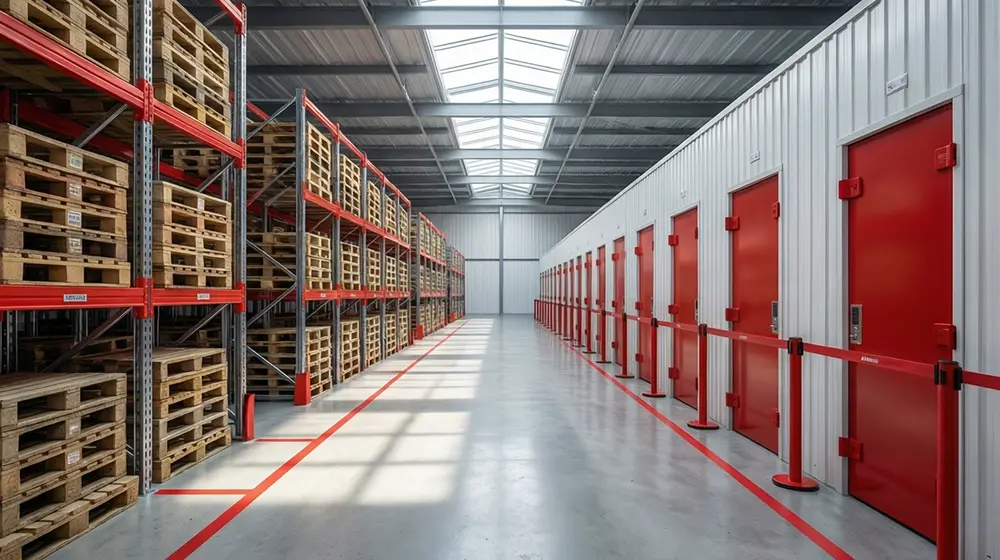
A practical framework uses seven variables:
- Inventory volume and packaging (pallets, cartons, irregular items)
- Access frequency (daily, weekly, monthly)
- Service level (dispatch cutoffs, same-day pick, scheduled pickup)
- Handling method (manual handling, pallet jack, forklift)
- Compliance evidence (audit logs, custody records, access logs)
- Contract structure (term length, deposit, escalation)
- Tax and invoicing treatment (VAT, designated zone rules, free zone terms)
The next sections answer each variable as a direct question so procurement teams can score fit quickly.
What inventory volume triggers a warehouse in Ajman?
A warehouse fits when inventory volume uses pallet positions, bulk cartons, or large items that exceed typical self storage handling. Ajman Industrial Area listing ranges show multi-thousand sq ft units as a common supply band, which aligns with palletized or mixed bulk storage.
What examples match warehouse volume?
Examples include: beverage cartons, FMCG master cartons, construction consumables, furniture inventory, spare parts bins, and import consolidation.
What inventory volume triggers self storage in Ajman?
Self storage fits when inventory stays in cartons, bins, racks, or small equipment sets that load through standard doors. Providers advertising 50 to 1,000 sq ft units reflect this use case range for small and mid-sized business storage.
What examples match self storage volume?
Examples include: marketing collateral, small electronics stock, uniforms, event equipment, tools, archived files, and seasonal product cartons.
How does access frequency change the best choice?
Access frequency is the strongest hidden cost driver.
- High frequency access increases labor time and travel time.
- Low frequency access increases rent sensitivity and contract flexibility importance.
Self storage often prices access convenience into the monthly fee. Warehouse storage often prices space first, then your team or your operator handles access labor.
How do service levels differ between a warehouse and self storage?
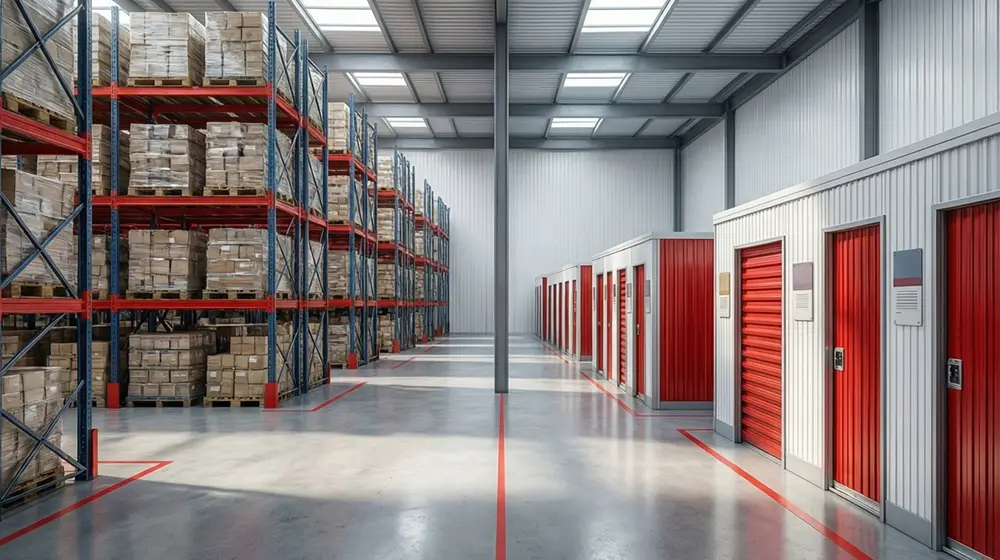
Warehouses support structured service levels like receiving hours, planned dispatch windows, and staging capacity. Self storage supports simple access and retrieval but usually lacks receiving docks, scheduled inbound checks, and dispatch staging unless the provider also offers fulfillment services.
If your business requires cutoffs, pick lists, and dispatch SLAs, the warehouse model matches the process shape.
What handling equipment changes the economics?
Equipment changes both cost and feasibility.
What handling fits self storage?
Manual handling, hand trolleys, light shelving, and carton stacking.
What handling fits warehouses?
Pallet jacks, forklifts, racking systems, staging zones, and receiving inspection areas.
Warehouses that support loading access and higher ceiling height reduce handling time per unit moved, which changes cost per order.
What compliance evidence differs between warehouse and self storage?
Compliance evidence is a storage selection variable in B2B sectors like healthcare supply, food distribution, spare parts, and regulated imports.
What evidence is typical in warehouses?
- Inbound receiving logs
- Putaway location records
- Dispatch pick logs
- Stock count reports
- Visitor and driver logs
What evidence is typical in self storage?
- Access logs at the facility level
- Unit contract records
- Customer entry records when facility systems exist
For VAT and designated zone contexts, the Federal Tax Authority publishes guidance on designated zones and clarifies that free zones do not automatically sit outside the UAE VAT territorial scope, and only designated zones receive special VAT treatment under defined limitations.
What tax and free zone rules affect warehouse and self storage in Ajman?
VAT treatment depends on the specific contract, supply type, and zone classification.
- The FTA designated zones VAT guide explains that free zones are not automatically outside the VAT scope, and designated zones have specific rules and limitations.
- The FTA also publishes a designated zones list PDF, which supports verification of whether a specific zone appears on the designated list.
Ajman Free Zone publishes a short-term warehouse product page stating the service is exempt from VAT and also available for customers not licensed in the free zone, which is relevant for contract planning when that specific product fits your use case.
This section does not treat VAT exemption as universal. It treats VAT terms as contract-specific and evidence-based.
What does the UAE self storage market growth signal imply for B2B planning?
A growing self storage market signals increased adoption and more provider options, which can improve pricing competitiveness and service features over time. One market research summary reports UAE self storage revenue of USD 602.5 million in 2024 with a forecast to USD 859.2 million by 2030 and a CAGR of 6.3% for 2025 to 2030.
This growth signal supports planning for flexible storage as a formal layer in supply chains, not only as consumer overflow.
What is the Ajman warehouse cost baseline using published listing summaries?
A baseline uses listing summaries because fully standardized public rent indices for industrial space are limited.
Property Finder’s Ajman Industrial Area summary states:
- Yearly rental starts at AED 42,000
- Average around AED 175,000
- Average size around 2,700 sq ft
What does that imply as a rough planning unit cost?
A rough unit cost uses average rent divided by average size. That converts to about AED 64.8 per sq ft per year using the listing averages. The actual number varies by power load, fit-out condition, yard access, and location inside Ajman.
This is a planning benchmark, not a quote.
What is a self storage monthly cost baseline using published UAE price sheets?
Self storage often publishes unit ladders by area and monthly fee. A Dubai price sheet example lists a 10 sq ft locker at AED 350 per month and a 20 sq ft unit at AED 595 per month, plus VAT, which provides a transparent unit ladder format useful for budgeting logic.
ServiceMarket’s guidance also gives container-style monthly ranges for 10 ft, 20 ft, and 40 ft storage containers in Dubai, which illustrates how storage pricing changes with volume.
Ajman providers differ in exact rates, but the budgeting structure stays similar: monthly fee scales with unit size and features such as climate control and access hours.
What is the direct comparison table for Ajman warehouse vs self storage?
| Decision variable | Ajman warehouse storage | Ajman self storage |
|---|---|---|
| Best fit inventory | Pallets, bulk cartons, large items | Cartons, bins, small equipment |
| Access pattern | Planned dispatch and receiving | Flexible retrieval and drop-off |
| Handling method | Forklift and pallet jack workflows | Manual handling and small trolleys |
| Evidence depth | Receiving, pick, dispatch logs | Facility access logs and contracts |
| Contract profile | Longer terms, higher deposits common | Shorter terms common, monthly ladders |
| Cost driver | Space plus labor and transport | Monthly fee plus access trip effort |
| Tax nuance | Contract-specific, zone-specific | Contract-specific, zone-specific |
The next section converts this into a scoring tool for procurement teams.
What does a hybrid storage model in Ajman look like?
A hybrid model splits inventory by velocity:
- Warehouse stores bulk and slow-moving inventory.
- Self storage stores fast-access kits, returns processing cartons, or sales collateral.
This reduces warehouse travel for small urgent pulls and keeps bulk inventory in lower unit cost space.
What operational risks differ between warehouses and self storage?
What warehouse risks appear most often?
- Receiving errors without structured inspection
- Stock misplacement without bin location control
- Damage during forklift handling without aisle discipline
- Labor cost spikes during peak dispatch weeks
What self storage risks appear most often?
- Unit overfill and damage from dense stacking
- Lost time from repeated small trips
- Limited receiving support for inbound deliveries
- Weak audit trail if access logging is minimal
These risks convert into cost through rework and shrinkage.
What checklist supports a compliant storage selection in Ajman?
Commercial checklist
- Rent basis, escalation clause, deposit amount
- Contract term and exit penalties
- Utility billing method and service charges
- Insurance responsibility and liability caps
Facility checklist
- Loading access and turning radius
- Fire safety systems and emergency access
- Power load capacity and cooling capability
- Security controls and access logging
Operations checklist
- Receiving process and delivery rules
- Stock count method and variance tolerance
- Dispatch window rules and carrier access
- Damage reporting method and evidence archive
For free zone terms, Ajman Free Zone positions proximity to Ajman Port and regional airports in its official materials, which supports logistics planning assumptions around access and connectivity.
What are the most common B2B use cases for Ajman warehouse storage?
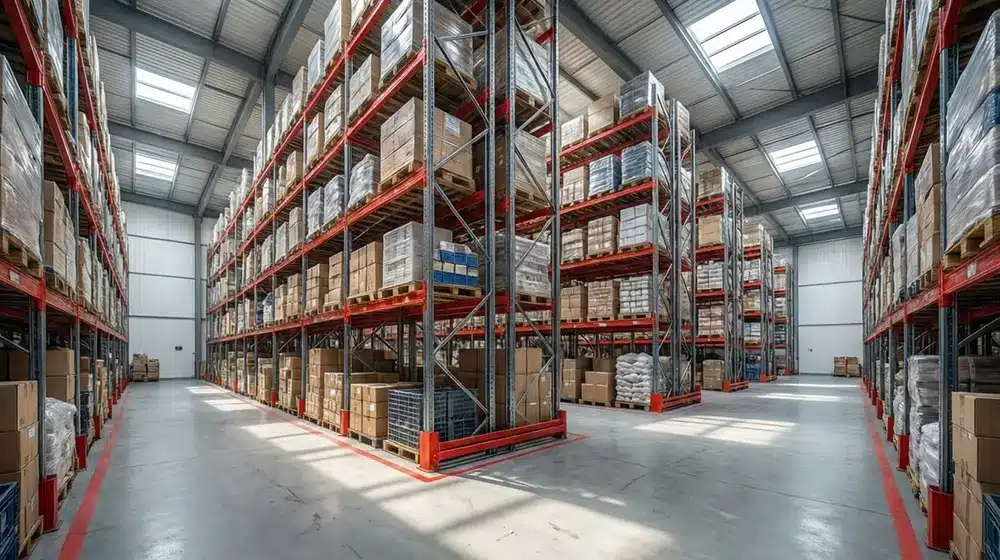
Ajman warehouse storage aligns with:
- Wholesale distribution staging
- Spare parts stockholding
- Packaging material storage
- Import consolidation near port corridors
- Light assembly and kitting where permitted by the lease activity type
Ajman Industrial Area shows broad unit availability and size ranges that match these use cases.
What are the most common B2B use cases for Ajman self storage?
Ajman self storage aligns with:
- Overflow inventory during peak season
- Document archiving and evidence retention
- Field equipment storage
- Event and promotional stock storage
- Returns processing buffer space
Providers listing small and large unit ranges signal this mixed business usage pattern.
What is the practical conclusion for Ajman warehouse vs self storage?
Ajman warehouse storage fits businesses with pallet flow, receiving, and dispatch structure, supported by the multi-thousand sq ft warehouse supply band visible in Ajman Industrial listings.
Ajman self storage fits businesses that value flexible unit sizing and fast access for smaller volumes, consistent with providers advertising unit sizes from small to large bands.
A hybrid model fits businesses with mixed inventory velocity, because it preserves low unit cost bulk storage and adds rapid access for operational kits.
What questions do procurement teams ask before signing?
What is the real unit cost per month?
What is the access constraint?
What evidence exists for disputes?
What tax language appears in the contract?
Hayyan is a logistics veteran with over 15 years of experience in facility management and spatial optimization. He specializes in warehouse security, climate-controlled storage protocols, and the technical logistics of large-scale moving. His focus is on helping clients maximize their square footage while ensuring the long-term preservation of their inventory and belongings.
Thuraya is a specialist in home organization and residential transition management. With a background in interior space planning, she helps individuals navigate the complexities of downsizing and relocation. She provides expert advice on packing fragile items, choosing optimal storage unit sizes, and turning the stress of moving into a seamless, organized experience.