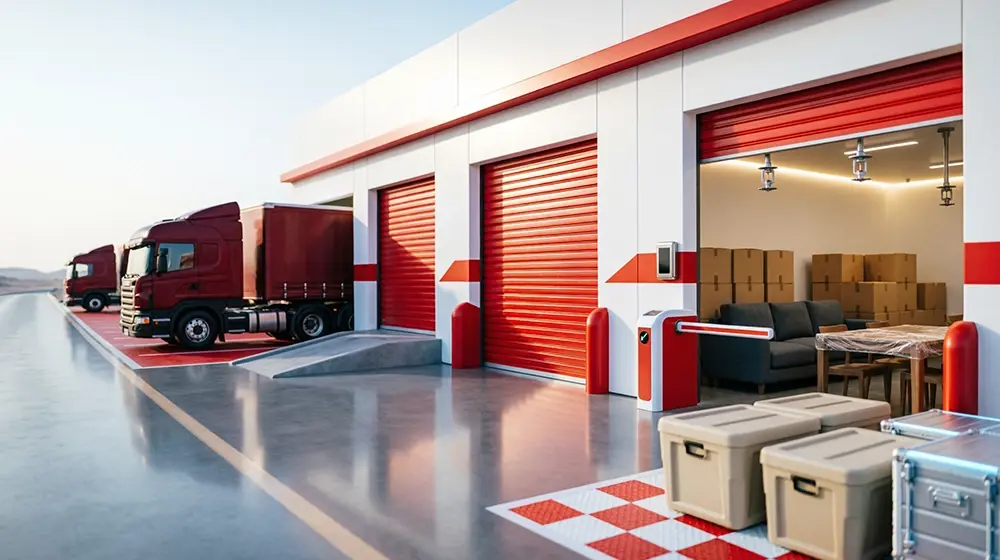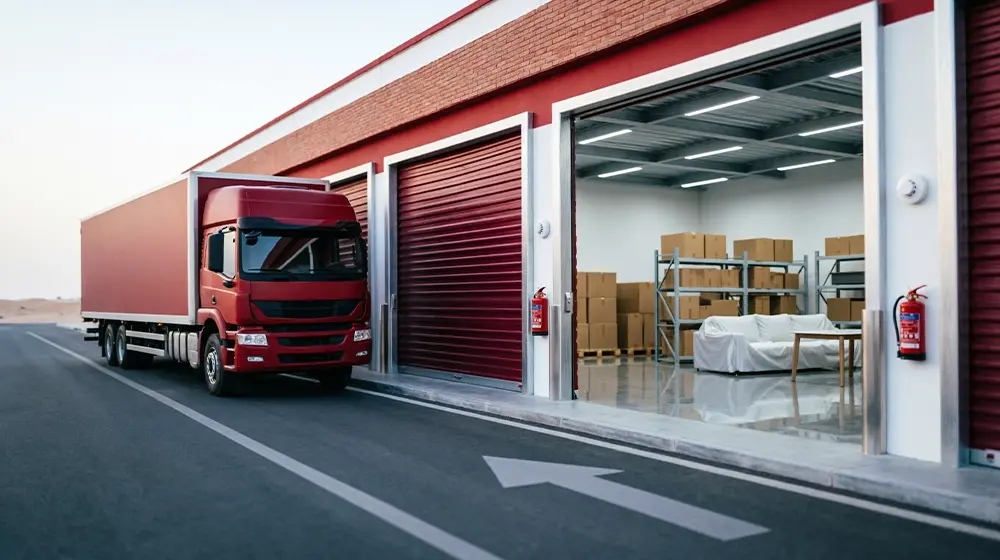
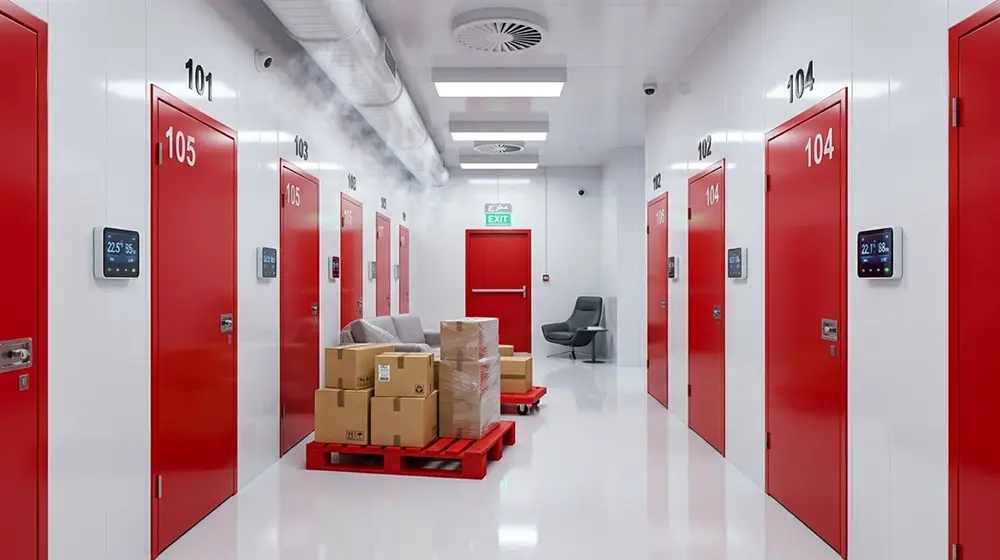
A temperature- and humidity-managed indoor unit protects moisture-sensitive belongings from mold conditions, corrosion conditions, and material warping caused by unstable heat and relative humidity.
Choosing the proper flexible storage solutions for sensitive items is essential in Fujairah, where temperatures and humidity swing wildly. Climate controlled storage in Fujairah is perfect for preserving electronics, valuable artwork, or rare books, as it shields your belongings from heat, moisture, and anything else ruining them.
With the growing need for temperature controlled units, Fujairah residents and businesses are realizing that climate protected storage is an innovative solution for keeping the condition of their valuable and delicate items. In this blog, we explore the relevance of climate controlled storage, how it’s different from standard storage, and how it can be used to their advantage.
Did You Know? Fujairah has seen a 30 % increase in demand for climate controlled storage in the past five years because the region’s need for safe and secure storage for delicate items has increased.
What is climate controlled storage in Fujairah?
An HVAC-regulated storage environment maintains a narrower band of temperature and relative humidity than standard storage by using air conditioning, ventilation, moisture control, and insulated building envelopes.
Key terms
- Relative humidity (RH): A percentage measure of air moisture used to estimate mold risk and material moisture uptake.
- Moisture control: The main driver of mold control in indoor environments.
What Fujairah climate data signals storage risk?
High maximum humidity and high daytime temperatures appear repeatedly in Al Fujairah City forecast bulletins, which increases moisture exposure time for stored items.
Data set: Al Fujairah City temperature and relative humidity (NCM, selected bulletin days)
| Bulletin date | Day listed | Max temp | Min temp | Max RH | Min RH |
|---|---|---|---|---|---|
| 26 Feb 2026 | Thu 26 Feb | 30°C | 21°C | 90% | 25% |
| 26 Feb 2026 | Sun 01 Mar | 36°C | 19°C | 80% | 20% |
| 01 Mar 2026 | Mon 02 Mar | 29°C | 22°C | 85% | 25% |
| 01 Mar 2026 | Thu 05 Mar | 29°C | 20°C | 65% | 25% |
| 03 Mar 2026 | Sat 07 Mar | 27°C | 19°C | 75% | 25% |
What damage mechanisms affect belongings in non-controlled storage?
Moisture cycling damages materials by enabling mold growth, accelerating metal corrosion, and forcing hygroscopic materials to expand and contract.
Which mechanisms dominate storage damage?
There are 5 dominant damage mechanisms in humid heat.
- Trigger mold growth when wet materials remain wet for 24–48 hours.
- Increase condensation risk when indoor RH remains above 60% and surfaces cool below dew point.
- Accelerate corrosion on metal contacts and fasteners under persistent moisture exposure.
- Warp wood products by moisture uptake and dimensional change during RH swings.
- Degrade paper and photos by faster chemical decay at higher temperature and higher RH.
Evidence thresholds used by preservation and indoor-air authorities
- Keep indoor RH below 60%; EPA cites 30–50% RH as an ideal indoor range when feasible.
- Control RH to <65% to reduce microbial growth likelihood (ASHRAE Standard 62.1 FAQ).
- RH above ~70–80% is repeatedly modeled as mold-favorable in building-science literature.
What items use climate-controlled storage most?
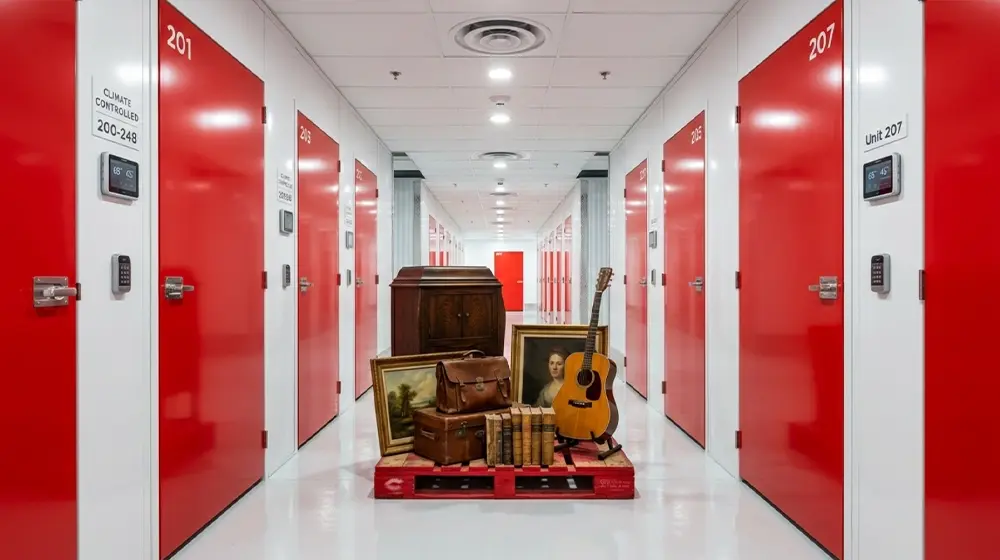
Moisture-sensitive and heat-sensitive categories gain the most risk reduction from stable temperature and RH.
Which household categories show the highest benefit?
There are 6 high-benefit categories for climate control.
- Paper archives (examples: passports, certificates, contracts, school files).
- Photographs and albums (examples: printed photos, negatives, scrapbooks).
- Books and rare prints (examples: textbooks, Qur’an prints, collectible editions).
- Electronics (examples: TVs, PCs, cameras, audio equipment).
- Wood and leather furniture (examples: wardrobes, dining sets, sofas, headboards).
- Artwork and collectibles (examples: framed art, canvas, antique décor, instruments).
What temperature and humidity ranges reduce damage risk?
Stable moderate RH and lower temperatures slow material decay and reduce mold and insect activity for paper-based and mixed-media belongings.
Which numeric targets match authoritative preservation guidance?
Three reference bands cover most household storage decisions.
| Material group | Primary risk | Reference temperature guidance | Reference RH guidance |
|---|---|---|---|
| Books and paper | Chemical decay, mold | “Room temperature or below” improves longevity | 30–55% RH is cited as safe for most books (LoC) |
| Family photos/papers | Mold, insects, brittleness | <75°F (24°C) (NARA family archives) | <65% RH; avoid <15% RH brittleness (NARA) |
| Mixed household items | Mold conditions | Keep wet items dry within 24–48 hours (EPA) | <60% RH; ideally 30–50% RH (EPA) |
How is temperature and humidity controlled inside a storage facility?
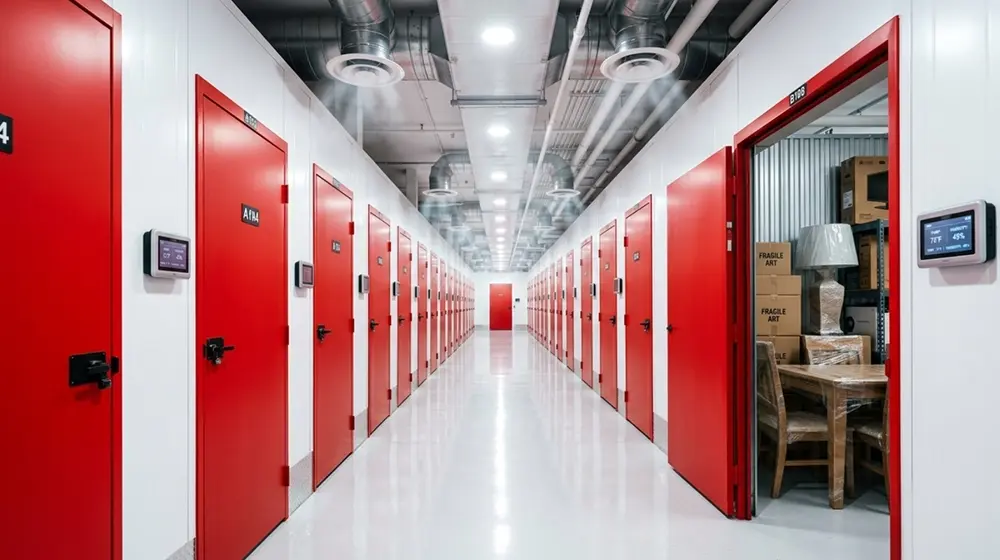
A closed-loop monitoring and conditioning system measures RH and temperature, conditions air with HVAC, and reduces moisture volatility through dehumidification, ventilation, and insulation.
What technical components define “climate control”?
There are 6 facility-level control components.
- Measure conditions using RH and temperature sensors.
- Condition air using HVAC to hold temperature bands.
- Reduce moisture using dehumidification and controlled ventilation.
- Stabilize drift using insulation and air barriers between zones.
- Prevent condensation by keeping indoor humidity low and managing cold surfaces.
- Document performance using environmental monitoring logs.
What is the difference between air-conditioned storage and climate-controlled storage?
Air-conditioned storage controls temperature, while climate-controlled storage controls temperature and reduces humidity volatility to reduce mold-favorable conditions and moisture uptake in materials.
| Storage type | Controlled variable | Core benefit | Core limitation |
|---|---|---|---|
| Standard storage | None | Lower cost | Ambient heat and RH volatility |
| Air-conditioned storage | Temperature | Lower heat exposure | RH can remain high |
| Climate-controlled storage | Temperature + moisture control | Lower mold/corrosion/warping risk | Higher operating complexity |
How do you verify a unit is climate-controlled?
A verifiable climate-controlled unit provides measurable RH/temperature ranges, continuous HVAC operation, and documented monitoring rather than “AC only” cooling.
Facility verification checklist (instruction list)
- Request target ranges for RH and temperature in numeric values.
- Confirm monitoring via sensors and periodic logs.
- Verify moisture controls (dehumidification + ventilation practices).
- Inspect condensation signals (wet spots, musty odor, visible mold).
- Check separation barriers between zones with different RH requirements.
How do you pack items for climate-controlled storage?
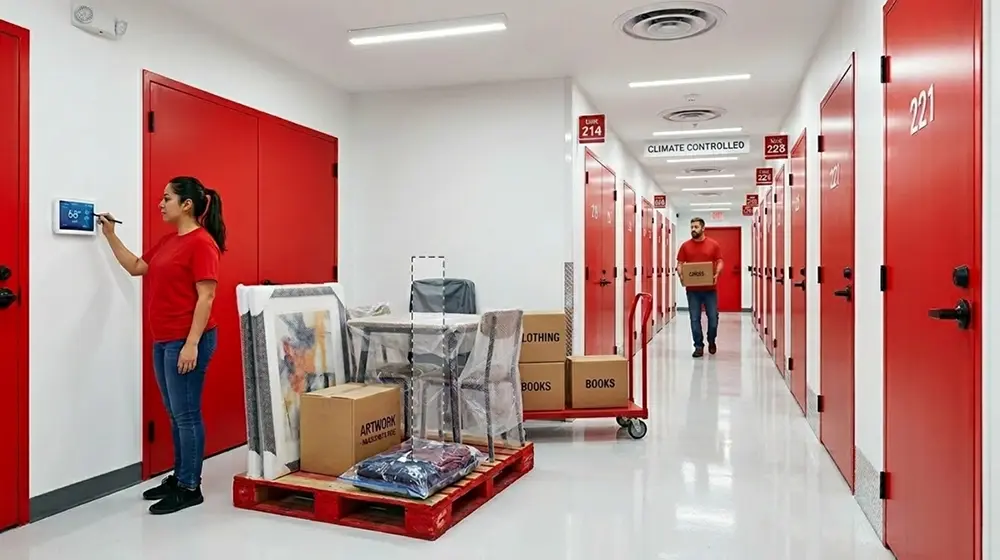
Dry, breathable, and labeled packaging reduces trapped moisture and improves material stability during long storage durations.
Packing protocol (instruction list)
- Dry textiles fully, if textiles experienced moisture exposure in the prior 48 hours.
- Use breathable covers for furniture surfaces to reduce moisture trapping.
- Elevate cartons to reduce floor-level moisture contact risk.
- Separate material types (paper, electronics, textiles) to reduce cross-contamination risk from odors and moisture.
- Buffer micro-humidity using desiccant packets inside sealed electronics cartons, if cartons remain sealed for weeks.
Frequently Asked Questions
Relative humidity above 60% increases condensation and mold risk, and building-science models often classify 70–80% RH as mold-favorable.
Drying wet materials within 24–48 hours prevents mold growth in many indoor cases.
A 30–55% RH band is cited as safe for most books in Library of Congress preservation guidance.
A temperature below 75°F (24°C) is listed by the U.S. National Archives for preserving family archives.
Relative humidity below 65% is listed by the U.S. National Archives to prevent mold growth and reduce insect activity.
Humidity equilibration can take days to months, while temperature equilibration occurs faster, which increases long-duration stress from RH volatility in porous materials.
Hayyan is a logistics veteran with over 15 years of experience in facility management and spatial optimization. He specializes in warehouse security, climate-controlled storage protocols, and the technical logistics of large-scale moving. His focus is on helping clients maximize their square footage while ensuring the long-term preservation of their inventory and belongings.
Thuraya is a specialist in home organization and residential transition management. With a background in interior space planning, she helps individuals navigate the complexities of downsizing and relocation. She provides expert advice on packing fragile items, choosing optimal storage unit sizes, and turning the stress of moving into a seamless, organized experience.