
Micro-Fulfilment Storage Strategies for Al Quoz E-Commerce Startups

Micro-fulfilment is a logistics and warehousing strategy in which inventory is stored in small, highly optimised facilities located within 30 kilometres of end customers to enable same-day or next-day order fulfilment. According to a 2022 McKinsey and Company report on last-mile delivery ecosystems, micro-fulfilment centres reduce last-mile delivery costs by up to 25% compared to centralised distribution warehouses. Al Quoz, Dubai’s primary industrial warehousing district, positions e-commerce startups within 10 to 15 kilometres of major residential communities, including Downtown Dubai, Business Bay, and Jumeirah, placing inventory inside the delivery radius of over 2.1 million Dubai residents.
The 5 core components of a micro-fulfilment storage strategy are warehouse layout design, vertical storage systems, inventory management systems (IMS), order picking methods, and last-mile delivery coordination. Each component affects cost-per-order, picking speed, and delivery time. These are the 3 operational metrics that determine fulfilment competitiveness in the UAE e-commerce market.
According to Statista’s 2024 UAE E-Commerce Market Report, the UAE e-commerce market generates USD 9.2 billion in annual revenue, with a compound annual growth rate (CAGR) of 11.5% projected through 2029. Dubai accounts for approximately 65% of that total. Al Quoz-based logistics operations sit at the geographic centre of that demand concentration.
What Is Micro-Fulfilment and Why Does It Matter for Al Quoz Startups?
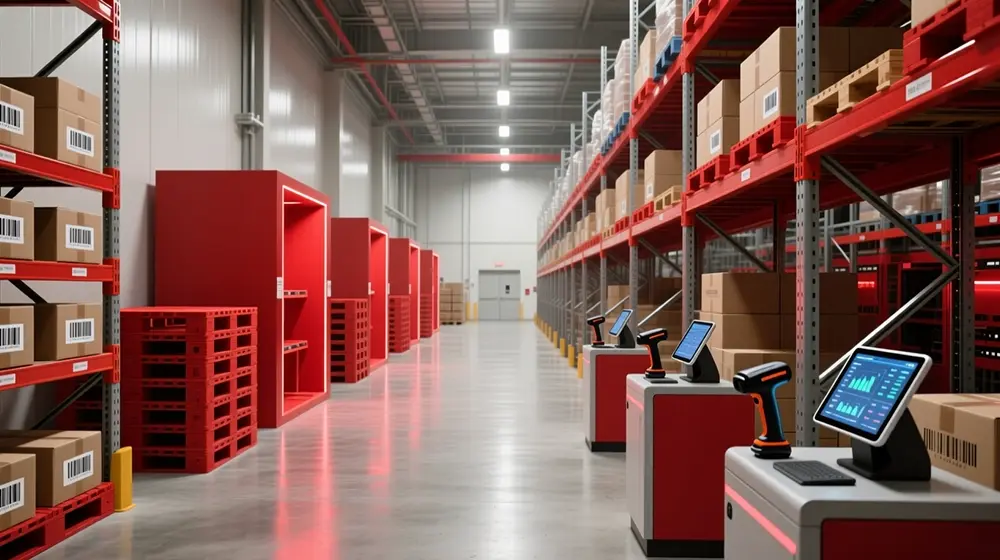
Micro-fulfilment matters for Al Quoz e-commerce startups because it converts small, high-density storage units into fully operational order dispatch centres without requiring the capital expenditure of a large central warehouse. A micro-fulfilment centre (MFC) typically occupies between 300 and 1,000 square metres, compared to 10,000 or more square metres for a traditional distribution centre, while processing between 500 and 5,000 orders per day where throughput systems are correctly configured.
According to a 2021 study published in the International Journal of Production Economics by Hubner et al., urban micro-fulfilment adoption reduces average order delivery time by 43% and increases order accuracy rates to 99.2% when combined with barcode-enabled inventory tracking. Platforms such as Noon and Amazon.ae have set same-day delivery as the baseline customer expectation in Dubai, making this accuracy threshold a baseline operational requirement rather than a performance target.
How Do Rising Customer Delivery Expectations Affect Al Quoz Operations?
Customer delivery expectations in Dubai now require same-day or next-day fulfilment as standard, not a premium option, where an e-commerce brand targets the city’s urban consumer base. According to Dubai Chamber of Commerce e-commerce data published in 2023, 74% of UAE online shoppers abandon repeat purchases from retailers that fail to deliver within 48 hours. Al Quoz-based micro-fulfilment centres address this by placing inventory within a 20-kilometre delivery radius of over 2.1 million Dubai residents.
Why Is Al Quoz the Right Location for Micro-Fulfilment in Dubai?
Al Quoz offers 4 measurable location advantages for micro-fulfilment operations: direct access to Sheikh Zayed Road (E11), proximity to the Dubai Metro Red Line, central positioning between Jebel Ali Port (35 km) and Dubai International Airport (18 km), and warehouse rental rates that average AED 35 to 55 per square foot annually. Those rates sit 20 to 30% below comparable units in Dubai Silicon Oasis or Dubai Investment Park.
Current self-storage and warehouse options in Dubai include unit sizes and access configurations suited to micro-fulfilment throughput requirements at different order volume stages.
What Storage Challenges Do Al Quoz E-Commerce Startups Face?
There are 5 specific storage challenges Al Quoz e-commerce startups face when building micro-fulfilment operations. The layout, racking, and inventory systems selected should address each challenge before capital is committed to equipment.
The 5 Al Quoz micro-fulfilment storage challenges are:
- Limited floor area: Most Al Quoz industrial units range from 100 to 500 square metres with irregular column placements, reducing usable floor space by 8 to 15% in standard grid layouts.
- High rent-per-order cost: At AED 45 per sq ft on average, a 200 sq ft unit costs approximately AED 9,000 monthly. Per-order space efficiency is the primary profitability driver at this cost level.
- High SKU diversity: UAE e-commerce startups carry an average of 800 to 2,500 active SKUs across 3 to 6 product categories, requiring multiple racking configurations within a single compact facility.
- Seasonal demand spikes: UAE retail seasons, including Ramadan, Dubai Shopping Festival (January to February), and White Friday (November), generate order volume surges of 120 to 300% above daily averages.
- Manual picking errors: Startups relying on paper pick lists record error rates of 3 to 4%, versus 0.5 to 0.8% for barcode-enabled digital systems, according to the Warehousing Education and Research Council (WERC) 2022 DC Measures study.
How Do You Design an Efficient Warehouse Layout for a Compact Al Quoz Facility?

To design an efficient warehouse layout, map the process flow first, then assign dedicated zones to each operational stage before placing any racking or shelving. In a compact Al Quoz facility of 200 to 500 square metres, the 5 operational zones are receiving, storage, picking, packing, and dispatch. Each zone requires a minimum aisle clearance of 1.2 metres between workflow paths to prevent cross-traffic and picker collisions.
According to the Supply Chain Management: An International Journal (2020), warehouse layout efficiency improves by 31% when fast-moving SKUs (those with daily pick rates above 20 units) are positioned within 5 metres of packing stations. This principle, known as slotting optimisation, is the most cost-effective single layout decision for Al Quoz micro-fulfilment facilities operating with limited floor space.
What Are the 4 Layout Planning Steps for an Al Quoz Micro-Fulfilment Unit?
The 4 layout planning steps for an Al Quoz micro-fulfilment unit are:
- Step 1: Map process flow: Draw the physical path from receiving dock to dispatch bay. No workflow step should require backtracking through a preceding zone.
- Step 2: Assign zone boundaries: Allocate a minimum of 15% of total floor space to receiving, 10% to packing, 5% to returns, and 70% to active storage, adjustable based on SKU count and order velocity.
- Step 3: Apply ABC slotting: Place A-grade SKUs (top 20% by pick frequency) at waist height within 5 metres of packing. Place B-grade SKUs at shoulder or knee height. Place C-grade SKUs at floor level or in high-bay racking.
- Step 4: Validate aisle widths: Maintain 1.2-metre minimum aisle clearance for manual picking, and 2.4 metres where pallet jacks or autonomous mobile robots (AMRs) are in use.
Al Quoz Layout Zone Allocation: Recommended vs. Common Startup Configurations
| Zone | Recommended Allocation | Common Startup Mistake | Impact of Mistake |
|---|---|---|---|
| Receiving | 15% of floor space | 5 to 8% (undersized) | Dock congestion, delayed put-away by 2 to 4 hrs |
| Active Storage | 70% of floor space | 80%+ (oversized) | No room for packing expansion as orders grow |
| Packing Station | 10% of floor space | 3 to 5% (cramped) | Packing errors increase by 18 to 22% |
| Returns | 5% of floor space | 0% (no zone) | Mixed stock, inventory inaccuracies, write-offs |
How Do You Maximise Vertical Storage Space in a Compact Al Quoz Unit?
To maximise vertical storage space, install high-bay racking systems that extend from floor level to a minimum of 4.5 metres, which is the standard clear height of Al Quoz industrial units. Vertical storage increases usable storage capacity by 200 to 350% compared to floor-level storage alone, without expanding the facility’s square footage. According to the MHI Annual Industry Report 2023, 68% of fast-growing e-commerce warehouses in urban markets use vertical space as their primary capacity expansion method before seeking larger premises.
Climate-controlled storage units in Dubai are available in high-density racking configurations suited to pharmaceutical, cosmetics, and electronics inventory that requires stable temperature and humidity conditions.
What Are the 3 Proven Vertical Storage Systems for Al Quoz Micro-Fulfilment?
The 3 proven vertical storage systems for compact Al Quoz micro-fulfilment units are:
- High-bay selective pallet racking: Stores bulk palletised inventory at 4 to 6 metre heights using reach trucks or order pickers. Selective racking provides access to every pallet without moving adjacent stock, reducing retrieval time to under 90 seconds per pallet. Typical installed cost: AED 180 to 240 per bay.
- Multi-tier shelving systems: Installs 2 to 4 mezzanine levels within existing floor-to-ceiling height, multiplying usable floor area by 200 to 400%. Suitable for SKUs weighing under 25 kg. Typical build cost: AED 550 to 750 per square metre of mezzanine platform.
- Vertical lift modules (VLMs): Automated storage systems that house goods in trays and bring requested items to a single ground-level access point. VLMs reduce picker travel time by up to 66% and achieve storage densities of 200 to 400 kg per square metre of floor space, according to Kardex Remstar’s 2023 operational benchmarks.
What Racking and Shelving Systems Suit Fast-Moving Inventory in Al Quoz?
There are 4 racking and shelving systems suited to fast-moving SKU environments in Al Quoz micro-fulfilment centres. Selection depends on 3 variables: SKU weight class, unit dimensions, and daily pick frequency per SKU.
Racking System Comparison for Al Quoz Micro-Fulfilment
| Racking Type | Best For | Pick Speed | Approx. AED Cost per Bay |
|---|---|---|---|
| Selective pallet racking | Palletised bulk stock above 50 kg | Medium, 90 to 180 sec | AED 180 to 240 |
| Carton flow racking | Fast-moving small to medium SKUs | High, 15 to 45 sec | AED 320 to 480 |
| Bin shelving | Small items under 5 kg, cosmetics, electronics | Very high, under 15 sec | AED 80 to 140 |
| Drive-in racking | Single-SKU bulk stock on LIFO rotation | Low, 3 to 5 min | AED 140 to 200 |
Carton flow racking delivers the highest pick throughput for Al Quoz e-commerce operations because gravity-fed lane replenishment removes the need for picker repositioning between picks. Warehouse storage solutions in Dubai include units with carton-flow-compatible specifications and vehicle access configurations.
How Does an Inventory Management System Improve Micro-Fulfilment in Al Quoz?

An Inventory Management System (IMS) reduces stock discrepancy rates from an average of 3.2% under manual tracking to 0.4% under barcode-enabled IMS, according to a 2021 study by Hales et al. published in the Journal of Business Logistics. For an Al Quoz operation processing 300 orders per day, that 2.8-percentage-point accuracy gain eliminates approximately 8 to 9 mis-picks daily, cutting reshipment costs and customer refunds in the same transaction cycle.
What Are the 4 Core Functions of an IMS for E-Commerce Micro-Fulfilment?
The 4 core functions an IMS performs in an Al Quoz micro-fulfilment environment are:
- Real-time stock tracking: Records each put-away, pick, and despatch transaction at the SKU level, eliminating phantom inventory (stock recorded as available but physically missing), which affects 6 to 12% of manually managed SKUs.
- Reorder point automation: Triggers purchase orders when individual SKU stock falls below a defined threshold, preventing stockouts during demand spikes. Reorder points adjust based on sales velocity data from the connected e-commerce platform, where the IMS integration is active.
- Digital pick list generation: Produces pick routes sequenced by aisle and shelf location, reducing picker travel distance by 30 to 45% versus paper-based random-order lists.
- Platform synchronisation: Syncs live stock counts with Shopify, WooCommerce, Salla, and Zid storefronts within 60 to 120 seconds of each transaction, preventing overselling during high-traffic sales periods.
UAE e-commerce growth and micro-warehousing storage unit sizes follow order volume thresholds that determine which IMS configuration tier is appropriate for a given facility.
What Picking Methods Work Best for Al Quoz Micro-Fulfilment Operations?
There are 3 primary picking methods used in Al Quoz micro-fulfilment: single-order picking, batch picking, and zone picking. Method selection depends on daily order volume and SKU count per order. According to the Warehousing Education and Research Council (WERC) DC Measures 2022, facilities processing under 200 orders per day achieve the best accuracy with single-order picking, while operations between 200 and 800 daily orders gain 28 to 35% throughput improvement from batch picking.
Picking Method Comparison for Al Quoz Micro-Fulfilment
| Picking Method | Best Order Volume | Throughput Gain vs. Single | Error Rate |
|---|---|---|---|
| Single-order picking | Under 200 orders per day | Baseline | 1.2 to 2.0% |
| Batch picking | 200 to 800 orders per day | +28 to 35% | 0.8 to 1.4% |
| Zone picking | 800+ orders per day | +45 to 60% | 0.5 to 0.9% |
Al Quoz startups benefit most from batch picking during the initial 12 to 18 months of operation, then transition to zone picking where daily order volume consistently exceeds 600 units. Zone picking requires minimum facility dimensions of 250 square metres to define functional picking zones without workflow overlap.
How Do You Integrate Automation and Technology Into an Al Quoz Micro-Fulfilment Centre?
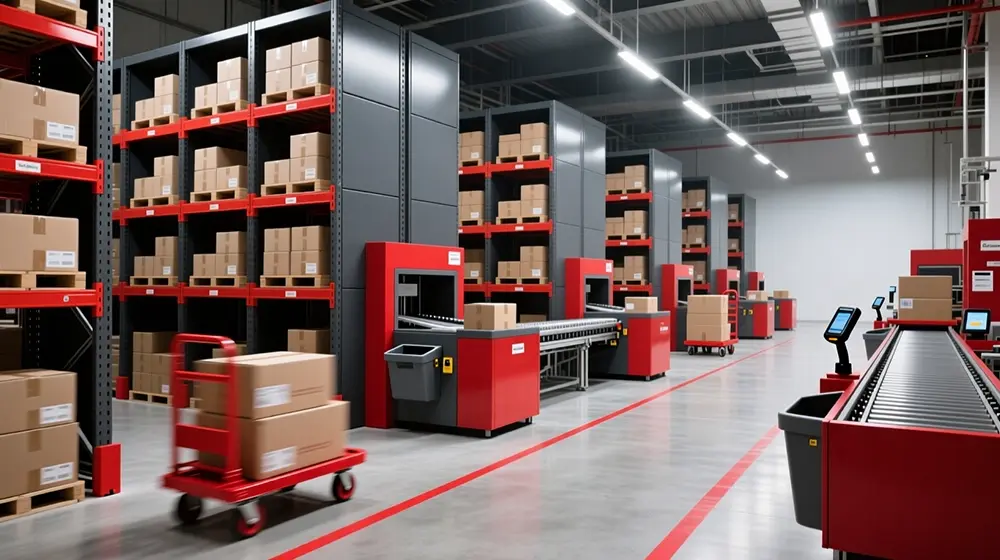
Automation integration increases Al Quoz micro-fulfilment throughput by 35 to 70%, where implementation follows the correct sequence, starting with barcode scanning before advancing to autonomous mobile robots (AMRs). A 2023 report by Mordor Intelligence on UAE Warehouse Automation recorded a 47% year-on-year increase in AMR adoption among UAE third-party logistics (3PL) operators, driven by falling per-unit robot costs that now start from AED 55,000 for entry-level models.
The 4-stage automation adoption sequence for Al Quoz startups, ordered by investment level and operational impact, is:
- Stage 1: Barcode or QR scanning (AED 800 to 2,500 per device): Reduces picking error rates from 3 to 4% down to 0.5 to 1.0% and provides the data foundation for all subsequent automation layers.
- Stage 2: Cloud-based WMS with mobile picking (AED 1,500 to 5,000 per month on SaaS): Generates pick routes, tracks picker productivity, and integrates stock data across all sales channels in real time.
- Stage 3: Conveyor systems for packing (AED 18,000 to 45,000 installed): Appropriate for operations exceeding 400 orders per day. Reduces manual carry time between picking and packing stations by 55 to 70%.
- Stage 4: AMRs for zone-to-zone transfer (AED 55,000 to 180,000 per unit): Eliminates picker walking time between warehouse zones. ROI period is typically 14 to 22 months for operations processing 800 or more orders daily.
Industrial logistics rent trends and self-storage demand in Dubai and Abu Dhabi determine the rent cost trajectory that sets the automation investment threshold at which technology spend is more cost-effective than facility expansion.
How Do You Optimise Last-Mile Delivery from an Al Quoz Micro-Fulfilment Centre?
Last-mile delivery from Al Quoz reaches 80% of Dubai’s residential population within a 25-kilometre radius, covering Deira, Bur Dubai, Jumeirah, Dubai Marina, and Al Barsha. According to McKinsey’s Future of the Last-Mile Ecosystem report, last-mile costs represent 41 to 53% of total fulfilment cost in urban markets. Route optimisation produces the largest cost reduction per dirham invested after warehouse layout is established.
The 4 last-mile delivery optimisation methods for Al Quoz micro-fulfilment are:
- Route optimisation software: Tools including Circuit, OptimoRoute, and Routific reduce per-delivery fuel and time costs by 15 to 22% through dynamic multi-stop route sequencing.
- Carrier diversification: Maintaining contracts with a minimum of 2 courier providers, such as Aramex, Fetchr, or Quik, prevents capacity bottlenecks during peak demand periods and supports rate negotiation.
- Time-slot delivery: Offering 3-hour delivery windows reduces failed delivery attempts by 34%, according to Accenture’s Last Mile Delivery Survey 2022, cutting redelivery costs and customer complaints in the same cycle.
- Consolidated area shipping: Grouping 8 to 15 orders within a 2-kilometre delivery radius per route reduces per-order delivery cost by AED 4 to 9 versus individual dispatch, where order density reaches 6 or more deliveries per postcode zone per day.
How Do You Manage Returns and Reverse Logistics in a Compact Al Quoz Facility?
UAE e-commerce return rates average 12 to 18% across fashion, electronics, and lifestyle categories, according to the Dubai Chamber of Commerce E-Commerce Industry Report 2023. In a compact Al Quoz micro-fulfilment centre, unmanaged returns consume 8 to 12% of active storage space within 30 days of a major sales event, increasing cost-per-order by AED 3 to 7.
The 4 reverse logistics management practices that prevent space and cash-flow loss in Al Quoz micro-fulfilment are:
- Designated returns zone: Allocate a minimum of 5% of floor space (at least 10 to 15 sq metres in a 200 sq metre unit) exclusively for returned goods. Keeping returns physically separated from active stock prevents incorrect restocking of damaged items.
- 48-hour inspection SLA: Inspect, grade, and make a restocking or disposal decision on every return within 48 hours of receipt. Returns held beyond 72 hours have a 34% lower resale rate due to packaging deterioration in Dubai’s high-humidity climate.
- Automated return tracking: Log each return through the IMS at the point of receipt, updating stock records and triggering customer refund processes within the same workflow.
- Condition-based disposition: Grade returns as A (resaleable), B (refurbishable), or C (disposal). A-grade items restock within 4 hours. B-grade items move to a dedicated refurbishment station. C-grade items record for monthly write-off reporting.
How Do You Control Costs Across Rent, Labour, and Technology in Al Quoz Micro-Fulfilment?
Cost control in Al Quoz micro-fulfilment requires monitoring 4 KPIs: cost per order, orders per picker per hour, picking accuracy rate, and space utilisation percentage. A 300 sq metre Al Quoz micro-fulfilment centre with ABC slotting and barcode scanning achieves a cost per order of AED 8 to 14, versus AED 22 to 35 for operations using traditional large-warehouse models without slotting or technology investment, according to logistics cost benchmarking data published by the Chartered Institute of Logistics and Transport (CILT) UAE Chapter 2023.
Al Quoz Micro-Fulfilment Cost Benchmark: 300 sq metre Facility
| Cost Category | Monthly AED Range | Optimisation Method | Savings Potential |
|---|---|---|---|
| Rent (300 sq m at AED 45 per sq ft) | AED 11,250 to 13,500 | Vertical storage reduces required floor area | 20 to 35% floor cost reduction |
| Labour (2 to 4 pickers) | AED 8,000 to 18,000 | Batch picking and barcode scanning | 28 to 35% labour time reduction |
| Technology (IMS and WMS) | AED 1,500 to 5,000 | Cloud SaaS replaces on-premise systems | 60 to 80% below on-premise costs |
| Last-mile delivery | AED 15,000 to 40,000 | Route optimisation and carrier diversification | 15 to 22% cost reduction |
Business storage solutions in Ajman provide a cost-effective overflow option during seasonal spikes, with rental periods as short as one month and unit sizes from 20 to 300 square metres.
What Safety, Compliance, and Sustainability Standards Apply to Al Quoz Warehouses?
Al Quoz warehouses operate under 3 primary regulatory frameworks: Dubai Civil Defence fire safety codes, Dubai Municipality industrial zoning regulations, and Dubai Integrated Economic Zones Authority (DIEZ) operational licensing requirements. Non-compliance with fire safety standards, including inadequate sprinkler coverage, blocked emergency exits, or expired extinguisher certifications, carries fines from AED 5,000 to AED 50,000 per violation under Dubai Civil Defence Decree No. 58 of 2020.
The 4 compliance and sustainability practices that protect regulatory standing and operational continuity in Al Quoz micro-fulfilment are:
- Racking load certification: All racking systems require a load capacity certificate from the manufacturer or a licensed structural engineer before commissioning. Overloaded racks cause an estimated 25% of serious warehouse injuries in UAE industrial facilities.
- Fire safety compliance: Install ABC-type fire extinguishers at a minimum ratio of one unit per 200 square metres. Test and certify all sprinkler systems annually under Dubai Civil Defence supervision.
- LED lighting: LED lighting systems reduce warehouse electricity consumption by 40 to 60% versus fluorescent alternatives, lowering monthly utility costs by AED 800 to 2,500 in a 300 sq metre facility.
- Sustainable packaging: Replacing single-use polybags with FSC-certified corrugated cartons and paper void fill reduces packaging material waste by 35 to 50% and qualifies operations for Dubai Sustainability Awards supplier recognition.
What Are the Emerging Trends in Micro-Fulfilment for Dubai E-Commerce?
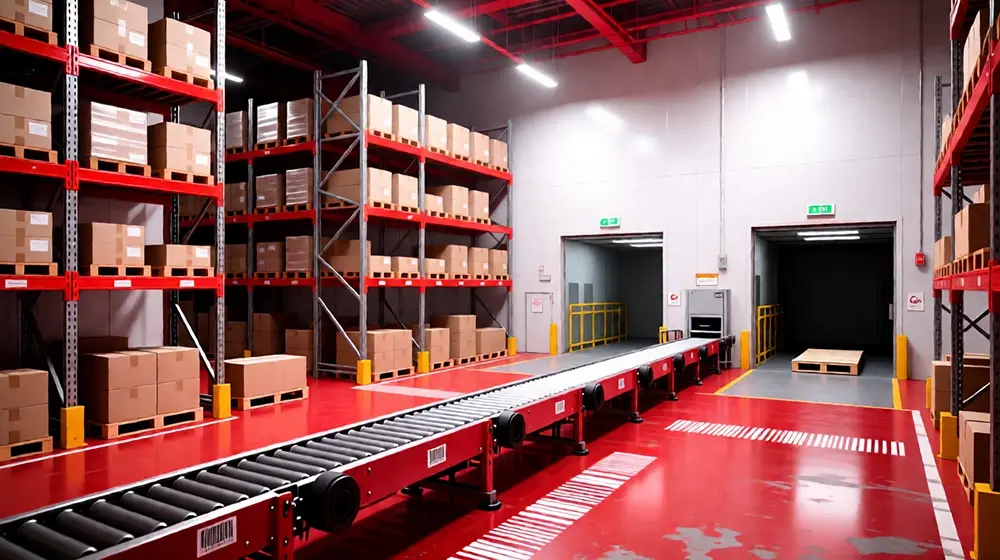
There are 4 emerging trends reshaping micro-fulfilment operations in Dubai’s e-commerce sector between 2024 and 2027, according to Mordor Intelligence’s UAE Warehousing and 3PL Market Forecast 2024 to 2029.
- Retail-embedded micro-fulfilment: Using the back-of-house areas of Dubai Mall, Mall of the Emirates, and City Centre Mirdif as mini-fulfilment hubs for online orders, reducing last-mile distance to under 5 km for 60% of Dubai’s residential zones.
- Demand forecasting with machine learning: Models trained on 24 months of sales, weather, and event data predict SKU-level demand with 87 to 92% accuracy at a 7-day forecast horizon, reducing overstock and stockout events by 40 to 55%.
- Autonomous mobile robot (AMR) adoption: AMR unit costs in UAE markets decreased by 31% between 2021 and 2024, with mid-range units now available from AED 55,000. Adoption among Dubai-based e-commerce 3PLs increased from 12% to 34% of facilities between 2022 and 2024.
- Omnichannel inventory pooling: Unifying inventory across Shopify, Amazon.ae, Noon, and in-store channels into a single stock pool reduces total inventory holding by 18 to 25% while maintaining service levels across all channels.
Frequently Asked Questions: Micro-Fulfilment Storage in Al Quoz
The minimum functional facility size for an Al Quoz micro-fulfilment centre is 150 square metres. That footprint accommodates a receiving zone, 2 to 3 racking aisles, a 2-person packing station, and a dispatch staging area. Operations processing under 100 orders per day function at this size, where single-order picking and a cloud-based IMS are in place.
A basic Al Quoz micro-fulfilment setup costs between AED 85,000 and AED 160,000 in initial capital expenditure. That figure covers racking installation (AED 30,000 to 55,000), a cloud IMS subscription deposit (AED 5,000 to 15,000), barcode scanning hardware (AED 3,000 to 8,000), packing equipment (AED 8,000 to 20,000), and first-month rent with deposit (AED 25,000 to 50,000 for a 200 sq metre unit). Monthly operational costs range from AED 35,000 to AED 80,000 depending on order volume and labour headcount.
A micro-fulfilment centre (MFC) is a dedicated warehousing facility that stores and dispatches e-commerce orders. A dark store is a retail outlet permanently closed to public shoppers and converted for online order fulfilment. Both serve urban last-mile delivery. MFCs provide more flexible racking configurations and are built for multi-category e-commerce. Dark stores retain existing retail shelving designed for single-item grocery or FMCG product formats.
Climate-controlled storage is necessary for Al Quoz micro-fulfilment where the product range includes pharmaceuticals, cosmetics, electronics, food and beverage, or luxury goods. All of those categories require temperatures between 15 degrees C and 25 degrees C and relative humidity below 60%. Dubai’s outdoor temperatures reach 45 degrees C or above between June and September, causing uncontrolled warehouse environments to exceed safe storage thresholds for temperature-sensitive SKUs within 2 to 4 hours of ambient exposure. Climate-controlled storage units in Dubai maintain stable year-round conditions for inventory requiring regulated storage environments.
Hayyan is a logistics veteran with over 15 years of experience in facility management and spatial optimization. He specializes in warehouse security, climate-controlled storage protocols, and the technical logistics of large-scale moving. His focus is on helping clients maximize their square footage while ensuring the long-term preservation of their inventory and belongings.
Thuraya is a specialist in home organization and residential transition management. With a background in interior space planning, she helps individuals navigate the complexities of downsizing and relocation. She provides expert advice on packing fragile items, choosing optimal storage unit sizes, and turning the stress of moving into a seamless, organized experience.
 Self Storage
What are the penalties for violating Dubai no-entry rules during commercial vehicle restricted timings?
Written by Hayyan Al-Jasmi | Reviewed by Thuraya Al-Mansoori | Published on December 29, 2025 | Updated on April 9, 2026 Penalties include cash…
Read More Self Storage
Heavy Vehicle No-Entry Timings By Emirate: Fujairah
Written by Hayyan Al-Jasmi | Reviewed by Thuraya Al-Mansoori | Published on December 29, 2025 | Updated on April 9, 2026 A self storage…
Read More Self Storage
2026 Heavy Vehicle No-Entry Timings In Ras Al Khaimah
Written by Hayyan Al-Jasmi | Reviewed by Thuraya Al-Mansoori | Published on December 29, 2025 | Updated on April 9, 2026 Self storage in…
Read More