
Warehouse in Dubai: Types, Functions, and Regulatory Framework Explained
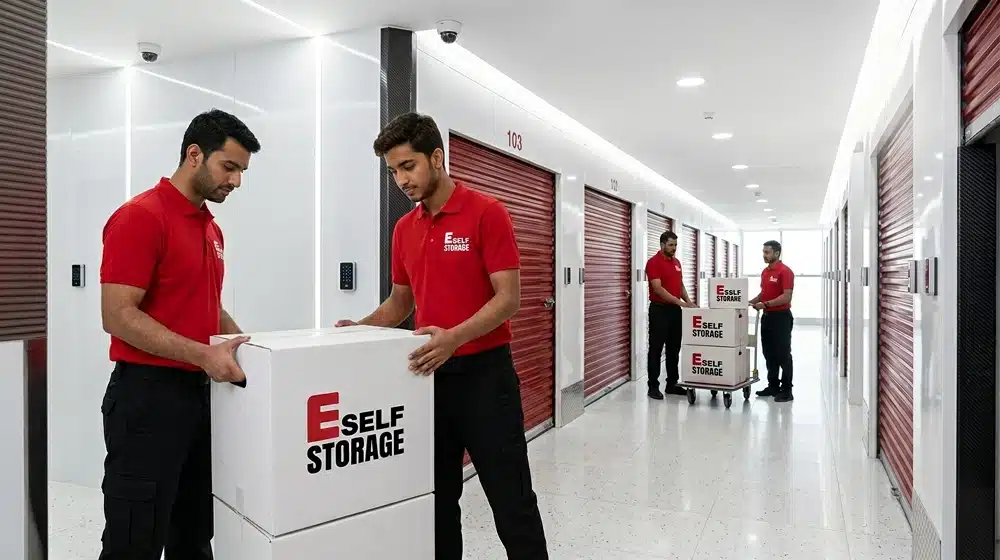
A warehouse in Dubai is a licensed commercial facility used to store, consolidate, and distribute goods under the regulation of Dubai Municipality and the Dubai Department of Economy and Tourism. Dubai operates 6 primary warehouse categories: general storage, climate-controlled, bonded, cold storage, smart (automated), and hazardous goods warehouses. The UAE warehousing market reached USD 3.2 billion in 2024 and is projected to grow at 7.1% CAGR through 2029, according to Mordor Intelligence industry research.
This guide explains what a warehouse is, which warehouse types operate in Dubai, how they function within supply chains, and which regulations govern them.
What Is a Warehouse?
A warehouse is a commercial building designed for the storage of goods between production and consumption. The Massachusetts Institute of Technology Center for Transportation and Logistics defines warehousing as the set of activities involved in receiving, storing, and shipping materials to and from production or distribution points.
Warehouses perform 4 core supply chain functions:
- Storage for holding inventory until demand occurs.
- Consolidation for combining shipments from multiple suppliers into single outbound loads.
- Break-bulk for splitting large inbound shipments into smaller outbound orders.
- Value-added services for labeling, kitting, packaging, and light assembly.
A warehouse differs from a distribution center in holding time. Warehouses store goods for weeks or months. Distribution centers move goods within 24 to 72 hours, according to research published by the Council of Supply Chain Management Professionals (CSCMP).
What Is the Origin of the Word “Warehouse”?
The word “warehouse” originates from the Middle English term “warehous,” combining “ware” (merchandise) and “hous” (building). The concept of dedicated storage facilities dates to ancient Mesopotamia around 2000 BCE, where granaries stored grain reserves. Modern warehousing emerged in 18th-century Britain during the Industrial Revolution, when the Port of London constructed bonded warehouses in 1803 to handle duty-deferred imports.
What Types of Warehouses Operate in Dubai?
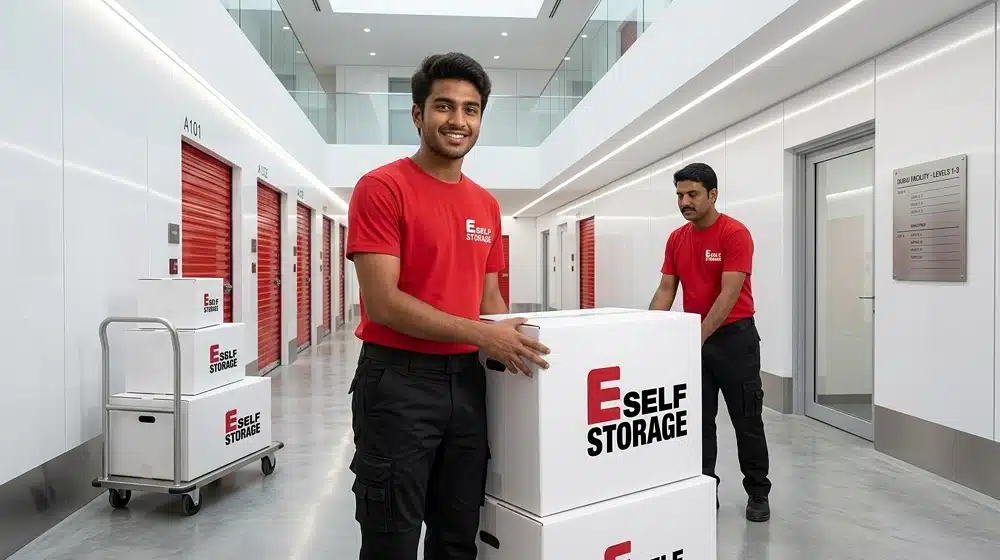
Dubai operates 6 distinct warehouse types, each serving specific cargo categories and regulatory requirements.
1. General Storage Warehouses
General storage warehouses hold non-perishable goods at ambient temperature. These facilities store furniture, electronics, textiles, machinery parts, and consumer goods. General warehouses represent the largest segment in Dubai, accounting for roughly 65% of total warehousing stock according to JLL UAE real estate research.
General warehouse specifications include:
- Ceiling heights of 8 to 14 meters.
- Floor loading capacity of 3 to 5 tons per square meter.
- Loading docks rated for 40-foot containers.
- Ambient temperature storage between 18°C and 35°C.
2. Climate-Controlled Warehouses
Climate-controlled warehouses maintain regulated temperature and humidity for sensitive goods. These facilities store pharmaceuticals, electronics, artwork, wine, and documents. Dubai’s outdoor temperature exceeds 45°C for 4 months annually, making climate control essential for heat-sensitive cargo. Research from the World Health Organization on pharmaceutical storage confirms that temperature excursions above 25°C degrade most medications within 48 hours.
Climate-controlled warehouses in Dubai maintain:
- Temperature range of 15°C to 25°C.
- Relative humidity of 45% to 65%.
- Real-time monitoring through IoT sensors.
- Backup power for 72 hours minimum.
3. Bonded Warehouses
A bonded warehouse is a customs-supervised facility where imported goods are stored without immediate duty payment. Dubai Customs licenses bonded warehouses under the UAE Federal Customs Authority framework. Goods remain duty-deferred until released into the UAE market, re-exported, or destroyed.
Bonded warehouses serve 3 cargo categories:
- Re-export shipments transiting through Dubai.
- High-duty goods awaiting market entry.
- Goods undergoing inspection or certification.
The UAE handled AED 1.98 trillion in non-oil foreign trade in 2023, with bonded warehouses processing a significant share according to the Federal Competitiveness and Statistics Centre.
4. Cold Storage Warehouses
Cold storage warehouses maintain sub-zero or chilled temperatures for perishable goods. These facilities store frozen seafood, meat, dairy, fresh produce, and vaccines. The Food and Agriculture Organization of the United Nations classifies cold storage into 3 temperature zones: chilled (0°C to 4°C), frozen (-18°C to -25°C), and deep-frozen (below -25°C).
Dubai’s cold chain capacity reached approximately 450,000 pallet positions in 2024. Jebel Ali hosts the largest cold storage cluster in the Middle East, serving the UAE’s food security program.
5. Smart (Automated) Warehouses
Smart warehouses use robotics, artificial intelligence, and Internet of Things systems to automate storage and retrieval. Research from McKinsey & Company on warehouse automation shows automated facilities reduce labor costs by 30% to 40% and improve order accuracy to 99.9%.
Smart warehouse components include:
- Automated Storage and Retrieval Systems (AS/RS).
- Autonomous Mobile Robots (AMRs) for order picking.
- Warehouse Management Systems (WMS) with AI-driven inventory forecasting.
- Computer vision for quality inspection.
Dubai launched its first fully autonomous warehouse at DP World’s Jebel Ali Port in 2022, handling 2 million TEUs annually.
6. Hazardous Goods Warehouses
Hazardous goods warehouses store chemicals, flammable liquids, compressed gases, and regulated substances. Dubai Civil Defence licenses these facilities under UAE Cabinet Resolution No. 27 of 2017. Hazardous warehouses follow the United Nations Globally Harmonized System of Classification and Labelling of Chemicals (GHS) for cargo classification.
Required features include fire suppression systems, spill containment, blast-resistant construction, and minimum separation distances of 30 meters from occupied buildings.
Where Are the Main Warehouse Locations in Dubai?
Dubai concentrates warehouse inventory in 7 primary industrial zones, each optimized for specific cargo flows and logistics requirements.
| Zone | Primary Use | Proximity to Port/Airport |
|---|---|---|
| Jebel Ali Free Zone (JAFZA) | Re-export, bonded cargo | Adjacent to Jebel Ali Port |
| Dubai Industrial City (DIC) | Manufacturing, FMCG | 30 km from Al Maktoum Airport |
| Al Quoz Industrial Area | Retail distribution, light industry | 20 km from Dubai International Airport |
| Dubai South | E-commerce, aviation cargo | Adjacent to Al Maktoum Airport |
| Dubai Investment Park (DIP) | General logistics | 15 km from Jebel Ali Port |
| Ras Al Khor Industrial | Heavy goods, automotive | 12 km from Dubai International Airport |
| National Industries Park | Chemicals, industrial inputs | 10 km from Jebel Ali Port |
JAFZA operates 7,000 companies across 57 square kilometers, making it the largest free zone warehouse cluster in the Middle East according to DP World annual reports. Dubai South covers 145 square kilometers and hosts the Emirates SkyCargo logistics hub, processing 2.7 million tonnes of air cargo annually.
What Regulations Govern Warehouses in Dubai?
Warehouses in Dubai operate under 5 regulatory layers covering licensing, safety, customs, labor, and environmental compliance.
1. Commercial Licensing
Every warehouse operator holds a commercial license issued by the Dubai Department of Economy and Tourism (DET) or the relevant free zone authority. Free zone warehouses fall under JAFZA, DAFZA, or DMCC jurisdiction. Mainland warehouses follow DET regulations and Dubai Municipality zoning codes.
2. Fire and Safety Compliance
Dubai Civil Defence enforces the UAE Fire and Life Safety Code of Practice, which mandates:
- Automatic sprinkler systems for warehouses above 500 square meters.
- Fire exits spaced no more than 45 meters apart.
- Emergency lighting with 90-minute battery backup.
- Annual third-party safety audits.
3. Customs Supervision
Dubai Customs regulates bonded warehouses under Federal Decree-Law No. 18 of 2022. Operators submit daily inventory reports and grant Customs officers continuous access. Duty deferral periods extend up to 3 years, renewable subject to inspection.
4. Labor and Workplace Safety
The UAE Ministry of Human Resources and Emiratisation (MOHRE) enforces workplace safety standards under Federal Decree-Law No. 33 of 2021. Warehouse operators provide certified forklift training, heat stress management between June and September, and accident reporting within 48 hours.
5. Environmental Compliance
Dubai Municipality’s Environment Department regulates waste disposal, refrigerant gases, and emissions from warehouse operations. Cold storage facilities comply with the Montreal Protocol on Substances that Deplete the Ozone Layer, phasing out HCFC refrigerants by 2030.
How Do Warehouses Function in the Dubai Supply Chain?
Warehouses function as intermediate nodes between suppliers, manufacturers, and end consumers. A typical Dubai supply chain moves goods through 5 sequential stages.
- Inbound receiving for goods arrive at Jebel Ali Port, Dubai International Airport, or Al Maktoum Airport.
- Customs clearance for Dubai Customs processes documentation within an average of 4 hours for pre-registered cargo.
- Warehouse storage for goods transfer to general, bonded, or specialized warehouses.
- Order fulfillment for warehouse management systems pick, pack, and label orders.
- Outbound distribution for goods shipped to UAE markets, GCC countries, or re-export destinations.
The World Bank Logistics Performance Index 2023 ranked the UAE 7th globally, with warehousing infrastructure scoring 4.1 out of 5. Dubai’s geographic position places 2.5 billion consumers within an 8-hour flight radius, making warehouses strategic assets for regional distribution.
What Is Warehouse Management?
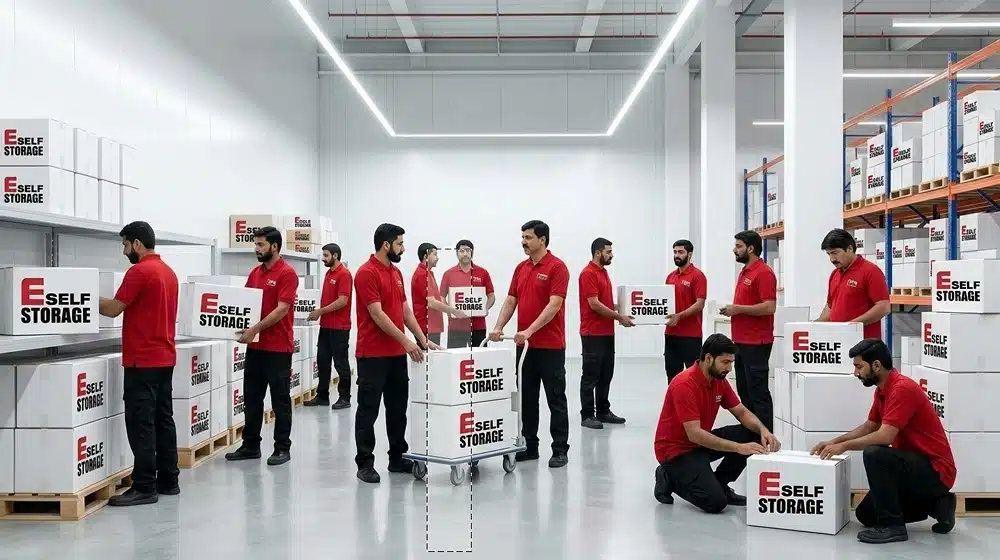
Warehouse management is the coordination of receiving, storage, inventory control, order picking, and shipping activities within a warehouse. A Warehouse Management System (WMS) is the software that automates these functions. Research from Gartner on supply chain technology shows WMS adoption reduces inventory carrying costs by 25% and picking errors by 67%.
Core WMS functions include:
- Real-time inventory tracking by SKU and location.
- Automated replenishment triggers.
- Labor productivity reporting.
- Integration with Enterprise Resource Planning (ERP) systems.
What Is the Difference Between a Warehouse and Self Storage?
A warehouse is a commercial facility for business inventory, while self storage is a rental unit for personal or small-business belongings. The 2 facility types differ across 5 characteristics.
| Characteristic | Warehouse | Self Storage |
|---|---|---|
| Primary user | Businesses, importers, manufacturers | Individuals, small businesses |
| Typical size | 500 to 50,000 square meters | 10 to 300 square feet |
| Access | Staff-operated, scheduled | Tenant-operated, often 24/7 |
| Services | Loading, inventory management, distribution | Storage only |
| Lease term | 1 to 10 years | Weekly to monthly |
Self storage units accommodate households during relocation, expatriates storing belongings during travel, and small businesses holding seasonal stock.
Summary
A warehouse in Dubai is a licensed commercial storage facility operating under Dubai Municipality, Dubai Customs, and Dubai Civil Defence regulation. Dubai operates 6 warehouse types across 7 industrial zones, supporting the UAE’s position as the 7th-ranked logistics economy globally. Bonded warehouses defer customs duty, climate-controlled facilities protect sensitive goods, and smart warehouses automate operations through robotics and artificial intelligence. Warehouse selection depends on cargo category, duration, and applicable regulatory framework.
Sources and Further Reading:
- Mordor Intelligence: UAE Warehousing Market Report
- World Bank: Logistics Performance Index 2023
- MIT Center for Transportation and Logistics
- UAE Federal Customs Authority
- Dubai Civil Defence: Fire and Life Safety Code
- Council of Supply Chain Management Professionals (CSCMP)
- Warehousing Education and Research Council (WERC)
Frequently Asked Questions
A bonded warehouse in Dubai is a customs-supervised facility where imported goods are stored without immediate duty payment. Dubai Customs licenses these facilities under Federal Decree-Law No. 18 of 2022. Goods remain duty-deferred for up to 3 years, allowing importers to defer tax liability until goods enter the UAE market or are re-exported.
Warehouse area in Dubai is calculated using Gross Floor Area (GFA) in square meters, measured from the outer wall perimeter. Usable storage area excludes loading docks, offices, and circulation corridors, typically representing 70% to 80% of GFA. Industry standards from the Warehousing Education and Research Council (WERC) recommend a storage density benchmark of 1.5 to 2.0 cubic meters per square meter of floor space.
Dubai warehouses store 7 primary cargo categories: consumer goods, industrial materials, pharmaceuticals, food products, chemicals, electronics, and documents. UAE Federal Law prohibits storage of narcotics, counterfeit goods, radioactive materials without Federal Authority for Nuclear Regulation approval, and items violating UAE Federal Law No. 2 of 2015 on Combating Discrimination.
Yes. Dubai Civil Defence enforces the UAE Fire and Life Safety Code of Practice on all commercial warehouses. Facilities above 500 square meters install automatic sprinkler systems, heat and smoke detection, and emergency exits spaced 45 meters apart. Annual safety audits are mandatory for license renewal.
Goods remain in a Dubai bonded warehouse for up to 3 years under current Dubai Customs regulations. The period is renewable subject to inspection and re-registration. Perishable goods follow shorter timelines tied to product expiration dates.
A smart warehouse is a storage facility that uses robotics, artificial intelligence, and Internet of Things sensors to automate receiving, storage, picking, and shipping. Research from MIT Sloan Management Review on automation shows smart warehouses achieve 99.9% order accuracy and reduce labor requirements by 40% compared to manual facilities.
Jebel Ali Free Zone (JAFZA) hosts the largest warehouse cluster in Dubai, followed by Dubai Industrial City, Al Quoz Industrial Area, and Dubai South. JAFZA operates 7,000 companies across 57 square kilometers and handles the majority of re-export cargo moving through Jebel Ali Port.
Hayyan is a logistics veteran with over 15 years of experience in facility management and spatial optimization. He specializes in warehouse security, climate-controlled storage protocols, and the technical logistics of large-scale moving. His focus is on helping clients maximize their square footage while ensuring the long-term preservation of their inventory and belongings.
Thuraya is a specialist in home organization and residential transition management. With a background in interior space planning, she helps individuals navigate the complexities of downsizing and relocation. She provides expert advice on packing fragile items, choosing optimal storage unit sizes, and turning the stress of moving into a seamless, organized experience.
 Commercial Storage
E-Commerce Inventory Warehousing Near Dubai’s Industrial Zones: The Ultimate Guide
Written by Hayyan Al-Jasmi | Reviewed by Thuraya Al-Mansoori | Published on December 26, 2024 | Updated on April 25, 2026 E-commerce businesses that…
Read More Warehouse in Dubai
How Warehouses in Dubai Power E‑Commerce and Logistics Operations
Written by Hayyan Al-Jasmi | Reviewed by Thuraya Al-Mansoori | Published on December 26, 2024 | Updated on April 25, 2026 Warehouses in Dubai…
Read More Personal Storage
Expat Guide to Organizing Personal Belongings in Storage Dubai
Written by Hayyan Al-Jasmi | Reviewed by Thuraya Al-Mansoori | Published on December 26, 2024 | Updated on April 25, 2026 Moving to Dubai…
Read More