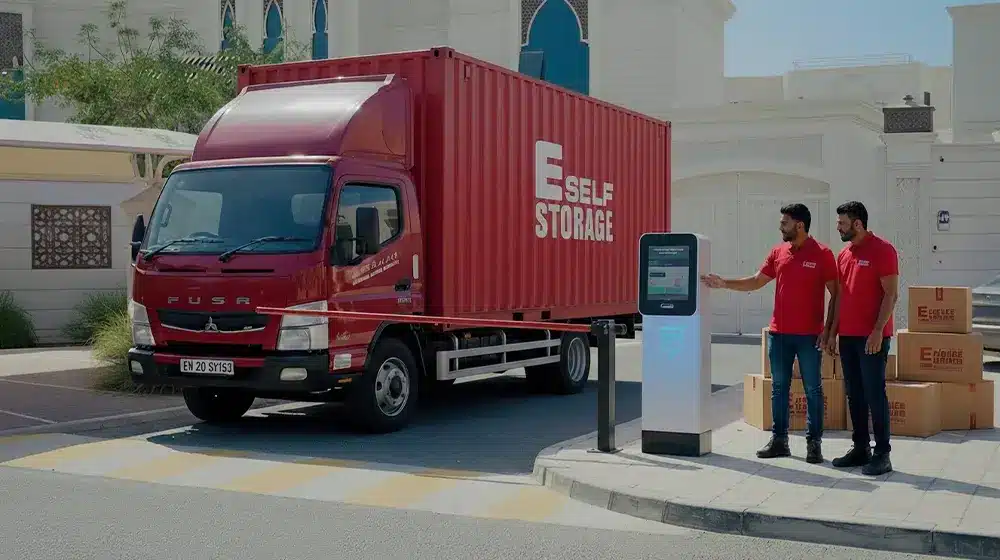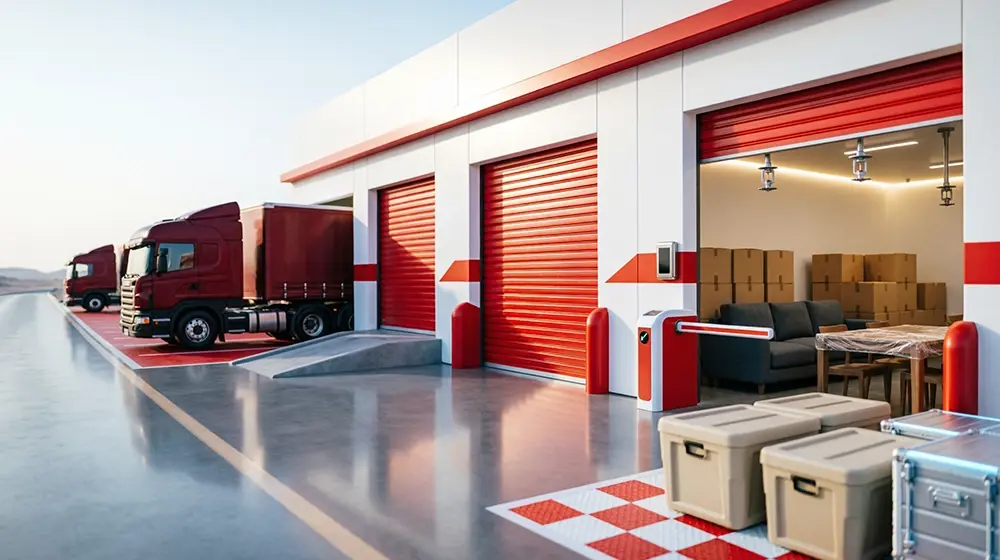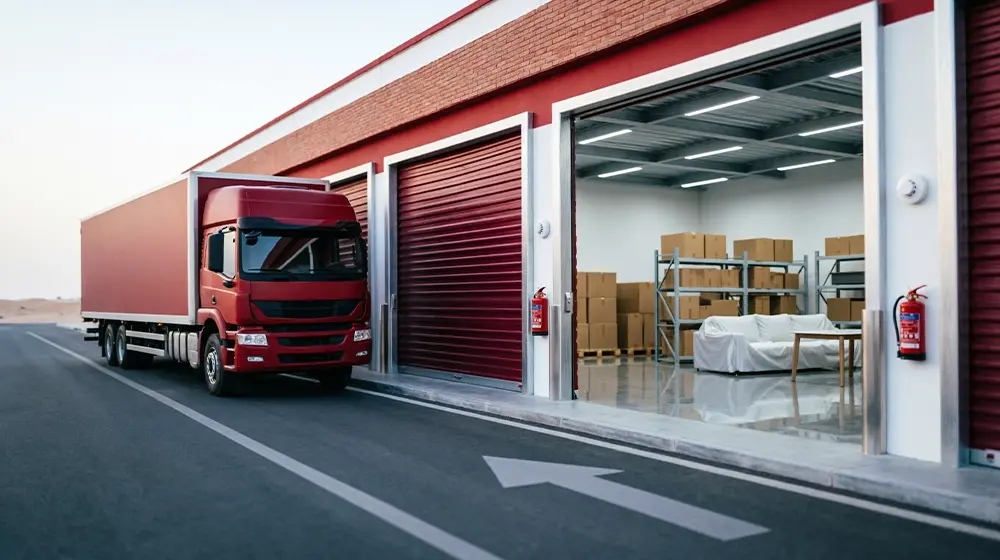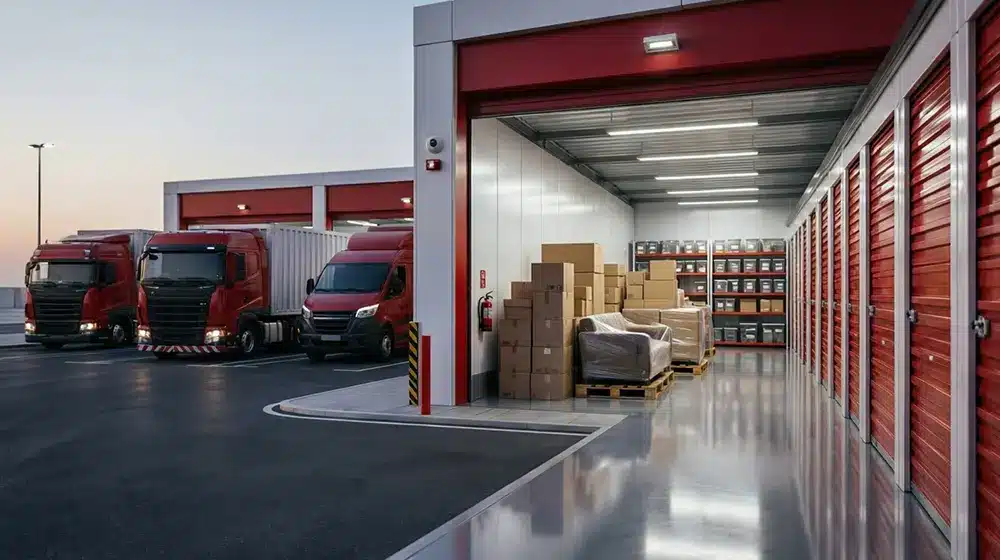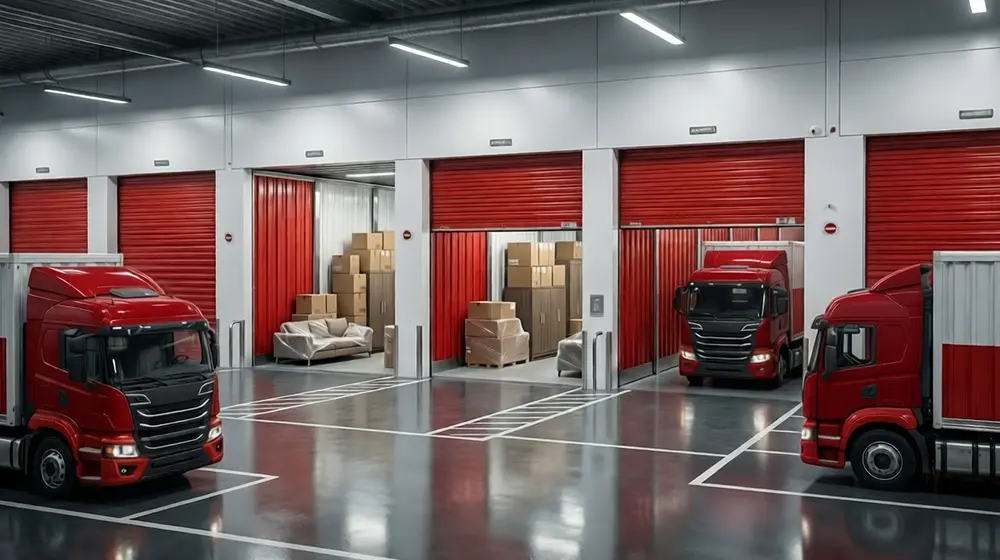
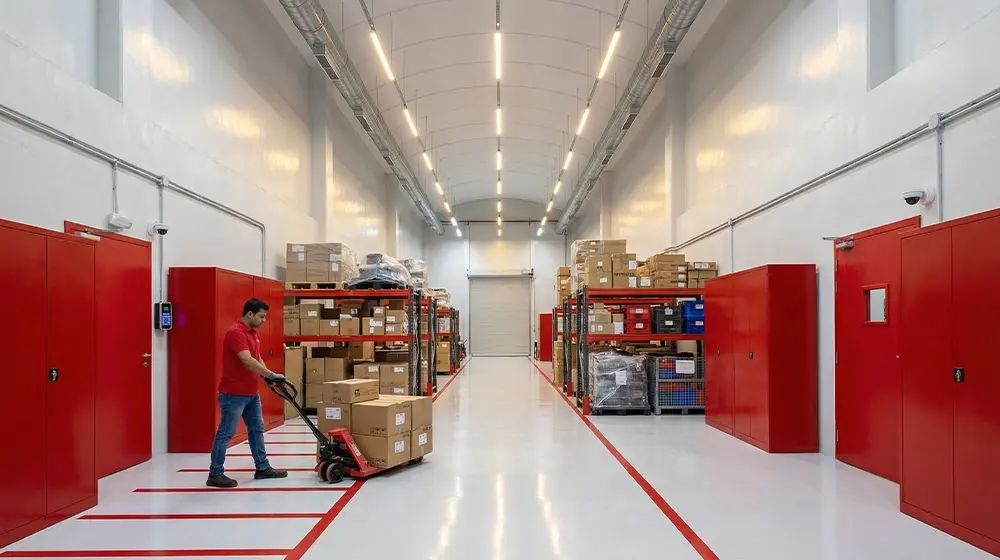
A warehouse in Ajman supports business growth by increasing inventory accuracy, shortening order cycle time, and reducing storage-related risk through controlled operations. Ajman’s warehousing ecosystem connects industrial zones with regional transport corridors and port infrastructure that businesses use for inbound storage and outbound distribution.
What is a warehouse in Ajman and how does it support business operations?
A warehouse in Ajman is a facility that receives goods, stores inventory in defined locations, and dispatches orders through controlled handling steps. This operational structure separates warehousing from “simple storage” because warehousing includes inbound checks, location management, and outbound verification.
There are 3 core warehouse functions that drive operational control:
- Receive inventory using inbound inspection and quantity verification.
- Store inventory using pallet racking, shelving, or bin-location systems.
- Dispatch inventory using pick validation and loading checks.
Warehouse space in Ajman becomes a growth asset when these three functions operate as a repeatable process rather than ad-hoc handling.
Why is Ajman a strategic location for warehousing?
Ajman is strategic for warehousing because its industrial zones connect to regional distribution corridors and a commercial port operated by a global terminal operator. Hutchison Ports Ajman describes its location as close to Dubai and Sharjah, and Oxford Business Group reports that Hutchison Ports operates Ajman Port and works with local authorities on expansion and maritime trade development.
Ajman location advantage becomes operational when it reduces variability in four logistics variables:
- Inbound transit time from port-to-warehouse routes.
- Outbound distribution time to Dubai, Sharjah, and Northern Emirates delivery lanes.
- Truck access repeatability for scheduled receiving and dispatch windows.
- Re-export workflow feasibility when free zone operations apply.
Ajman Port expansion also appears in industry reporting as a capacity and efficiency-focused infrastructure theme, which increases relevance for importers and distributors planning longer-term warehousing footprints.
What security features define a secure warehouse in Ajman?
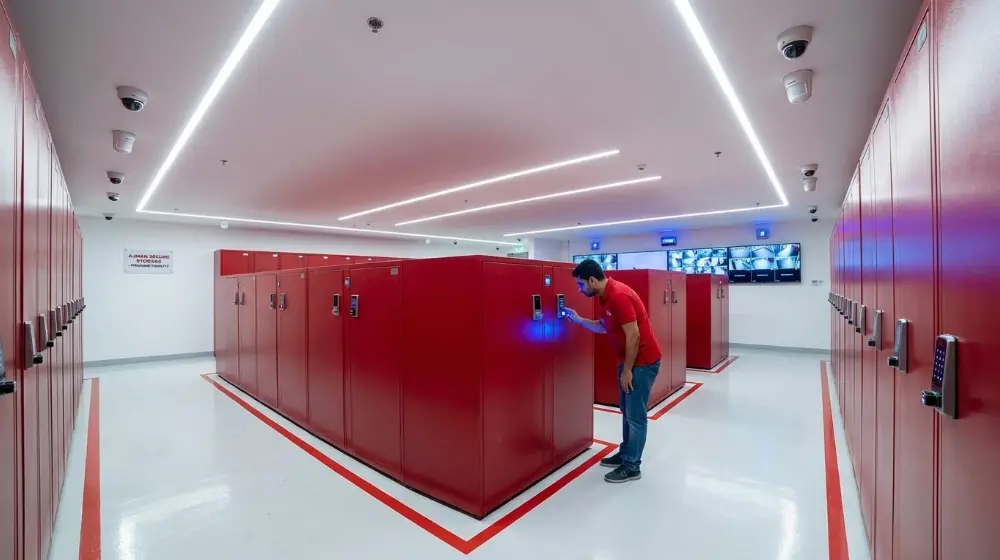
A secure warehouse in Ajman is defined by controlled access, surveillance visibility, fire-life safety compliance, and inventory traceability. Ajman Free Zone warehouse listings explicitly include “24-hour security and full accessibility” as a stated incentive, which provides a practical baseline for security expectations in professional warehouse environments.
Which security controls reduce inventory loss and operational disputes?
There are 7 security controls that define a secure warehouse in Ajman:
- Control entry with gated access and visitor logs.
- Record movement with CCTV coverage of entry points, aisles, and loading bays.
- Separate high-value SKUs using lockable cages or restricted zones.
- Verify fire-life safety readiness using code-aligned alarm, egress, and protection systems.
- Track item handling using barcode or RFID scan events for put-away and picking.
- Document exceptions using incident logs for damage, shortage, or tamper events.
- Audit inventory using cycle counts with variance thresholds.
Fire-life safety is a security layer because it reduces catastrophic loss risk. The UAE Fire and Life Safety Code of Practice describes the goal of life safety through regulating design, construction, and related safety measures, and Dubai-related code guidance documents reinforce practical controls such as detection systems, egress, and fire protection systems.
What operational features make a warehouse in Ajman efficient?
An efficient warehouse in Ajman is defined by fast receiving, accurate storage placement, short pick paths, and verified dispatch flow. Efficiency becomes measurable through KPIs that capture time, accuracy, and fulfillment reliability.
What is the single most cost-intensive warehouse activity?
Order picking is one of the most labor-intensive and cost-intensive warehouse activities and research frequently reports it as exceeding 50% of warehouse operating costs. This cost concentration makes layout, slotting, and picking verification the highest-return efficiency levers for most warehouse operations.
Which process design features increase efficiency?
There are 5 operational features that increase warehouse efficiency:
1. Receiving zone separation
A receiving zone increases efficiency by preventing inbound congestion and accelerating dock-to-stock time.
2. Location-based storage
Location-based storage increases efficiency by reducing search time and stabilizing replenishment.
3. SKU velocity slotting
SKU velocity slotting increases efficiency by placing fast movers closer to packing and dispatch.
4. Scan-based pick validation
Scan validation increases efficiency by reducing mis-picks and returns.
5. Dispatch staging discipline
Dispatch staging increases efficiency by preventing mixing of orders and reducing loading errors.
How does a warehouse in Ajman reduce delivery delays and order errors?
A warehouse in Ajman reduces delivery delays and order errors by improving inventory record accuracy and pick verification at the warehouse level. Research on inventory record inaccuracy links inaccurate inventory records to performance impacts in retail operations and productivity/lost sales relationships, which is why inventory accuracy becomes a growth KPI rather than an IT detail.
There are 4 mechanisms that reduce errors:
- Real-time inventory visibility reduces “false availability” order failures.
- Bin-level location control reduces picking search time.
- Validation scans reduce wrong-item shipments.
- Cycle counting reduces inventory drift and stockout surprises.
What types of warehouses exist in Ajman?
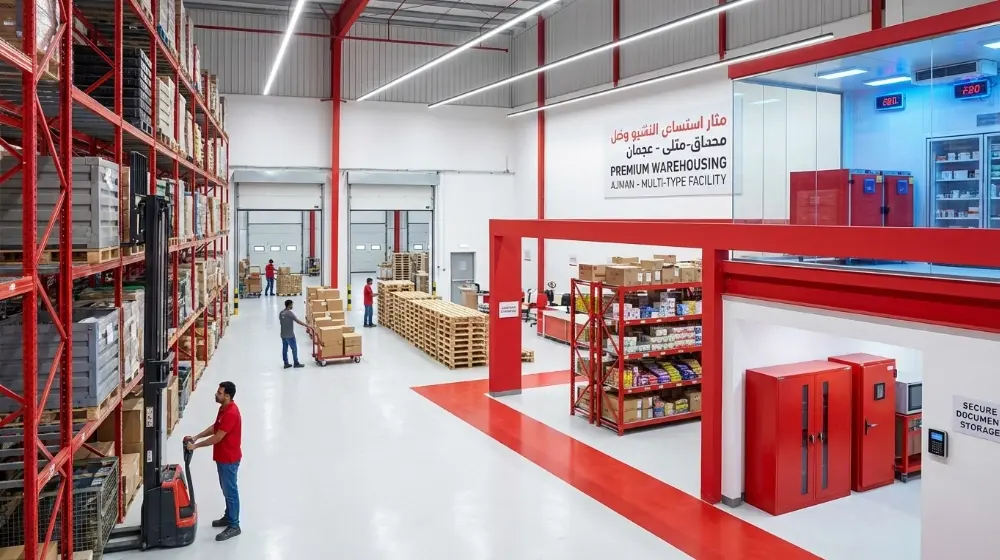
Warehouses in Ajman typically fall into 5 operational types based on inventory behavior and handling requirements.
1. Industrial warehouse in Ajman
An industrial warehouse supports bulk storage, machinery handling, and production-adjacent flows.
2. Commercial warehouse in Ajman
A commercial warehouse supports trading inventory, retail distribution, and multi-SKU operations.
3. Distribution warehouse
A distribution warehouse supports cross-docking, regional dispatch, and route-based outbound scheduling.
4. Fulfillment warehouse
A fulfillment warehouse supports e-commerce pick/pack operations and returns processing.
5. Temperature-controlled warehouse
A temperature-controlled warehouse supports inventory requiring stable thermal ranges for quality control.
How does a warehouse in Ajman reduce operational costs?
A warehouse in Ajman reduces operational costs by lowering picking time, reducing inventory error losses, and minimizing damage and shrinkage through controlled handling. Cost reduction links directly to the cost structure of warehouse work, where order picking takes a dominant share of operating cost in many warehouse environments.
What cost categories appear in warehouse rental in Ajman?
Warehouse rental in Ajman includes base rent plus 6 operational cost categories:
- Utilities and power load capacity
- Racking and storage systems
- Material handling equipment access
- Labor and handling services
- Security and monitoring controls
- Compliance and safety readiness
Ajman Free Zone warehouse listings also describe add-on services such as labor and forklifts as “available at extra cost,” which is a practical signal that service scope changes the true monthly cost.
What compliance standards apply to warehouses in Ajman?
Warehouses in Ajman operate under civil defense and fire-life safety requirements that govern egress, detection, and protection systems. The UAE Fire and Life Safety Code of Practice is published through official civil defense channels and establishes a baseline approach to occupant safety and protective systems.
Compliance becomes operationally relevant because it changes three business outcomes:
- Shutdown risk from non-compliance events
- Insurance claim defensibility after incidents
- Asset protection for stored inventory and equipment
What KPIs measure warehouse performance for business growth?
Warehouse performance is measured by accuracy, time, and fulfillment reliability KPIs that link directly to customer experience and cost.
Which KPIs quantify efficiency and growth-readiness?
There are 5 KPIs that quantify warehouse performance:
1. Inventory accuracy %
Inventory accuracy measures record correctness versus physical stock.
2. Pick accuracy %
Pick accuracy measures correct item, quantity, and lot/variant compliance.
3. Order cycle time
Order cycle time measures time from order release to dispatch completion.
4. Dock-to-stock time
Dock-to-stock time measures receiving speed from unloading to available inventory.
5. OTIF % (On Time In Full)
OTIF measures the percentage of orders delivered on-time and in full as promised.
How does a business evaluate warehouse rental in Ajman for long-term suitability?
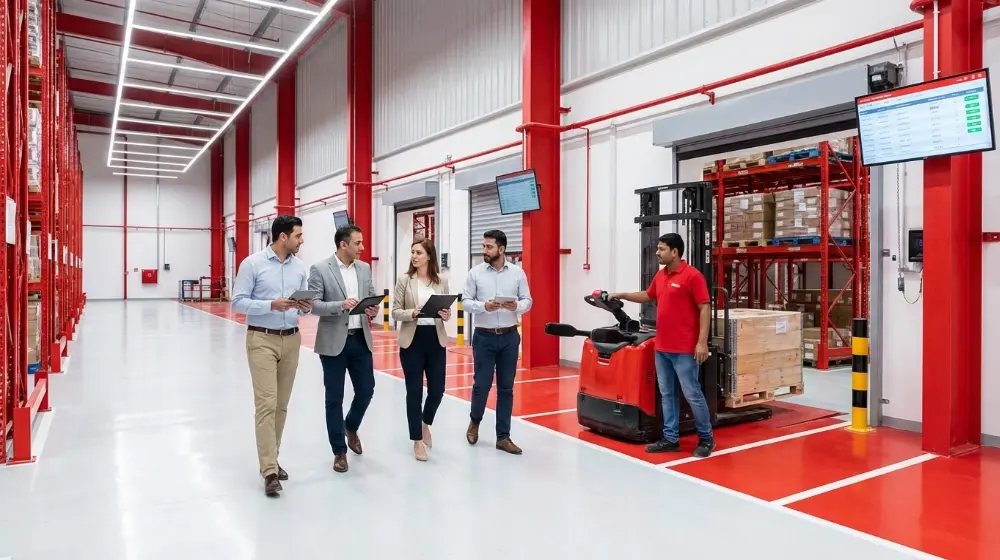
A business evaluates warehouse rental in Ajman by matching location access, scalability, security systems, infrastructure, and compliance readiness to its inventory profile. This evaluation prevents capacity mismatch and process failure.
What evaluation criteria match business growth constraints?
There are 6 evaluation criteria that predict long-term fit:
- Road accessibility for inbound trucks and outbound routes.
- Ceiling height and usable area for pallet positions and racking design.
- Loading and staging capacity for simultaneous receiving and dispatch.
- Security design for controlled access and monitored movement.
- Compliance status aligned with UAE fire-life safety requirements.
- Scalability pathway for capacity expansion without relocation.
Table: Warehouse features and business impact
The table below maps warehouse feature dimensions to operational outcomes and measurable business metrics.
| Feature dimension | Example attribute values | Operational outcome | Business KPI impact |
|---|---|---|---|
| Access control | gated entry, visitor logs | fewer unauthorized entries | shrinkage rate ↓ |
| Surveillance | CCTV coverage of doors/aisles | incident traceability | dispute resolution time ↓ |
| Storage system | pallet racking, bin labels | faster put-away | dock-to-stock time ↓ |
| Slotting | fast-mover zoning | shorter pick paths | order cycle time ↓ |
| Validation | scan-based picking | fewer mis-picks | pick accuracy % ↑ |
| Safety readiness | code-aligned egress/detection | risk reduction | downtime risk ↓ |
Frequently Asked Questions
The main advantage is higher operational predictability because inventory is stored in controlled locations and dispatched through verified workflows. Predictability increases inventory accuracy and reduces order cycle time.
A secure warehouse is defined by controlled access, CCTV monitoring, fire-life safety readiness, and inventory traceability. Ajman Free Zone warehouse listings explicitly include 24-hour security as an incentive.
Warehouse efficiency is defined by fast receiving, location-based storage, optimized pick paths, and pick validation. Research frequently identifies order picking as a dominant share of warehouse operating cost, which makes picking design a primary efficiency lever.
OTIF, order cycle time, inventory accuracy, and pick accuracy measure reliability for customers. OTIF is widely used to represent delivery promises met on time and in full.
Hayyan is a logistics veteran with over 15 years of experience in facility management and spatial optimization. He specializes in warehouse security, climate-controlled storage protocols, and the technical logistics of large-scale moving. His focus is on helping clients maximize their square footage while ensuring the long-term preservation of their inventory and belongings.
Thuraya is a specialist in home organization and residential transition management. With a background in interior space planning, she helps individuals navigate the complexities of downsizing and relocation. She provides expert advice on packing fragile items, choosing optimal storage unit sizes, and turning the stress of moving into a seamless, organized experience.