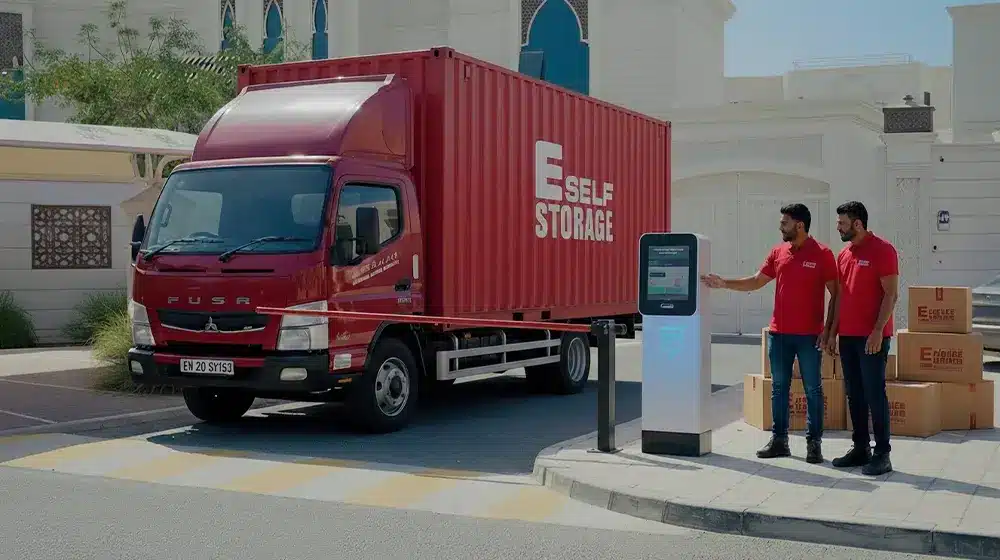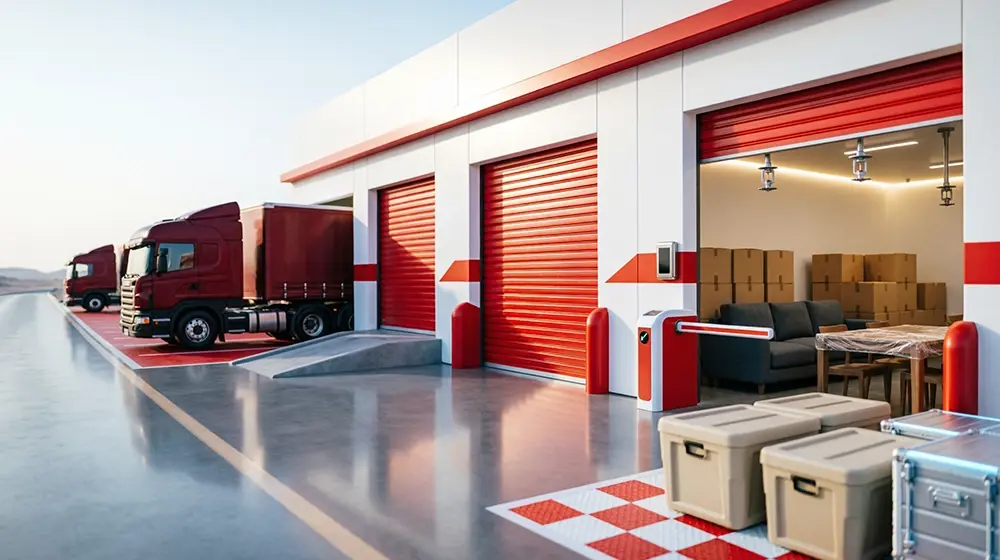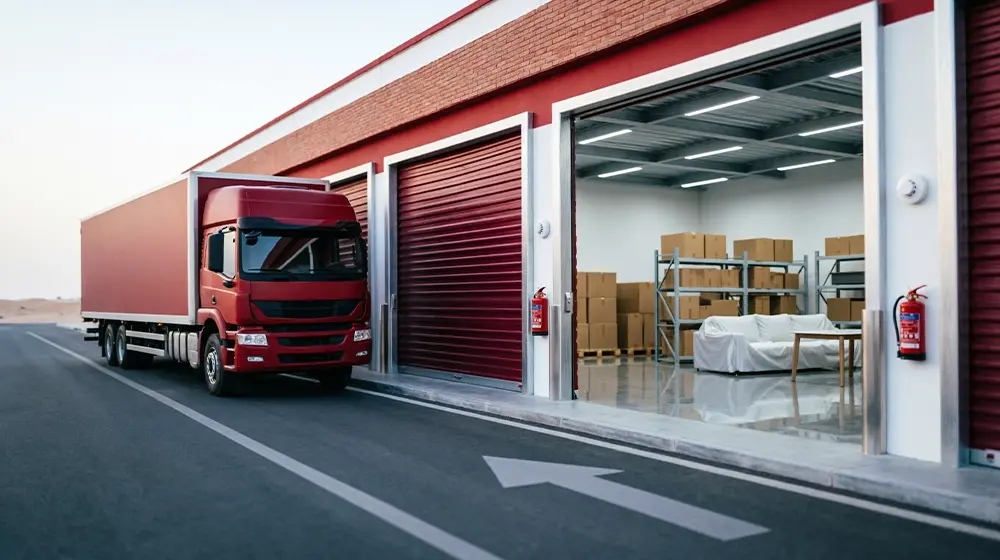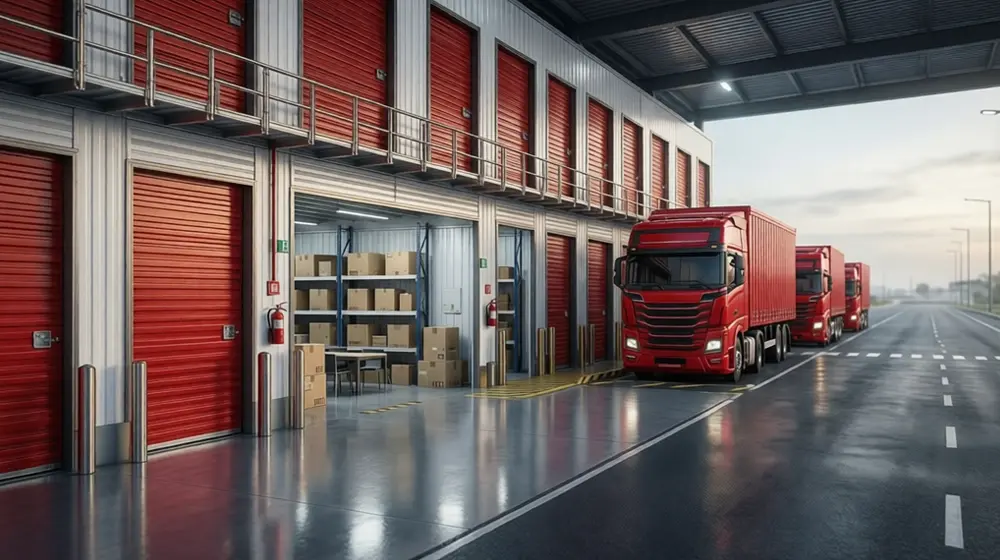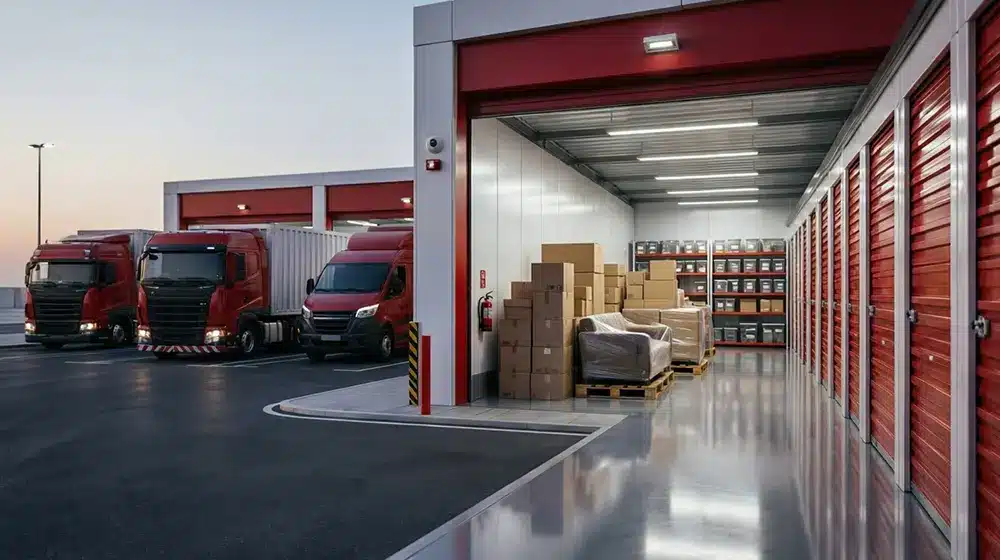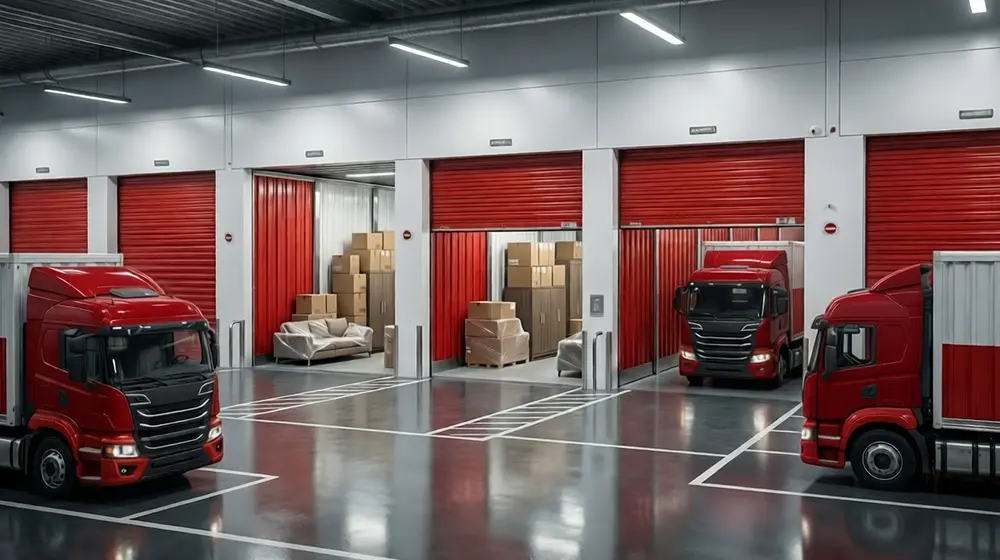
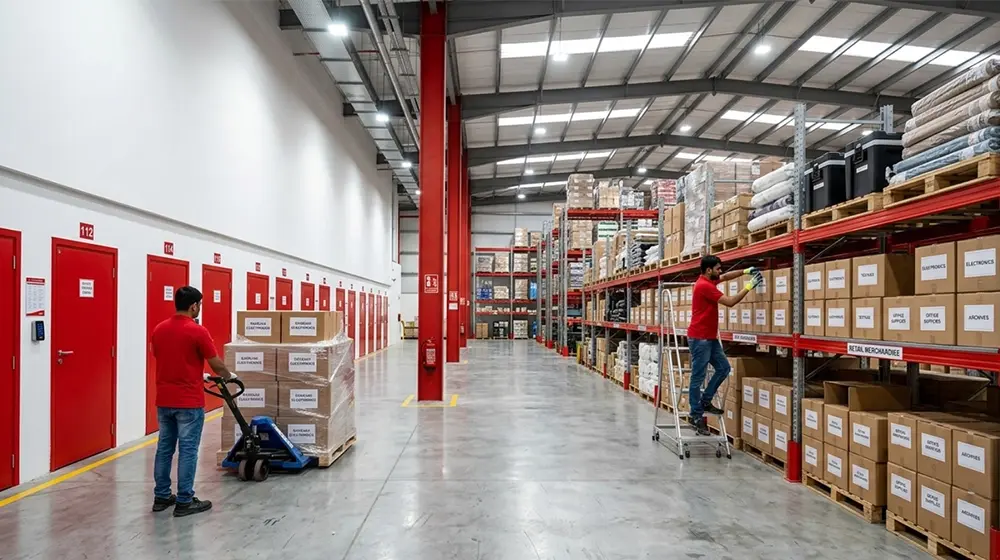
A warehouse in Sharjah improves business growth and efficiency by increasing stock capacity, shortening replenishment time, and giving businesses a better base for receiving, storing, picking, and dispatching goods. Sharjah’s logistics profile supports that function. Sharjah Airport handled 19.48 million passengers, 116,657 flights, and 204,323 tonnes of air cargo in 2025, after 195,909 tonnes in 2024 and 141,358 tonnes in 2023. Sharjah Chamber also describes Sharjah as the only emirate with ports on both the Arabian Gulf and the Indian Ocean, which gives the emirate a dual sea-access advantage for trade and distribution.
Sharjah’s warehouse demand also sits inside a larger business expansion pattern. SAIF Zone and Hamriyah Free Zone attracted more than 1,600 companies in 2024, and the two zones now host over 15,000 companies from 160 countries. The same official SAIF Zone update states Sharjah’s 2025 budget is AED 42.007 billion, with 41% allocated to infrastructure and 27% to economic development. That matters because warehousing depends on roads, power, logistics access, customs support, and industrial land supply.
This article explains the full informational topic: why businesses use a warehouse in Sharjah, which warehouse types fit different operations, which features matter, how warehouse systems improve efficiency, what costs shape the decision, and how businesses can evaluate warehouse fit before leasing space.
Why does a warehouse in Sharjah support business growth?
A warehouse in Sharjah supports business growth because it separates storage from selling, storage from administration, and storage from production bottlenecks. That separation creates room for larger purchase volumes, cleaner stock segmentation, and faster order fulfillment. In a trade-driven emirate, that operational separation matters more than simple square-meter expansion. Sharjah Airport’s cargo centre alone has five cargo terminals with 32,000 square metres of floor area, dedicated 1,200 sqm warehouses for freight forwarders, and 10 additional 200 sqm warehouses, which signals how strongly the local market values organized storage infrastructure.
Growth also becomes easier when warehousing reduces stock fragmentation. A business that stores goods across a showroom, an office, and an ad hoc back room usually loses time in stock counting, retrieval, and replenishment. A business that centralizes inventory inside a warehouse gains clearer location control, better batch separation, and faster dispatch sequencing. Peer-reviewed research in the International Journal of Production Economics found that inventory record inaccuracy harms both sales performance and inventory management performance; the study tested data from more than 5,250,000 inventory items across 81 retail stores. That finding is directly relevant to warehouse strategy because storage discipline affects sales discipline.
Which businesses benefit most from a warehouse in Sharjah?
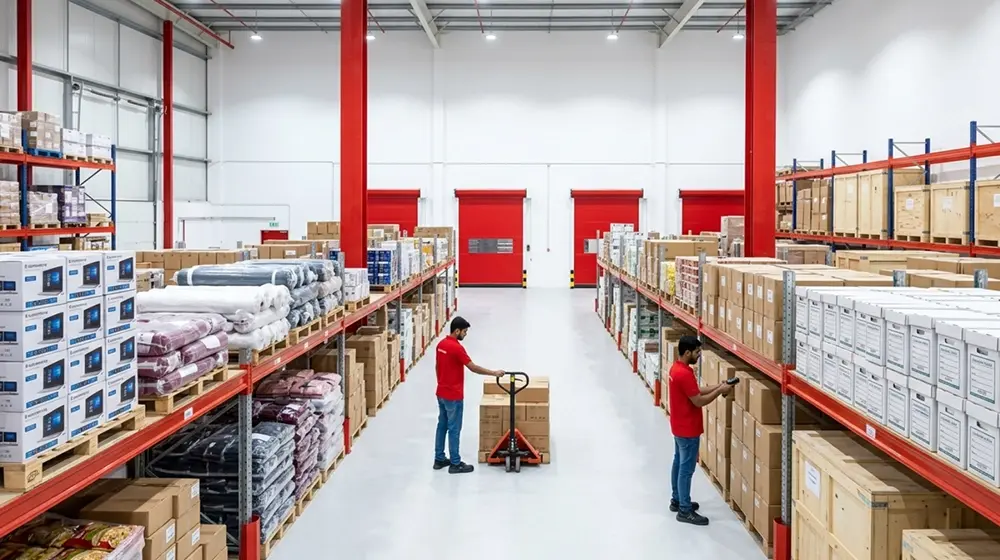
Six business groups benefit most from warehouse space in Sharjah: retailers, wholesalers, manufacturers, importers, exporters, and e-commerce operators. Each group uses warehouse capacity for a different operational reason.
- Retailers use warehouses for replenishment stock. Retail stores hold display stock and fast-moving stock. Reserve inventory, promotion stock, and seasonal inventory usually fit better in a warehouse than in customer-facing retail space.
- Wholesalers use warehouses for bulk stock. Wholesale models depend on larger on-hand volumes, pallet positions, and staged dispatch rather than shelf display.
- Manufacturers use warehouses for material flow. Raw materials, packaging inputs, spare parts, finished goods, and returnable packaging need controlled space and movement logic.
- Importers and exporters use warehouses for trade flow. Sharjah’s airport-linked and port-linked free zones support goods that move through air, sea, and regional road corridors.
- E-commerce businesses use warehouses for picking and dispatch. Small order profiles, many SKUs, and repeat picking cycles make structured warehousing more valuable than simple storage.
- Project-based businesses use warehouses for temporary stock concentration. Construction suppliers, events companies, contractors, and fit-out firms often need stock space between inbound supply and outbound project use.
What problems does warehouse storage in Sharjah solve?
Warehouse storage in Sharjah solves five recurring business problems: overflow, stock inaccuracy, slow dispatch, weak product protection, and poor scaling capacity. These problems usually appear before the business notices that warehousing has become necessary.
A warehouse addresses:
- Overflow pressure, for example excess cartons, pallets, spare parts, or seasonal goods
- Inventory visibility gaps, for example unknown stock position or stock mismatches
- Slow dispatch cycles, for example delayed picking, packing, or loading
- Handling risk, for example damaged goods caused by poor stacking or mixed-use spaces
- Growth friction, for example when the business can sell more than it can store.
The operational logic is well established in research. A 2024 Elsevier study on warehouse layout and picking efficiency found that re-arranging item positions by pickup frequency and outer volume reduced picking time in operational warehousing. That means layout quality changes labor speed, not only storage appearance.
What does a warehouse in Sharjah actually do inside the operation?
A warehouse in Sharjah does more than hold stock. A warehouse receives, checks, stores, protects, picks, consolidates, and dispatches goods. A business grows faster when each of those functions is defined clearly.
The main warehouse functions are:
- Receive inbound goods
Goods arrive from suppliers, ports, airports, or factories and enter a controlled receiving area. - Check quantity and condition
The receiving team verifies SKU count, batch details, packaging condition, and documentation. - Store by logic
Goods move into racks, floor positions, bays, or temperature-controlled areas based on turnover, size, and sensitivity. - Pick by order profile
Fast-moving goods sit closer to dispatch paths; slow-moving goods sit deeper in storage. - Consolidate for dispatch
Orders, route batches, or customer loads move into staging before transport. - Process returns and residual stock
Returned, damaged, or excess stock moves into defined areas instead of mixing with saleable goods.
That sequence explains why a warehouse is an operations tool. The warehouse creates a controlled material flow, not only a storage address.
Which warehouse types exist in Sharjah?
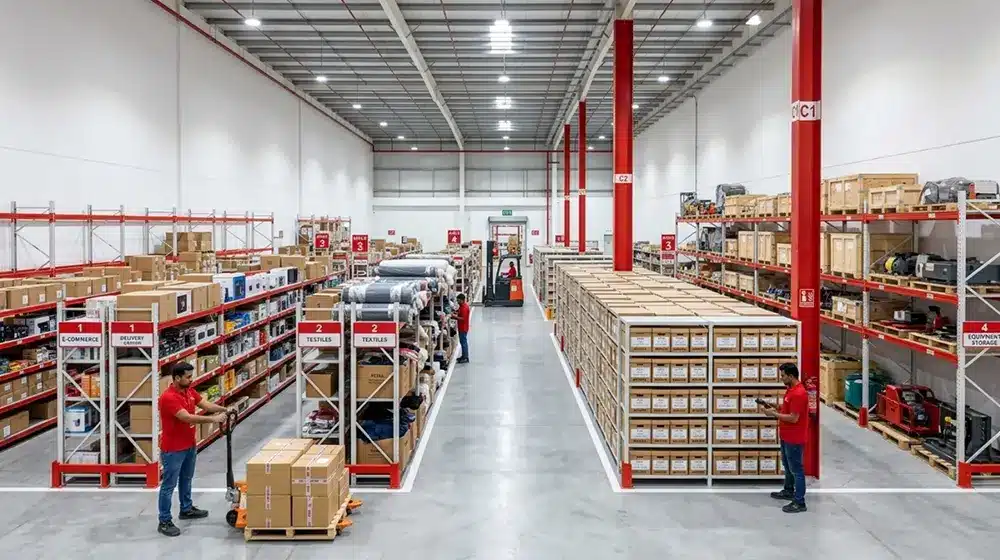
Sharjah supports at least five practical warehouse formats: general warehouse, distribution warehouse, industrial warehouse, airport-linked warehouse, and port-linked warehouse. The right format depends on the goods, movement speed, and transport corridor.
The table below defines the main warehouse formats used in Sharjah and the type of business each format fits.
| Warehouse format | Best fit | Main local signal |
|---|---|---|
| General warehouse | Dry goods, cartons, furniture, equipment, packaged inventory | Common in industrial and commercial districts |
| Distribution warehouse | Retail replenishment, wholesale dispatch, e-commerce fulfillment | Focus on receiving, picking, staging, dispatch |
| Industrial warehouse | Raw materials, semi-finished goods, machinery support, packaging | Strong fit in Hamriyah Free Zone and industrial plots |
| Airport-linked warehouse | Air cargo, urgent stock, pharma, perishables, freight forwarding | Sharjah Airport cargo centre has 5 terminals, 32,000 sqm, bonded storage, chillers, freezers, and 24/7 customs |
| Port-linked warehouse | Bulk imports, export staging, industrial shipping, maritime-linked stock | Hamriyah Free Zone has access to a 14-metre deep-water port and 7-metre inner harbour |
How do SAIF Zone, Hamriyah Free Zone, and airport-linked facilities differ?
These three warehouse environments differ by transport logic, building specification, and operating use case. The distinction matters because a warehouse near an airport solves a different problem from a warehouse next to a port or in an industrial zone.
How does SAIF Zone differ?
SAIF Zone fits businesses that want airport adjacency, pre-built warehouse formats, and mixed logistics use. SAIF Zone states that its pre-built warehouses are available in 125 sqm, 250 sqm, 400 sqm, and 600 sqm sizes. SAIF also states that these warehouses suit manufacturing, trading, assembly, and logistics, include built-in offices, pantries, lavatories, and provide industrial exhaust plus ample power capacity for heavy-duty equipment. SAIF describes the zone as adjacent to Sharjah International Airport and Cargo Centre, 20 minutes to Dubai, and 30 minutes to the nearest port.
How does the Hamriyah Free Zone differ?
Hamriyah Free Zone fits port-linked industrial and export operations more strongly. The UAE Ministry of Economy states that Hamriyah Free Zone, established in 1995, is home to nearly 6,500 businesses from more than 160 countries. HFZA publishes warehouse sizes of 200 sqm, 400 sqm, and 600 sqm, with 7-metre and 9-metre heights, dedicated loading areas, car parking bays, and power-load options from 20 kW to 150 kW. HFZA also states that its industrial land starts from 2,500 sqm and connects to a 14-metre deep-water port and 7-metre inner harbour.
How do airport-linked cargo facilities differ?
Airport-linked facilities fit time-sensitive cargo, regulated cargo, and freight-forwarding workflows. Sharjah Airport’s cargo centre includes bonded warehouses, CEIV-certified pharmaceutical storage, dedicated facilities for perishables, dangerous goods, valuables, and radioactive materials, 15-tonne forklifts, 13-aircraft apron capacity, and 24-hour customs, import, export, porter, and clearance availability. General cargo that clears within 7 days avoids storage charges, while cargo held longer incurs AED 0.12 per kg per day.
What features matter most in a warehouse in Sharjah?
Seven features matter most: location, size, loading access, power, security, environment control, and inventory systems. A warehouse becomes useful when these seven attributes fit the stock profile and movement profile.
1. Location
Location changes delivery time and replenishment cost. Airport-linked goods benefit from SAIF Zone or Sharjah Airport cargo access. Sea-linked industrial goods benefit from Hamriyah Free Zone. City distribution benefits from shorter road access to retail clusters.
2. Size
Size changes growth flexibility. SAIF pre-built warehouses range from 125 sqm to 600 sqm. HFZA warehouse products range from 200 sqm to 600 sqm and industrial land starts from 2,500 sqm.
3. Loading access
Loading access changes labor productivity. Dedicated loading areas, dock access, trailer parking, and short carry distance reduce handling time.
4. Power capacity
Power capacity changes industrial usability. HFZA lists warehouse power options from 20 kW up to 150 kW, which matters for machinery, tools, and powered handling equipment.
5. Security
Security protects inventory value. Access control, customs supervision, bonded storage, and secure cargo rooms matter for high-value or regulated goods. Sharjah Airport specifically lists secure stores for valuables and regulated cargo categories.
6. Temperature control
Temperature control protects sensitive goods. Pharma, food, chemicals, and some packaged products lose value quickly without controlled environments. Sharjah Airport lists freezers up to 100.8 cubic metres and chillers of 151 cubic metres.
7. Inventory system support
Inventory systems protect stock accuracy and speed. MDPI’s literature survey on IoT and inventory management reports that automated warehouse management approaches improve operational cost performance and item accessibility, and can create extra space through better control of location, receiving, and expiry information.
How does a warehouse management system improve warehouse efficiency?
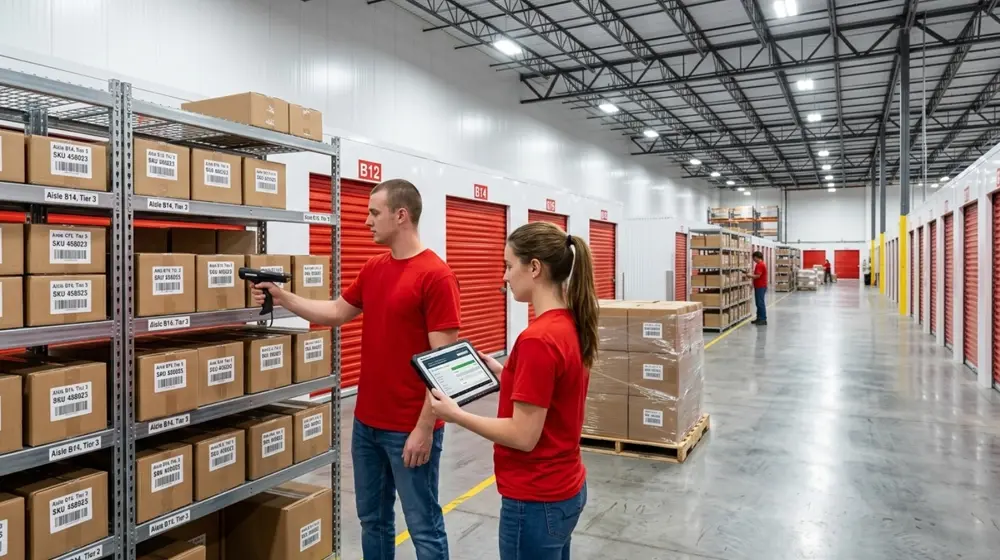
A warehouse management system improves efficiency by making stock location, stock quantity, and stock movement visible in real time or near real time. That visibility reduces manual search, duplicate ordering, and inaccurate picking.
A warehouse management system improves:
- Inventory accuracy, because stock records align more closely with physical stock
- Item accessibility, because locations are mapped and searchable
- Picking speed, because fast-moving SKUs sit in optimized positions
- Batch control, because expiry, lot, or serial data becomes trackable
- Space use, because dead zones and duplicate stock pockets become visible
A business does not need full robotics to benefit from warehouse systems. Barcode control, rack mapping, slotting logic, and batch-coded receiving already improve warehouse performance materially.
What costs shape the warehouse decision in Sharjah?
Warehouse cost in Sharjah depends on size, location, building specification, utilities, labor intensity, and handling method. Rent is only one line of the cost structure.
The main warehouse cost drivers are:
- Area requirement
A 125 sqm warehouse and a 600 sqm warehouse solve different stock profiles. - Location premium
Airport-adjacent and port-linked warehousing carries different access advantages. - Power demand
Heavy-duty use changes utility and infrastructure requirements. - Fit-out requirement
Racking, mezzanine construction, office partitions, and temperature zones add cost. - Handling intensity
High-throughput distribution uses more labor and equipment than passive bulk storage. - Goods category
Pharma, dangerous goods, perishables, and bonded goods require tighter controls. - Customs and dwell time
Airport cargo held beyond the free period incurs storage cost. Sharjah Airport states AED 0.12 per kg per day after 7 days for general cargo.
When is a warehouse in Sharjah the right solution?
A warehouse in Sharjah is the right solution when stock volume, stock movement, or stock sensitivity exceeds the limits of office storage, retail back rooms, or small-unit storage. Three signals make the decision clearer.
A warehouse fits better when the business has:
- Bulk stock, for example pallets, building materials, cartons, machinery parts
- High stock turnover, for example daily dispatch, route delivery, e-commerce picking
- Special handling requirements, for example customs control, temperature control, heavy loading, high power, or industrial access
A smaller storage format fits better when the business stores records, light equipment, or low-volume reserve stock. A warehouse fits better when the operation depends on movement as much as storage.
What should businesses check before renting a warehouse in Sharjah?
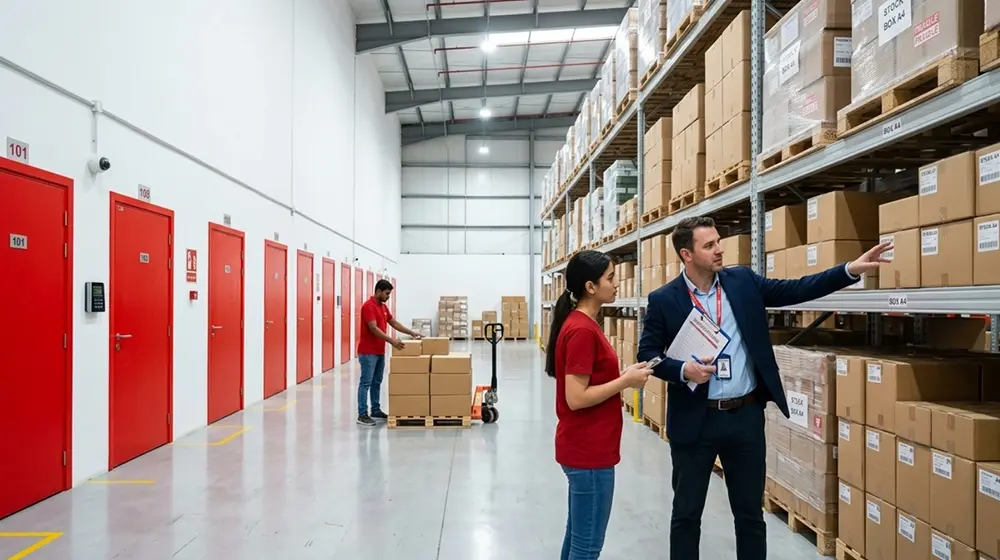
Businesses should check eight points before renting: stock profile, facility type, loading design, road access, systems fit, utility capacity, security, and growth capacity. That checklist keeps the warehouse aligned with the operating model.
- Define stock profile
Count SKUs, pallet positions, batch rules, and average monthly throughput. - Match the warehouse type
Dry storage, industrial warehouse, airport-linked warehouse, and bonded warehouse solve different problems. - Check loading geometry
Confirm dedicated loading areas, truck access, trailer parking, and internal carry distance. - Check location against route logic
Match the warehouse to airport, port, highway, or city distribution needs. - Check utility fit
Confirm power load, water, telecom, and office support space. - Check security and compliance
Confirm access control, customs relevance, surveillance, and handling conditions for sensitive goods. - Check system readiness
Confirm whether the facility can support rack labeling, barcode workflows, and inventory software. - Check expansion headroom
Growth often changes warehouse need faster than the first lease term suggests.
Final answer
A warehouse in Sharjah improves business growth and efficiency when the warehouse matches the goods, the transport corridor, and the operating model. Sharjah’s advantage comes from its combined airport, port, free-zone, and industrial infrastructure: 19.48 million passengers and 204,323 tonnes of air cargo at Sharjah Airport in 2025, five cargo terminals with 32,000 sqm, SAIF Zone warehouses from 125 sqm to 600 sqm, and Hamriyah Free Zone warehouses from 200 sqm to 600 sqm plus industrial land from 2,500 sqm.
The strongest warehouse decision is operational, not cosmetic. Retailers gain replenishment control. Wholesalers gain bulk capacity. Manufacturers gain material-flow stability. Importers and exporters gain corridor access. Businesses that evaluate warehouse size, loading, power, security, and inventory accuracy together usually get better results than businesses that compare rent alone.
Hayyan is a logistics veteran with over 15 years of experience in facility management and spatial optimization. He specializes in warehouse security, climate-controlled storage protocols, and the technical logistics of large-scale moving. His focus is on helping clients maximize their square footage while ensuring the long-term preservation of their inventory and belongings.
Thuraya is a specialist in home organization and residential transition management. With a background in interior space planning, she helps individuals navigate the complexities of downsizing and relocation. She provides expert advice on packing fragile items, choosing optimal storage unit sizes, and turning the stress of moving into a seamless, organized experience.