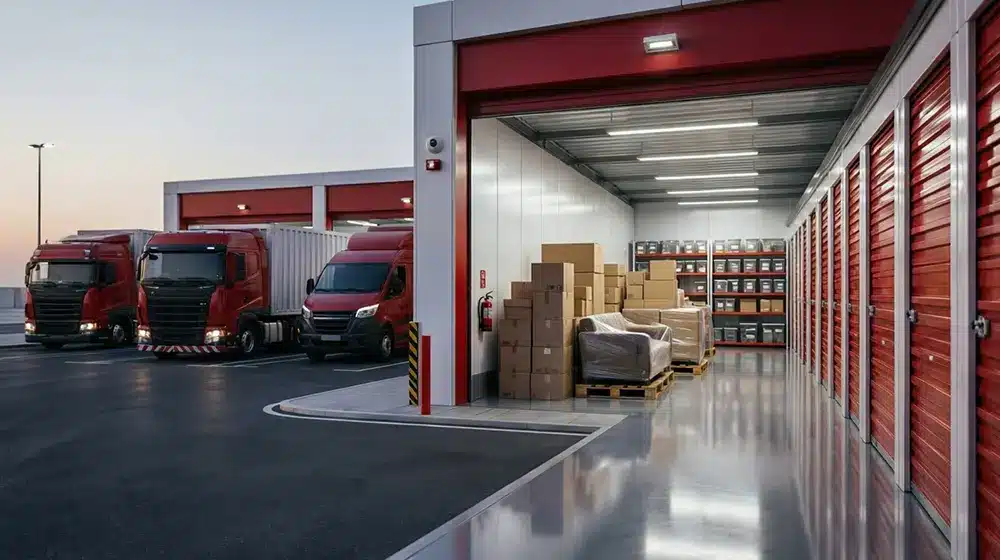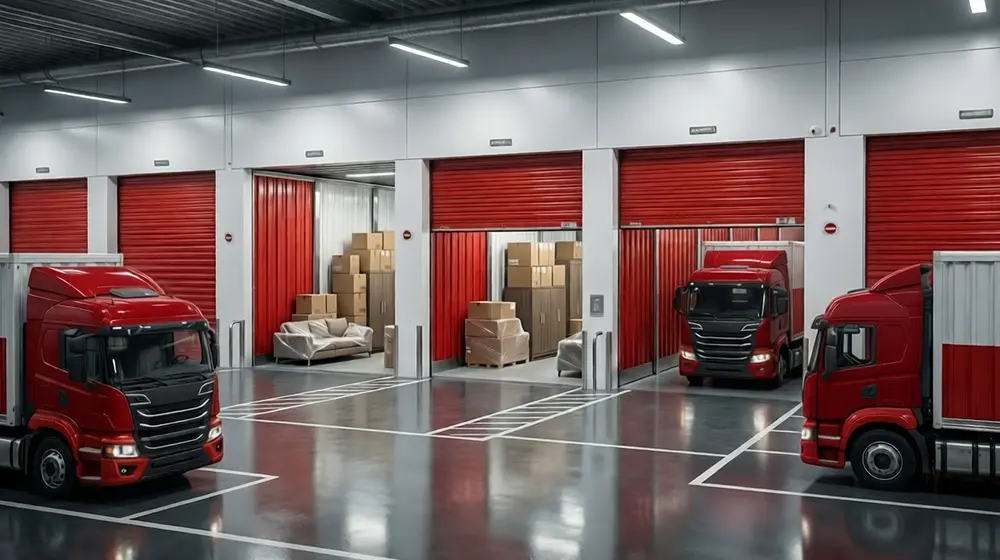
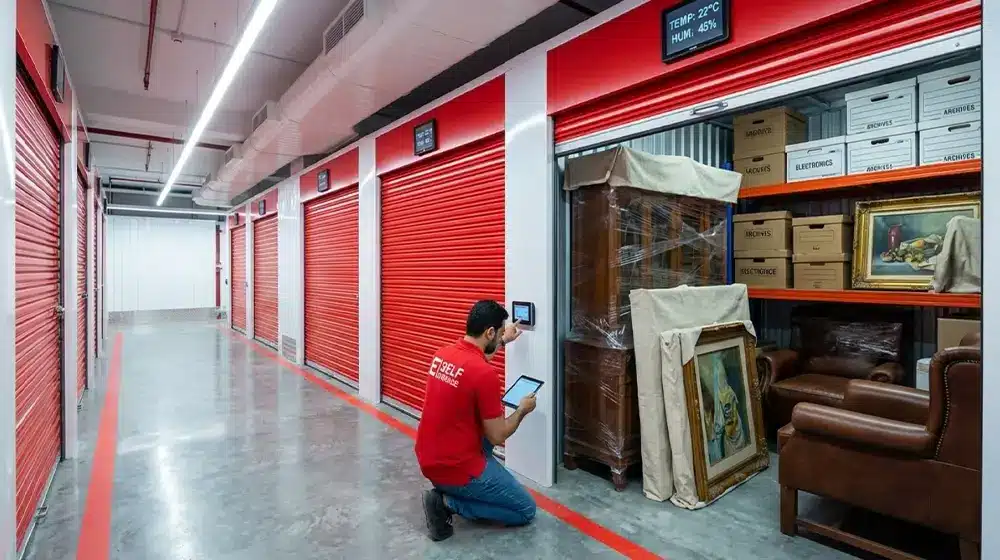
Climate controlled storage in Abu Dhabi is the best storage option for items that can be damaged by heat, humidity, and unstable indoor conditions. According to the Statistics Centre – Abu Dhabi, Abu Dhabi has a tropical desert climate, with average temperatures ranging from 18.4°C in January to 36.5°C in July and average annual relative humidity of 57.4%. That climate increases storage risk for paper records, books, photographs, wood furniture, antiques, electronics, and selected business inventory. Climate controlled storage, air conditioned storage, temperature controlled storage, and humidity controlled storage are related terms, but they do not always mean exactly the same thing. In practical use, the goal is simple. Protect sensitive belongings from environmental stress that can reduce their condition, function, or value. This makes climate controlled self storage and climate controlled warehouse storage more useful for long-term and sensitive storage needs in Abu Dhabi.
People usually use climate controlled storage in Abu Dhabi during moving, renovation, downsizing, office relocation, overseas relocation, and long-term storage of valuable or delicate items. A controlled indoor unit helps reduce the risk of fading, cracking, mold, paper deterioration, finish damage, and moisture-related stress.
What is climate controlled storage in Abu Dhabi?
Climate controlled storage is an indoor storage solution that manages temperature, humidity, and environmental stability more carefully than standard storage. The WHO storage guidance specifically covers temperature control, humidity control, monitoring, alarms, and documented conditions for sensitive stored materials.
In practical terms, climate controlled storage gives better protection than a normal unit because it reduces exposure to hot air, damp conditions, and unstable storage environments. In Abu Dhabi, that added protection matters because the local climate already creates a higher storage risk for sensitive materials.
Is climate controlled storage the same as air conditioned storage?
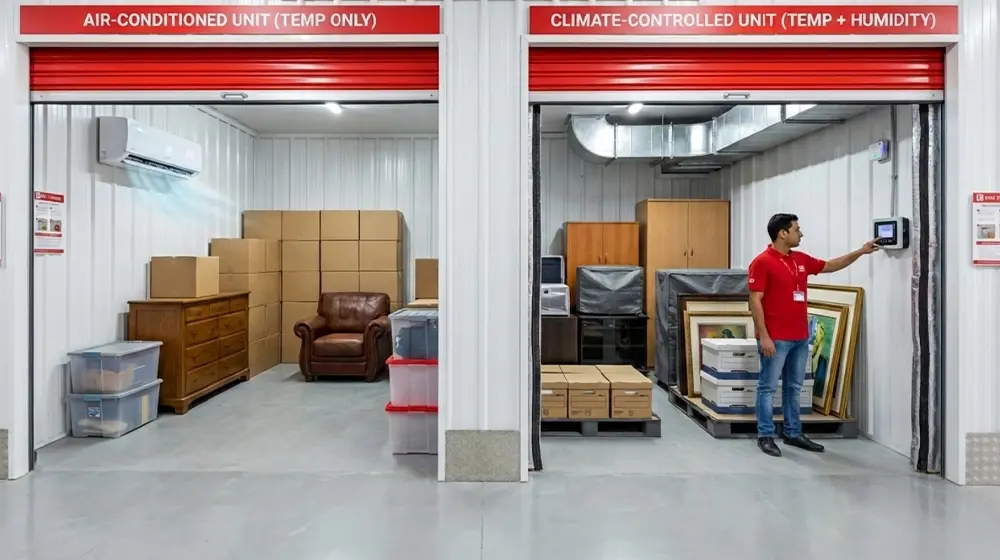
Not always. Air conditioned storage usually means the space is cooled. Climate controlled storage usually goes further by creating a more stable indoor environment that also addresses humidity and fluctuation control.
That difference matters because a cooled space is helpful, but sensitive items often need more than lower temperature alone. Documents, books, antiques, wood furniture, and electronics benefit more from storage that is both cooler and more stable.
What is the difference between climate controlled storage and temperature controlled storage?
Temperature controlled storage mainly focuses on keeping the unit within a managed temperature range. Climate controlled storage usually includes temperature stability plus humidity awareness and better overall environmental control.
For Abu Dhabi users, that means temperature controlled storage is useful, but climate controlled storage is usually the stronger option for high-value or moisture-sensitive items. Paper files, books, framed items, wood furniture, and mixed-material belongings benefit from stable humidity as well as lower heat exposure.
Why is climate controlled storage important in Abu Dhabi?
Climate controlled storage is important in Abu Dhabi because local climate conditions increase the risk of storage damage. The U.S. National Archives recommends lower temperature and controlled relative humidity for papers and photographs. ICON’s guidance for documents and archives says storage conditions should be clean, dry, cool, dark, and stable, preferably around 45% to 60% relative humidity.
That is why climate controlled storage is not just a premium feature for sensitive belongings. It is a practical protection measure for people who want their stored items to remain usable, presentable, and valuable after weeks or months in storage.
Which sensitive items need climate controlled storage in Abu Dhabi?
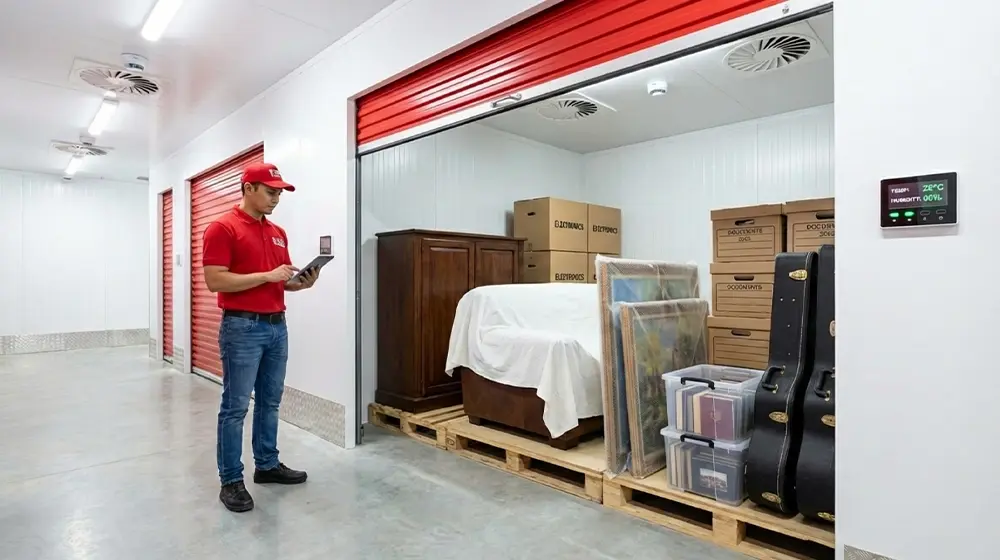
Do documents, books, and photographs need climate controlled storage?
Yes. Documents, books, albums, photographs, certificates, contracts, business files, and archived records benefit from a storage environment that is cool, dry, and stable. The National Archives and ICON’s books guidance both recommend stable conditions and humidity below mold-promoting levels.
This makes climate controlled self storage a strong option for:
- Personal records
- Legal documents
- Passports and certificates
- Family photo collections
- Office archives
- Academic files
- Books and printed materials
Do wood furniture, antiques, and collectibles need climate controlled storage?
Yes. Wood, veneer, leather, upholstery, and mixed materials respond to environmental change. Stable indoor conditions help reduce drying, movement, cracking, finish stress, and long-term damage.
This matters for:
- Antique furniture
- Heirloom items
- Carved wood décor
- Framed artwork
- Collectible storage pieces
- Premium household furniture
Do electronics need climate controlled storage?
Yes, especially for longer storage periods. Apple Support advises keeping laptops within acceptable temperature conditions and using them in non-condensing humidity environments.Apple’s MacBook Air operating requirements also list storage temperature limits and non-condensing humidity conditions. That makes a controlled indoor storage unit safer than a standard hot storage space when device condition matters.
This applies to laptops, monitors, cameras, drives, media equipment, and office electronics.
Do businesses need climate controlled warehouse storage?
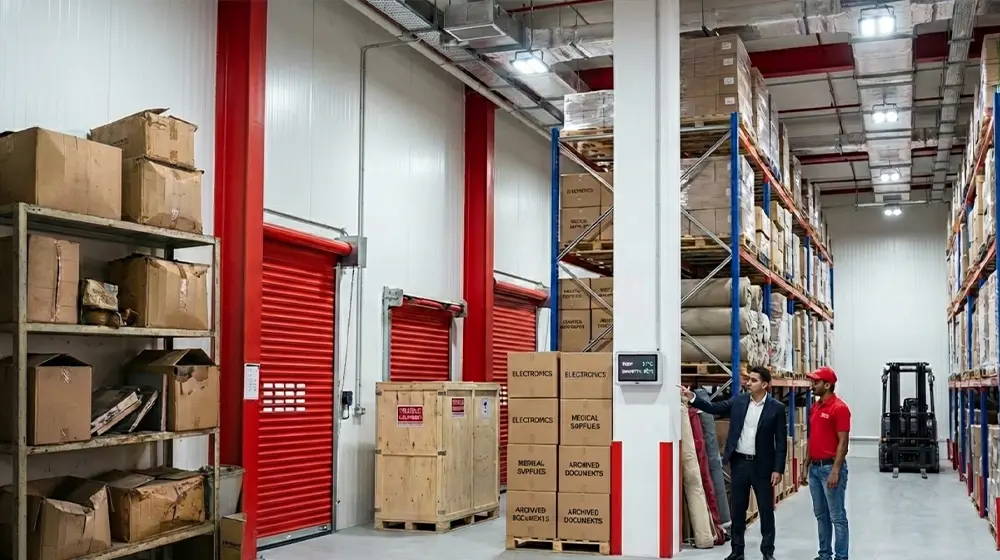
Often yes. Climate controlled warehouse storage is useful for business records, media equipment, selected regulated supplies, packaging-sensitive stock, and inventory that needs monitored indoor conditions. The WHO guidance supports controlling, monitoring, and recording temperature and humidity where storage conditions matter.
This makes climate controlled warehouse storage relevant for:
- Archived company records
- Specialty retail stock
- Display materials
- Media and AV equipment
- Selected healthcare-adjacent supplies
- Products with packaging sensitivity
When should you choose climate controlled storage instead of standard storage?
Choose climate controlled storage when the item is sensitive to heat or humidity, difficult to replace, high in value, or intended for medium- to long-term storage. ICON’s documents and archives guidance specifically warns against unstable spaces such as attics, garages, and basements because temperature and humidity fluctuate there more easily.
In Abu Dhabi, climate controlled storage is the better choice during:
- Delayed move-in dates
- Villa or apartment renovation
- Downsizing
- Overseas relocation
- Office moves
- Long-term archive storage
- Seasonal overflow
- Storage of antiques and electronics
Standard storage can still work for many durable belongings. Climate controlled storage is the better fit when the stored item needs environmental protection, not just extra space.
What is the difference between climate controlled storage and standard storage?
The main difference is environmental stability. Standard storage provides storage space. Climate controlled storage provides storage space plus better protection from heat and humidity fluctuation.
| Storage Type | Best For | Main Risk Level in Abu Dhabi |
|---|---|---|
| Standard storage | Durable household overflow, tools, sealed plastic items, lower-risk short-term storage | Higher for paper, wood, leather, electronics, and collectibles |
| Climate controlled storage | Documents, books, photos, antiques, electronics, archived files, specialty inventory | Lower because temperature and humidity are better managed |
What should you look for in a storage facility in Abu Dhabi?
Look for a storage facility in Abu Dhabi that offers managed indoor conditions, humidity awareness, monitoring, cleanliness, and practical access. The WHO guidance emphasizes temperature control, humidity control, environmental monitoring, alarms, and recordkeeping.
A better climate controlled storage facility should provide:
- Indoor climate controlled storage
- Temperature monitoring
- Humidity control or humidity monitoring
- Clean enclosed units
- Secure access
- Easy loading access
- Unit sizes that match the stored inventory
This is also where user search terms such as storage with AC, air conditioned storage unit, AC storage, and temperature controlled storage units connect. The wording can vary, but the decision should stay the same. Does the facility protect sensitive items from heat and moisture better than a standard unit?
How should you pack items for climate controlled storage?
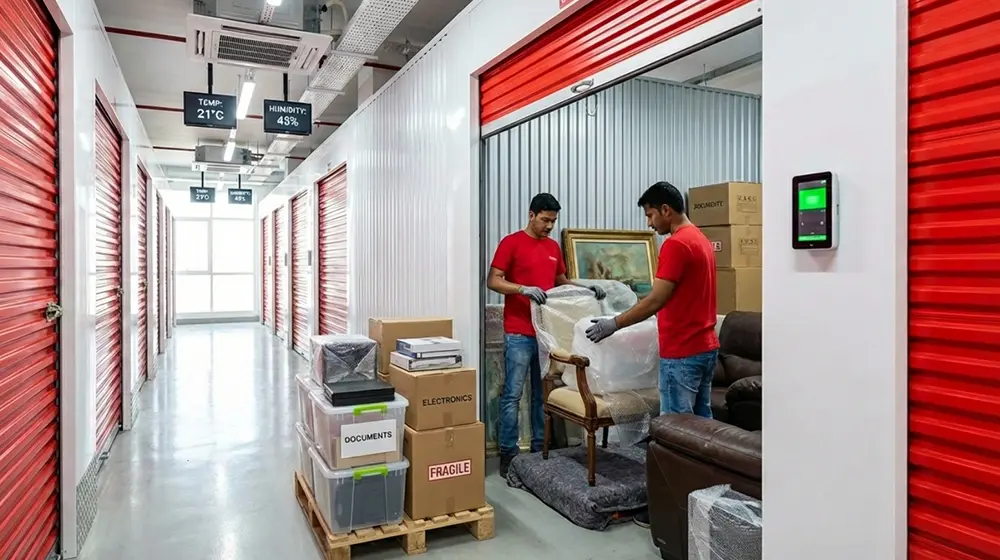
Packing still matters, even inside a climate controlled unit. Good storage conditions work best when items are also packed correctly. The Canadian Conservation Institute recommends acid-free materials for works on paper, and the EPA mold guide stresses fast drying when items become damp.
A practical packing method is:
- Use acid-free folders, sleeves, and boxes for paper items
- Keep books upright and supported
- Keep photographs in protective enclosures
- Separate electronics from loose accessories
- Avoid packing damp items
- Label cartons clearly for low-handling retrieval
- Place valuable items where they can be accessed without repeated shifting
Is climate controlled self storage one of the best storage solutions in Abu Dhabi?
Yes for sensitive items. Standard storage is suitable for many durable belongings, but climate controlled self storage is one of the best storage solutions in Abu Dhabi for paper records, books, photographs, antiques, wood furniture, and electronics because those materials benefit from a stable storage environment.
For households, climate controlled self storage works well for personal belongings that need extra protection. For businesses, climate controlled warehouse storage is the stronger option when records, equipment, or inventory need monitored indoor conditions.
Final CTA
Climate controlled storage in Abu Dhabi is the right solution for sensitive items that can lose condition, function, or value in heat and humidity. That includes documents, books, photographs, antiques, wood furniture, electronics, and selected business inventory. If you need secure indoor storage for valuable items, choose a facility that offers monitored climate control, clean units, and practical access.
Frequently Asked Questions
Yes for sensitive belongings. Climate controlled storage is better than regular storage when the items can be affected by heat, humidity, or instability, including documents, books, photos, antiques, and electronics.
It is better than uncontrolled storage, but full climate controlled storage is stronger. Air conditioned storage mainly lowers temperature, while climate controlled storage usually adds better humidity stability and environmental protection.
Yes. Humidity controlled storage matters because paper, books, wood, textiles, and other sensitive materials deteriorate faster in humid or unstable conditions.
Yes. Businesses use climate controlled warehouse storage for records, equipment, specialty stock, and inventory that needs monitored indoor conditions.
They are helpful, but climate controlled storage is safer for long storage periods. Electronics benefit from controlled temperature and a more stable indoor environment.
Hayyan is a logistics veteran with over 15 years of experience in facility management and spatial optimization. He specializes in warehouse security, climate-controlled storage protocols, and the technical logistics of large-scale moving. His focus is on helping clients maximize their square footage while ensuring the long-term preservation of their inventory and belongings.
Thuraya is a specialist in home organization and residential transition management. With a background in interior space planning, she helps individuals navigate the complexities of downsizing and relocation. She provides expert advice on packing fragile items, choosing optimal storage unit sizes, and turning the stress of moving into a seamless, organized experience.