
Ajman is a cost effective storage hub in the UAE because it combines lower average warehouse asking rents, short lead times for leasing, and direct access to inter emirate logistics corridors that connect to Dubai and the Northern Emirates. This guide builds a practical 2026 price index from published market reports and current listing data, then converts pricing into an operations model for procurement, finance, and supply chain teams.
Benefits of reading this article
- A 2026 price index that benchmarks Ajman storage economics against Dubai and Abu Dhabi using referenced data.
- A procurement grade decision framework that links rent, access, VAT treatment, and transport distance to total monthly storage cost.
The next section defines the price index methodology so the numbers stay auditable.
What is the 2026 Ajman storage price index in this guide?
The 2026 Ajman storage price index is a planning benchmark that converts current UAE industrial rent references and Ajman warehouse asking rent datasets into comparable unit costs. The index uses:
- Ajman warehouse asking rent averages and size ranges from listing platforms with published summaries.
- UAE industrial market rent references for Dubai and Abu Dhabi from published market reports.
- A transparency note that listing data represents asking rents and varies by power load, mezzanine, fit out condition, and yard access.
This approach supports 2026 budgeting when fully audited government rent indices for industrial space are limited compared with residential indices.
What does “cost effective storage hub” mean in B2B terms?
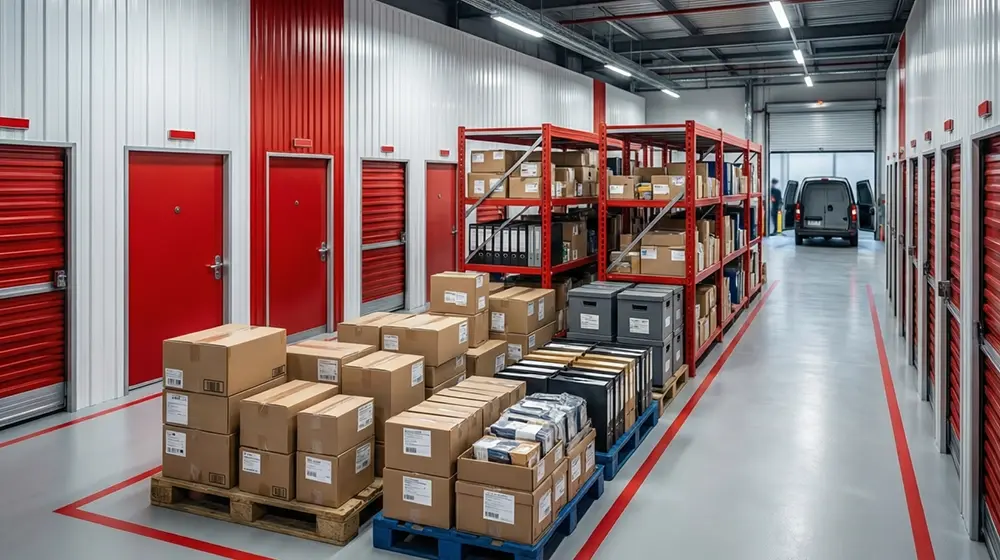
A cost effective storage hub is a location that reduces total storage cost per month, not only base rent. Total cost typically includes:
- Rent per square foot or per square metre
- Utility loads and cooling requirements
- Access time to customers and carriers
- Permit friction and leasing lead time
- VAT treatment and invoicing structure in specific leasing products
- Staffing and travel time between warehouse and last mile routes
Ajman’s advantage often comes from a combined effect across these variables, not a single rent headline.
What are the reference points for UAE warehouse rents used in this analysis?
Dubai and Abu Dhabi rent references come from published industrial market reporting. One referenced dataset reports Q1 rent levels near AED 42 per sq ft for Dubai and AED 401 per sq m for Abu Dhabi, with prime submarkets higher.
Another referenced market review describes continued industrial rent pressure after strong demand growth.
Ajman rent references in this guide come from listing platforms that publish average annual warehouse rent and typical unit sizes in Ajman Industrial areas. Property Finder summarises Ajman Industrial Area warehouses with yearly rental starting levels, an average around AED 175,000, and an average size near 2,700 sq ft.
Bayut summarises Ajman warehouse rents with an average rental value for warehouses in Ajman.
What is the 2026 price index table for Ajman versus Dubai and Abu Dhabi?
The table below converts referenced rents into an indexed view. Ajman uses Ajman Industrial listing summaries as a baseline. Dubai and Abu Dhabi use published industrial market references.
2026 Price Index (planning benchmark)
| Market reference | Source type | Reference rent basis | Converted view | Index vs Ajman |
|---|---|---|---|---|
| Ajman Industrial baseline | Listing market summary | Avg AED 175,000 per year, avg 2,700 sq ft | ~AED 64.8 per sq ft per year | 100 |
| Ajman overall warehouse baseline | Listing market summary | Avg AED 204,351 per year | Depends on size mix | 100 to 120 |
| Dubai industrial reference | Market report | ~AED 42 per sq ft | Lower than Ajman baseline on headline, higher in prime submarkets | 65 to 120 |
| Abu Dhabi industrial reference | Market report | ~AED 401 per sq m | ~AED 37.3 per sq ft | 58 to 105 |
Conversion note: 1 sq m equals 10.7639 sq ft. The Abu Dhabi conversion uses AED 401 per sq m divided by 10.7639 to estimate AED per sq ft.
Interpretation note: The index range exists because listings vary by power capacity, mezzanine presence, loading access, and fit out condition, and published reports reflect specific quality bands and submarkets.
The next section explains why Ajman can still rank as cost effective even when a single Dubai headline appears lower, because total cost drivers change by submarket.
Why can Ajman remain cost effective when Dubai headline rent benchmarks look competitive?
Ajman’s cost effectiveness often comes from three mechanics:
- Space efficiency and unit availability: Ajman Industrial listings often show a wide spread of unit sizes with lower annual entry points, supporting scale up without premium submarket competition.
- Inter emirate access patterns: Ajman Industrial areas sit near the E11 and E311 corridors used for inter emirate logistics, which supports distribution to Sharjah and Dubai with predictable routing.
- Free zone leasing products: Ajman Free Zone publishes short term warehouse leasing products with specific commercial terms, including a VAT exemption statement on that product page.
A procurement team often compares all in landed cost per order, not only rent per square foot.
What makes Ajman a logistics aligned storage hub rather than only a low rent emirate?
Ajman’s storage logic aligns with proximity to port infrastructure and inter emirate road corridors:
- Ajman Free Zone states location near Ajman Port in its official brochure.
- Ajman Ports and Customs publishes its official gateway presence for port and customs services in Ajman.
- Industrial area guidance sources describe connectivity through E11 and E311 for distribution.
This combination supports import staging, mid mile repositioning, and regional distribution without the same premium pricing pressure as dense Dubai industrial nodes.
Which Ajman zones act as the core storage clusters for 2026 planning?
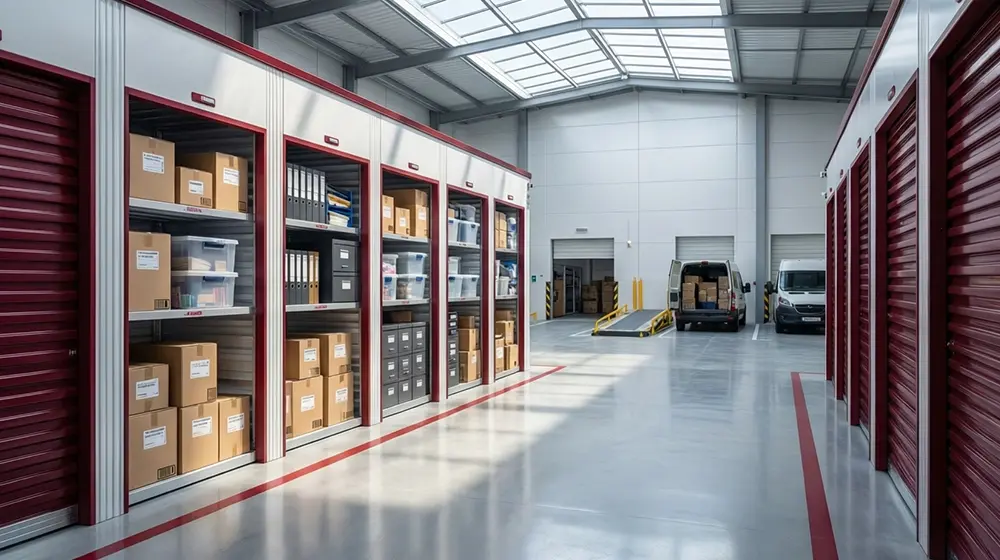
Ajman storage clustering often concentrates around:
- Al Jurf Industrial listings, frequently referenced for warehouse availability and annual rent.
- Ajman Industrial Area aggregated warehouse supply and pricing summaries.
- Ajman Free Zone warehouses and short term leasing products, with published product rules.
These clusters suit different demand types, including trading inventory, e commerce staging, spare parts, and light industrial storage.
What does Ajman Free Zone add to storage economics?
Ajman Free Zone provides warehouse and workspace products and publishes key commercial conditions:
- AFZ lists temporary leasing warehouses and states VAT exemption on that service page.
- AFZ FAQs clarify leasing eligibility rules for AFZ facilities, which affects procurement planning and company structuring.
- AFZ positions itself as a business ecosystem near Ajman Port in its official brochure.
A VAT exemption statement on a specific leasing product changes monthly cash flow modelling. A leasing eligibility rule changes who can contract directly with the zone.
What VAT considerations affect storage decisions in the UAE?
VAT treatment in UAE free zones varies. The Federal Tax Authority designated zones guide explains that free zones are not automatically outside the UAE VAT territorial scope, and only designated zones receive specific treatment under defined conditions.
This matters because:
- A leasing product that states VAT exemption becomes a commercial differentiator.
- A general assumption that all free zones are VAT exempt creates forecasting errors.
A finance team typically maps VAT treatment per contract and per supply type, not per emirate name.
What is the total cost model for “storage hub” selection?
A practical total cost model uses five buckets:
- Facility cost: rent, deposit, service charges, fit out allowances
- Operating cost: utilities, power demand, cooling, racking maintenance
- Transport cost: inbound drayage, outbound delivery, fuel and tolls
- Compliance cost: permits, customs workflows, audit logs
- Risk cost: damage, shrinkage, downtime, penalty clauses
Industrial market tightness in Dubai and Abu Dhabi influences facility cost volatility, which increases the value of alternative hubs.
What numeric benchmarks can you use for self storage pricing comparisons in the UAE?
Self storage pricing varies by city, access hours, climate control, and unit size. Market references provide indicative ranges:
- A Dubai self storage cost guide cites monthly pricing ranges from small units around AED 300 to large units above AED 3,000, by unit size.
- A Dubai storage price sheet example lists specific monthly prices per unit size in sq ft.
These references support a comparison between warehouse storage and self storage for lighter inventory, documents, and spare parts.
When does Ajman outperform Dubai and Abu Dhabi on storage economics?

Ajman tends to outperform when one or more conditions exist:
- Medium velocity inventory with weekly dispatch cycles rather than hourly dispatch cycles
- Space heavy SKUs such as furniture, packaging materials, promotional kits
- Multi emirate distribution with repeated routes to Sharjah and northern customers
- Budget controlled operations where rent stability and predictable leasing dominate
Ajman Industrial warehouse supply pricing summaries provide a baseline for such planning.
What are the common cost drivers inside Ajman warehouses?
Ajman warehouse costs often move with these attributes, visible in listing data:
- Electricity load capacity in kW
- Mezzanine availability
- Yard access for container handling
- Cooling or insulation
- Office fit out area inside the unit
- Ceiling height and racking compatibility
Listings in Al Jurf and Ajman Industrial frequently mention electricity capacity and size, which helps cost normalisation.
What procurement checklist supports a cost effective storage lease in Ajman?
A procurement checklist controls variables that inflate total cost:
Commercial fields
- Rent basis and escalation clause
- Deposit percentage and refund conditions
- Utility metering and billing model
- Maintenance scope and landlord obligations
Technical fields
- kW capacity and upgrade process
- Floor load rating and slab condition
- Loading bay width and yard turning radius
- Fire safety and access control specifications
Operational fields
- Access hours and gate process
- Truck route constraints and peak hour access
- Insurance requirements and liability boundaries
Ajman Free Zone leasing products and eligibility rules provide an example of how commercial conditions can be explicit on official pages.
What split network model uses Ajman without losing Dubai speed?
A split network model stores bulk inventory in Ajman and places fast moving SKUs closer to dense demand nodes.
- Ajman acts as the buffer storage hub.
- Dubai or Abu Dhabi hosts a smaller forward stock location aligned with last mile constraints and service levels.
This structure reduces total rented area in premium submarkets while preserving service speed for top SKUs.
What are the most common failure points when moving storage operations into Ajman?
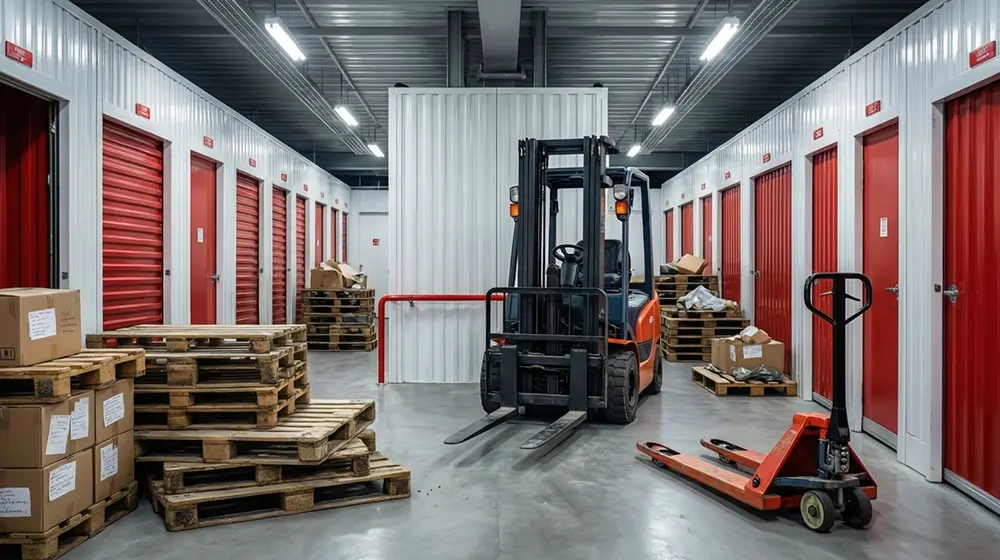
Failure points usually relate to mismatch between cost assumptions and operational constraints:
- Underestimating utility requirements and power upgrade lead times
- Selecting units without yard access for inbound container flow
- Treating VAT treatment as uniform across all free zones
- Ignoring contract eligibility rules in free zone facilities
These issues create indirect cost through downtime and rework.
What 2026 forecasting method produces an auditable monthly storage budget?
A forecasting method uses three layers.
Layer 1: Facility cost
- Annual rent divided into 12
- Service charges and maintenance add ons
- Deposit cash flow impact
Ajman Industrial annual rent and unit size summaries enable unit cost calculation per sq ft.
Layer 2: Logistics cost
- Weekly trip count
- Trip distance band
- Load factor and vehicle type
Inter emirate connectivity through E11 and E311 supports predictable routing assumptions when distribution includes Dubai and Sharjah.
Layer 3: Compliance and tax
- VAT model per contract type
- Customs workflows when port linked operations exist
AFZ product terms and FTA guidance support tax and contract assumptions.
What role do movers and storage operators play in a cost effective Ajman hub setup?
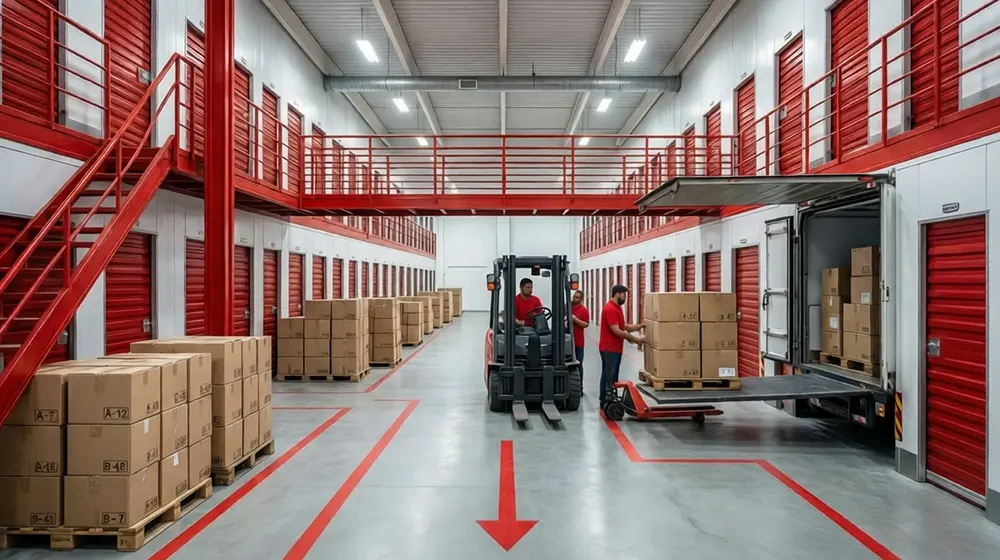
A storage hub setup includes physical relocation, racking installation, and inventory transition. Office movers and commercial movers often coordinate:
- Pallet and carton staging
- Inventory labelling and location mapping
- Damage documentation and sign off
A cost effective move reduces rehandling, which protects the economics of a lower rent hub.
If you want, I can add a separate section that connects “storage hub transition” to a step by step move method statement used by commercial movers.
What is the final conclusion on Ajman as the UAE cost effective storage hub?
Ajman qualifies as a cost effective storage hub in UAE planning when the decision model uses total cost, not only rent headlines. Listing market summaries show Ajman Industrial warehouses with lower entry points and scalable sizes that fit SMEs and mid market distribution.
Ajman Free Zone adds additional leasing options and published commercial terms, including a VAT exemption statement on a specific short term warehouse product page, which supports cash flow sensitive planning.
Connectivity references link Ajman’s industrial clusters to E11 and E311 corridors, supporting inter emirate distribution economics that remain central to 2026 budgeting.
Hayyan is a logistics veteran with over 15 years of experience in facility management and spatial optimization. He specializes in warehouse security, climate-controlled storage protocols, and the technical logistics of large-scale moving. His focus is on helping clients maximize their square footage while ensuring the long-term preservation of their inventory and belongings.
Thuraya is a specialist in home organization and residential transition management. With a background in interior space planning, she helps individuals navigate the complexities of downsizing and relocation. She provides expert advice on packing fragile items, choosing optimal storage unit sizes, and turning the stress of moving into a seamless, organized experience.