
Don’t Overpay for Space: Smart Storage Unit Size Guide in Dubai
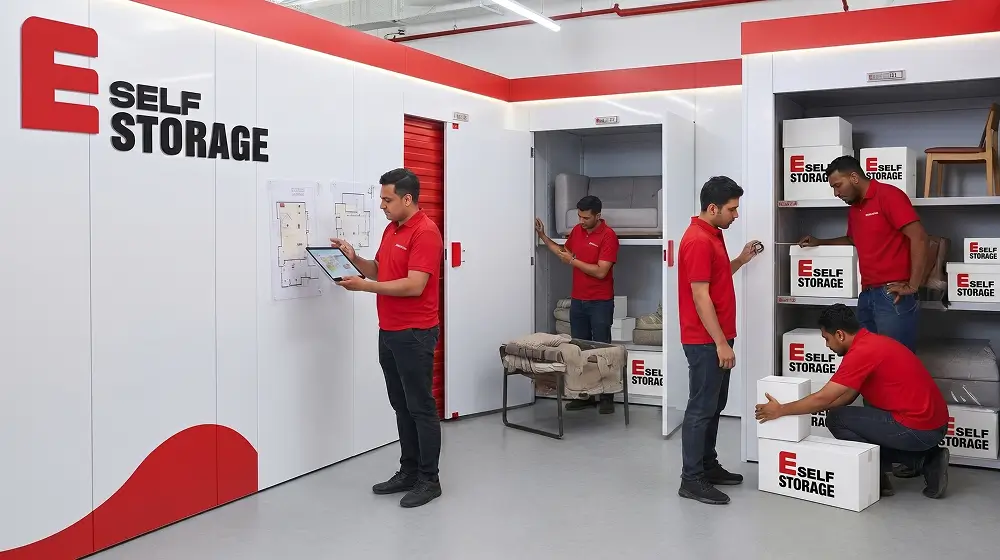
Choosing the right storage unit size in Dubai saves money, improves access, and reduces packing mistakes. The right unit size is the smallest unit that fits your current inventory, protects access paths, and leaves enough room for safe stacking. That is the core sizing rule for personal storage, furniture storage, and business overflow storage.
Dubai residents and businesses rent storage for moving, downsizing, travel, renovation, stock overflow, and document archiving. In a city with high mobility, apartment living, and frequent home transitions, storage demand stays strong. Dubai’s resident population reached about 3.86 million by the end of 2024, which helps explain why space efficiency matters across apartments, villas, and offices. The broader self-storage market is also expanding, with Mordor Intelligence projecting continued global growth in the lettable area through 2031.
This guide explains what fits in common unit sizes from 30 sqft to 200 sqft, how to estimate your real storage volume, and how to avoid renting space you do not use.
How do you choose the right storage unit size in Dubai?
You choose the right storage unit size by matching 4 things, item volume, item type, access frequency, and stacking method. Most sizing mistakes happen when people count only floor area and ignore height, awkward furniture shapes, and access lanes.
Use this 4-step method before booking:
- List every item you plan to store
- Group items by type, boxes, furniture, appliances, documents, stock, luggage
- Identify bulky items first, sofas, beds, wardrobes, refrigerators, desks
- Decide whether you need walk-in access or dense packing
A unit packed wall to wall is cheaper on paper but harder to use. A unit with a narrow access lane is often the better choice for long-term storage because it reduces handling damage and wasted time.
If you are storing heat-sensitive items, add one more filter. Dubai’s climate creates real storage risk for wood, leather, paper, electronics, instruments, artwork, and textiles. The UAE’s National Center of Meteorology tracks local climate and weather conditions, and E Self Storage already positions climate controlled storage as the correct option for temperature- and humidity-sensitive items.
Why does storage unit size matter so much?
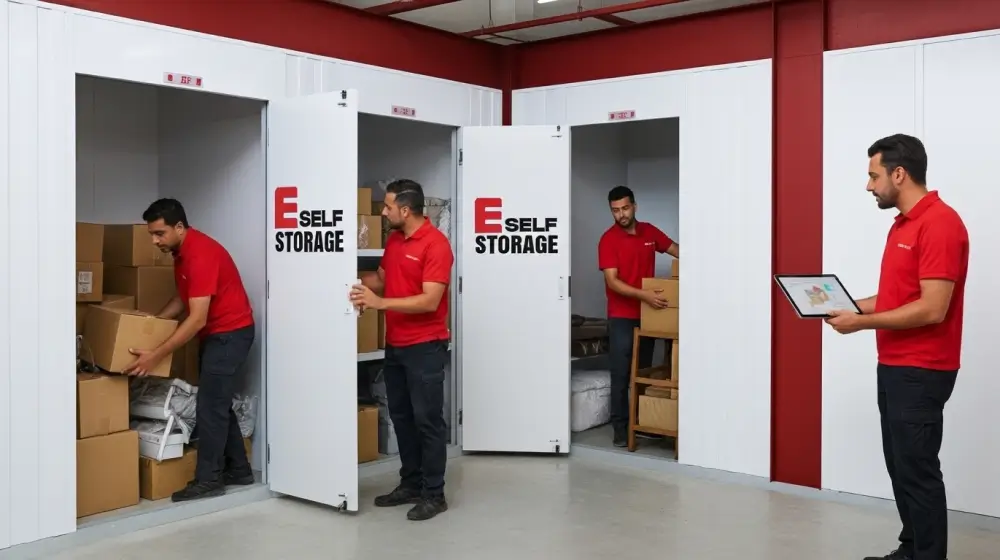
Storage unit size matters because storage cost rises with unused square footage, while damage risk rises when the unit is too small. A wrong-size unit usually creates one of 2 expensive outcomes.
The first outcome is overpaying for empty space. This happens when customers guess upward and rent a unit far larger than their actual inventory. The second outcome is underestimating volume, which leads to re-stacking, crushed boxes, blocked access, and mid-contract upgrades.
A correct size improves 5 things:
- Monthly cost control
- Safer stacking
- Easier retrieval
- Lower risk of breakage
- Better inventory visibility
This is why size selection should happen before packing day, not at the facility gate.
How should you estimate your storage needs before renting?
You should estimate your storage needs by starting with large items, then adding stackable items, then adding access space. This sequence reflects real storage geometry better than guessing by room count alone.
Start with the largest footprint items:
- Mattresses
- Bed Frames
- Sofas
- Dining Tables
- Wardrobes
- Appliances
- Office Desks
- Shelving Units
Then add medium-volume items:
- Suitcases
- Plastic Bins
- Small Appliances
- Folded Chairs
- Décor Boxes
Then add special handling items:
- Mirrors
- Artwork
- Electronics
- Bicycles
- Musical Instruments
- Archived Files
Finally, add access allowance. If you need to retrieve items regularly, reserve a narrow path inside the unit. If access is rare, pack more densely and place low-priority items at the back.
What fits in a 30 sqft storage unit?
A 30 sqft storage unit fits a small personal load, usually 10 to 15 boxes, a few suitcases, seasonal items, and a few compact furniture pieces. This size works best for light storage, not full-room moves.
A 30 sqft unit is usually suitable for:
- Seasonal clothing
- Personal files
- Travel bags
- Sports gear
- Baby items
- Dorm items
- One bedside table
- One accent chair
- Folded shelves
- Boxed kitchenware
This size is common among students, solo renters, travellers, and people clearing one room before repainting or renovation. It is also useful for short-term life events, including temporary relocation, home repairs, or travel leave.
Do not choose 30 sqft for full furniture sets or mixed loads from a one-bedroom apartment. It becomes inefficient quickly once you add a mattress, large boxes, or rigid furniture.
What fits in a 50 sqft storage unit?
A 50 sqft storage unit usually fits the contents of a studio apartment or one room, including a mattress set, small furniture, 10 to 20 boxes, and compact appliances. This is one of the most practical entry sizes for residential storage.
A 50 sqft unit often fits:
- Queen mattress
- Small sofa
- TV stand
- Side tables
- Folded dining chairs
- Microwave
- Boxes of clothes
- Boxes of books
- Kitchen cartons
- Luggage
This size is useful for:
- Moving between apartments
- Storing items during painting
- Holding furniture during repairs
- Short-term expat relocation
- Storing business files or light stock
For users specifically storing home items, this section pairs naturally with furniture storage services in Dubai, because furniture protection depends on both size and storage condition.
What fits in a 70 sqft storage unit?
A 70 sqft storage unit usually fits the contents of a typical one-bedroom apartment, including a bed set, sofa, dining furniture, medium appliances, and multiple cartons. This size is a strong middle option when 50 sqft is too tight and 100 sqft is too much.
A 70 sqft unit commonly holds:
- Bed frame and mattress
- Two-seat or three-seat sofa
- Coffee table
- Dining table
- Dining chairs
- Chest of drawers
- TV unit
- 15 to 25 boxes
- Office chair
- Small workstation
This size works well for:
- One-bedroom moves
- Longer travel storage
- Marriage transitions
- Medium furniture storage
- Small business overflow stock
For business users, 70 sqft is often enough for document boxes, samples, packaging materials, display items, and light office furniture.
What fits in an 80 sqft storage unit?
An 80 sqft storage unit gives extra flexibility for bulky items from a larger one-bedroom apartment or a compact two-bedroom setup. The extra area matters most when furniture pieces are wide, tall, or hard to stack.
An 80 sqft unit is often used for:
- Larger wardrobes
- Bookshelves
- Entertainment units
- Wider sofas
- Appliance storage
- Mixed furniture and cartons
- Long-term expat storage
This size is common when customers want a safer layout instead of a dense layout. That difference matters because safe stacking reduces pressure damage on fabric, veneer, electronics, and carton seams.
If the stored load includes wood furniture, upholstery, electronics, documents, or artwork, the condition of the unit becomes more important than size alone.
What fits in a 100 sqft storage unit?
A 100 sqft storage unit usually fits the contents of a two-bedroom home, including beds, wardrobes, sofas, white goods, and 20 to 25 medium boxes. This is one of the most commonly rented sizes for full-home temporary storage.
A 100 sqft unit often fits:
- Two mattresses
- Two bed frames
- One sofa set
- Dining set
- Refrigerator
- Washing machine
- Boxes of books
- Décor cartons
- Wardrobes
- Side tables
- Office desk
- Household equipment
This size is suitable for:
- Family moves
- Apartment handover gaps
- Home renovation
- Temporary downsizing
- International relocation staging
E Self Storage already has a cost-focused page that discusses price variation by unit size, duration, access, and climate control.
What fits in a 120 sqft storage unit?
A 120 sqft storage unit usually fits a two- to three-bedroom household load and gives better internal organization than a tightly packed 100 sqft unit. It is the better option when the inventory includes oversized sofas, multiple wardrobes, or large appliances.
This size often accommodates:
- Multiple bedroom sets
- Larger sectional seating
- Entertainment systems
- Storage cabinets
- Bulk cartons
- Children’s furniture
- Bicycles
- Garden tools
- Home office equipment
Families choose 120 sqft when they want more than simple fit. They want order, access, and lower handling risk. That is especially useful during long renovations, overseas assignments, or staged property moves.
What fits in a 150 sqft storage unit?
A 150 sqft storage unit fits the contents of a three- to four-room home and often works as a light business warehouse alternative. This size crosses from household storage into hybrid storage.
A 150 sqft unit can often hold:
- Multiple bedroom sets
- Living room furniture
- Large appliances
- Dining room sets
- Decorative items
- Archive boxes
- Retail stock
- Point-of-sale material
- Trade show items
- Office furniture
This size is relevant for two audiences.
The first audience is families storing a large household during renovation, relocation, or villa transition. The second audience is businesses storing overflow stock, seasonal inventory, event material, or office contents without taking a full warehouse lease.
What fits in a 200 sqft storage unit?
A 200 sqft storage unit fits the contents of a large villa or a full-house move, including oversized furniture, major appliances, outdoor items, and more than 50 boxes. This is the largest personal-use tier for many storage customers.
A 200 sqft unit may hold:
- Full villa furniture
- Large dining sets
- Multiple wardrobes
- Oversized sectional sofas
- Refrigerators and deep freezers
- Outdoor furniture
- Home gym equipment
- Large archive loads
- Trade event material
- Bulky business inventory
This size suits:
- Long-distance moves
- Villa renovation
- International relocation
- Estate clearance
- High-volume business overflow
Large units solve capacity problems, but they still need layout planning. Large loads fail when fragile items are buried, weight distribution is uneven, or labels are poor.
Is climate-controlled storage necessary in Dubai?
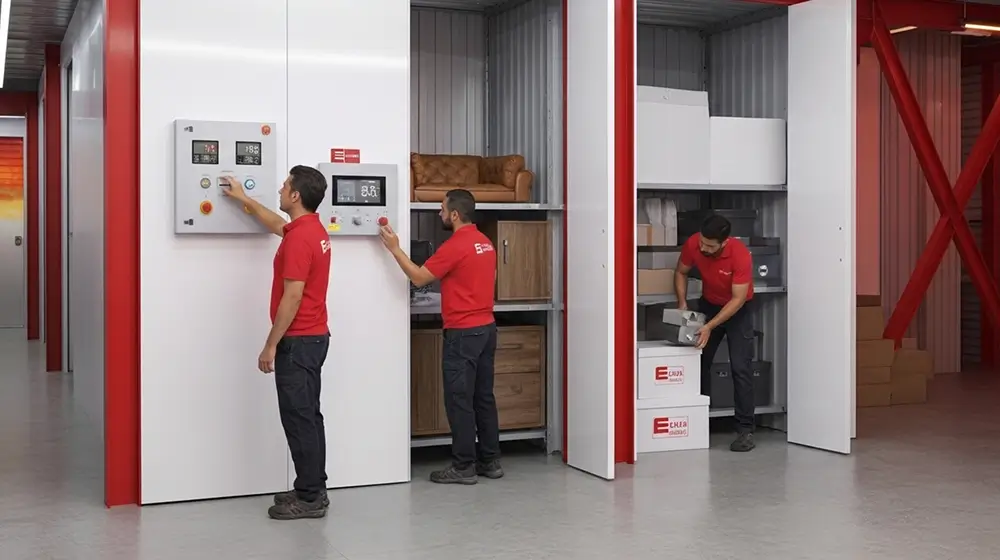
Climate-controlled storage is necessary in Dubai for items that can degrade under heat, humidity, or rapid temperature variation. Size alone does not protect sensitive items.
- Wood furniture
- Leather furniture
- Mattresses
- Paper records
- Books
- Electronics
- Musical instruments
- Artwork
- Textiles
- Branded product packaging
Dubai’s weather pattern makes this practical, not optional, for many item types. The official National Center of Meteorology tracks the country’s weather and climate conditions, while climate-controlled units are the correct solution for moisture- and heat-sensitive belongings.
This is why readers searching for size guidance often also need condition guidance. A 50 sqft climate-controlled unit can be the better choice than a cheaper 70 sqft standard unit if the inventory includes wood, fabric, paper, or electronics.
Why should you visit the storage facility before booking?
You should visit the storage facility before booking because the visual scale is easier to judge in person than by numbers alone. Many users misread room-size labels and overestimate what fits around door clearance, ceiling height, and furniture angles.
A quick visit helps you check:
- Real floor area
- Unit height
- Corridor width
- Trolley access
- Loading process
- Security systems
- Facility cleanliness
- Climate control setup
A facility visit also helps you ask better questions about access hours, contract flexibility, CCTV, pest control, and packing support.
How can you reduce storage cost without choosing the wrong size?
You reduce storage cost by increasing packing efficiency, not by forcing the load into an undersized unit. Cheap storage becomes expensive when damage, re-handling, and upgrades are added later.
Use these 7 cost-control rules:
- Dismantle beds and tables where possible
- Use uniform boxes for safer stacking
- Place heavy boxes at the bottom
- Wrap furniture before loading
- Stand mattresses upright if allowed
- Label every carton by room and content
- Reserve access space only for items you will retrieve
Also compare monthly rent against item value. A cheaper non-climate unit is not the cheaper option if stored wood, leather, paper, or electronics degrade over time.
What are the most common mistakes people make when choosing storage size?
The most common storage size mistakes are undercounting bulky items, ignoring access paths, and renting based on guesswork instead of inventory. These 5 errors cause most upsizing requests.
1. Counting rooms instead of items
Room count is a rough guide, not a storage calculation. Two one-bedroom apartments can need very different unit sizes.
2. Ignoring non-stackable furniture
Wide furniture and rigid furniture reduce usable space faster than boxes do.
3. Forgetting future additions
Storage loads often grow after move-in, renovation start, or office cleanup.
4. Choosing by price alone
The cheapest quoted unit is not the lowest-cost choice when access, damage, or upgrade risk is higher.
5. Ignoring climate risk
Heat-sensitive inventory needs the right conditions, not only the right dimensions.
Which storage unit size is best for you?
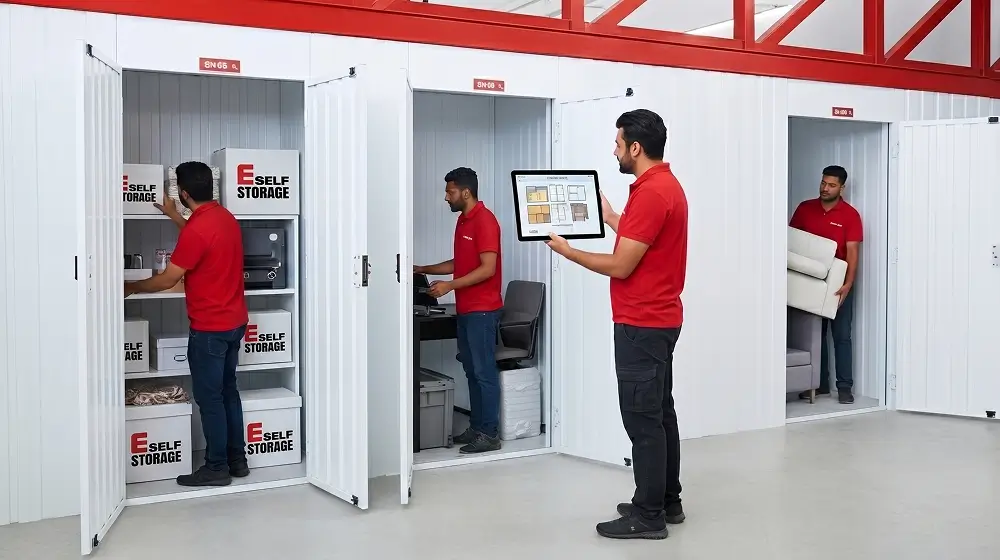
The best storage unit size depends on what you store, how long you store it, and how often you need access. Use this simple match guide.
- Choose 30 sqft for boxes, luggage, student items, and light personal storage
- Choose 50 sqft for studio loads, one room, and light furniture storage
- Choose 70 sqft for one-bedroom apartment contents
- Choose 80 sqft for bulkier one-bedroom loads and mixed furniture
- Choose 100 sqft for two-bedroom home storage
- Choose 120 sqft for two- to three-bedroom family loads
- Choose 150 sqft for large household moves and business overflow
- Choose 200 sqft for full-villa storage and high-volume inventory
This size guide becomes more accurate when combined with a facility visit, item inventory, and climate requirement check.
Final thoughts
Choosing the right storage unit size in Dubai comes down to accuracy, not guesswork. The correct unit size fits your inventory, protects your items, and allows safe access without wasted space. When you match unit size with item type, storage duration, and access needs, you avoid extra cost and reduce handling risk.
This guide shows that each unit size serves a clear purpose. Smaller units work for boxes and personal items, mid-size units fit apartment moves, and larger units support full households and business storage. The key is to list your items, identify bulky pieces first, and plan your layout before booking.
Storage decisions in Dubai also depend on conditions, not only size. Heat and humidity affect furniture, documents, and electronics, so climate-controlled storage becomes necessary for sensitive items. A slightly smaller climate-controlled unit often performs better than a larger standard unit for long-term protection.
A well-chosen storage unit improves organization, saves money, and simplifies daily operations. When you combine correct sizing, efficient packing, and the right storage conditions, you turn storage from a cost into a controlled and practical solution.
Hayyan is a logistics veteran with over 15 years of experience in facility management and spatial optimization. He specializes in warehouse security, climate-controlled storage protocols, and the technical logistics of large-scale moving. His focus is on helping clients maximize their square footage while ensuring the long-term preservation of their inventory and belongings.
Thuraya is a specialist in home organization and residential transition management. With a background in interior space planning, she helps individuals navigate the complexities of downsizing and relocation. She provides expert advice on packing fragile items, choosing optimal storage unit sizes, and turning the stress of moving into a seamless, organized experience.
 Self Storage
What are the penalties for violating Dubai no-entry rules during commercial vehicle restricted timings?
Written by Hayyan Al-Jasmi | Reviewed by Thuraya Al-Mansoori | Published on July 4, 2025 | Updated on April 20, 2026 Penalties include cash…
Read More Self Storage
Heavy Vehicle No-Entry Timings By Emirate: Fujairah
Written by Hayyan Al-Jasmi | Reviewed by Thuraya Al-Mansoori | Published on July 4, 2025 | Updated on April 20, 2026 A self storage…
Read More Self Storage
2026 Heavy Vehicle No-Entry Timings In Ras Al Khaimah
Written by Hayyan Al-Jasmi | Reviewed by Thuraya Al-Mansoori | Published on July 4, 2025 | Updated on April 20, 2026 Self storage in…
Read More