The UAE’s heat and dry air present a tough balancing act for storage facilities: keep the goods indoors cool and humidity-free without allowing electricity bills to skyrocket. The key is to pick smart climate settings, use the right kind of wall and roof padding, and know how these picks change how much power is used and how much you pay for energy.
Why Climate-Control Set-Points Matter in UAE Storage
The UAE is one of the hottest places in the world. In summer, the heat can go above 45 degrees. The sun there shines very strongly. In the storage area, that brings up four major issues:
Product degradation
A significant amount of stored items (e.g., pharmaceuticals, food, electronics, cosmetics, high-value equipment) experiences rapid degradation under temperature and humidity conditions.
Risk of condensation & mould
If not managed well, wet air can build up, more so near the sea or in homes with poor air flow. This can make the air damp and lead to mould.
Energy expense and grid usage
Cooling loads comprise the vast majority of electricity usage and can incite extremely high peak demand charges.
Equipment life span
HVAC units that run with low temp points and too much strain can wear out more and need more fixes and care. Determining the most suitable temperature and humidity setpoints is among the most critical design decisions for any UAE storage warehouse, cold room, or self storage unit.
Typical Storage Climate Targets in the UAE
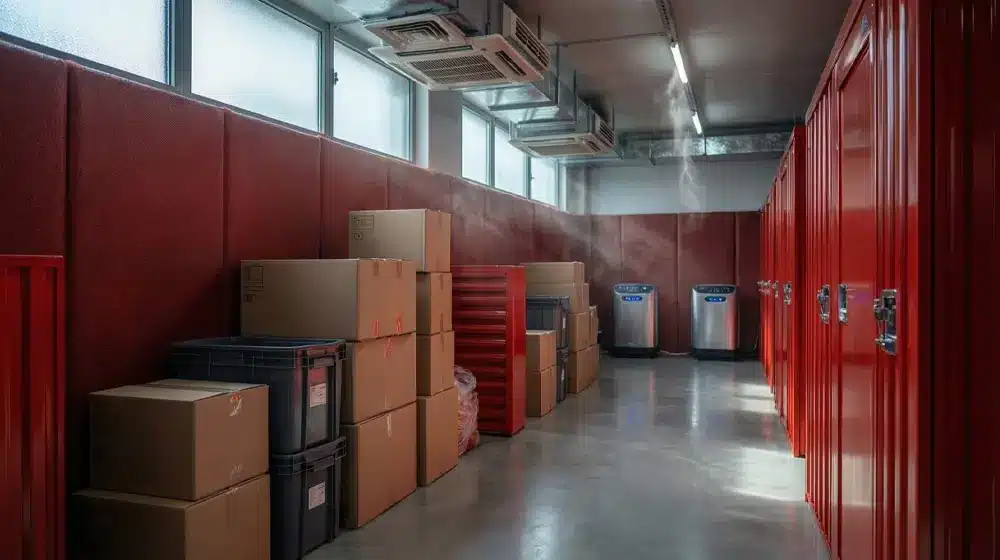
Exact setpoints depend on what you’re storing, but you can think in terms of three broad categories:
1. Ambient but Tempered Storage
Items you use each day that don’t need a cold spot but should not get too warm. Rang de temperatura estàndard: 24-30 grams Celsius. Relative Humidity (RH): <65-70%.Applications: Use in stores, wrap for goods, and use in many types of work. This is often done by letting air move, using a little bit of cooling, and having some cover to keep in heat. We want to lose the extra heat and stop big jumps.
2. Climate-Controlled Storage
For temperature and humidity-sensitive products, but not for deep-frozen goods.standard temperaturinställning: 20-25 °C
RH: 40-60%
Uses: Home and business storage; specific electronic equipment; record-keeping mediums; textile materials; beauty products. This band protects products and saves energy. In the UAE, each additional degree below ~24-25 degrees C incurs a significant kWh cost.
3. Cold & Frozen Storage
for temperature-sensitive substances.chilled storage: +2 to +8 degrees C (e.g., pharmaceutical products, dairy products, fresh vegetables).frozen storage: 18 to 25 °C (meat, long-term frozen products). Deep frozen: less than 25 °C for special use. In this case, the building envelope, door control and heat gain control are critical, given that the delta temperature outside can be greater than 60 degrees C in summer.
How Set-Point Choices Affect Energy Use (kWh)
In places with hot weather like the UAE, when you set the temperature just one degree lower, it can make your air system use about 3 to 5 per cent more power. This change depends on how your place is built and how you use the cooling. The higher the temperature difference between the inside and outside of the car, the more you’ll need to use your air conditioning to remove even more heat. Extended compressor operations.HVAC units run for more time at their top speed, use more power, and wear out faster. Additional infiltration loss. A leak or open door introduces hot air that requires cooling to the desired setpoint. For storage applications, where comfort is not a key consideration, it often makes sense to run slightly warmer setpoints (24-26 °C instead of 20-22 °C) as long as the products are still protected.
kWh Modelling for UAE Storage Facilities
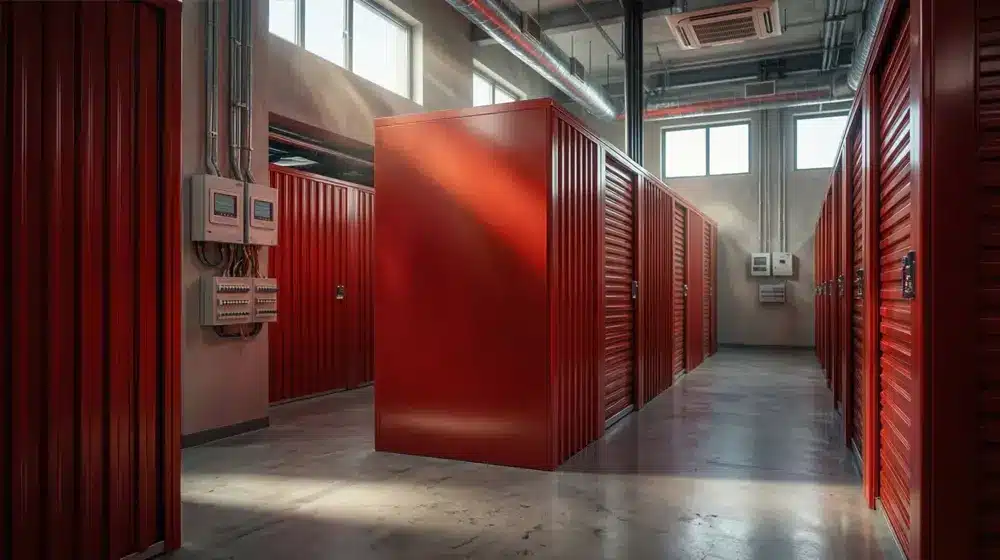
To accurately evaluate the influence of setpoints, kWh modelling is required to estimate your building’s energy consumption on an hourly or monthly basis, based on your various design and operational scenarios.
Key Inputs for Cooling Load & kWh Modelling
Envelope building Wall and roof U-values (insulation performances).window sections and glass typesroof color and solar re ectanceinward forceilluminance (W/m2)machinery.Occupants (quantity and thermal gains per occupant), Airflow and infiltration.Fresh air needdoor use count (loading docks, roll-up doors, staff doors). Set points and control approach.Thermostat and humidity.during off-peak hours: fallback/relaxationweather hereditary bulb and wet bulb temperatures each hoursolar energy
Why kWh Modeling Is Important in the UAE
kWh modelling is very important in the United Arab Emirates (UAE). Here, it is a must to act fast because the use of power is going up. This is due to more jobs, more homes, and very hot summers. At the same time, the country wants to keep things good for the earth and reach its green goals. If energy production and consumption are accurately modelled, there will not be excess generation capacity or load-shedding. Don’t over-size or under-size your HVAC. Overdesign means you will pay more during the initial CAPEX, and it will run inefficiently, not good. Under design will cause the area to get too hot, risking your product.
Common Insulation Materials in UAE Storage Facilities
Sandwich panels PU PIR.core PU or PIR. Commonly utilised for refrigeration facilities and temperature-regulated storage units. Great skill to hold heat.
EPS (Expanded Polystyrene)
cost-effective but typically lower performing than pu/pir at the same thickness applied to certain industrial and storage purposes
XPS (Extruded Polystyrene)
Nice compressive strengths.Like it for cold room or freezer floor insulation. Mineral / Rock Wool
shelter to heat fire. typical for fire-rated
Insulation Thickness and the Law of Diminishing Returns
Each more inch of cover means less heat gets through, but the cost goes up faster and faster. Transitioning from uninsulated to moderately insulated results in a substantial reduction in heat gain and kilowatt-hours (kWh) consumption. However, if the insulation is increased from moderate to very high levels, the heat gain reduction remains consistent while the savings per additional millimetre of insulation diminish.
This creates a cost curve:
Capex curve: More insulation means it will cost more. Opex energy curve: more insulation=less kwh and electric bill. Preference is typically given to the design that results in the lowest lifecycle cost (CAPEX + discounted OPEX).
Energy Cost Curves: Balancing Set-Points, Insulation & Bills
Setpoint vs insulation can be represented as the cost of energy curves. Picture this scene: On the up and down line, you show how much you pay each year for cooling. On the side-to-side line, you show the set room temp. When the setpoint is low (e.g. most in the range of 18 to 20 degrees c), the energy cost is very high, particularly in poorly insulated buildings. With moderate setpoints (e.g., 23-26 degrees C), energy expenditures decrease substantially while maintaining protection for the majority of products. For higher setpoints (above 28 degrees Celsius), energy expenditures decrease further, yet the quality of your product may be compromised.
Now overlay insulation quality:
Bad insulation curves high (you pay more at every set point).Noise insulation downward curve (you pay less for the same setpoint). Great insulation – the curve is lower even, but because of each upgrade, the extra downwards shift is getting smaller.
Key Insights from Energy Cost Curves
Raising the setpoint (within limits) is one of the quickest savings levers. Better insulation moves your whole energy cost curve down. You save at every setpoint. Optimal strategy frequently involves a moderate setpoint (e.g., 24 to 26 degrees C for general climate-controlled storage) combined with maximum insulation, rather than excessively high or low settings.
Special Considerations for UAE Storage Facilities
The act of keeping goods in the UAE comes with its own set of hard tasks. Some of these are the very hot weather, tight rules for safety, and the need to follow strict laws.
1. Humidity in Coastal Areas
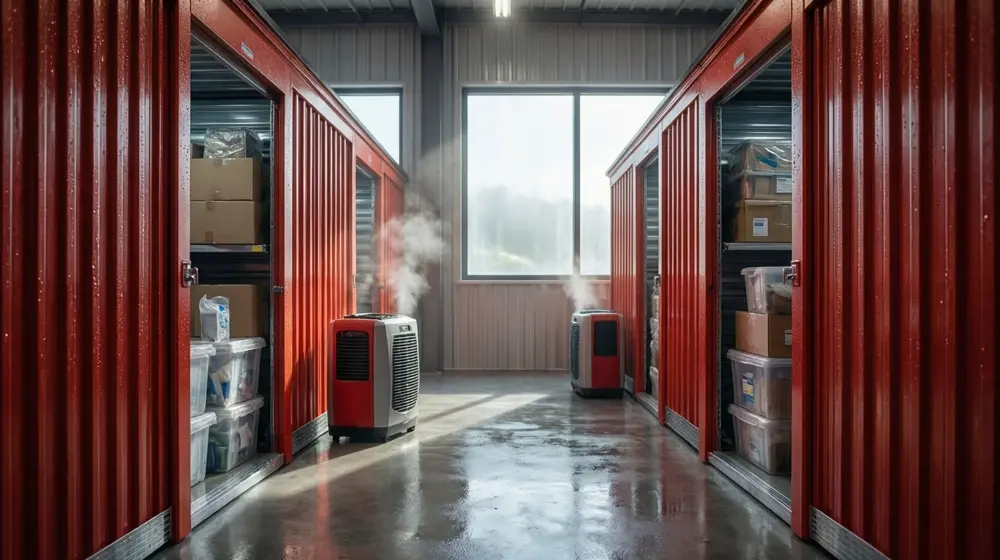
For instance, in coastal emirates such as Dubai and Abu Dhabi, humidity may be high, especially during summer evenings. For fragile items: Make sure your HVAC system has sufficient latent cooling (dehumidification). Evaluate desiccant dehumidification for stringent relative humidity (RH) management. Read RH 24/7, not just temps.
2. Solar Gain & Orientation
Position structures to avoid direct solar exposure on extensive wall surfaces when feasible. Use shade tools, roof covers, or walls close by to cut down on the sun that hits doors and windows right on.
Frequently Asked Questions
Which temperature should you set your climate control at for general storage in the UAE?
What is the insulation requirement for a climate-controlled warehouse in the UAE?
Does better insulation always pay you back?
What impact do energy cost curves have on decision-making?
Do I require sophisticated software to create models for kWh and set points?
Hayyan is a logistics veteran with over 15 years of experience in facility management and spatial optimization. He specializes in warehouse security, climate-controlled storage protocols, and the technical logistics of large-scale moving. His focus is on helping clients maximize their square footage while ensuring the long-term preservation of their inventory and belongings.
Thuraya is a specialist in home organization and residential transition management. With a background in interior space planning, she helps individuals navigate the complexities of downsizing and relocation. She provides expert advice on packing fragile items, choosing optimal storage unit sizes, and turning the stress of moving into a seamless, organized experience.