Furniture storage in Ras Al Khaimah is furniture preservation under heat and humidity conditions. Preservation depends on climate stability, breathable protection, elevation, airflow gaps, and documented handling.
What is furniture storage in Ras Al Khaimah
Furniture storage in Ras Al Khaimah is the storage of wood, leather, fabric, and metal furniture in a controlled unit to reduce swelling, mold, corrosion, odor absorption, and handling damage. The storage outcome improves when temperature and relative humidity (RH) stay stable.
What damages furniture during storage in Ras Al Khaimah
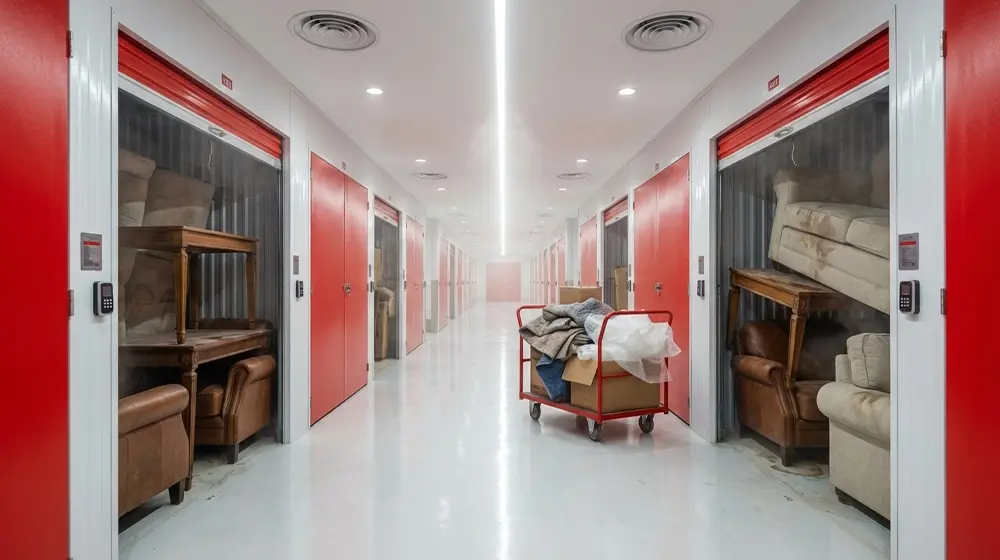
Furniture damage during storage comes from humidity change, heat load, dust abrasion, pest activity, and stacking pressure.
What humidity change does to wood furniture
Wood expands at higher RH and contracts at lower RH, and this movement stresses joints, veneer, and finishes. Wood moisture exchange is a known driver of dimensional change.
What humidity does to upholstery fabric and foam
High RH increases mold risk and odor retention in fabric and foam, especially when airflow is blocked.
What heat and fluctuation do to leather furniture
Leather deforms faster under higher temperature and unstable RH because moisture loss and mechanical stress increase.
What trapped moisture does to metal hardware
Metal corrosion increases when moisture stays trapped around hinges, screws, and runners, and corrosion can stain adjacent materials.
Why Ras Al Khaimah climate increases furniture storage risk
Ras Al Khaimah experiences long hot and humid periods, and humid air increases moisture-related risk for wood, leather, and textiles. A non-controlled unit can track outside humidity patterns more closely than a climate-controlled unit.
What storage climate protects wood, leather, and fabric furniture
A protective storage climate keeps RH and temperature stable enough to reduce wood movement, mold probability, and leather drying. Stability is the core variable because rapid cycling increases stress.
What RH band is commonly used as a preservation baseline
A common preventive conservation baseline keeps RH in a mid-range band to reduce brittleness at low RH and fungal risk at high RH.
Why temperature stability matters for RH stability
Temperature change shifts RH, and RH shift changes moisture balance in organic materials.
What is climate-controlled furniture storage in Ras Al Khaimah
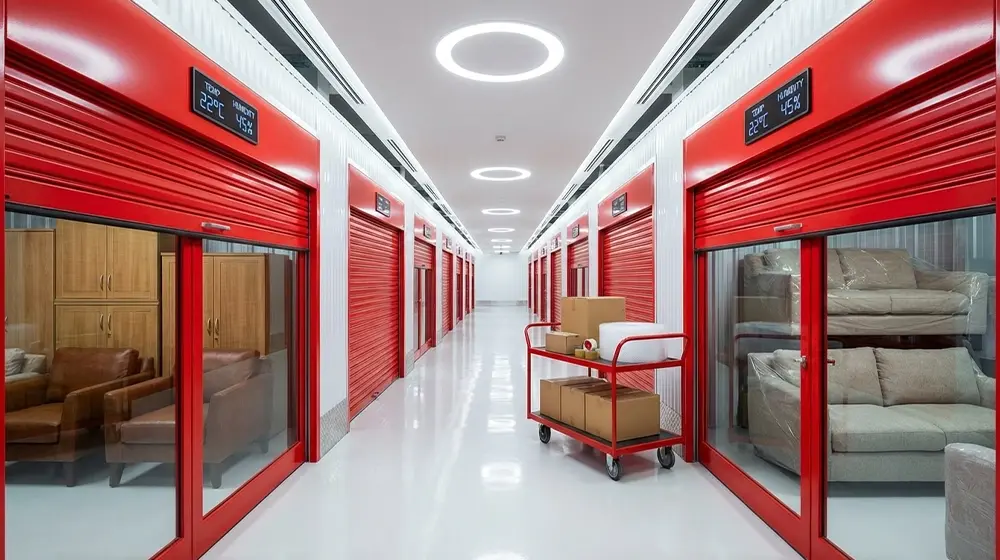
Climate-controlled furniture storage is a unit type that uses HVAC and monitoring to keep temperature and RH more stable than a standard unit. Climate control reduces moisture peaks and reduces fluctuation.
Furniture categories that benefit most
- Solid wood furniture, veneer furniture
- Leather sofas, leather chairs
- Upholstered fabric furniture
- Antique furniture, heirloom furniture
- Mixed-material furniture (wood + metal + fabric)
How to prepare furniture for storage in Ras Al Khaimah
Prepare furniture by cleaning, drying, disassembling, protecting contact surfaces, and labeling hardware. This workflow reduces damage and reduces disputes because condition stays documented.
How to clean furniture before storage
Clean furniture to reduce stains, odor absorption, and pest attraction.
- Wipe hard surfaces using a dry-to-damp method
- Vacuum upholstery seams and creases
- Dry surfaces completely before covering
- Empty drawers and remove residues
How to disassemble large furniture before storage
Disassemble large furniture to reduce joint stress and handling impacts.
- Remove legs from tables, sofas, beds
- Detach headboards and bed frames, if removable
- Bag fasteners in sealed pouches
- Label pouches by item name
- Photograph connection points for accurate reassembly
What packing materials protect furniture without trapping moisture
Use padded blankets and breathable covers because airtight plastic can trap moisture against surfaces in humid conditions. Breathable protection reduces dust without sealing humidity inside.
Protection stack order
- Moving blanket (abrasion control)
- Breathable cover (dust control)
- Corner guards (impact control)
How to store bulky furniture safely inside a storage unit
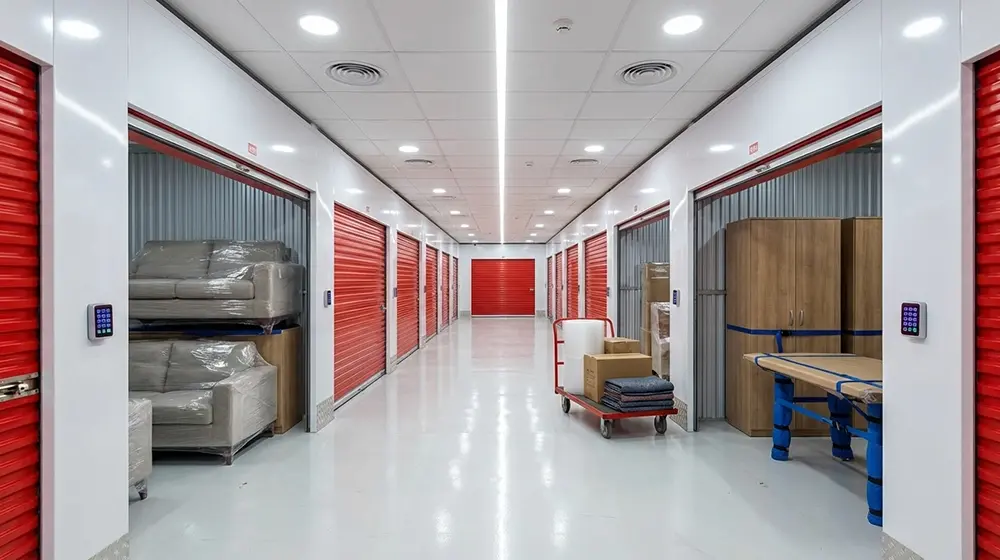
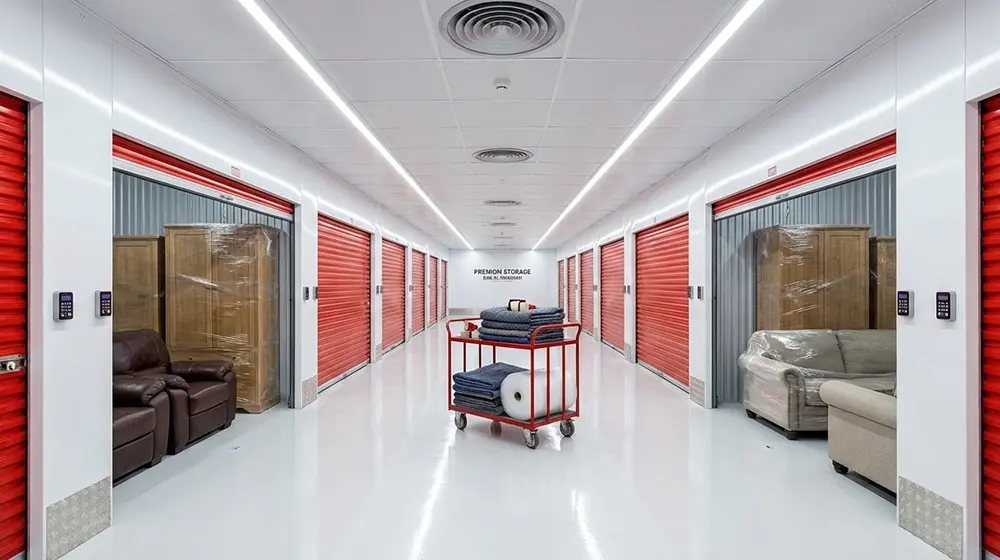
Store bulky furniture by controlling load paths and keeping airflow gaps. Bulk items fail when pressure concentrates on weak points.
Unit setup rules
- Elevate furniture off the floor using pallets or risers
- Keep a wall clearance gap for airflow and inspection
- Place heavy items low; place light items high
- Keep an access aisle for retrieval without scraping
- Keep fragile edges facing inward
Placement examples
- Sofa: store on feet, not on arms
- Wardrobe: store upright, stabilize, keep back panel ventilated
- Dining table: protect corners, avoid unsupported vertical lean
- Mattress: store upright with ventilation space, avoid sealed wrapping
What unit size fits common furniture storage sets
Unit size selection depends on the largest footprint, item count, and access aisle requirement. Access aisles reduce retrieval damage.
Table definition: The table maps furniture sets to space drivers and damage risks.
| Furniture set type | Largest items | Access style | Primary damage risk |
|---|---|---|---|
| Studio set | sofa, mattress, small wardrobe | service-aisle | foam compression, edge abrasion |
| 1-bedroom set | sofa, bed, wardrobe, dining set | walk-in aisle | scraping during retrieval, joint stress |
| 2-bedroom set | multiple wardrobes + sofas | walk-in aisle | stacking pressure, airflow blockage |
| Renovation room set | mixed antiques + cartons | walk-in + padded zones | finish abrasion, veneer lift |
What security and access controls reduce loss and damage
Loss and damage risk drops when facilities use CCTV coverage, controlled access, and documented check-in and check-out. Documentation creates verifiable timestamps and access history.
Controls that map to outcomes
- CCTV coverage: incident review evidence
- Controlled access: reduced unauthorized entry
- Access log entry accountability
- Lock standard: reduced forced entry probability
- Lighting + clear corridors: reduced handling accidents
What mistakes cause the highest furniture storage damage
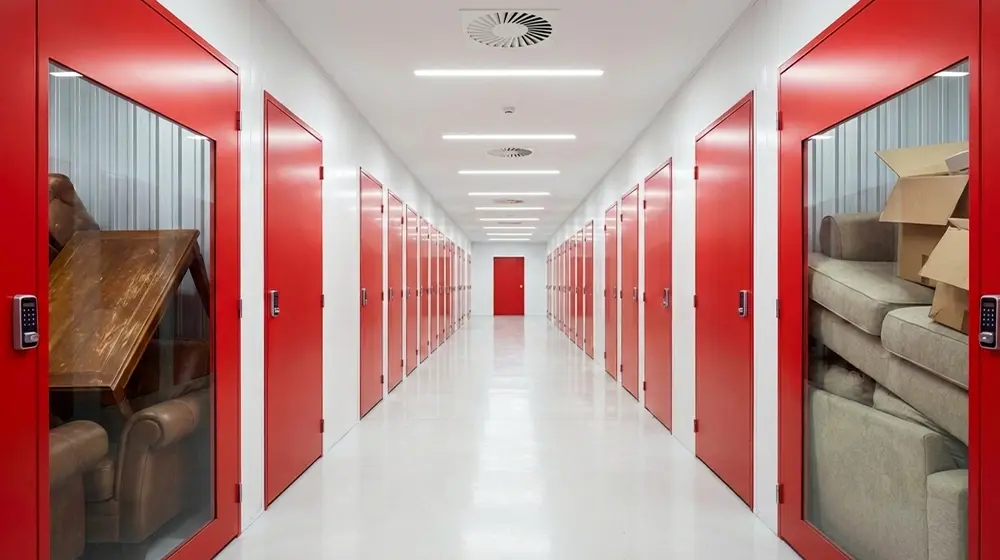
The highest-damage mistakes are storing damp furniture, sealing furniture in airtight plastic, stacking heavy loads on weak surfaces, and blocking airflow against walls.
- Store damp furniture: mold odor and surface staining
- Seal plastic tightly on upholstery: trapped humidity and odor
- Stack heavy boxes on sofas: foam compression and frame stress
- Place furniture directly on floor: moisture contact risk
- Remove access aisle: scraping damage during retrieval
- Mix hardware without labels: missing parts and assembly damage
Conclusion
Furniture storage in Ras Al Khaimah is furniture preservation under heat and humidity conditions, and preservation depends on climate stability, breathable protection, elevation, airflow gaps, and documented handling. The same preservation logic applies to short-term storage during moves and long-term storage during renovations.
Frequently Asked Questions
Furniture storage in Ras Al Khaimah is the storage of furniture in a unit that reduces damage risk through stable temperature, stable RH, breathable protection, and controlled handling.
A stable mid-range RH approach reduces wood movement and reduces fungal risk compared to fluctuating humidity patterns.
Airtight plastic wrapping traps moisture near surfaces in humid conditions, so breathable covers reduce dust without sealing humidity inside.
Wood absorbs and releases moisture from air, and this moisture change causes swelling and shrinkage that stresses joints and finishes.
Climate control protects leather by stabilizing temperature and RH, which reduces moisture loss and mechanical stress from fluctuation.
Hayyan is a logistics veteran with over 15 years of experience in facility management and spatial optimization. He specializes in warehouse security, climate-controlled storage protocols, and the technical logistics of large-scale moving. His focus is on helping clients maximize their square footage while ensuring the long-term preservation of their inventory and belongings.
Thuraya is a specialist in home organization and residential transition management. With a background in interior space planning, she helps individuals navigate the complexities of downsizing and relocation. She provides expert advice on packing fragile items, choosing optimal storage unit sizes, and turning the stress of moving into a seamless, organized experience.