Sharjah SMEs use storage near Muwaileh to reduce retrieval time, protect audit evidence, and keep inventory accessible without leasing extra office or warehouse area. The strongest outcomes come from separating document storage from inventory storage, then contracting for measurable controls such as retention coverage, retrieval SLAs, and access governance.
Benefits of reading this guide
- A B2B document archiving framework based on retention timelines, proof standards, and retrieval SLAs.
- A practical inventory storage model that balances access frequency, unit type, and handling controls for SMEs operating near Muwaileh.
The next section defines document archiving and inventory storage as two distinct systems, because each has different risks, controls, and procurement checks.
What does “Sharjah storage for SMEs” mean in operational terms?
“Sharjah storage for SMEs” means external storage used to control two business-critical assets.
- Document Storage: Contracts, invoices, HR files, audit trails, and corporate records that must remain retrievable and defensible.
- Inventory Storage: Stock, packaging materials, spare parts, and goods that must remain accessible, countable, and protected from damage or loss.
This difference matters because document storage is governed by evidence quality, while inventory storage is governed by handling throughput.
Why do SMEs in Sharjah prioritize storage near Muwaileh?
SMEs prioritize Muwaileh-adjacent storage because it reduces access friction for both archive retrieval and restocking cycles.
- Shorter Retrieval Cycles: Courier runs and urgent collection requests become easier when storage sits closer to office clusters.
- Lower Operational Disruption: Frequent pickups and returns become feasible without losing half a day in transit.
- Better Inventory Flow: Stock can function as a “micro-warehouse” when access and loading tolerance match SME operations.
For SMEs, proximity becomes valuable only when the provider’s operating model supports B2B requirements such as authorization controls, logs, and service reliability.
What retention timelines shape SME document storage in the UAE?
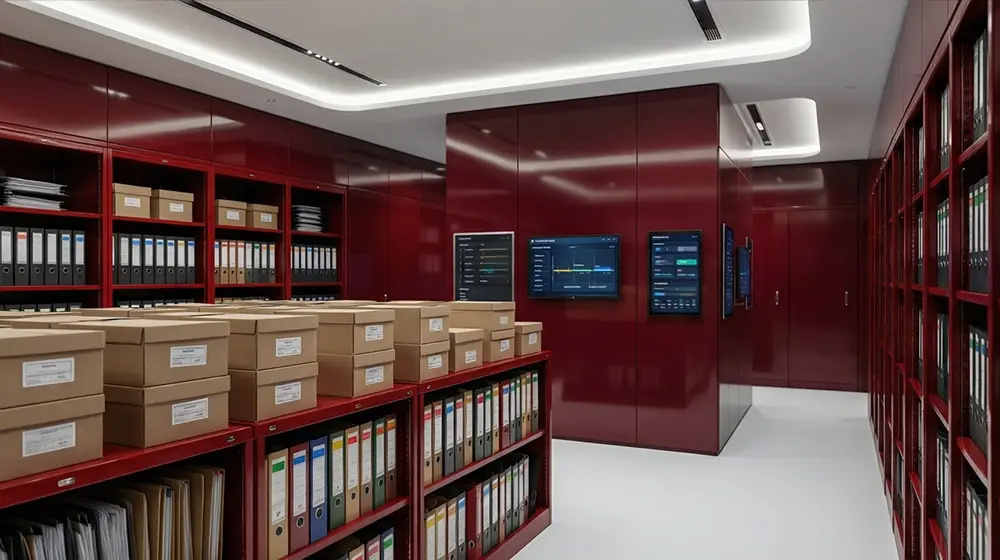
Retention is not one number. It is a record-type map. SMEs get better outcomes by building a file plan that identifies the longest retention category, then selecting storage that supports it.
- Corporate Tax Exposure Records: Records linked to taxable income, deductions, and supporting schedules often need longer retention coverage than routine admin files.
- VAT Exposure Records: VAT-linked records and supporting transaction evidence often require multi-year retention logic.
- Contract and Dispute Records: Contracts, claims, and legal correspondence require retention aligned to dispute windows and commercial risk.
B2B takeaway: Storage selection must support your longest retention requirement with reliable retrieval and defensible custody controls, not only cheap unit pricing.
What is the biggest SME mistake in document storage?
The biggest mistake is storing documents as “files” instead of storing them as an audit trail.
An audit trail requires:
- A Complete Record Set: Invoice, contract, delivery proof, payment proof, and approvals stored as one linked set.
- A Stable Indexing System: Box IDs, file batch IDs, and searchable metadata.
- Retrieval Performance: Defined retrieval SLA with cutoff times and escalation.
- Custody Discipline: Intake logs, access authorization, and documented handovers.
When the archive is not indexed, storage becomes a cost center that still fails during audits or disputes.
What proof standards make document storage defensible for SMEs?

Defensible storage is verified through proof artifacts, not marketing terms.
Proof standard 1: Retrieval SLA
- Retrieval Time Promise: Same-day, next-day, or fixed-hour windows.
- Cutoff Times: A clear daily cutoff for same-day action.
- Escalation Path: Named contacts for urgent retrieval.
Proof standard 2: Chain-of-custody evidence
- Intake Log: Box ID, batch ID, date, and signer.
- Access Control: Authorized personnel list and access logs.
- Handover Proof: Delivery notes or signed handover forms for retrieval and return.
Proof standard 3: Environmental control disclosure
- Humidity Control Disclosure: Paper stability depends on moisture conditions over time.
- Pest Control Measures: Prevent degradation and contamination.
- Water Ingress Mitigation: Raised storage, drainage controls, and incident procedure.
Proof standard 4: Security controls
- Controlled Access Zones: Restricted entry to archive areas.
- CCTV Coverage Statement: Stated coverage and retention window.
- Visitor Policy: Rules for non-staff access and supervision.
These standards are procurement-friendly because they convert “secure document storage” into measurable controls.
Which SME document categories belong in external document storage near Muwaileh?
A practical file plan prioritizes records by audit exposure and dispute exposure.
High exposure records
- Tax Invoices And Supporting Schedules: Transaction-level evidence.
- Bank Evidence And Reconciliation Sets: Payment proof and matching.
- Supplier Contracts And Purchase Orders: Commercial obligations and scope.
- Payroll Summaries And HR Employment Documents: Employment evidence and payroll controls.
Medium exposure records
- Policies And SOP Versions: Governance continuity and version control.
- Management Approvals: Decision trails and authorization evidence.
- Customer Onboarding Files: KYC packs, onboarding evidence, and signed terms.
Low exposure records
- Marketing Archives: Old brochures and old campaign assets.
- Catalog Versions: Non-binding historical material.
- Vendor Brochures: Informational items without legal exposure.
External storage delivers the highest ROI when it protects high-exposure and medium-exposure categories with strong indexing and retrieval performance.
What inventory storage problems do SMEs solve near Muwaileh?
Inventory storage solves operational friction, not only space constraints.
Common SME use cases:
- E-Commerce Stock Overflow: Fast movers stored offsite but still accessible.
- Packaging Materials And Consumables: Cartons, labels, fillers, and wraps staged for replenishment.
- Seasonal Inventory Staging: Holiday peaks, campaign stock, and seasonal lines.
- Spare Parts For Field Service: Parts availability without office clutter.
- Event Equipment And Promotional Assets: Display units, stands, and branded materials.
A storage unit becomes valuable when it improves cycle time, reduces stockouts, and prevents damage.
What unit format fits SME inventory versus SME documents?
Unit format should match the asset type and access frequency.
Document storage fit
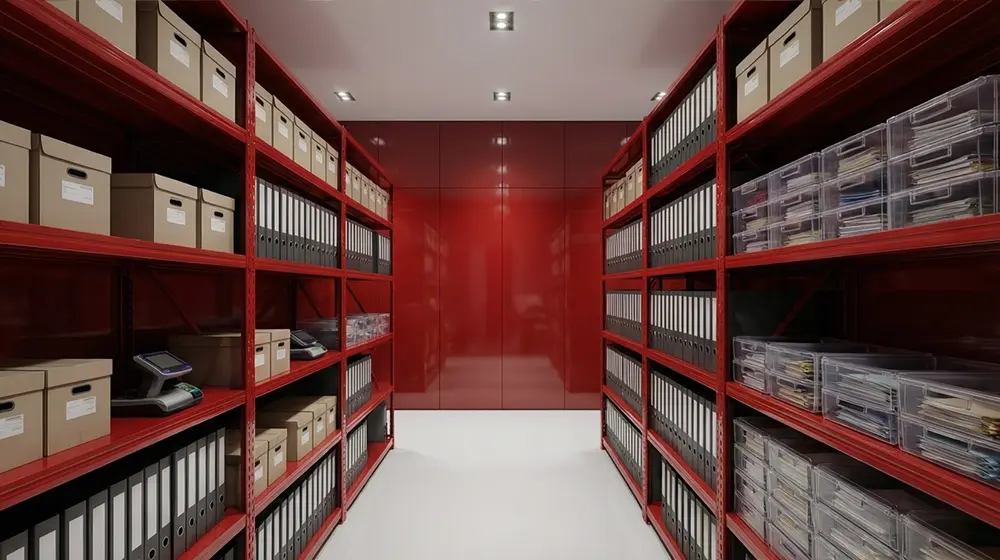
- Indexed Box Storage: Box IDs and batch IDs with an intake register.
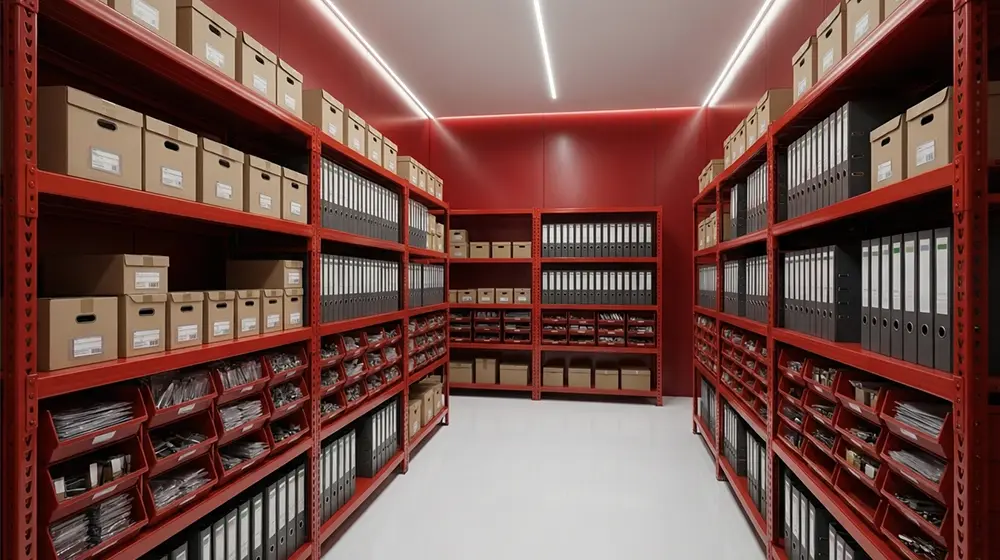
- Racked Archive Rooms: Controlled access with retrieval handling discipline.
- Request-Based Retrieval: Retrieval process with SLA and handover proof.
Inventory storage fit
- Loading-Friendly Space: Wide access and handling tolerance.
- Staging Capacity: Room for inbound checks and outbound packing.
- Clear Access Windows: Operating hours aligned to business restocking patterns.
How do you choose between Muwaileh-adjacent storage and industrial-area storage?

Use an access frequency and handling profile test.
- Low Retrieval Frequency: Prioritize indexing, chain-of-custody, and security.
- Moderate Retrieval Frequency: Prioritize access hours, pickup reliability, and route simplicity.
- High Retrieval Frequency: Prioritize loading tolerance, vehicle access, and operational throughput.
This approach prevents the most common SME mismatch: renting a cheap unit that is operationally unusable.
What contract checks do SMEs use for storage procurement?
Contract clarity prevents hidden cost escalation and operational disputes.
Pricing and billing checks
- Unit Size Definition: Clear measurement method and unit boundaries.
- Deposits And Refund Rules: Clear terms for exit and refunds.
- Price Escalation Clause: Exact timing and method of increases.
- Minimum Term And Termination Notice: Avoid lock-in surprises.
Access and operations checks
- Access Hours: Documented hours and emergency access rules.
- Authorization Controls: Who can approve retrieval and who can receive items.
- Handling Charges: Cost per retrieval, per return, and per delivery if applicable.
- Pickup And Drop Rules: Zone coverage, lead time, and service limitations.
Liability and exclusions checks
- Prohibited Items: Clear exclusions to avoid contract breaches.
- Liability Cap: Defined maximum liability and conditions.
- Insurance Option: Coverage scope and claim evidence requirements.
- Damage Reporting Timeline: Defined reporting window and process.
What are the most common pitfalls for SME storage in Sharjah?
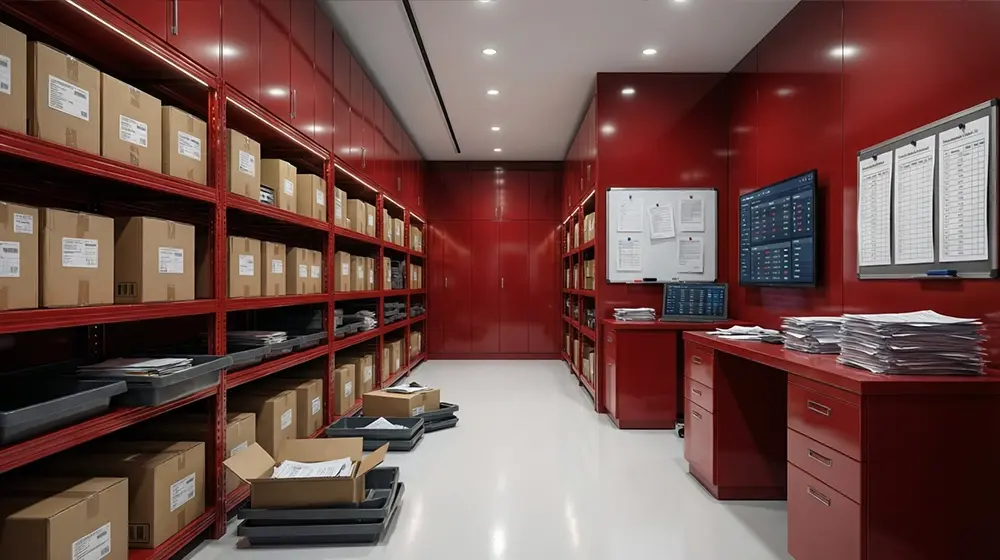
Pitfalls cluster into governance gaps and operational mismatches.
- Mixed Storage Logic: Mixing documents and inventory in one unit without controls creates retrieval errors and evidence gaps.
- Weak Indexing: No box ID system leads to loss-by-confusion rather than theft.
- No Retrieval SLA: “Secure” storage becomes unusable when retrieval is slow or inconsistent.
- Access Mismatch: Inventory operations fail when loading access is restrictive or operating windows are narrow.
- Retention Mismatch: Retention needs exceed what informal storage can deliver without proof and structure.
Table: Document archiving controls vs inventory storage controls
| Control Area | Document Storage Requirement | Inventory Storage Requirement |
|---|---|---|
| Primary Risk | Evidence Failure | Stock Disruption |
| Core Proof | Chain-of-Custody Logs | Count Accuracy |
| Retrieval Model | Request-Based SLA | Frequent Access |
| Unit Format | Indexed Boxes | Loading-Friendly Space |
| Handling | Controlled Personnel | Operational Throughput |
| Procurement Focus | Retention And Audit Readiness | Access And Cycle Time |
What is a practical setup for SME document storage near Muwaileh?
Use a three-layer archive model that reduces retrieval cost and protects evidence.
- Active Records Layer: Current period files kept onsite for immediate use.
- Warm Archive Layer: Recent months stored in indexed cartons for faster retrieval.
- Cold Archive Layer: Older records stored for retention coverage with strict chain-of-custody and retrieval controls.
This structure prevents the “one big box room” failure mode and keeps retrieval predictable.
What is a practical setup for SME inventory storage near Muwaileh?
Inventory storage works best as a workflow.
- Define SKUs And Labels: SKU list, bin labels, and pick locations.
- Define Receiving Checks: Quantity check, damage check, and intake notes.
- Define Cycle Counts: Weekly or monthly counts for accuracy control.
- Define Dispatch Rules: Pick list discipline and outbound verification.
- Define Returns Zone: Controlled area for returns, defects, and quarantine items.
When SMEs treat storage as a controlled system, storage becomes a productivity asset rather than overflow space.
Conclusion
Sharjah storage for SMEs near Muwaileh performs best when documents and inventory are separated into two controlled systems. Document archiving requires retention mapping, indexing, chain-of-custody, and retrieval SLAs. Inventory storage requires loading tolerance, access reliability, and count discipline. A procurement-style contract review prevents hidden fees and operational mismatches by forcing measurable definitions for access, handling, and liability.
Frequently Asked Questions
What is the best Sharjah storage approach for SME document storage?
Why is Muwaileh a practical location for SME storage in Sharjah?
What is the biggest difference between document storage and inventory storage?
Hayyan is a logistics veteran with over 15 years of experience in facility management and spatial optimization. He specializes in warehouse security, climate-controlled storage protocols, and the technical logistics of large-scale moving. His focus is on helping clients maximize their square footage while ensuring the long-term preservation of their inventory and belongings.
Thuraya is a specialist in home organization and residential transition management. With a background in interior space planning, she helps individuals navigate the complexities of downsizing and relocation. She provides expert advice on packing fragile items, choosing optimal storage unit sizes, and turning the stress of moving into a seamless, organized experience.