
What Are the Hidden Costs of Poor Furniture Storage in Dubai?
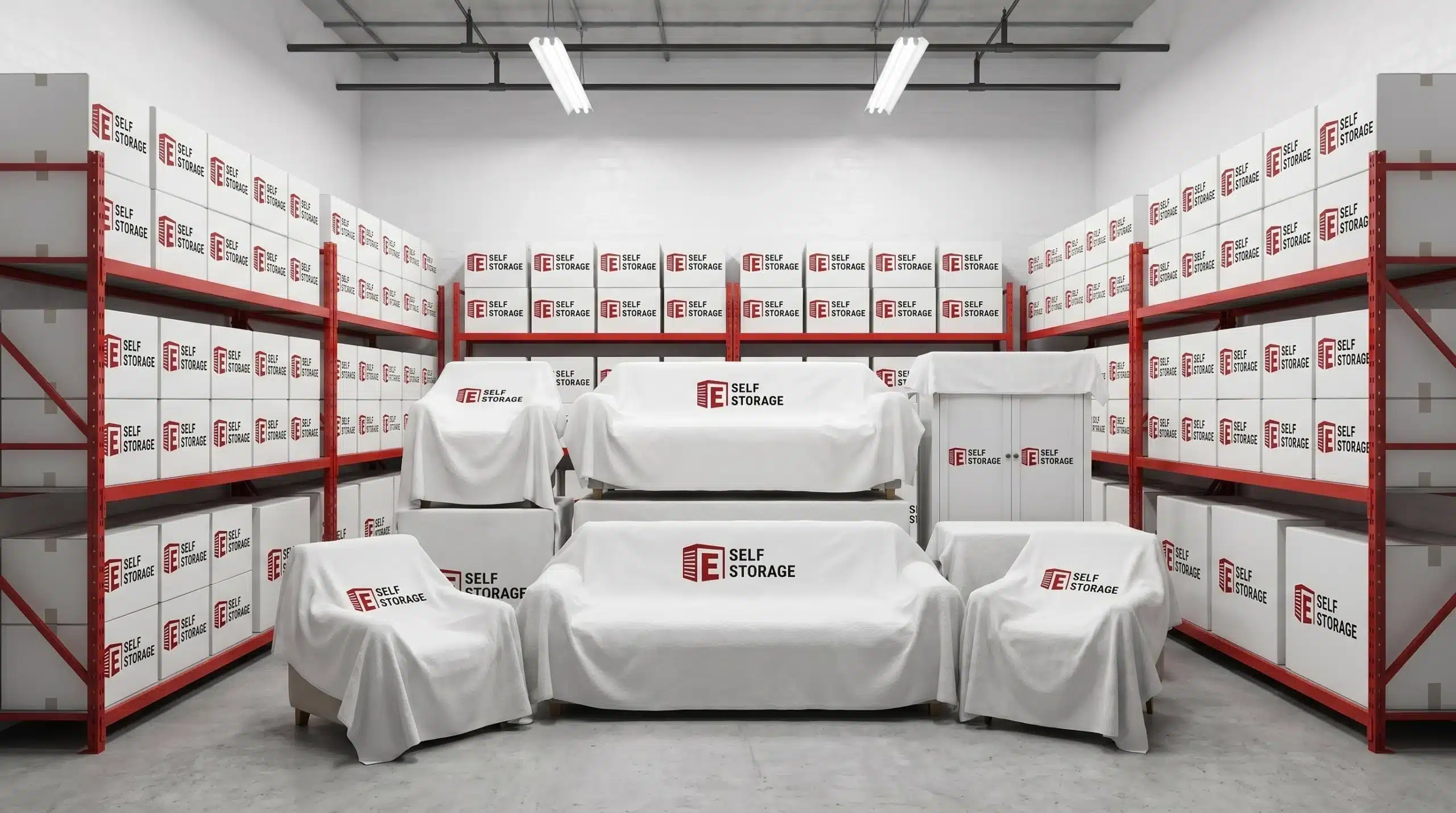
The 5 hidden costs of poor furniture storage in Dubai are: structural repair, full replacement, pest extermination, mould remediation, and business productivity loss. These costs range from AED 500 to AED 35,000 per incident, depending on furniture material, storage duration, and the degree of climate exposure in the storage environment.
Standard storage environments in Dubai uninsulated units, private garages, and rooftop rooms expose furniture to 4 active damage threats: extreme heat, high humidity, desert dust infiltration, and pest activity. Each threat produces measurable financial damage within 30–90 days of storage.
Why Does Dubai’s Climate Damage Furniture Faster Than Other Cities?
Dubai’s climate damages furniture faster than most global cities because of 3 simultaneous stress conditions: peak summer temperatures of 48°C, relative humidity between 80–90% in July and August, and year-round dust particulate levels among the highest of any urban environment globally.
According to the UAE National Centre of Meteorology, Dubai records an average of 109 days per year with temperatures above 40°C. Wood begins to warp at sustained temperatures above 35°C combined with humidity above 60%. Leather loses elasticity at temperatures above 38°C. Fabric fibres develop mould colonies at relative humidity above 70% a threshold Dubai exceeds for 3 to 4 consecutive months every year.
Unventilated storage environments in Dubai private garages, rooftop rooms, and non-climate units reach internal temperatures of 55–65°C in summer, according to UAE thermal performance standards published by the Ministry of Energy and Infrastructure. No unventilated storage environment remains safe for wood, leather, or fabric furniture during Dubai’s summer months of June through September.
What Are the 5 Hidden Costs of Poor Furniture Storage in Dubai?
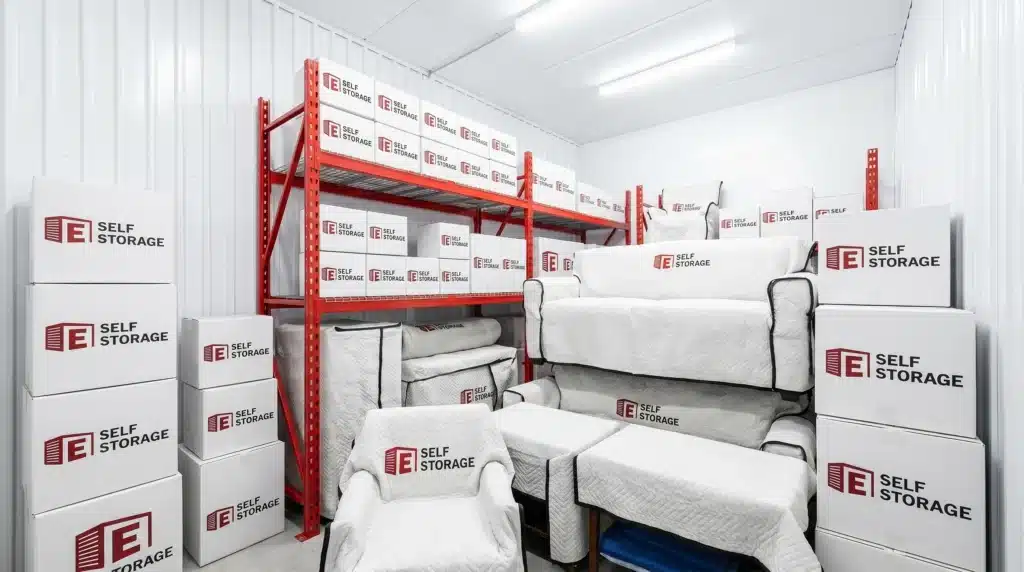
The 5 hidden costs of poor furniture storage in Dubai are: structural repair, full replacement, pest extermination, mould treatment, and business downtime.
Structural repair covers wood restoration, frame straightening, upholstery re-stitching, and joint re-bonding on furniture warped or cracked by heat exposure. Upholstery restoration in Dubai costs AED 150–600 per piece. Wood joint rebonding and surface restoration costs AED 300–1,500 per item depending on the extent of warping.
Full replacement applies when damage exceeds repair viability. A solid wood dining set costs AED 5,000–20,000 to replace in Dubai. A leather sofa set costs AED 3,500–15,000. An ergonomic office workstation costs AED 1,200–4,500. Replacement eliminates any residual value from the original asset entirely.
Pest extermination covers termite, rodent, and cockroach treatment after infestation in poorly sealed storage environments. Termites become active at temperatures above 25°C a threshold Dubai maintains for 10 months per year. Professional termite treatment in Dubai costs AED 400–1,200 per session. Termite-damaged wooden furniture requires both extermination and structural repair simultaneously, compounding total costs.
Mould treatment applies to fabric, leather, and upholstered furniture stored at humidity above 70%. Professional mould remediation in Dubai costs AED 300–800 per item for surface treatment. Mattresses, fabric sofas, and upholstered headboards with deep mould penetration are not recoverable and require full replacement.
Business downtime affects companies storing office furniture between relocations. Damaged or unusable workstations delay office setup by 5–15 business days. Replacement procurement and delivery adds AED 500–2,000 in logistics costs per order, separate from the item replacement cost itself.
How Much Does Furniture Damage Cost to Repair or Replace in Dubai?
Poor storage causes AED 2,000 to AED 35,000 in furniture repair and replacement costs for a standard 1–2 bedroom apartment’s contents stored for 6 months in an unregulated environment.
The table below defines 6 common furniture types, their primary damage risk in standard Dubai storage, and the AED cost range for repair versus full replacement.
| Furniture Type | Primary Damage Risk | Repair Cost (AED) | Replacement Cost (AED) |
|---|---|---|---|
| Solid wood dining set | Warping, joint separation | 800–2,500 | 5,000–20,000 |
| Leather sofa set | Cracking, mould | 600–1,800 | 3,500–15,000 |
| Fabric upholstered bed | Mould, dust penetration | 400–1,200 | 2,000–8,000 |
| Office workstation | Frame rust, surface damage | 500–1,500 | 1,200–4,500 |
| Antique or hardwood cabinet | Warping, veneer separation | 1,000–4,000 | Non-recoverable |
| Mattress | Deep mould penetration | Not recoverable | 800–5,000 |
Climate-controlled furniture storage in Dubai costs AED 300–1,800 per month by unit size. Over 6 months, climate-controlled storage costs AED 1,800–10,800 in total. This compares directly to AED 2,000–35,000 in potential repair or replacement costs from uncontrolled storage, a net financial saving of AED 200 to AED 24,200 over the same period.
How Does Climate-Controlled Storage Prevent Furniture Damage in Dubai?
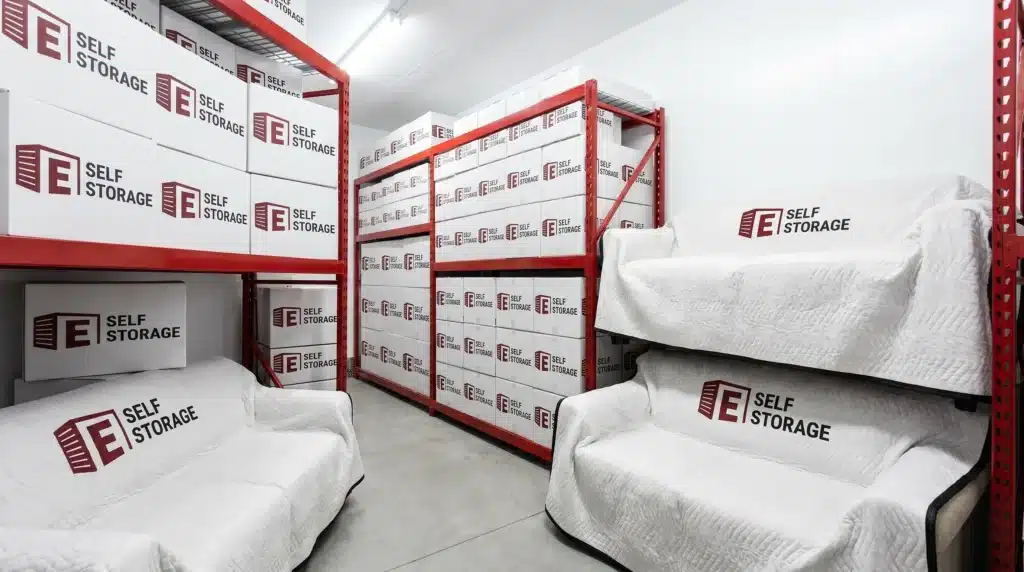
Climate-controlled furniture storage in Dubai prevents damage by maintaining internal unit temperature at 16–24°C and relative humidity below 55% year-round conditions that eliminate the 4 primary environmental damage mechanisms active in standard storage.
Climate-controlled units operate using 3 simultaneous active systems: precision air conditioning calibrated to ±2°C accuracy, dehumidification units that extract moisture continuously, and sealed door gaskets that block dust and pest entry. These systems maintain safe conditions regardless of the external temperature or humidity level.
The financial protection climate control delivers across 5 furniture material types:
- Solid wood furniture stored below 55% humidity does not warp, crack, or develop joint separation, the 3 most frequent and costly wood damage types in Dubai storage.
- Leather furniture stored below 24°C retains elasticity and surface texture without conditioning treatment, extending usable lifespan by 3–5 years compared to standard storage exposure.
- Fabric and upholstered furniture stored below 55% humidity does not develop mould colonies, eliminating the primary cause of fabric furniture write-offs in Dubai.
- Metal frames and components stored in dehumidified environments do not oxidise, preventing the surface rust that weakens structural integrity and reduces resale value by 40–60%.
- Electronics stored alongside office furniture remain within the 10–35°C manufacturer safe operating range, preventing circuit board damage from repeated thermal expansion cycles.
Which Furniture Types Require Climate-Controlled Storage in Dubai?
7 furniture and asset categories require climate-controlled storage in Dubai: solid wood pieces, leather upholstery, fabric-upholstered furniture, office electronics, antiques and collectibles, artwork, and archival documents stored alongside furniture.
- Store solid wood furniture dining tables, wardrobes, cabinets in climate control. Warping begins within 30–60 days in uncontrolled Dubai summer conditions.
- Store leather sofas, chairs, and recliners in climate control. Surface cracking begins within 45–90 days at temperatures above 38°C.
- Store fabric-upholstered beds, sofas, and chairs in climate control. Mould develops within 3–6 weeks at humidity above 70%.
- Store office electronics monitors, printers, routers in climate control. Thermal cycling above 40°C causes permanent circuit board damage within 60–90 days.
- Store antiques and handcrafted pieces in climate control. Veneer separation and hide glue bond failure begins within 2–4 weeks of heat exposure above 35°C.
- Store artworks on canvas, paper, and stretched frames in climate control. Moisture absorption and warping begin at humidity above 60%.
- Store archival documents in climate control. Paper yellowing and permanent bonding occurs at humidity above 65% within 60–90 days.
Climate-controlled storage is not required for plastic garden furniture, powder-coated metal shelving, ceramic items, and stone decorative pieces.
How Do Climate-Controlled and Standard Storage Units Compare in Dubai?
Climate-controlled units cost 20–30% more per month than standard units and prevent AED 2,000–35,000 in damage for a standard apartment’s furniture contents stored over 6 months in Dubai.
The table below compares 6 key dimensions across climate-controlled and standard furniture storage unit types available across Dubai facilities.
| Dimension | Climate-Controlled Unit | Standard Unit |
|---|---|---|
| Temperature range | 16–24°C (maintained) | 35–65°C (summer, uncontrolled) |
| Humidity level | Below 55% RH | 80–90% RH (July–August) |
| Monthly cost premium | +20–30% above standard | Base rate |
| Pest barrier | Sealed gaskets, treated entry | Varies by facility |
| Suitable furniture | All material types | Plastics and metals only |
| 6-month damage risk | Minimal | AED 2,000–35,000 |
Residents and businesses comparing furniture storage in Dubai across unit types, contract lengths, and facility locations use this cost differential as the primary decision factor between storage categories.
How to Prepare Furniture for Climate-Controlled Storage in Dubai?
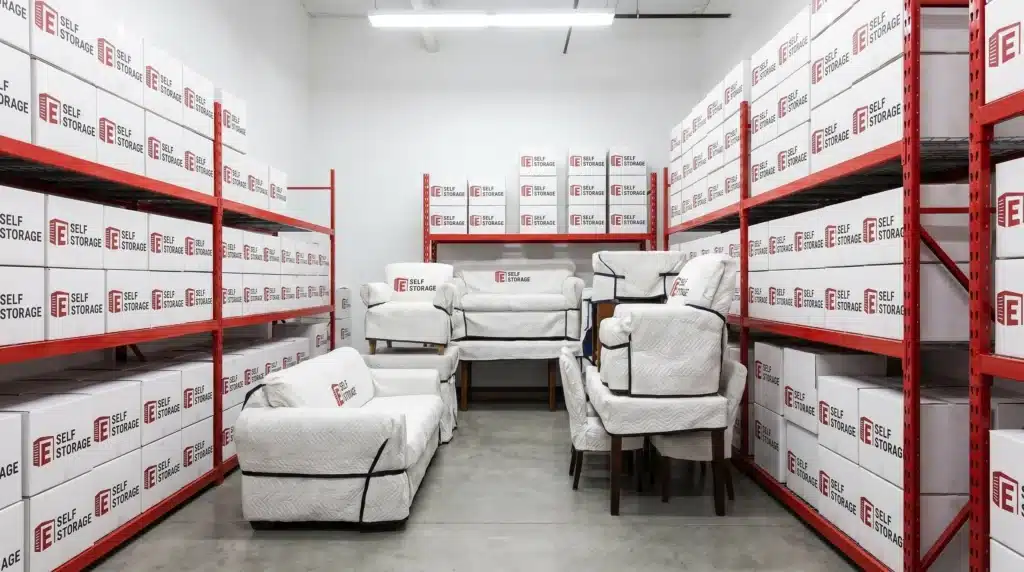
Prepare furniture for climate-controlled storage in Dubai by completing 6 steps: clean, disassemble, cover, elevate, organise, and label every item before unit entry.
- Clean every item, remove dust, grease, and surface moisture before storage. Residual moisture accelerates mould growth even inside climate-controlled units.
- Disassemble large furniture beds, dining tables, and wardrobes to reduce floor footprint and prevent structural stress from concentrated stacked weight.
- Cover all upholstered, wood, and leather items with breathable cotton or non-woven fabric covers. Plastic sheeting traps condensation and causes mold within 2–4 weeks, even in climate-controlled conditions.
- Elevate all items on wooden pallets or metal storage racks and keep no furniture in direct floor contact. Seasonal floor condensation reaches concrete surfaces before the unit’s dehumidifier fully equalises ambient humidity.
- Organise the unit with heavier items at the base and lighter items above. Maintain a 60 cm access aisle from the unit door to allow item retrieval without full unpack.
- Label every box and wrapped item on the side face, not the top. Top-face labels become unreadable once items are stacked.
Completing these 6 steps before storing reduces retrieval handling damage by 35–50%, based on standard UAE moving industry damage-frequency benchmarks.
Frequently Asked Questions
The hidden costs of avoiding climate-controlled storage in Dubai total AED 2,000–35,000 for a standard apartment’s furniture contents over 6 months. The 5 cost categories are structural repair, full replacement, pest treatment, mould remediation, and business downtime from delayed office setups.
Furniture shows measurable damage within 30–60 days in standard uncontrolled Dubai storage. Wood warping begins within 30 days at temperatures above 45°C. Mould develops on fabric within 3–6 weeks at humidity above 70%. Leather surface cracking begins within 45–90 days at temperatures above 38°C without conditioning.
Climate-controlled storage is worth the 20–30% monthly premium in Dubai for any furniture with a combined replacement value above AED 5,000. The monthly premium for climate control ranges from AED 60–400 depending on unit size compared to AED 300–4,000 in damage repair costs per item from a single Dubai summer in standard storage.
Climate-controlled furniture storage in Dubai operates across 5 main districts: Al Quoz, Jebel Ali, Dubai Investment Park, Umm Ramool, and Business Bay. Al Quoz and Jebel Ali hold the highest concentration of large-format climate-controlled facilities with the lowest per-sq-ft monthly rates in the emirate.
Antique furniture requires climate-controlled storage in Dubai without exception. Antique pieces use historical joinery techniques mortise-and-tenon, dovetail, and hide glue bonds that fail at humidity above 60% and temperatures above 35°C. No antique piece survives an uncontrolled Dubai summer without measurable structural damage.
Store a leather sofa in a climate-controlled unit at 16–24°C, covered in breathable cotton fabric, elevated on pallets. Apply a thin coat of leather conditioner before storage, confirm relative humidity stays below 55% inside the unit, and do not wrap the sofa in plastic at any stage. A leather sofa stored under these conditions retains full structural and surface integrity for 12–36 months without additional maintenance.
Residents and businesses selecting professional furniture storage in Dubai protect furniture assets against the full range of climate-driven damage costs outlined throughout this guide.
Hayyan is a logistics veteran with over 15 years of experience in facility management and spatial optimization. He specializes in warehouse security, climate-controlled storage protocols, and the technical logistics of large-scale moving. His focus is on helping clients maximize their square footage while ensuring the long-term preservation of their inventory and belongings.
Thuraya is a specialist in home organization and residential transition management. With a background in interior space planning, she helps individuals navigate the complexities of downsizing and relocation. She provides expert advice on packing fragile items, choosing optimal storage unit sizes, and turning the stress of moving into a seamless, organized experience.
 Appliances Storage
Weekend Homeowners in Ajman: Seasonal Storage for Furniture and Appliances
Written by Hayyan Al-Jasmi | Reviewed by Thuraya Al-Mansoori | Published on August 23, 2025 | Updated on May 16, 2026 Seasonal storage for…
Read More Furniture Storage
Furniture Storage During Villa Renovation in Sharjah: Step-by-Step Plan
Written by Hayyan Al-Jasmi | Reviewed by Thuraya Al-Mansoori | Published on August 23, 2025 | Updated on May 16, 2026 Furniture storage during…
Read More Furniture Storage
Climate Controlled vs Standard Storage in Sharjah: Cost Benefit for Furniture
Written by Hayyan Al-Jasmi | Reviewed by Thuraya Al-Mansoori | Published on August 23, 2025 | Updated on May 16, 2026 Climate controlled storage…
Read More