
How Climate Controlled Storage Protects Furniture in Dubai’s Heat and Humidity
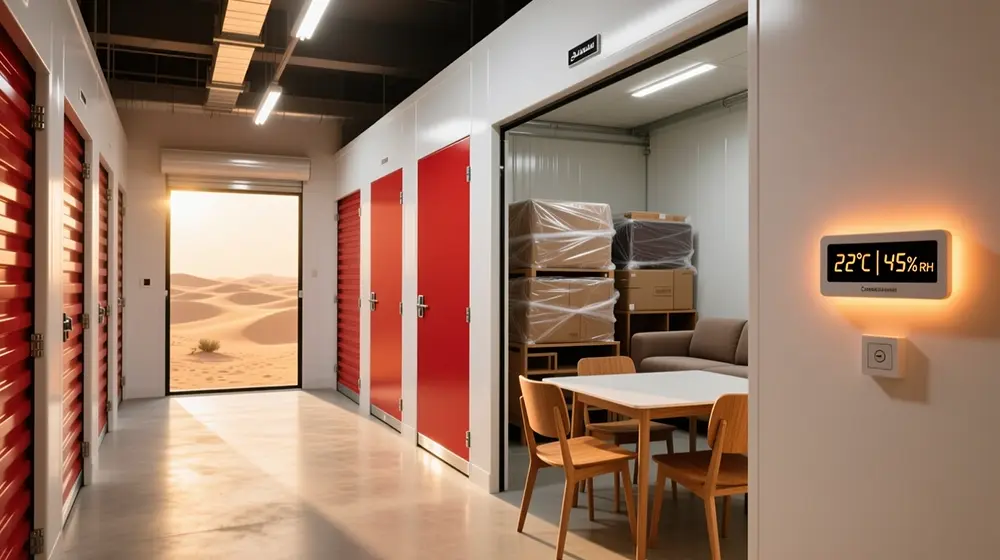
Dubai furniture faces three main storage risks: heat, humidity, and dust. Climate controlled storage reduces these risks by keeping furniture in a stable indoor environment with managed temperature, controlled humidity, filtered air, and better protection from pests and moisture.
Dubai homes often contain wooden dining tables, leather sofas, upholstered beds, wardrobes, antique cabinets, office furniture, and imported décor. These materials react differently to heat and moisture. Wood expands and shrinks. Leather dries or absorbs moisture. Fabric traps odor. Metal fittings corrode. Glue joints weaken. Climate controlled storage in Dubai protects these materials by slowing the environmental changes that cause damage.
The Dubai Government Media Office states that Dubai has an annual average humidity of about 59 percent, with higher levels linked to the shallow waters of the Arabian Gulf. Weather data also shows that Dubai’s temperature usually ranges from about 14°C to 41°C across the year, with hotter summer days rising above normal comfort levels. These conditions make ordinary storage risky for sensitive furniture.
What Is Climate Controlled Furniture Storage?
Climate controlled furniture storage is an indoor storage system that controls temperature, humidity, airflow, dust, and access. It protects furniture from the rapid heat and moisture changes common in Dubai.
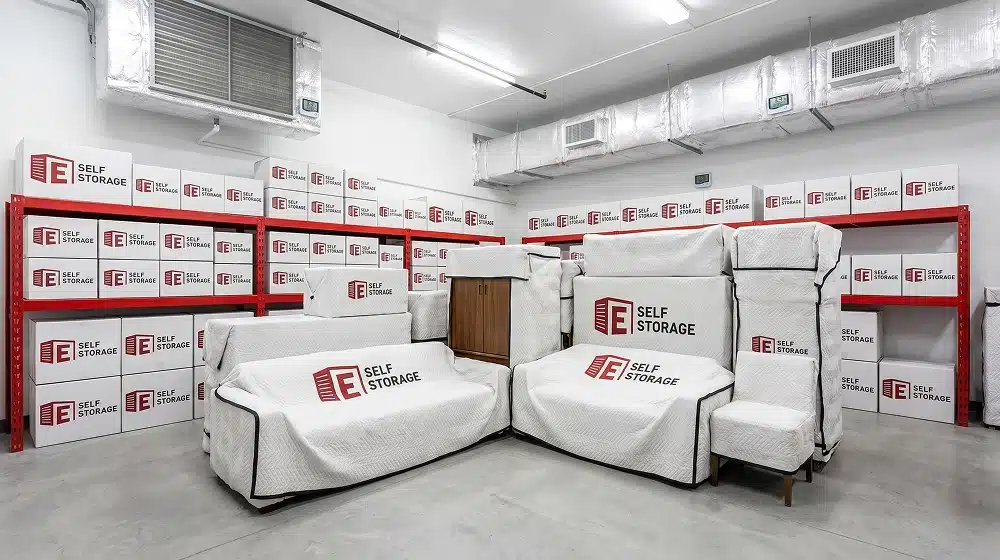
A standard storage room mainly gives space. A climate controlled storage unit gives a managed environment. The unit uses air conditioning, dehumidification, ventilation, insulation, door sealing, pest control, CCTV, and fire safety systems. The main purpose is not only cooling. The purpose is stability.
For furniture, stability matters more than extreme cold. The Canadian Conservation Institute explains that wooden furniture benefits most from a stable environment, because no oil or polish can stop wood from drying if humidity is too low.
A good climate controlled storage facility in Dubai usually manages five conditions:
- Temperature: moderate indoor cooling.
- Relative humidity: reduced moisture swings.
- Air filtration: lower dust and airborne particles.
- Ventilation: continuous airflow inside the facility.
- Security: restricted access, CCTV, alarms, and fire safety systems.
Why Does Dubai’s Climate Damage Stored Furniture?
Dubai’s climate damages stored furniture because heat speeds deterioration and humidity changes the moisture level inside wood, leather, fabric, and adhesives.
The UAE Climate Fact Sheet states that the UAE summer season from June to September has extremely high temperatures, with mean summer temperatures ranging from 32°C to 37.2°C and higher values possible in some regions. In Dubai, the coastal location adds humidity to the heat load.
Furniture does not stay passive in that environment. It reacts physically.
Wood absorbs and releases moisture. Leather loses oils and stiffens. Upholstery holds dampness and odor. Metal hinges and frames oxidize when moisture stays high. Veneer, glue, lacquer, and polish layers move at different rates, so cracks and lifting can appear over time.
The U.S. Forest Products Laboratory states that wood is hygroscopic, which means it takes on moisture from surrounding air. Moisture exchange depends mainly on relative humidity, temperature, and the current moisture content of the wood.
How Does Heat Affect Wooden Furniture in Dubai Storage?
Heat affects wooden furniture by increasing drying stress, weakening finishes, and making moisture movement faster. In Dubai storage, heat becomes more harmful when it combines with humidity swings.
Wooden furniture includes dining tables, bed frames, wardrobes, cabinets, drawers, sideboards, antique pieces, and veneer panels. These items contain solid wood, engineered wood, glue, polish, lacquer, screws, hinges, and sometimes marble or glass inserts.
Purdue University explains that wood shrinks and swells when it changes moisture content in response to changes in relative humidity. When air is humid, wood adsorbs moisture and swells. When air is dry, wood loses moisture and shrinks.
This matters in Dubai because furniture can move between three different environments:
- Air conditioned apartment.
- Hot moving truck or loading bay.
- Uncontrolled storage unit.
That movement creates stress. A wardrobe door may no longer close evenly. A dining table may cup at the edges. A drawer may stick. A veneer layer may lift from the base board. A polished surface may develop fine lines.
Climate controlled storage in Dubai reduces this risk by keeping the storage environment closer to a steady indoor range.
How Does Humidity Damage Furniture in Dubai?
Humidity damages furniture by increasing swelling, mold risk, odor, corrosion, and adhesive failure. The risk rises when relative humidity stays high or changes repeatedly.
The U.S. Environmental Protection Agency recommends keeping indoor humidity below 60 percent, ideally between 30 percent and 50 percent, to reduce moisture and mold problems. The CDC gives a stricter household mold prevention target, no higher than 50 percent all day long.
Furniture damage often appears in 6 ways:
- Wood swelling: doors, panels, drawers, and joints expand.
- Wood shrinkage: dry periods cause cracks and gaps.
- Leather stiffness: low moisture and heat cause drying.
- Fabric odor: damp fabric stores moisture and smell.
- Metal corrosion: handles, screws, springs, and frames oxidize.
- Mold growth: moisture supports fungal growth on organic surfaces.
The World Health Organization states that indoor microbial pollution is caused by bacteria and fungi, including mold, when enough moisture is available. This makes humidity control central for stored sofas, mattresses, cushions, curtains, rugs, and padded furniture.
What Humidity Level Is Safer for Furniture Storage?
A safer humidity range for sensitive furniture is often around 45 percent to 55 percent relative humidity, with limited fluctuation. For general mold control, indoor humidity below 60 percent is a key safety threshold.
The Canadian Conservation Institute recommends stable relative humidity between 45 percent and 55 percent for rawhide and semi tanned leather, and notes that mold grows best when relative humidity rises above about 65 percent. It also states that temperatures below 25°C are preferable for leather.
The International Council of Museums Committee for Conservation also cites 45 percent to 55 percent relative humidity, with limited drift, and a temperature range of 15°C to 25°C for many cultural materials. This range applies best to sensitive, valuable, or heritage type items, not to every household object.
For Dubai furniture storage, a practical target is:
- Wood furniture: 40 percent to 55 percent RH.
- Leather furniture: 45 percent to 55 percent RH.
- Upholstered furniture: below 60 percent RH.
- Antiques and veneer: stable 45 percent to 55 percent RH.
- Metal fittings: lower humidity and dry airflow.
The exact target depends on the item, age, material, finish, and storage duration.
Which Furniture Needs Climate Controlled Storage in Dubai?
Wood, leather, upholstered, antique, luxury, and imported furniture need climate controlled storage in Dubai. These furniture types contain materials that react strongly to heat, humidity, dust, and poor airflow.
Wooden Furniture
Wooden furniture needs climate controlled storage because wood expands and shrinks with moisture changes. The U.S. Forest Service states that controlling moisture content within reasonable limits helps avoid major dimensional change problems.
Examples include:
- Dining tables.
- Wardrobes.
- Bed frames.
- Cabinets.
- Console tables.
- Wooden office desks.
- Veneered panels.
Leather Sofas and Chairs
Leather sofas need climate controlled storage because leather responds to moisture and heat. Dry heat can stiffen leather, while high humidity can increase mold risk.
The Canadian Conservation Institute states that stable RH between 45 percent and 55 percent helps prevent leather from becoming damp or too dry.
Examples include:
- Leather sofas.
- Recliners.
- Dining chairs.
- Office chairs.
- Leather headboards.
Upholstered Furniture
Upholstered furniture needs humidity controlled storage because foam, cotton, linen, velvet, and polyester blends trap moisture and odor.
Examples include:
- Fabric sofas.
- Mattresses.
- Cushioned chairs.
- Ottoman benches.
- Padded headboards.
- Curtains and rugs.
Antique and Heirloom Furniture
Antique furniture needs climate controlled storage because old glue, veneer, varnish, and handmade joints react badly to humidity swings.
Examples include:
- Antique cabinets.
- Hand carved chairs.
- Veneer tables.
- Heritage trunks.
- Decorative screens.
Metal and Glass Furniture
Metal and glass furniture may not need the same humidity level as wood or leather, but metal parts still benefit from dry, filtered air.
Examples include:
- Steel bed frames.
- Chrome chairs.
- Glass tables with metal bases.
- Office cabinets.
- Display racks.
How Does Climate Controlled Storage Work?
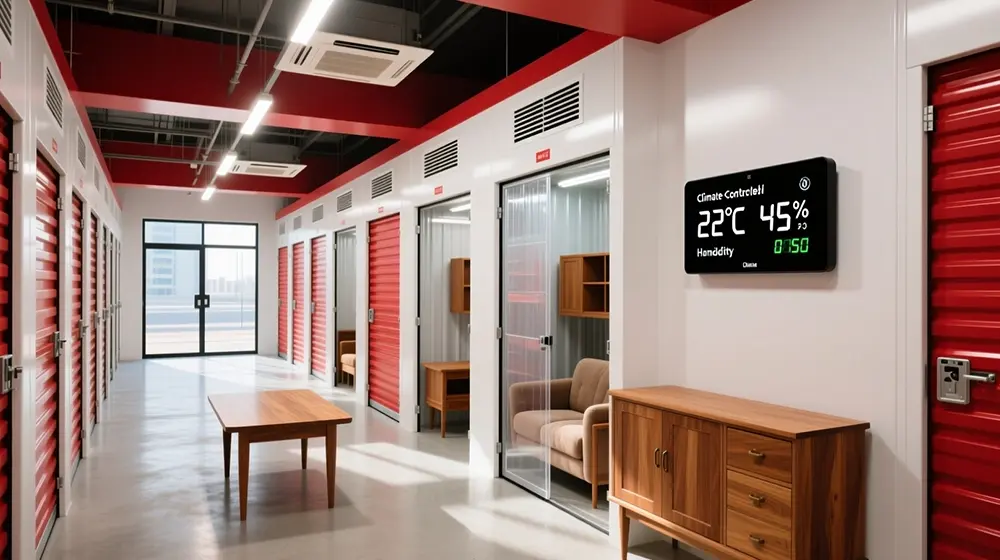
Climate controlled storage works through air conditioning, dehumidification, insulation, filtered airflow, sealed access points, and monitoring. These systems reduce heat, humidity, dust, pests, and sudden environmental changes.
A proper Dubai storage facility uses four linked systems.
1. HVAC Cooling
HVAC cooling keeps the indoor storage area within a moderate temperature band. The goal is not freezing cold air. The goal is steady indoor conditions.
Dubai Green Building Regulations state that Dubai building rules aim to improve energy use, water use, material performance, public health, safety, and building operation. This supports the value of efficient HVAC design in storage buildings.
2. Dehumidification
Dehumidification removes excess moisture from indoor air. This matters because humidity, not only heat, causes mold, swelling, odor, and corrosion.
The EPA recommends humidity below 60 percent and ideally between 30 percent and 50 percent for mold prevention.
3. Air Filtration
Air filtration reduces dust on furniture surfaces, fabric fibers, drawers, hinges, and polish. The EPA states that HEPA filters can theoretically remove at least 99.97 percent of particles at 0.3 microns.
This is useful in Dubai because fine dust can settle inside fabric, carved wood, drawer channels, and furniture joints.
4. Insulation and Sealing
Insulation and sealing reduce heat transfer from outside. They also reduce dust entry and pest movement.
A sealed indoor unit protects furniture better than an open warehouse corner because it reduces uncontrolled airflow, external humidity swings, and sand dust exposure.
What Damage Does Climate Controlled Storage Help Prevent?
Climate controlled storage helps prevent warping, cracking, mold, odor, corrosion, veneer lifting, fabric dampness, leather stiffness, and pest exposure.
Here are the main damage types.
Warping
Warping happens when one part of wood absorbs or loses moisture faster than another part. Climate controlled storage reduces this by limiting humidity swings.
Cracking
Cracking happens when wood dries or shrinks too fast. It also appears in old lacquer, veneer, and painted finishes.
Mold
Mold grows when moisture stays available. EPA guidance links mold prevention with indoor humidity control below 60 percent.
Odor
Odor forms when fabric, foam, and padding absorb moisture. Sofas, mattresses, rugs, and cushions are the highest risk items.
Corrosion
Corrosion affects hinges, bolts, sofa springs, handles, drawer runners, metal bed frames, and decorative trims.
Leather Drying
Leather drying appears as stiffness, dullness, rough texture, and cracks. Storage away from heat and moisture swings lowers the risk.
Veneer Lifting
Veneer lifting happens when the thin decorative layer separates from the base wood. Humidity movement and adhesive weakness increase this problem.
Climate Controlled Storage vs Standard Storage in Dubai
Climate controlled storage protects furniture better than standard storage because it controls the indoor environment. Standard storage mainly controls access and space.
| Factor | Standard Storage | Climate Controlled Storage |
|---|---|---|
| Temperature | Often not stable | Managed through cooling |
| Humidity | Often unmanaged | Reduced through dehumidification |
| Dust | Depends on sealing | Reduced through indoor filtration |
| Mold risk | Higher in damp conditions | Lower with RH control |
| Wood movement | More likely | Reduced by stability |
| Leather cracking | More likely in heat | Reduced by moderate conditions |
| Fabric odor | More likely | Reduced by airflow |
| Best use | Durable items, short stays | Wood, leather, fabric, antiques |
Standard storage may work for plastic bins, metal tools, temporary boxes, and low value items. Climate controlled furniture storage in Dubai is better for long term storage, luxury furniture, leather seating, wooden wardrobes, mattresses, business inventory, and imported décor.
How Long Can Furniture Stay in Climate Controlled Storage?
Furniture can stay in climate controlled storage for months or years when it is cleaned, dried, wrapped correctly, and checked regularly. The storage condition matters more than the calendar length.
Short term storage under 30 days mainly needs clean packing and safe handling. Medium term storage from 1 to 6 months needs moisture control. Long term storage above 6 months needs humidity monitoring, pest control, breathable covers, and periodic inspection.
For Dubai, summer storage needs more care because the external climate places higher pressure on cooling systems. The UAE summer climate has high temperatures from June to September, so storage facilities need stable HVAC operation during this period.
How Should Furniture Be Prepared Before Storage?

Furniture must be clean, dry, disassembled where possible, covered with breathable material, and lifted off the floor. Preparation reduces damage even inside climate controlled storage.
Use this storage preparation checklist:
- Clean wood with a dry microfiber cloth.
- Remove dust from joints, corners, grooves, and drawer tracks.
- Dry all furniture before packing.
- Disassemble beds, tables, shelves, and modular sofas.
- Keep screws, bolts, and keys in labeled bags.
- Cover wood with cotton sheets or breathable furniture covers.
- Avoid tight plastic wrapping on wood and leather.
- Use mattress bags with ventilation where available.
- Keep leather away from direct cooling vents.
- Lift furniture on pallets or blocks.
- Leave small gaps between items for airflow.
- Photograph each item before storage.
The Canadian Conservation Institute warns that oils and polish cannot solve moisture problems in wood. Stable storage conditions remain the best protection.
What Should You Avoid When Storing Furniture in Dubai?
Avoid plastic trapping, damp packing, direct floor contact, overcrowding, poor ventilation, and outdoor style storage. These mistakes increase mold, odor, staining, and pressure damage.
Avoid these 9 common mistakes:
- Storing damp furniture.
- Wrapping leather tightly in plastic.
- Placing sofas directly on concrete.
- Stacking heavy boxes on cushions.
- Leaving drawers full of heavy items.
- Storing furniture near loading bay doors.
- Using newspaper on polished wood.
- Ignoring pest control.
- Choosing storage only by lowest price.
Cheap storage can cost more later if it causes sofa odor, swollen cabinets, cracked leather, or warped doors.
How Much Does Climate Controlled Storage Cost in Dubai?
Climate controlled storage in Dubai commonly starts from low monthly rates for small units, but the final price depends on size, location, access, insurance, pickup, and facility quality.
ServiceMarket lists Dubai storage quotes starting from AED 149 per month, while Dubai self storage providers commonly price units by size, location, and service level. Some providers also list square meter or square foot rates, and prices change with promotions, access hours, and climate control features.
Practical pricing factors include:
- Unit size.
- Climate control level.
- Location, such as Al Quoz, Ras Al Khor, DIP, or Dubai Investment Park.
- 24 hour access.
- Pickup and delivery.
- Insurance.
- CCTV and access control.
- Contract length.
- Peak moving season.
- Storage duration.
For expensive furniture, the right question is not only monthly cost. The better question is replacement risk. A leather sofa, solid wood wardrobe, or antique table can cost more than several months of climate controlled storage.
How Do You Choose the Best Climate Controlled Storage Provider in Dubai?
Choose a provider by checking humidity control, temperature control, fire safety, cleanliness, pest control, access rules, insurance, and real customer reviews. A low price is not enough.
Use this provider checklist:
- Ask for the indoor temperature range.
- Ask for the relative humidity range.
- Ask whether humidity is monitored.
- Check if the facility is air conditioned, not only ventilated.
- Visit the unit before booking.
- Smell the unit for dampness or mold.
- Check dust on floors, doors, and corners.
- Confirm pest control frequency.
- Confirm CCTV coverage.
- Confirm fire alarm and fire protection systems.
- Ask for insurance terms in writing.
- Check pickup and delivery handling rules.
- Read recent reviews.
- Avoid vague answers about “safe storage.”
Dubai Civil Defence provides access to the UAE Fire and Life Safety Code of Practice, which sets the broader fire safety framework for buildings and facilities. Storage users do not need to read the full code, but they can ask providers for fire alarm, smoke detection, and safety compliance information.
Is Climate Controlled Storage Worth It for Dubai Furniture?
Climate controlled storage is worth it for Dubai furniture when the items are made of wood, leather, fabric, veneer, antique materials, or high value imported finishes. It reduces the main environmental risks linked with heat, humidity, dust, and moisture.
It is most useful for:
- Long term furniture storage.
- Summer storage.
- Villa renovation storage.
- Apartment downsizing.
- Expat relocation.
- Interior design projects.
- Business inventory.
- Hotel and office furniture.
- Leather and wooden furniture.
- Antique and heirloom pieces.
It may be unnecessary for:
- Plastic storage boxes.
- Short term metal items.
- Low value temporary items.
- Outdoor furniture designed for weather exposure.
The decision depends on value, material, storage time, and risk tolerance.
Interactive Furniture Storage Risk Check
Answer these 7 questions before booking storage in Dubai.
- Is the furniture made of solid wood, veneer, leather, fabric, or antique material?
- Is storage longer than 30 days?
- Is storage happening between June and September?
- Is the furniture expensive to replace?
- Does the item already have cracks, loose joints, or peeling veneer?
- Does the item include cushions, foam, fabric, or mattress material?
- Is the storage unit not fully air conditioned?
If the answer is yes to 3 or more questions, climate controlled storage is the safer option.
Conclusion: Protect the Furniture Before Dubai’s Climate Reaches It
Climate controlled storage protects furniture in Dubai by reducing the environmental stress that causes warping, cracking, mold, odor, corrosion, and leather damage. Dubai’s heat is not the only problem. The stronger risk is the combination of heat, humidity, dust, and sudden movement between air conditioned homes, hot trucks, loading areas, and storage rooms.
Wood, leather, fabric, veneer, metal fittings, glue, foam, and polish all react to storage conditions. A stable indoor unit gives these materials a better chance of staying close to their original shape, texture, color, and function. For short term low value storage, standard units may work. For long term furniture storage in Dubai, climate controlled storage gives stronger protection and lower replacement risk.
The best choice is a clean, monitored, insured, pest controlled, fire safe, and humidity managed facility. Good storage does not only save space. It protects the value already invested in the furniture.
FAQs About Climate Controlled Storage in Dubai
Climate controlled storage in Dubai is indoor storage with managed temperature, reduced humidity, filtered airflow, and better protection from dust, pests, and moisture.
Furniture needs climate controlled storage in Dubai when it is made of wood, leather, fabric, veneer, antique material, or expensive imported finishes.
A safer humidity range for sensitive furniture is often 45 percent to 55 percent RH, while general mold prevention guidance keeps indoor humidity below 60 percent.
Standard storage can damage wooden furniture when heat and humidity cause swelling, shrinking, warping, cracks, sticky drawers, and loose joints.
Air conditioned storage controls cooling, while climate controlled storage also manages humidity, airflow, filtration, sealing, and monitoring.
Leather furniture can crack in Dubai storage when high heat, low humidity, direct airflow, or long dry periods remove flexibility from the leather surface.
Climate controlled storage lowers mold risk, but it does not replace cleaning, drying, breathable covering, pest control, and regular inspection.
Plastic wrapping is not ideal for wood or leather during long storage because trapped moisture can increase mold, odor, and surface staining risk.
Wooden furniture, leather sofas, mattresses, upholstered chairs, rugs, antiques, artwork, documents, electronics, and luxury décor need climate controlled storage most.
Ask for the temperature range, humidity range, monitoring method, HVAC system, dehumidification system, pest control record, fire safety compliance, and insurance details.
Hayyan is a logistics veteran with over 15 years of experience in facility management and spatial optimization. He specializes in warehouse security, climate-controlled storage protocols, and the technical logistics of large-scale moving. His focus is on helping clients maximize their square footage while ensuring the long-term preservation of their inventory and belongings.
Thuraya is a specialist in home organization and residential transition management. With a background in interior space planning, she helps individuals navigate the complexities of downsizing and relocation. She provides expert advice on packing fragile items, choosing optimal storage unit sizes, and turning the stress of moving into a seamless, organized experience.
 Climate Controlled Storage
Climate-Controlled Storage for Marina Apartment Downsizing
Written by Hayyan Al-Jasmi | Reviewed by Thuraya Al-Mansoori | Published on October 18, 2025 | Updated on May 20, 2026 Downsizing a Dubai…
Read More Climate Controlled Storage
The Unit Economics Of Climate-Controlled Self Storage In Dubai: CAPEX, OPEX & 5-Year Payback
Written by Hayyan Al-Jasmi | Reviewed by Thuraya Al-Mansoori | Published on October 18, 2025 | Updated on May 20, 2026 Climate-controlled self storage…
Read More Climate Controlled Storage
Climate Controlled Storage in Fujairah
Written by Hayyan Al-Jasmi | Reviewed by Thuraya Al-Mansoori | Published on October 18, 2025 | Updated on May 20, 2026 A temperature- and…
Read More