Self Storage in Dubai: Complete Guide to Units, Security, and Pricing
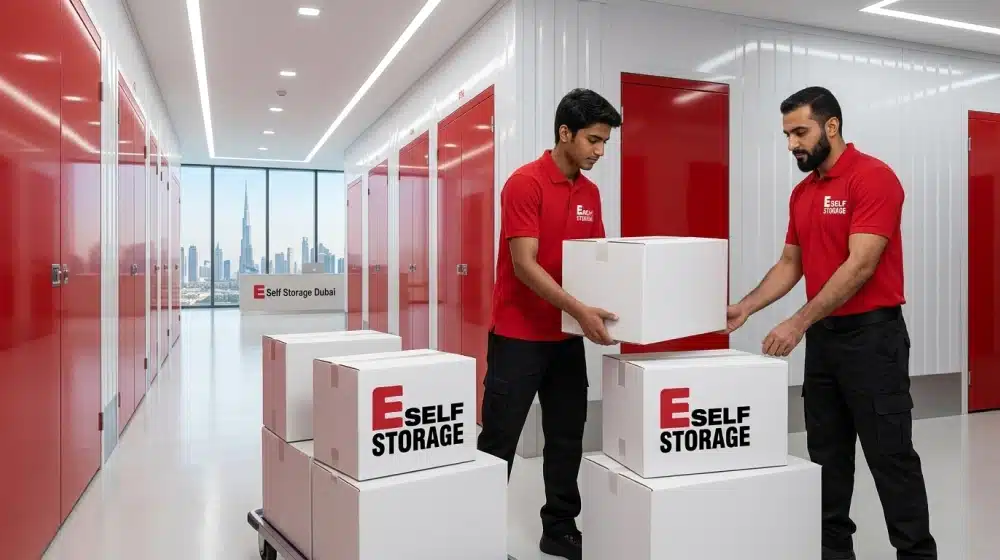
What is self storage?
Self storage is a rental service that provides individuals and businesses with private, lockable units to store personal or commercial goods for a defined period. Units range from 10 square feet to 300 square feet in Dubai. The service operates on a month-to-month lease in most facilities. Tenants hold the only key or access code to their unit.
The self storage industry started in 1958 in Fort Lauderdale, Florida, at Lauderdale Storage. The Self Storage Association (SSA) recognizes this as the first modern facility. Dubai’s first self storage facilities opened in 2005, led by operators in Al Quoz industrial zone.
Self storage differs from warehousing in three factual ways. First, self storage units are accessed by the tenant, not facility staff. Second, self storage contracts run month-to-month; warehousing contracts run annually. Third, self storage units start at 10 sqft; warehouse units start at 500 sqft. Businesses requiring larger units can explore warehouse storage in Dubai for bulk inventory needs.
How does self storage work in Dubai?
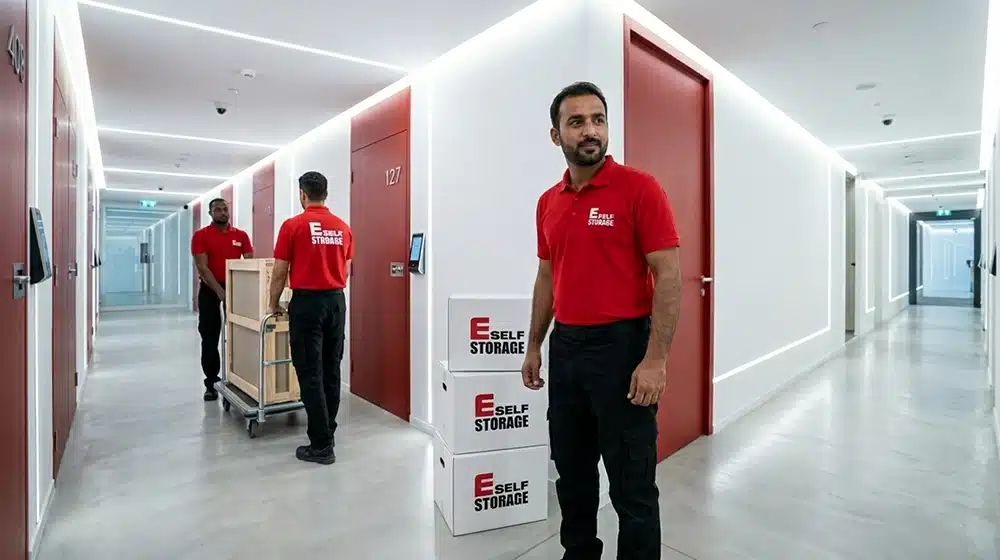
Self storage in Dubai operates in four steps: select a unit size, sign a rental agreement, receive an access code or key, and move belongings into the unit. The tenant accesses the unit during the facility’s operating hours. The facility provides security, climate control, and insurance options.
The rental agreement specifies five terms: unit number, monthly rent, access hours, notice period (typically 7 to 30 days), and prohibited items. Payment is processed through bank transfer, credit card, or direct debit. Most Dubai facilities require a security deposit equal to one month’s rent.
What unit sizes are available in Dubai self storage facilities?
Dubai self storage facilities offer six standard unit sizes: 10 sqft, 25 sqft, 50 sqft, 100 sqft, 200 sqft, and 300 sqft. Each size accommodates a specific volume of belongings measured in cubic meters.
| Unit Size | Square Feet | Cubic Meters | Equivalent Storage |
|---|---|---|---|
| Locker | 10 sqft | 2.5 m³ | 20 document boxes or 1 small bicycle |
| Small | 25 sqft | 6 m³ | Studio apartment contents minus furniture |
| Medium | 50 sqft | 12 m³ | One-bedroom apartment contents |
| Large | 100 sqft | 24 m³ | Two-bedroom apartment contents |
| Extra Large | 200 sqft | 48 m³ | Three-bedroom villa contents |
| Warehouse | 300 sqft | 72 m³ | Four-bedroom villa contents or business inventory |
10 sqft locker units
A 10 sqft locker stores 20 document boxes, 1 bicycle, or seasonal clothing for a family of four. The unit measures approximately 3 feet by 3 feet with a 10-foot ceiling.
25 sqft small units
A 25 sqft unit stores the contents of a studio apartment excluding furniture. The unit holds 40 medium boxes and small appliances.
50 sqft medium units
A 50 sqft unit stores one-bedroom apartment contents including a single bed, a two-seater sofa, a dining table, and 30 boxes.
100 sqft large units
A 100 sqft unit stores two-bedroom apartment contents including two beds, a three-seater sofa, wardrobes, a refrigerator, and 50 boxes. Residents storing household furniture can review dedicated furniture storage services in Dubai for climate-controlled protection.
200 sqft extra large units
A 200 sqft unit stores three-bedroom villa contents including bedroom sets, living room furniture, kitchen appliances, and 80 boxes.
300 sqft warehouse units
A 300 sqft unit stores four-bedroom villa contents or business inventory equivalent to 10 commercial pallets.
How much does self storage cost in Dubai?
Self storage in Dubai costs between AED 150 and AED 3,800 per month, depending on unit size, location, and climate control. Prices increase by 20% to 30% for climate-controlled units compared to non-climate-controlled units.
| Unit Size | Non-Climate-Controlled (AED/month) | Climate-Controlled (AED/month) |
|---|---|---|
| 10 sqft | 150 – 250 | 200 – 320 |
| 25 sqft | 300 – 450 | 380 – 570 |
| 50 sqft | 550 – 750 | 700 – 950 |
| 100 sqft | 900 – 1,300 | 1,150 – 1,650 |
| 200 sqft | 1,600 – 2,200 | 2,050 – 2,800 |
| 300 sqft | 2,200 – 3,000 | 2,800 – 3,800 |
Prices reflect the Dubai market average across Al Quoz, Dubai Investment Park, and Ras Al Khor facilities as of January 2026. Long-term contracts of 6 months or 12 months reduce the monthly rate by 5% to 15%.
What security features do Dubai self storage facilities provide?
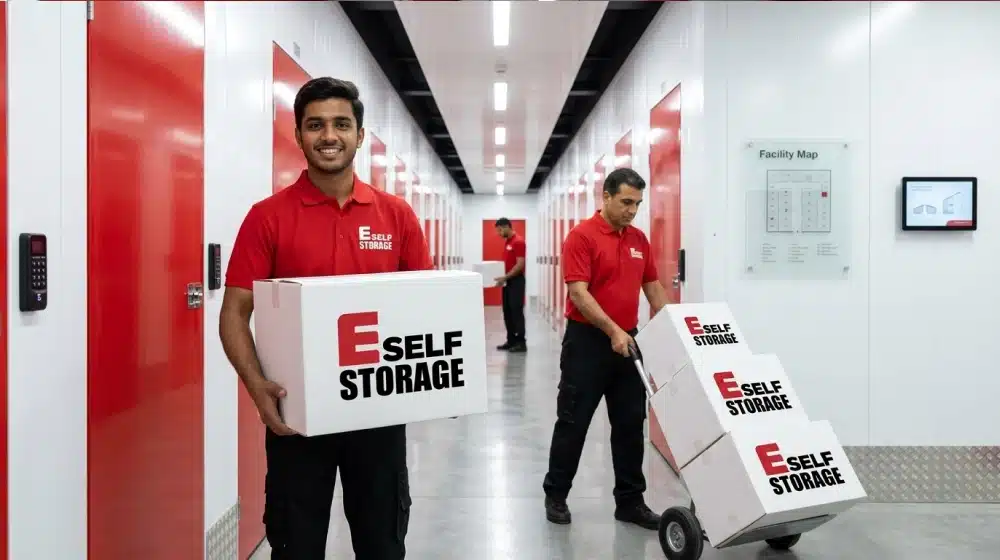
Dubai self storage facilities provide seven standard security features: 24/7 CCTV surveillance, individual unit alarms, biometric access, PIN code entry, gated perimeter fencing, on-site security personnel, and fire suppression systems. These features align with Dubai Police Security Systems Department standards for commercial storage premises.
24/7 CCTV surveillance
Facilities install a minimum of 16 cameras per 10,000 sqft of storage space. Cameras record footage at 1080p resolution. Recordings are retained for 30 to 90 days.
Individual unit alarms
Each unit connects to the central alarm system. The alarm triggers when the unit is accessed without an authorized code. The security team responds within 5 minutes.
Biometric access
Biometric systems use fingerprint or facial recognition. The system logs every entry with a timestamp. Access logs are retained for 12 months.
PIN code entry
Tenants receive a unique 6-digit PIN. The PIN grants access to the facility gate and the individual unit.
Gated perimeter fencing
Facilities are enclosed by 2.5-meter steel fencing. The main gate operates on the same PIN code system.
On-site security personnel
Security guards are present 24 hours per day, 7 days per week. Guards patrol the facility every 2 hours.
Fire suppression systems
Facilities install smoke detectors, heat sensors, and sprinkler systems that comply with UAE Civil Defence standards (UAE Fire and Life Safety Code of Practice, 2018 edition).
What is climate-controlled self storage?
Climate-controlled self storage is a unit that maintains temperature between 18°C and 24°C and humidity between 40% and 55%. The system runs 24 hours per day. Climate control protects items from Dubai’s peak summer temperatures, which reach 45°C in July and August according to the National Center of Meteorology.
Climate-controlled units are required for seven item categories:
- Artwork and paintings with oil or acrylic media
- Electronics including laptops, cameras, and audio equipment
- Leather furniture and leather goods
- Wooden antique furniture
- Musical instruments including pianos and guitars
- Paper documents, books, and photographs
- Wine and pharmaceutical products
Non-climate-controlled units are suitable for metal tools, outdoor equipment, plastic containers, and sealed commercial inventory. For technical details on temperature setpoints and energy efficiency, read the climate control setpoints guide for UAE storage. For furniture-specific protection against Dubai humidity, see climate-controlled storage in Dubai for furniture.
Who uses self storage in Dubai?
Self storage in Dubai serves four primary user groups: expatriate residents, local families, small businesses, and e-commerce operators. Each group uses storage for different purposes and duration.
Expatriate residents
Expats represent 88.52% of the UAE population according to the Federal Competitiveness and Statistics Centre (2024 data). Expats use self storage during relocation, visa transitions, and annual leave periods. The average rental period is 3 to 6 months.
Local families
Emirati and resident families use self storage for seasonal items, furniture during villa renovation, and inherited belongings. The average rental period is 6 to 12 months.
Small businesses
Small and medium enterprises (SMEs) use self storage for inventory, archived documents, and trade show equipment. Dubai SME count exceeded 557,000 companies in 2024 according to Dubai Chamber of Commerce. The average rental period is 12 months or longer.
E-commerce operators
E-commerce sellers on Amazon.ae, Noon, and independent platforms use self storage for product inventory and order fulfillment. The average rental period is 6 to 12 months.
Where are self storage facilities located in Dubai?
Self storage facilities in Dubai are concentrated in six industrial and commercial zones: Al Quoz, Dubai Investment Park (DIP), Ras Al Khor, Jebel Ali, Al Qusais, and Dubai South. Each zone offers different accessibility and price points.
| Zone | Distance from Downtown Dubai | Average Unit Price (100 sqft) |
|---|---|---|
| Al Quoz | 15 km | AED 1,100/month |
| Dubai Investment Park | 30 km | AED 950/month |
| Ras Al Khor | 12 km | AED 1,200/month |
| Jebel Ali | 35 km | AED 900/month |
| Al Qusais | 20 km | AED 1,000/month |
| Dubai South | 45 km | AED 850/month |
Al Quoz holds the highest concentration of self storage facilities due to its central location and designated commercial zoning under Dubai Municipality regulations. Residents outside Dubai can also consider self storage in Ajman, self storage in Sharjah, or self storage in Umm Al Quwain depending on their emirate.
What are the access hours for Dubai self storage units?
Dubai self storage facilities offer three access models: 24/7 access, extended access (6 AM to 10 PM), and business hours access (8 AM to 8 PM). The access model affects the monthly rental price by 10% to 20%.
24/7 access facilities charge a premium of 15% to 20%. Extended access facilities charge a premium of 5% to 10%. Business hours access represents the baseline pricing.
How do you choose the right self storage unit in Dubai?
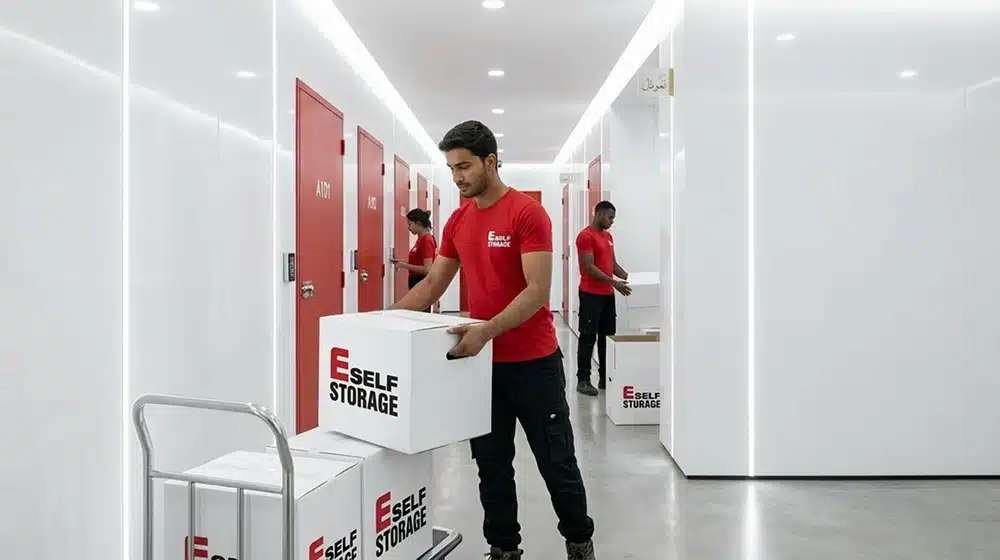
Selecting a self storage unit in Dubai requires five decisions: unit size, climate control, access hours, location, and contract length. Each decision affects cost and convenience.
- Unit size: Measure the volume of items in cubic meters. Add 20% for access pathways inside the unit.
- Climate control: Choose climate-controlled units for artwork, electronics, leather, wood, documents, and instruments.
- Access hours: Select 24/7 access for business inventory. Select business hours access for seasonal household items.
- Location: Choose facilities within 20 km of the primary residence or business.
- Contract length: Choose month-to-month contracts for short-term needs under 6 months. Choose annual contracts for long-term needs above 12 months.
Individuals storing household belongings can review personal storage options in Dubai for short-term and long-term plans.
What items are prohibited in Dubai self storage units?
Dubai self storage facilities prohibit twelve item categories under UAE Federal Law No. 24 of 1999 on environmental protection and Dubai Municipality commercial storage regulations.
- Flammable liquids including petrol, diesel, and solvents
- Explosives and fireworks
- Compressed gas cylinders
- Firearms and ammunition
- Illegal drugs and controlled substances
- Perishable food items
- Live animals and plants
- Human or animal remains
- Toxic chemicals and pesticides
- Radioactive materials
- Stolen goods
- Cash and precious metals above AED 50,000 value without declaration
Violation of prohibited item rules results in immediate contract termination and reporting to Dubai Police.
How long can you rent a self storage unit in Dubai?
Dubai self storage rental periods range from 1 week to 10 years. Most facilities offer month-to-month contracts with a minimum rental period of 4 weeks. Long-term contracts of 6 months, 12 months, and 24 months provide discounted rates.
Short-term rentals under 1 month are available at 35% of facilities in Dubai. Medium-term rentals of 1 to 6 months represent 68% of all self storage contracts in Dubai. Long-term rentals above 12 months account for 24% of contracts.
What insurance options are available for Dubai self storage?
Dubai self storage facilities offer three insurance tiers: basic coverage up to AED 10,000, standard coverage up to AED 50,000, and premium coverage up to AED 250,000. Insurance premiums range from AED 25 to AED 200 per month.
Insurance covers six risk categories: fire damage, water damage, theft, vandalism, natural disaster, and accidental damage during facility handling. Insurance does not cover jewelry, cash, documents of personal value, or items stored against facility rules.
How do you pack items for self storage in Dubai?
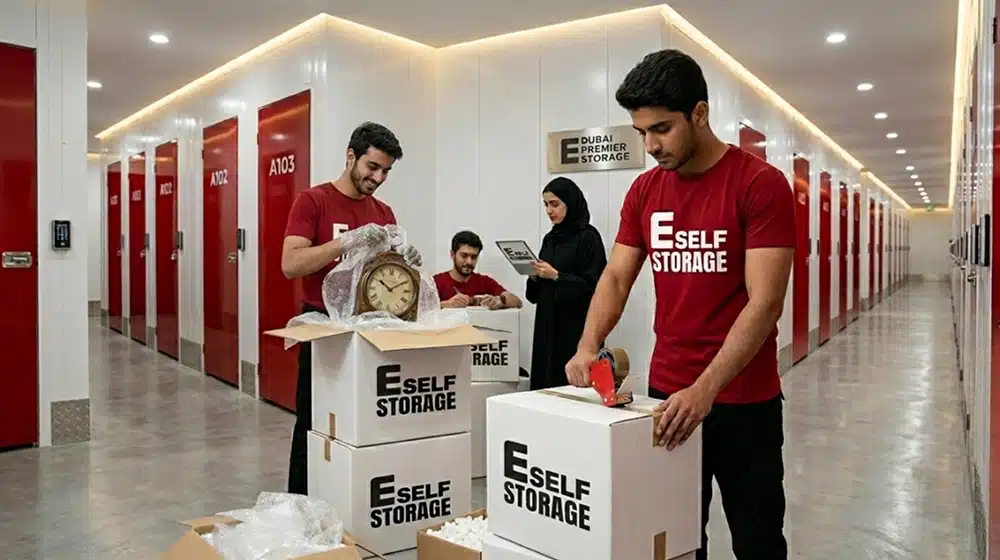
Packing items for self storage in Dubai follows six steps: disassemble furniture, wrap fragile items in bubble wrap, pack boxes by room category, label each box, stack heavier boxes at the base, and leave a 30 cm access pathway.
Disassemble furniture
Remove legs from tables, separate bed frames, and detach mirrors from dressers. Store screws and bolts in labeled plastic bags taped to the main piece.
Wrap fragile items
Use 3 layers of bubble wrap for glass, ceramics, and electronics. Fill empty space in boxes with packing peanuts or crumpled paper.
Pack by room category
Group items by original room: kitchen, living room, bedroom, bathroom, garage. Packing by category reduces retrieval time by 60%.
Label each box
Write the contents, room category, and fragility level on three sides of each box. Use waterproof markers to prevent smudging.
Stack heavier boxes at the base
Place boxes over 10 kg at the base. Place boxes under 5 kg at the top. This stacking method prevents box collapse.
Leave an access pathway
Leave a 30 cm pathway from the unit entrance to the back wall. The pathway provides access to items stored at the rear.
What is the difference between self storage and warehousing?
Self storage differs from warehousing in access, contract length, unit size, and pricing model. The table below shows the four primary differences.
| Factor | Self Storage | Warehousing |
|---|---|---|
| Access | Tenant accesses directly | Staff retrieves items |
| Contract | Month-to-month | Annual minimum |
| Unit size | 10 sqft to 300 sqft | 500 sqft minimum |
| Pricing | Fixed monthly rate | Per pallet or cubic meter |
Self storage suits personal belongings and small business inventory. Warehousing suits bulk commercial inventory above 500 sqft.
Is self storage in Dubai regulated?
Self storage in Dubai is regulated under Dubai Economic Department (DED) commercial licensing rules and Dubai Municipality building regulations. Operators require a commercial trade license with activity code 522009 (Storage Services).
Facilities must comply with three regulatory frameworks:
- UAE Fire and Life Safety Code of Practice (2018): covers fire suppression and emergency exits
- Dubai Municipality Building Code: covers structural safety and ventilation
- UAE Federal Law No. 24 of 1999: covers environmental and hazardous material rules
Key Takeaways
Self storage in Dubai provides secure, flexible storage for expatriates, local families, small businesses, and e-commerce operators. Units range from 10 sqft to 300 sqft. Prices range from AED 150 to AED 3,800 per month. Climate-controlled units maintain 18°C to 24°C and 40% to 55% humidity. Facilities operate under Dubai Economic Department licensing and Dubai Municipality regulations.
Frequently Asked Questions
Yes, 24/7 access is offered by 42% of self storage facilities in Dubai. The remaining 58% offer extended access (6 AM to 10 PM) or business hours access (8 AM to 8 PM).
A 50 sqft non-climate-controlled unit costs AED 550 to AED 750 per month. A 50 sqft climate-controlled unit costs AED 700 to AED 950 per month.
Yes, 200 sqft and 300 sqft units accommodate one passenger vehicle. Vehicle storage requires draining fuel to a quarter tank and disconnecting the battery.
The facility sends a payment reminder after 7 days. After 30 days of non-payment, the facility places a lien on the unit contents. After 60 days, the contents are auctioned under UAE Commercial Transactions Law Article 272.
Climate-controlled units are worth the 20% to 30% price premium for artwork, electronics, leather, wood, paper, and musical instruments. Non-climate-controlled units are sufficient for metal tools, outdoor equipment, and sealed commercial goods.
No, Dubai Economic Department (DED) does not accept self storage units as registered business addresses. Businesses require a commercial office address for trade license registration.
The minimum rental period is 4 weeks at most Dubai facilities. Weekly rental options under 4 weeks are available at 35% of facilities with a 25% price premium.
Yes, 78% of Dubai self storage facilities sell packing materials on-site. Packing boxes cost AED 8 to AED 25. Bubble wrap rolls cost AED 30 to AED 80. Packing tape costs AED 10 to AED 15.
Hayyan is a logistics veteran with over 15 years of experience in facility management and spatial optimization. He specializes in warehouse security, climate-controlled storage protocols, and the technical logistics of large-scale moving. His focus is on helping clients maximize their square footage while ensuring the long-term preservation of their inventory and belongings.
Thuraya is a specialist in home organization and residential transition management. With a background in interior space planning, she helps individuals navigate the complexities of downsizing and relocation. She provides expert advice on packing fragile items, choosing optimal storage unit sizes, and turning the stress of moving into a seamless, organized experience.
 Self Storage
What are the penalties for violating Dubai no-entry rules during commercial vehicle restricted timings?
Written by Hayyan Al-Jasmi | Reviewed by Thuraya Al-Mansoori | Published on November 27, 2024 | Updated on April 24, 2026 Penalties include cash…
Read More Self Storage
Heavy Vehicle No-Entry Timings By Emirate: Fujairah
Written by Hayyan Al-Jasmi | Reviewed by Thuraya Al-Mansoori | Published on November 27, 2024 | Updated on April 24, 2026 A self storage…
Read More Self Storage
2026 Heavy Vehicle No-Entry Timings In Ras Al Khaimah
Written by Hayyan Al-Jasmi | Reviewed by Thuraya Al-Mansoori | Published on November 27, 2024 | Updated on April 24, 2026 Self storage in…
Read More