
Storage Trends in Dubai: What Modern Consumers Want
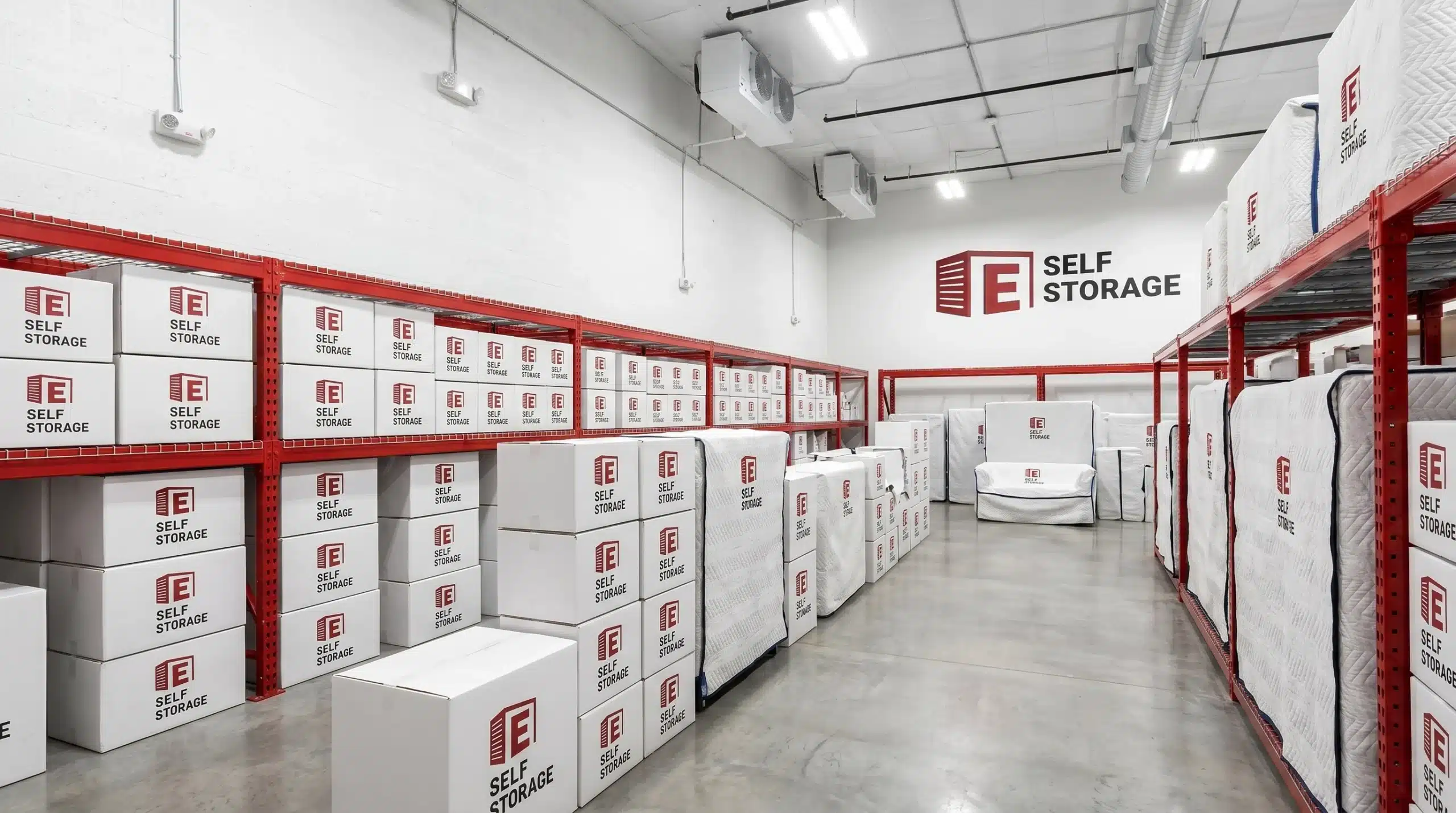
Storage demand in Dubai is moving toward on-demand access, climate protection, and flexible monthly pricing. The UAE self-storage market generated USD 602.5 million in revenue in 2024 and is forecast to reach USD 859.2 million by 2030, a compound annual growth rate of 6.3%. Seven storage trends now define what modern consumers in Dubai want from a storage provider in 2026.
These trends reflect a city of high-rise apartments, a large expatriate workforce, and rapid e-commerce growth. Each trend below answers a question buyers ask before they store.
Why is storage demand in Dubai changing?
Storage demand in Dubai is changing because apartment living, frequent relocation, and online retail reduce spare space at home and at work. Smaller floor plans hold fewer belongings. A workforce that moves between leases needs space for furniture in the gaps. Online sellers need stock room without a warehouse lease.
Three forces drive the shift: limited apartment space, high resident turnover, and demand for service-led convenience. Traditional warehouse storage answers none of these well. Modern providers answer all three with pickup, climate control, and per-item pricing.
What is on-demand box storage in Dubai?
On-demand box storage lets a customer store individual boxes instead of renting a full unit. The provider collects packed boxes from the home, holds them in a managed facility, and returns them on request. Pricing applies per box, not per square foot.
This model suits frequent flyers, students in shared apartments, and minimalist residents. A customer stores six boxes for a season, then retrieves two without a trip to a warehouse. Providers that offer box storage remove the cost of empty space inside a leased unit.
Why is climate-controlled storage in demand in Dubai?
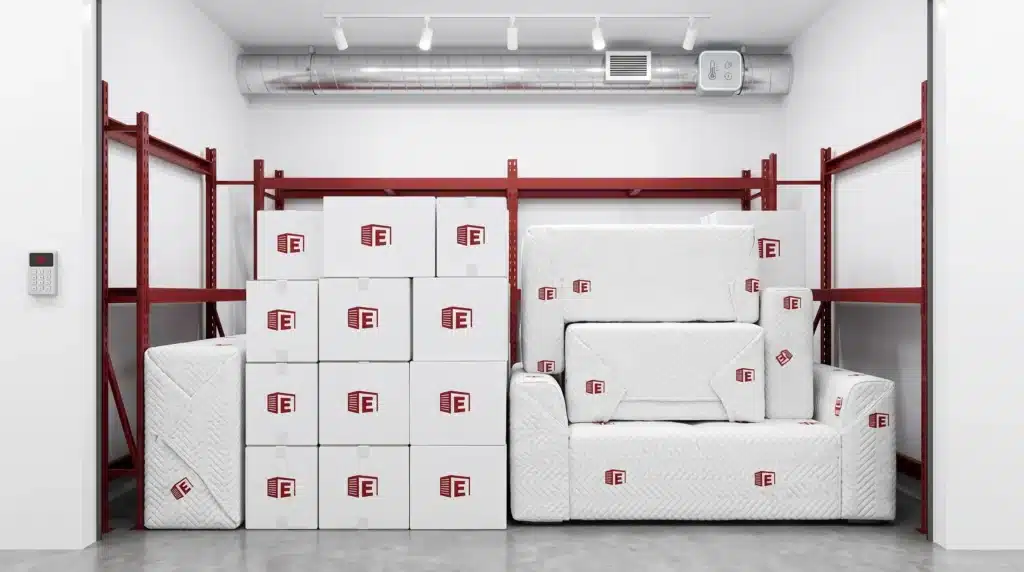
Climate-controlled storage protects belongings from Dubai’s extreme summer heat and humidity. The National Centre of Meteorology recorded average July maximums near 48.5°C and August maximums near 48.8°C, with coastal humidity rising to 90%. Uncontrolled heat warps wood, cracks leather, and degrades electronics and paper documents.
A climate-controlled unit holds a stable temperature and regulated humidity through the year. Expatriate families store furniture between leases in these units. Small businesses store inventory and archived records the same way. Demand for climate control signals a clear consumer priority: long-term protection over the lowest monthly rate.
How is smart technology changing storage in Dubai?
Smart technology changes storage in Dubai through mobile booking, digital inventories, and automated billing. A customer books a pickup in an app, views stored items in an online catalogue, and receives renewal reminders without a phone call.
Three features now meet resident expectations: app-based pickup and delivery, a photo inventory of every stored item, and automatic payment reminders. Dubai residents who order rides and meals in seconds expect the same speed from a storage provider. Technology turns a warehouse transaction into an on-screen service.
What flexible pricing models do Dubai storage providers offer?
Dubai storage providers offer per-box rates, short-term traveller plans, and seasonal business discounts in place of fixed annual contracts. A traveller stores luggage for three weeks. A retailer rents extra space only during a sales peak. A student pays for six boxes across one summer.
Flexible pricing opens storage to budgets that a yearly lease excludes. Grand View Research reports that medium-sized units generated the highest revenue share of the UAE market in 2024, while large units rank as the fastest-growing segment through 2030. Pricing flexibility widens the customer base across both sizes.
How does minimalism drive storage demand in Dubai?
Minimalism drives storage demand by separating daily-use items from seasonal and sentimental ones. A resident keeps a clear apartment and stores winter clothing, travel gear, and keepsakes off-site. The home stays uncluttered, and owned possessions stay in hand.
Young professionals in furnished rentals use storage this way most often. Families store seasonal decorations and inherited items between uses. Minimalist living and self-storage work as a pair: one clears the living space, the other preserves what the resident chooses to keep.
How does e-commerce growth drive business storage in Dubai?
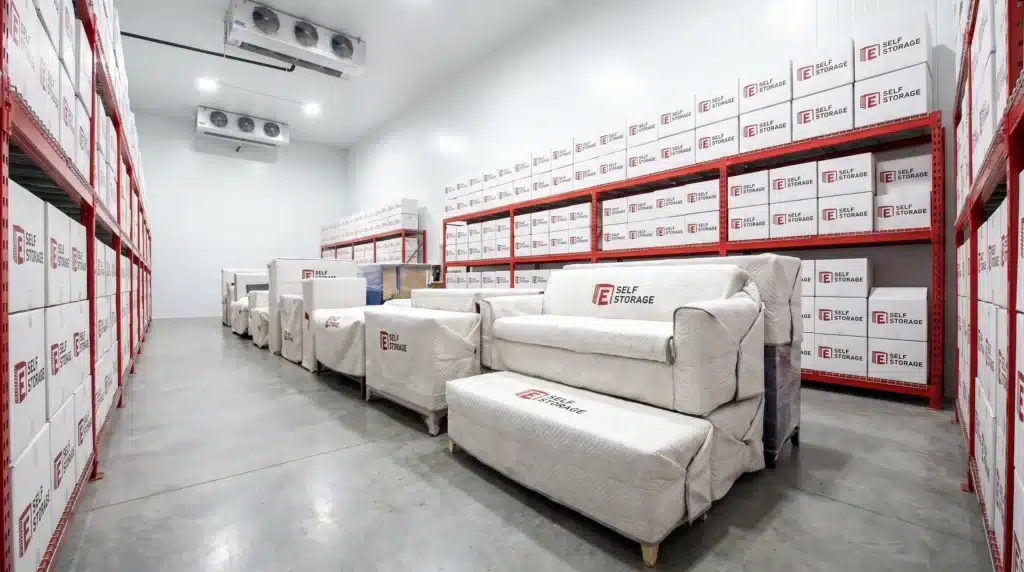
E-commerce growth drives business storage because online sellers need stock space without a full warehouse lease. Dubai’s e-commerce market reached AED 32.3 billion (USD 8.8 billion) in 2024 and is projected to reach AED 50.6 billion (USD 13.8 billion) by 2029, according to the Dubai Department of Economy and Tourism. More online orders require more held inventory.
Small businesses and startups store stock, packaging, and documents in flexible units. A seller scales space up before a peak and down afterward. Business storage now sits inside supply-chain planning for Dubai’s smaller online retailers.
Why is sustainable storage a trend in Dubai?
Sustainable storage is a trend in Dubai because consumers weigh environmental impact alongside price and security. Providers that use recyclable packaging, consolidated delivery routes, and energy-efficient facilities meet that preference. The shift aligns with Dubai’s published sustainability targets.
Environmentally minded residents choose lower-waste providers. Businesses select them to support their own environmental reporting. Sustainable practice now functions as a selection criterion, not an optional extra.
What do modern storage consumers in Dubai want?
Modern storage consumers in Dubai want five things: convenient pickup and delivery, climate protection, transparent pricing, flexible terms, and sustainable operations. These priorities replace the single old requirement of floor space.
Convenience covers app booking, collection, and digital inventory. Protection covers climate control and security. Affordability covers per-box and short-term rates. Flexibility covers short-term, long-term, and seasonal use. Sustainability covers recyclable materials and efficient logistics. Together, the seven storage trends in Dubai point to one conclusion: modern consumers treat storage as a managed service, not a rented room.
Frequently asked questions about storage trends in Dubai
Self storage in Dubai starts from around AED 400 per month for a small climate-controlled unit. Final cost depends on unit size, rental length, and pickup. Per-box and short-term plans lower the entry price for light storage needs.
On-demand storage is a service in which a provider collects packed boxes from your home, stores them in a managed facility, and returns them on request. You pay per box rather than for a full unit.
Climate-controlled storage is necessary for heat-sensitive items in Dubai. Summer temperatures approach 48°C with humidity up to 90%. Wood, leather, electronics, documents, and artwork degrade without regulated temperature and humidity.
On-demand box storage and business storage grow fastest in Dubai, both tied to e-commerce expansion and flexible pricing. Large storage units rank as the fastest-growing size segment of the UAE market through 2030.
Hayyan is a logistics veteran with over 15 years of experience in facility management and spatial optimization. He specializes in warehouse security, climate-controlled storage protocols, and the technical logistics of large-scale moving. His focus is on helping clients maximize their square footage while ensuring the long-term preservation of their inventory and belongings.
Thuraya is a specialist in home organization and residential transition management. With a background in interior space planning, she helps individuals navigate the complexities of downsizing and relocation. She provides expert advice on packing fragile items, choosing optimal storage unit sizes, and turning the stress of moving into a seamless, organized experience.
 Self Storage
What are the penalties for violating Dubai no-entry rules during commercial vehicle restricted timings?
Written by Hayyan Al-Jasmi | Reviewed by Thuraya Al-Mansoori | Published on August 26, 2025 | Updated on June 16, 2026 Penalties include cash…
Read More Self Storage
Heavy Vehicle No-Entry Timings By Emirate: Fujairah
Written by Hayyan Al-Jasmi | Reviewed by Thuraya Al-Mansoori | Published on August 26, 2025 | Updated on June 16, 2026 A self storage…
Read More Self Storage
2026 Heavy Vehicle No-Entry Timings In Ras Al Khaimah
Written by Hayyan Al-Jasmi | Reviewed by Thuraya Al-Mansoori | Published on August 26, 2025 | Updated on June 16, 2026 Self storage in…
Read More