
Student Storage in Dubai: Cost, Pickup, and What to Store During Summer Break
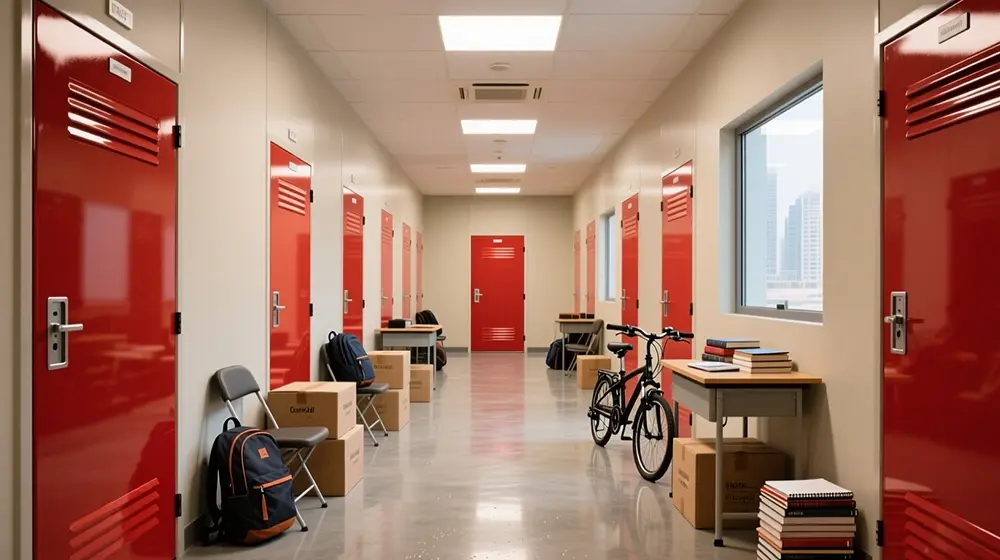
Student storage in Dubai is a short-term storage solution for university students who need a secure place for books, luggage, clothing, electronics, and dorm-room items during summer break, semester gaps, internships, or housing transitions. This topic is most relevant to students living in Dubai International Academic City, Dubai Knowledge Park, Dubai Silicon Oasis, Jumeirah Village Circle, and nearby student housing areas.
Student storage in Dubai usually combines 4 service elements:
- Short rental duration
- Pickup from student housing
- Inventory labeling
- Protected indoor storage conditions
This combination matters because room handover dates are fixed, while student travel and return dates vary.
Why do students in Dubai look for summer storage?
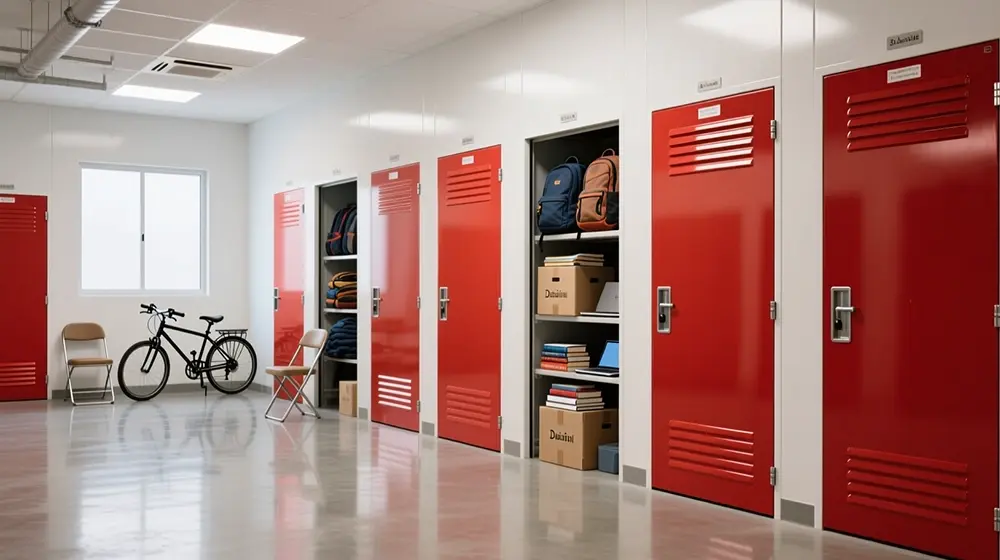
Students in Dubai look for summer storage because accommodation timelines and travel timelines rarely match. Many students leave the UAE for 30 to 120 days, but student housing often requires rooms to be cleared before the next semester cycle begins. The same pattern appears in university housing systems outside the UAE. MIT requires students to remove personal belongings during move-out and points students to summer storage options, while the University of Minnesota offers a summer storage option tied directly to move-out procedures.
There are 5 main reasons students use storage during summer break:
- Clear rooms on time before inspections and key return
- Store bulky items that are expensive to fly with
- Protect belongings from heat, dust, and unstable humidity
- Avoid repeat handling during international or intercity travel
- Return faster at the start of the next semester
Which students benefit most from student storage in Dubai?
Student storage in Dubai is most useful for 4 student groups: international students, dorm residents, studio apartment residents, and students between leases.
Do international students benefit more from storage?
International students often benefit more because repeat transport costs rise fast when the item mix includes books, bedding, cookware, monitors, and multiple suitcases. A laptop and one bag travel easily. A full dorm-room setup does not.
Do dorm residents use student storage more often?
Dorm residents use student storage more often because residence halls usually follow fixed move-out windows. University housing systems commonly require students to remove all belongings by strict deadlines, which makes summer storage a practical extension of the move-out process.
Do students in private accommodation also need short-term storage?
Students in private accommodation use short-term storage when lease end dates, travel dates, and new move-in dates do not align. This is common during internships, summer travel, subletting gaps, and delayed housing confirmations.
Which universities and housing zones are most relevant to this topic?
The strongest demand for student storage in Dubai comes from universities with international student intake, residence use, and summer departure patterns. Your original page already connected the topic to institutions such as the University of Dubai, American University in Dubai, Zayed University, Heriot-Watt University Dubai, Middlesex University Dubai, Murdoch University Dubai, University of Birmingham Dubai, Rochester Institute of Technology Dubai, and Manipal Academy of Higher Education Dubai.
The most relevant local modifiers for this topic are:
- Student storage in Dubai International Academic City
- Student storage near Dubai Knowledge Park
- Summer storage for students in Dubai
- Short-term student storage in Dubai
- Student luggage storage in Dubai
These phrases are more natural than narrow variants built around “packages” and “university residents.”
How much does student storage in Dubai cost?
Student storage in Dubai usually costs less than repeated airline baggage, courier shipping, or keeping a full room only to hold stored items. Actual price depends on 4 variables:
- Storage volume
- Rental duration
- Pickup distance
- Climate-control requirement
A clearer way to explain price is by volume band rather than vague affordability language.
What are the 3 common student storage volume bands?
There are 3 common student storage bands: small, medium, and full-room storage.
| Storage band | Typical volume | Common contents | Best for |
|---|---|---|---|
| Small student storage | 5 to 8 boxes | Books, clothes, cables, one suitcase, small electronics | Short summer break |
| Medium student storage | 10 to 15 boxes | Bedding, cookware, shoes, monitors, luggage | Shared dorm room |
| Full-room student storage | 20 to 25 boxes plus furniture | Desk, chair, lamp, mini-fridge, shelves, boxes | Studio or private room |
This table shows that the main cost driver is not only time. Volume changes the quote faster than duration when furniture, bedding, or appliances are added.
Is student storage cheaper than taking everything home?
Student storage is often cheaper than taking everything home when a student has more than 2 suitcases, more than 5 boxes, or one or more bulky room items. The comparison usually comes down to 3 alternatives:
- Airline excess baggage
- International courier charges
- Temporary rent paid only to store belongings
For very light packers, storage may not be necessary. For dorm or studio residents, storage usually reduces cost and handling complexity.
What items do students usually store during summer break?
Students usually store 5 item groups during summer break: academic materials, electronics, clothing, luggage, and dorm-room furniture. Your original draft already identified these categories clearly.
Do students store books and study materials?
Students store textbooks, lab notes, files, design boards, calculators, and engineering kits because these items are dense, heavy, and inconvenient to transport repeatedly.
Paper-based materials need controlled conditions. The Library of Congress recommends a cool, relatively dry, stable environment for paper and books, and its preservation guidance notes that most books are best stored at a stable relative humidity of no higher than 55%.
Do students store electronics?
Students store laptops, monitors, tablets, speakers, consoles, keyboards, drives, and cables because these items are expensive, fragile, and difficult to pack for long travel. Environmental stability also matters for electronics. ASHRAE thermal guidance for equipment environments emphasizes stable temperature and humidity conditions and specifically warns against condensation.
Do students store clothing and bedding?
Students store clothing, shoes, bedsheets, towels, blankets, and personal textiles because fabrics occupy high volume and are rarely needed during travel.
Dry and stable conditions matter for soft goods because mould growth risk rises when indoor materials remain in moisture-prone environments. Research on indoor mould growth consistently links temperature and relative humidity conditions to mould risk.
Do students store furniture and appliances?
Students store desks, task chairs, lamps, microwave ovens, and mini-fridges when they live in studio accommodation or off-campus rooms. These items shift the storage need from box storage to full-room storage.
What items should students avoid storing?
Students should avoid storing perishable, illegal, hazardous, wet, or leak-prone items. Safe storage starts with category control.
The most common restricted items are:
- Open food
- Flammable liquids
- Gas cylinders
- Leaking containers
- Damaged batteries
- Live plants
- Wet clothing
- Illegal substances
A simple rule improves packing quality: Store dry, sealed, non-perishable, non-hazardous items only.
Is climate-controlled storage necessary for students in Dubai?
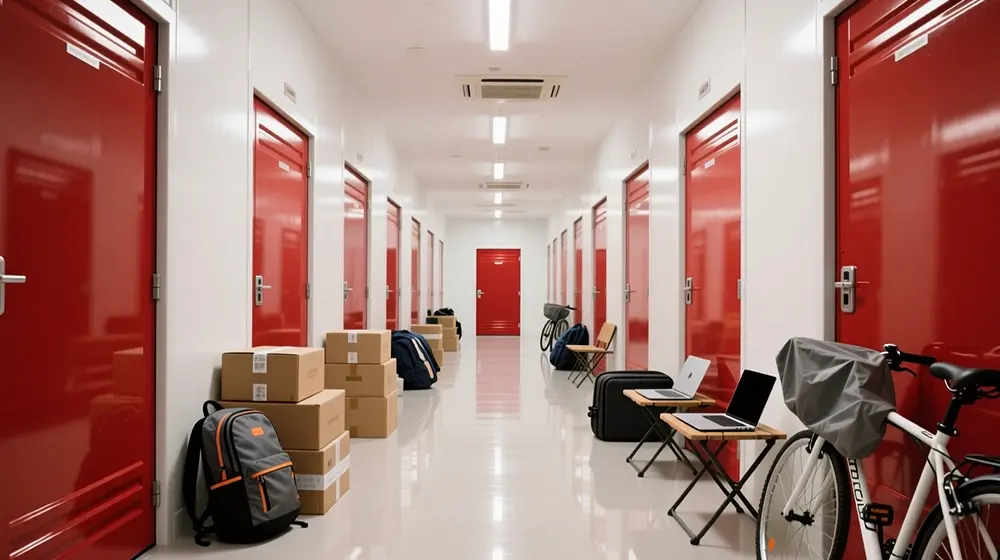
Climate-controlled storage is necessary in Dubai for books, electronics, fabrics, cosmetics, and other heat-sensitive student belongings. This matters because Dubai’s hot weather increases the risk of paper curling, adhesive breakdown, odor retention, and environmental stress on electronics if items remain in uncontrolled spaces. Preservation guidance from the Library of Congress supports cool, stable, relatively dry conditions for paper-based materials, while ASHRAE guidance supports stable non-condensing environments for electronic equipment.
Climate control matters for 4 reasons:
- Paper degrades faster under adverse temperature and humidity conditions
- Electronics perform better in stable, non-condensing environments
- Textiles face higher mould risk in moisture-prone conditions
- Cosmetics and toiletries destabilize faster under heat exposure
What storage conditions are best for student items?
The best storage conditions for most student items are cool, dry, clean, and stable. Stability matters as much as the target number because repeated environmental swings increase material stress. For books, the Library of Congress recommends stable relative humidity at no higher than 55%. For electronics, the key principle is stable indoor control with no condensation.
How does student storage pickup work in Dubai?
Student storage pickup in Dubai works through booking, access confirmation, item labeling, transport, and check-in. Pickup matters because student residences and apartment buildings often control parking, loading time, and visitor access. Your original page already framed this part well.
There are 5 usual pickup steps:
- Book collection with address, student name, and preferred date
- Confirm building access with reception, security, or housing office
- Pack and label items by category and owner
- Load items using boxes, trolleys, and sealed transport containers
- Check inventory on intake at the facility
This section naturally supports phrases such as student storage pickup Dubai, dorm storage Dubai, and short-term student storage in Dubai.
How should students pack belongings before storage?
Students should pack by material, weight, and retrieval priority. That method reduces damage risk and improves return accuracy.
There are 6 practical packing steps:
- Sort items into books, electronics, clothing, and room goods
- Pack heavy books into small reinforced cartons
- Wrap electronics in padded or anti-static protection
- Seal liquids separately or remove them entirely
- Label every box with owner and content category
- Separate essentials needed on return week
What packing materials work best?
The most useful packing materials are medium cartons, book boxes, bubble wrap, anti-static sleeves, wardrobe cartons, strong tape, and printed labels.
That list is practical because the average student stores mixed-density items, not one category only.
What storage size do students usually need?
Most students need one of 3 storage sizes: box-only storage, mixed dorm storage, or full-room storage. The right size depends on whether the student stores only academic and personal items or also stores furniture and appliances.
A quick sizing rule works well:
- Small storage fits books, clothing, cables, and 1 to 2 suitcases
- Medium storage fits dorm essentials such as bedding, kitchen items, and monitors
- Full-room storage fits studio contents including furniture and appliances
This section supports long-tail searches such as what size storage unit students need, student storage cost Dubai, and dorm room storage Dubai.
How does item return work after summer break?
Item return works through identity verification, scheduling, and inventory matching. The process is simplest when the student books return before the semester-start rush.
There are 4 common return steps:
- Request return by email, phone, or WhatsApp
- Verify identity with booking details or student ID
- Match labels or barcode records to stored inventory
- Deliver or collect items on the confirmed date
The best return windows are:
- 3 to 7 days before move-in
- Arrival day in Dubai
- After temporary accommodation check-in
When should students book summer storage in Dubai?
Students should book summer storage before peak move-out dates start. This lowers schedule pressure and improves pickup availability.
There are 3 operational benefits to early booking:
- Secure pickup slots
- Reduce packing stress
- Match storage size accurately
This is especially relevant for students finishing exams, leaving campus, and preparing for flights in the same week.
What should students check before booking student storage in Dubai?
Students should check 6 factors before booking: duration, pickup terms, indoor conditions, item restrictions, inventory method, and return process.
Use this checklist:
- Confirm the exact rental period
- Ask whether pickup is included
- Ask whether the storage is climate controlled
- Ask which items are restricted
- Ask how boxes are labeled and tracked
- Ask how return scheduling works
That checklist helps the reader compare options without turning the article into a sales page.
What are the main benefits of student storage in Dubai?
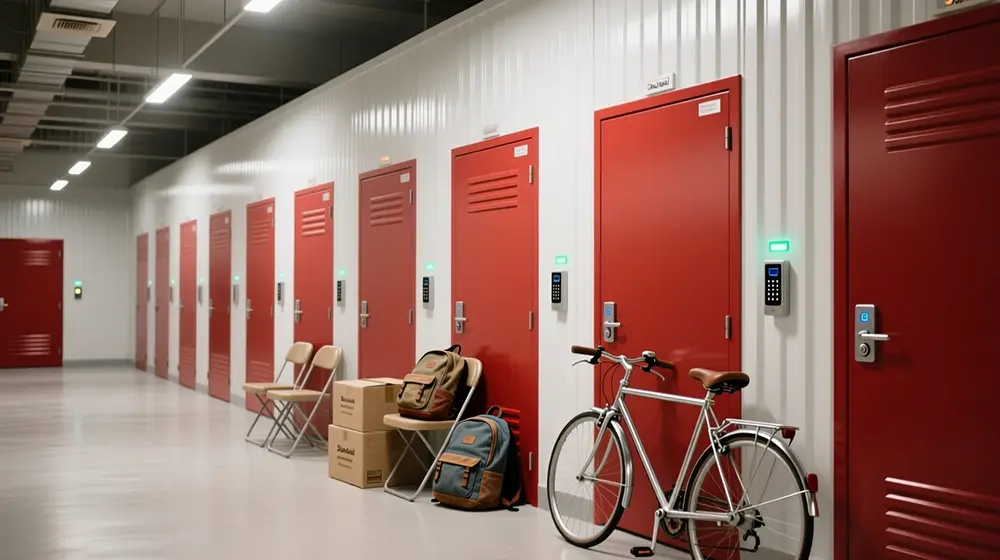
There are 6 main benefits of student storage in Dubai: lower travel burden, better material protection, faster move-out, less room clutter, simpler return logistics, and lower handling risk.
Does student storage reduce travel burden?
Student storage reduces travel burden by removing heavy, bulky, and low-frequency items from baggage planning.
Does student storage protect books and electronics?
Student storage protects books and electronics when the storage environment is cool, dry, and stable. That point is supported by preservation guidance for paper and thermal guidance for equipment environments.
Does student storage help with dorm clearance?
Student storage helps with dorm clearance because students can empty rooms within residence deadlines without discarding useful belongings. University housing guidance from MIT and the University of Minnesota shows that full removal of belongings is a standard move-out expectation and that summer storage options are often integrated into that process.
Does student storage simplify the next semester?
Student storage simplifies the next semester because labeled and grouped items are easier to retrieve, deliver, and unpack.
Summary
Student storage in Dubai is a practical short-term solution for university students who need to store books, electronics, clothing, luggage, and dorm-room items during summer break or housing transitions. The strongest version of this service combines 6 factors: short duration, pickup, climate-controlled storage, inventory tracking, controlled access, and organized return. For students leaving Dubai between semesters, storage reduces baggage pressure, protects belongings, and improves move-out efficiency. University housing guidance from institutions such as MIT and the University of Minnesota shows that seasonal storage is a normal extension of move-out logistics, while preservation guidance supports cool, stable, relatively dry storage conditions for books and other sensitive materials.
Frequently Asked Questions
The best student storage option in Dubai combines short-term rental, pickup support, clear restrictions, climate control, and an easy return process.
Students usually keep items in storage for 1 to 4 months during summer break, internship travel, or lease gaps.
Students can store electronics in Dubai when the items are packed properly and stored in stable indoor conditions without condensation risk.
Students can store books and coursework more safely in cool, relatively dry, stable conditions than in uncontrolled heat-exposed environments.
Students need climate-controlled storage in Dubai for books, electronics, fabrics, and heat-sensitive personal items during the summer period.
Pickup is usually possible from student housing when building access, time slots, and contact details are confirmed in advance.
Hayyan is a logistics veteran with over 15 years of experience in facility management and spatial optimization. He specializes in warehouse security, climate-controlled storage protocols, and the technical logistics of large-scale moving. His focus is on helping clients maximize their square footage while ensuring the long-term preservation of their inventory and belongings.
Thuraya is a specialist in home organization and residential transition management. With a background in interior space planning, she helps individuals navigate the complexities of downsizing and relocation. She provides expert advice on packing fragile items, choosing optimal storage unit sizes, and turning the stress of moving into a seamless, organized experience.
 Personal Storage
Expat Guide to Organizing Personal Belongings in Storage Dubai
Written by Hayyan Al-Jasmi | Reviewed by Thuraya Al-Mansoori | Published on December 8, 2025 | Updated on April 1, 2026 Moving to Dubai…
Read More Self Storage
What are the penalties for violating Dubai no-entry rules during commercial vehicle restricted timings?
Written by Hayyan Al-Jasmi | Reviewed by Thuraya Al-Mansoori | Published on December 8, 2025 | Updated on April 1, 2026 Penalties include cash…
Read More Self Storage
Heavy Vehicle No-Entry Timings By Emirate: Fujairah
Written by Hayyan Al-Jasmi | Reviewed by Thuraya Al-Mansoori | Published on December 8, 2025 | Updated on April 1, 2026 A self storage…
Read More