Commercial Storage in Dubai: Types, Regulations, and Market Data
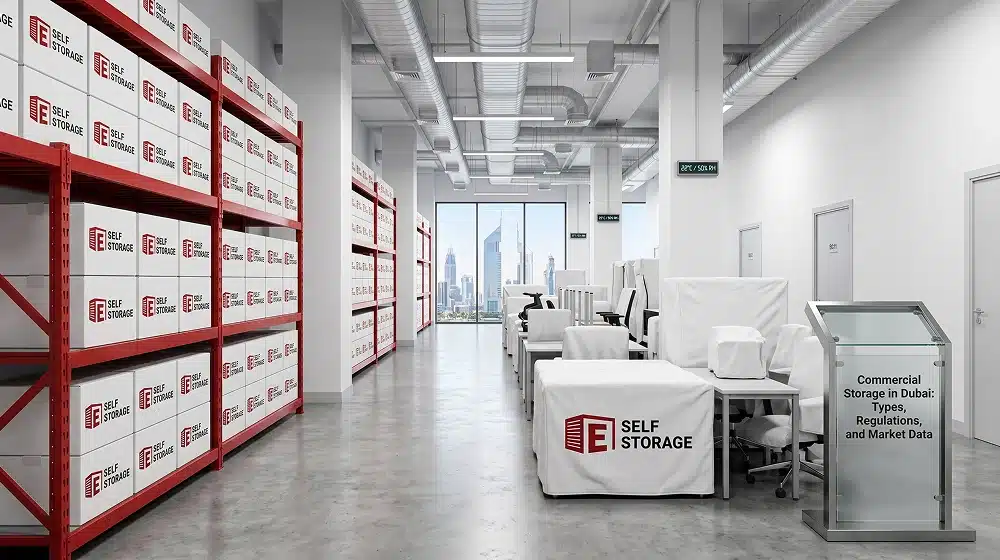
What Is Commercial Storage in Dubai?
Commercial storage in Dubai is a licensed B2B facility category providing businesses with dedicated, regulated space to hold inventory, equipment, documents, and assets outside their primary premises. Dubai’s Department of Economy and Tourism (DET) classifies it as a regulated support service under UAE Commercial Companies Law (Federal Decree-Law No. 32 of 2021).
The scale of the sector is substantial. The UAE warehousing market reached USD 3.02 billion in 2024, growing at a projected CAGR of 4.6% through 2030, driven by e-commerce expansion and rising demand for contract logistics. The UAE self-storage segment a subset of the broader commercial storage market generated USD 602.5 million in 2024 and is projected to reach USD 859.2 million by 2030. Dubai and Abu Dhabi dominate both markets due to strategic access to Jebel Ali Port and Al Maktoum International Airport.
Commercial storage is not the same as residential self-storage. Three differences define the distinction: unit scale (commercial units run from 200 sq ft to 200,000 sq ft versus the typical 25–500 sq ft of consumer units), access structure (B2B contracts with multi-user registered access protocols), and regulatory scope. The regulatory layer is where businesses are most frequently caught off-guard. Commercial storage in Dubai sits inside a framework of Dubai Civil Defence fire codes, UAE Federal Customs Authority bonding rules, and sector-specific health requirements none of which apply to a residential self-storage unit.
What Types of Commercial Storage Exist in Dubai?
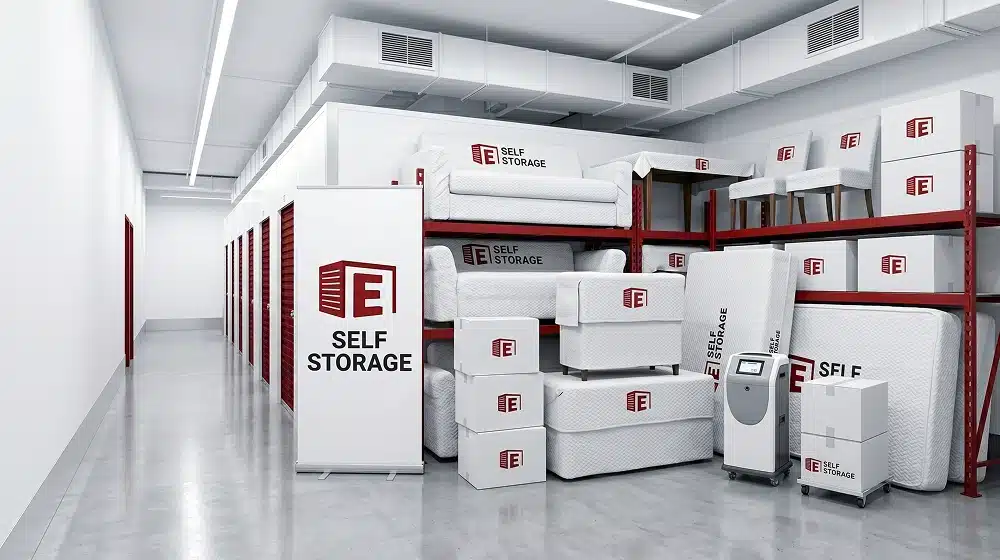
Dubai has 5 main commercial storage types: warehouse storage, climate-controlled storage, business self-storage, open yard storage, and specialised compliance storage. They’re not interchangeable. The right type depends on what’s being stored, how often it needs to be accessed, and what legal requirements govern the cargo.
What Is Warehouse Storage in Dubai?
Warehouse storage is bulk inventory storage in large-format facilities ranging from 5,000 to 200,000 sq ft, used by manufacturers, distributors, importers, exporters, and third-party logistics (3PL) operators. The three primary industrial clusters are Jebel Ali Free Zone (JAFZA), Dubai Logistics City (DLC) in Dubai South, and National Industries Park (NIP) in Al Qusais.
Warehouse rental demand in Dubai is competitive. JAFZA warehouse rents rose 28% year-on-year in 2024, reflecting strong pressure from e-commerce and 3PL operators seeking port-adjacent space. According to JLL market data via Statista (Q1 2024), Al Quoz recorded the highest warehouse rental rates in Dubai at AED 590 per sq metre per year approximately AED 55 per sq ft annually. JAFZA light industrial units start from around AED 278,000 annually for 3,300 sq ft, while mid-sized logistics facilities (24,000–65,000 sq ft) run AED 1.1 million to AED 2.5 million per year.
Three cargo classifications fill Dubai warehouses:
- Ambient dry goods: general merchandise, consumer products, packaged food
- Bonded customs cargo: goods held under UAE Federal Customs Authority supervision pending clearance or re-export
- Industrial stock: raw materials, machinery, manufacturing components
What Is Climate-Controlled Storage in Dubai?
Climate-controlled storage is a storage environment holding temperature between 15°C and 25°C and relative humidity between 40% and 60%, protecting cargo sensitive to heat, moisture, or thermal fluctuation. Dubai makes this category essential, not optional, for a wide range of goods. Outdoor temperatures hit 48°C in July and August, and uninsulated facilities routinely exceed 50°C internally during summer months.
Six goods categories require climate-controlled storage in Dubai:
- Pharmaceutical products and biologics required under UAE Federal Law No. 4 of 1989 on Pharmaceutical Professions and Institutions
- Electronic components and semiconductors
- Hardwood furniture, antiques, and fine art
- Archival documents and physical media
- Cosmetics and personal care inventory
- Food-grade commodities held above freezer threshold
The UAE cold chain logistics market reached USD 710 million in 2025 and is projected to grow to USD 1.15 billion by 2030 at a CAGR of 10.29%. The storage segment commands approximately 56% of total cold chain market share, reflecting the concentration of pharmaceutical and food-grade inventory in purpose-built climate facilities across Dubai and Abu Dhabi.
What Is Business Self-Storage in Dubai?
Business self-storage is a flexible unit rental service offering 50 to 500 sq ft of lockable space under month-to-month contracts, used by startups, SMEs, and sole traders for document archiving, seasonal stock overflow, and equipment storage between projects.
Facilities concentrate in Al Quoz, Ras Al Khor, and Umm Ramool. Monthly rates range from AED 400 for ambient units to AED 1,800 for climate-controlled units, depending on unit size and location. The medium-sized unit segment (approximately 2–10 sq m) generates the largest revenue share in the UAE self-storage market, driven by SME demand for overflow inventory and document storage.
Contracts run in three structures: monthly rolling, 6-month fixed, and 12-month fixed. Fixed-term agreements typically carry lower monthly rates than rolling contracts a meaningful difference for businesses running multiple units year-round.
What Is Open Yard Storage in Dubai?
Open yard storage is a fenced, uncovered outdoor compound for oversized equipment, construction materials, fleet vehicles, and project cargo that does not require environmental protection. Facilities operate in Al Quoz Industrial Area 3, Dubai Industrial Park (DIP), and Technopark.
Rates across Dubai’s open yard facilities range from AED 3 to AED 12 per sq ft monthly, varying by security grade, surface condition, access infrastructure, and proximity to Sheikh Zayed Road or Emirates Road. The lower end of that range applies to basic gravel-surfaced compounds in secondary locations; the upper end reflects paved, fenced, CCTV-monitored facilities in prime industrial corridors.
Four asset categories fill open yard compounds in Dubai:
- Heavy construction equipment: cranes, excavators, compactors
- Commercial fleet vehicles and trailers
- Structural materials: steel beams, concrete segments, prefabricated panels
- ISO standard shipping containers 20-ft and 40-ft
What Is Specialised Compliance Storage in Dubai?
Specialised compliance storage is a regulated facility category for goods subject to government, customs, or industry-specific safety requirements bonded warehouses, pharmaceutical cold chain units, and archival document vaults being the three main subtypes.
JAFZA is the largest customs bonded zone in the Middle East, home to over 11,000 companies from 150+ countries. Goods stored in JAFZA’s bonded facilities remain exempt from UAE customs duties typically 5% of CIF value until released into the UAE mainland market or re-exported. Healthcare-grade storage must comply with WHO Good Storage and Distribution Practices (GSDP) and relevant UAE Ministry of Health and Prevention (MoHAP) circulars governing pharmaceutical handling.
How Does Commercial Storage Regulation Work in Dubai?
Commercial storage facilities in Dubai operate under 4 regulatory frameworks: DET commercial licensing, Dubai Civil Defence (DCD) fire safety certification, UAE Federal Customs Authority bonding rules for duty-deferred storage, and sector-specific compliance requirements from MoHAP, Dubai Municipality, and relevant free zone authorities.
The layering is intentional. Dubai’s regulatory model treats storage as an active part of the city’s trade infrastructure not a passive real estate product. That’s why a pharmaceutical cold chain unit inside JAFZA carries approvals from four separate authorities simultaneously.
What Licences Do Commercial Storage Facilities in Dubai Require?
Four primary licences govern every commercial storage operator in Dubai:
- Dubai Economy and Tourism (DET) commercial activity licence Category: Storage and Warehousing
- Dubai Civil Defence fire safety certificate mandatory for all commercial storage facilities, based on the UAE Fire and Life Safety Code of Practice
- Dubai Municipality health and safety clearance
- JAFZA Free Zone Authority operating permit for JAFZA-based operators, governed by JAFZA’s rules and regulations
Healthcare-grade facilities carry a fifth: MoHAP pharmaceutical storage approval under UAE Federal Law No. 4 of 1989 and subsequent ministerial resolutions governing pharmaceutical storage conditions.
What Fire Safety Standards Apply to Commercial Storage in Dubai?
The UAE Fire and Life Safety Code of Practice, enforced by Dubai Civil Defence, sets the mandatory fire safety framework for all commercial storage facilities. Commercial and industrial storage must install full fire alarm systems, automatic sprinkler networks, emergency lighting, and in facilities storing flammable goods, aerosols, or chemicals gas suppression systems using approved agents such as FM-200 or NOVEC 1230.
Warehouse approvals in Al Quoz, Dubai Investment Park, and Ras Al Khor fall under Dubai Municipality and Civil Defence jointly, while JAFZA-based facilities require a Trakhees licence from the JAFZA authority. Sprinkler systems are mandatory where hazardous materials are stored. All fire protection systems must be designed, installed, and tested by DCD-approved contractors only.
Compliance inspections are annual. Late renewal of fire safety certificates carries fines of up to AED 50,000 and potential suspension of business operations under Dubai Civil Defence regulations.
What Tenant Rights Govern Commercial Storage Leases in Dubai?
Commercial storage leases on the Dubai mainland fall under Law No. 26 of 2007, as amended by Law No. 33 of 2008, which regulates the relationship between landlords and tenants across all commercial property in Dubai. Rent increases are separately governed by Decree No. 43 of 2013. Disputes are resolved through the Rental Dispute Settlement Centre (RDSC), which holds exclusive jurisdiction over registered commercial tenancy contracts in Dubai mainland.
All commercial storage lease contracts must be registered through Ejari RERA’s official tenancy registration system to be legally recognised by Dubai authorities. JAFZA-based storage leases operate outside this framework, governed instead by JAFZA’s own leasing terms and the UAE Federal Customs Law No. 1 of 2017 for bonded cargo custody.
What Does Commercial Storage Cost in Dubai?
Commercial storage in Dubai costs AED 20 to AED 55 per sq ft annually for standard ambient warehouse space. Climate-controlled warehouse storage runs AED 30 to AED 65 per sq ft. Self-storage sits between AED 400 and AED 1,800 per month. Open yard storage starts at AED 3 per sq ft monthly.
| Storage Type | Zone | Annual Rate (AED/sq ft) | Minimum Unit |
|---|---|---|---|
| Ambient warehouse | Al Quoz | 40–55 | 1,000 sq ft |
| Ambient warehouse | JAFZA | 28–45 | 3,400 sq ft |
| Ambient warehouse | Dubai South | 18–30 | 1,000 sq ft |
| Ambient warehouse | Ras Al Khor / DIP | 15–28 | 1,000 sq ft |
| Climate-controlled | Al Quoz | 35–55 | 200 sq ft |
| Climate-controlled | JAFZA | 40–65 | 500 sq ft |
| Self-storage (ambient) | Al Quoz / Ras Al Khor | AED 400–900/month | 50 sq ft |
| Self-storage (climate) | Al Quoz / Umm Ramool | AED 900–1,800/month | 50 sq ft |
| Open yard | DIP / Al Quoz 3 | AED 3–12/sq ft/month | 2,000 sq ft |
Rate data sourced from JLL Dubai Q1 2024 industrial market data via Statista, PropertyFinder Dubai warehouse listings, and Cargoz UAE warehouse cost benchmarks. Rates vary based on eave height, dock access, power capacity, and lease term.
Three additional cost variables apply across most facilities: loading dock fees (AED 150–AED 400 per use), warehouse management system (WMS) access charges for inventory integration, and cargo insurance calculated at 0.1–0.5% of declared goods value annually.
The JAFZA premium typically 20–30% above comparable Al Quoz space reflects direct port adjacency to Jebel Ali (the largest port in the Middle East by container throughput), bonding eligibility, and multimodal sea-air-road connectivity within the Dubai Logistics Corridor.
How Does Technology Operate in Dubai Commercial Storage Facilities?
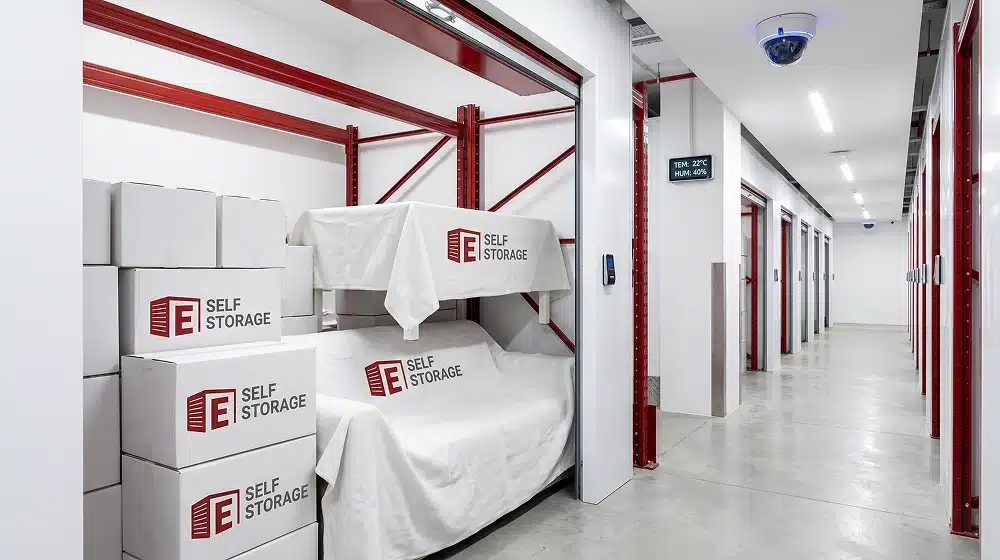
Technology in Dubai commercial storage operates across 3 layers: warehouse management and inventory tracking systems, security and access control infrastructure, and IoT-based climate and environmental monitoring.
What Warehouse Management Systems Do Dubai Storage Facilities Use?
Tier-one commercial storage facilities in Dubai run Warehouse Management Systems (WMS) including SAP Extended Warehouse Management (SAP EWM), Oracle WMS Cloud, and Logiwa. These platforms track inventory at item, pallet, and location level, with real-time data accessible via web and mobile interfaces.
RFID-based systems are replacing barcode scanning in high-throughput facilities. RFID eliminates the need for line-of-sight scanning and supports bulk reads across entire pallet loads simultaneously a critical efficiency gain in bonded warehouse environments where customs accuracy is non-negotiable.
How Do Security Systems Function in Dubai Storage Facilities?
Standard commercial storage security in Dubai runs on four layers: perimeter fencing with controlled vehicle access, 24/7 CCTV surveillance, biometric or keycard access at unit level, and on-site guard rotation. That combination represents the baseline for DET-licensed operators.
AI-powered video analytics increasingly deployed in JAFZA and Dubai South tier-one facilities process camera feeds in real time, flagging unauthorised access, perimeter breaches, and fire or smoke conditions without requiring a guard to monitor feeds continuously. Dubai Civil Defence now encourages smart fire systems that connect directly with their control centre for real-time alerts, using IoT-enabled sensors integrated with building management infrastructure. JAFZA-based facilities storing bonded cargo are contractually required under UAE Customs Authority bonded storage conditions to maintain controlled access at all times.
How Does Climate Monitoring Work in Commercial Storage Facilities?
IoT-connected temperature and humidity sensors, calibrated under accredited standards, log environmental readings at continuous intervals in compliance with pharmaceutical-grade storage requirements. MoHAP guidelines for pharmaceutical storage mandate documented temperature logs as part of the cold chain compliance audit trail. Remote cloud-based dashboards allow facility managers and tenants to monitor storage conditions from any location standard in JAFZA and Dubai South tier-one facilities, and increasingly available in Al Quoz mid-tier operators.
When temperature deviates beyond acceptable tolerances, automated alerts reach facility managers. For pharmaceutical tenants, this real-time alert capability is a contractual storage condition not a premium add-on.
Which Industries Use Commercial Storage in Dubai?
7 industries use commercial storage in Dubai: retail, e-commerce, construction, healthcare, hospitality, event management, and freight and logistics. Each operates a distinct storage profile determined by cargo type and the compliance framework governing it.
| Industry | Primary Storage Type | Governing Regulation |
|---|---|---|
| Retail | Self-storage, ambient warehouse | UAE Consumer Protection Law No. 15 of 2020 |
| E-commerce | Fulfilment warehouse, WMS-integrated | UAE Distance Selling Regulations (MoEC, 2022) |
| Construction | Open yard, bonded warehouse | Dubai Municipality Building Safety Code |
| Healthcare | Climate-controlled, GMP-certified | UAE Federal Law No. 4 of 1989; MoHAP GSDP guidelines |
| Hospitality | Climate-controlled, self-storage | DTCM Hotel Classification Standards |
| Event Management | Self-storage, open yard | Dubai Events Safety Regulations |
| Freight and Logistics | Bonded warehouse, JAFZA facility | UAE Federal Customs Law No. 1 of 2017 |
How Does the Retail Industry Use Commercial Storage in Dubai?
Dubai retail is seasonal by design. Three periods drive the majority of inventory pressure: Dubai Shopping Festival (January–February), the Ramadan promotional cycle (March–April), and back-to-school (August–September). Outside those windows, holding that volume of stock in prime retail floor space is financially irrational. Off-site ambient storage removes excess inventory from expensive front-of-house space, freeing it for customer-facing display.
How Does the Healthcare Industry Use Commercial Storage in Dubai?
Healthcare providers in Dubai store pharmaceutical inventory, laboratory equipment, and patient records in MoHAP-licensed, temperature-mapped, climate-controlled facilities with documented cold chain logs. UAE Federal Law No. 4 of 1989 on pharmaceutical professions, along with MoHAP circulars and WHO GSDP guidelines, governs the storage conditions for all pharmaceutical products distributed in the UAE. Refrigerated pharmaceuticals require storage between 2°C and 8°C; ambient medicines between 15°C and 25°C. Frozen products such as certain vaccines require storage at -20°C or below.
Non-compliant pharmaceutical storage conditions expose operators to administrative penalties and product recalls under UAE Federal Law No. 8 of 2019 on medical products. Most healthcare operators in Dubai treat cold chain compliance as a procurement-stage requirement verifying temperature mapping documentation and calibration certificates before signing a storage contract.
How Does the Construction Industry Use Commercial Storage in Dubai?
Construction firms use open yard and bonded warehouse storage to hold structural materials, heavy machinery, and project equipment between active site deployments. JAFZA’s bonded warehousing allows importers to defer UAE customs duty typically 5% of CIF value until goods are released to a project site. That deferment is a meaningful reduction in upfront capital commitment for large-volume material imports from Asia and Europe.
Dubai Municipality’s warehouse approval guidelines require that hazardous construction materials chemicals, solvents, flammable compounds be stored in specifically ventilated and secured areas, with sprinkler systems installed in any storage zone where fire-hazardous materials are present.
How Does the E-Commerce Industry Use Commercial Storage in Dubai?
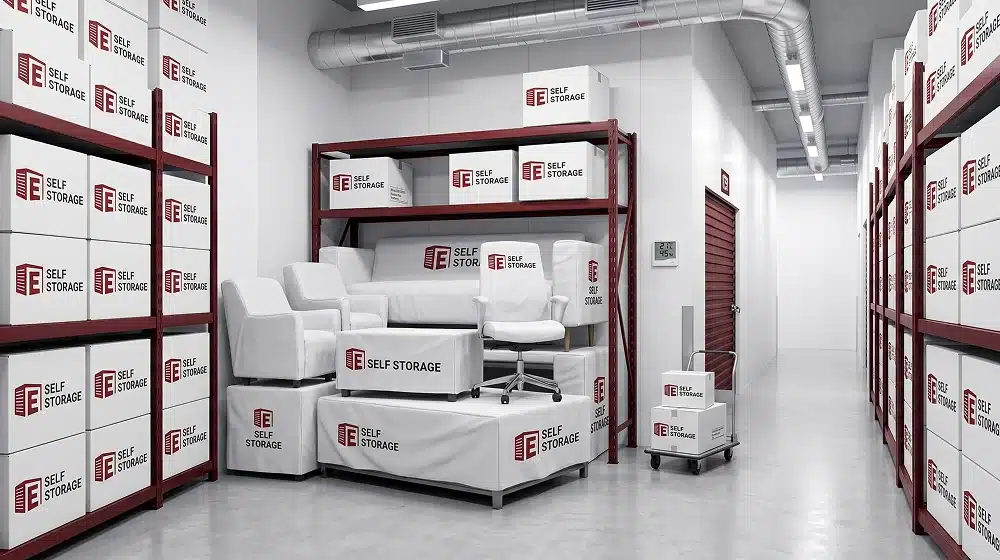
E-commerce operators use 3PL warehouse facilities with integrated WMS to run same-day delivery across Dubai, Sharjah, and Abu Dhabi from a single storage point. JAFZA reported warehouse occupancy rates surpassing 90% in 2024, with e-commerce and 3PL operators the primary drivers of that demand. Operators based in JAFZA or Dubai South warehouses achieve 4–6 hour delivery windows across the UAE. Operators managing inventory from primary office premises typically average 24–48 hours for the same delivery zones, a gap that drives 3PL adoption among mid-scale e-commerce businesses.
Commercial Storage in Dubai: Key Facts
Commercial storage in Dubai covers 5 regulated facility types: ambient warehouse, climate-controlled, business self-storage, open yard, and specialised compliance across 4 main industrial zones: Al Quoz, JAFZA, Dubai South, and Ras Al Khor. The UAE warehousing market stands at USD 3.02 billion (2024), growing at 4.6% CAGR. JAFZA warehouse rents rose 28% year-on-year in 2024, reflecting sustained demand pressure from e-commerce and 3PL operators. All commercial storage operators require a DET commercial licence and a Dubai Civil Defence fire safety certificate under the UAE Fire and Life Safety Code of Practice. Healthcare-grade facilities carry additional MoHAP pharmaceutical storage approval under UAE Federal Law No. 4 of 1989.
Frequently Asked Questions
Commercial storage is a B2B licensed facility category requiring a valid UAE trade licence, with units from 200 to 200,000 sq ft, multi-user registered access, and mandatory compliance with DET, Dubai Civil Defence, and sector-specific regulations. Residential self-storage accepts individual tenants without a trade licence in units from 25 to 500 sq ft with single-user access. Commercial leases on Dubai mainland fall under Law No. 26 of 2007, as amended by Law No. 33 of 2008. Residential self-storage contracts operate outside the RERA framework as standard service agreements.
A 1,000 sq ft ambient warehouse in Al Quoz costs approximately AED 3,300 to AED 4,600 per month, based on JLL Q1 2024 market rates of AED 40–55 per sq ft annually. A climate-controlled unit in JAFZA runs AED 3,300 to AED 5,400 per month for the same floor area. Self-storage units range from AED 400 to AED 1,800 per month for 50 to 500 sq ft. Open yard in DIP starts at AED 6,000 per month for a minimum 2,000 sq ft plot.
Climate-controlled storage is required for electronics in Dubai when ambient storage conditions exceed the manufacturer’s specified safe operating range, typically 35°C maximum for consumer electronics. Dubai’s summer outdoor peak of 48°C routinely produces internal temperatures above 50°C in uninsulated industrial units between May and September. Electronics stored under those conditions face thermal damage, shortened component lifespan, and voided manufacturer warranties.
A bonded warehouse in Dubai is a customs-approved facility where imported goods are held without payment of UAE customs duties, under Federal Customs Authority supervision, until released into the local market or re-exported. JAFZA is the largest customs bonded zone in the Middle East, hosting over 11,000 companies. Goods imported into JAFZA are exempt from UAE customs duties ordinarily 5% of CIF value for as long as they remain within the free zone. The governing legislation is UAE Federal Customs Law No. 1 of 2017.
Multiple categories of goods are prohibited from commercial storage in Dubai under UAE Federal Law and Dubai Municipality regulations, including:
Counterfeit or trademark-infringing products (UAE Federal Law No. 37 of 1992 on Trademarks)
Controlled narcotics and psychotropic substances (UAE Federal Law No. 14 of 1995)
Unlicensed firearms and ammunition
Unregistered pharmaceutical products
Radioactive materials without a FANR (Federal Authority for Nuclear Regulation) licence
Perishable food exceeding applicable cold chain temperature limits
Asbestos-containing materials
Hazardous chemicals without MSDS documentation
Goods under active customs hold or court attachment order
A DET commercial storage activity licence takes 5 to 15 business days from application submission, subject to Dubai Civil Defence inspection scheduling. JAFZA operating permits require a separate application to the JAFZA Free Zone Authority. MoHAP pharmaceutical storage approval is the longest process typically 30 to 60 business days requiring a site inspection, cold chain validation report, and temperature mapping documentation submitted to the MoHAP Pharmaceutical Control Department before the approval is granted.
Hayyan is a logistics veteran with over 15 years of experience in facility management and spatial optimization. He specializes in warehouse security, climate-controlled storage protocols, and the technical logistics of large-scale moving. His focus is on helping clients maximize their square footage while ensuring the long-term preservation of their inventory and belongings.
Thuraya is a specialist in home organization and residential transition management. With a background in interior space planning, she helps individuals navigate the complexities of downsizing and relocation. She provides expert advice on packing fragile items, choosing optimal storage unit sizes, and turning the stress of moving into a seamless, organized experience.
 Commercial Storage
Leasing Requirements for Commercial Storage in Dubai: A Complete Guide
Written by Hayyan Al-Jasmi | Reviewed by Thuraya Al-Mansoori | Published on December 17, 2024 | Updated on May 23, 2026 Dubai is growing…
Read More Commercial Storage
Commercial Storage Solutions in Al Quoz, Dubai
Written by Hayyan Al-Jasmi | Reviewed by Thuraya Al-Mansoori | Published on December 17, 2024 | Updated on May 23, 2026 Commercial storage in…
Read More Commercial Storage
E-Commerce Inventory Warehousing Near Dubai’s Industrial Zones: The Ultimate Guide
Written by Hayyan Al-Jasmi | Reviewed by Thuraya Al-Mansoori | Published on December 17, 2024 | Updated on May 23, 2026 E-commerce businesses that…
Read More