
Box Storage vs Traditional Units vs Mobile Pods in Dubai: Failure Modes, Liability, and Best-Fit Guide for UAE Users
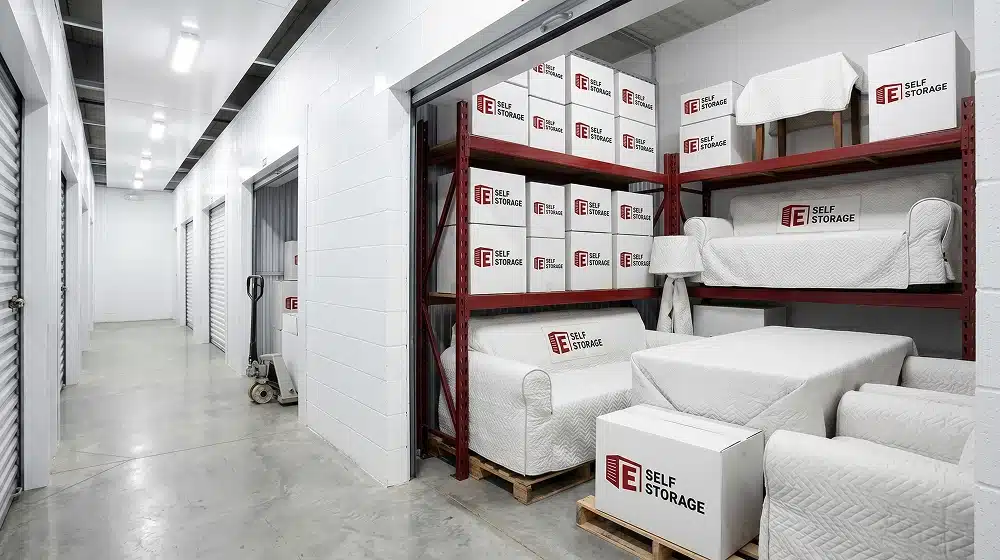
Dubai’s self-storage market offers 3 storage types: box storage, traditional self-storage units, and mobile pods. Box storage suits individuals storing fewer than 20 small-to-medium items. Traditional units suit families, businesses, and long-term users with bulky goods. Mobile pods suit short-term relocation users who prioritise doorstep loading. According to Grand View Research (2024), the UAE self-storage sector generated USD 602.5 million (~AED 2.2 billion) in revenue in 2024 and grows at a 6.3% compound annual growth rate through 2030.
What Are the 3 Storage Types Available in Dubai?
Dubai’s self-storage market provides 3 distinct storage models, each with a different operational structure, access method, and pricing framework.
Box storage operates on a delivery-and-collect model. The provider delivers empty boxes to the customer’s address. The customer packs the boxes. The provider collects and stores the packed boxes in a central warehouse. Retrieval is requested by phone or app, with standard delivery within 24–48 hours.
Traditional self-storage in Dubai provides a private, lockable unit rented on a monthly or annual contract. Unit sizes range from 1 m² lockers to 50 m² warehouse-style rooms. The renter accesses the unit directly during facility operating hours.
Mobile pod storage delivers a portable container to the customer’s address or worksite. The customer loads the pod at their own pace. The provider transports the loaded pod to a secured storage facility. Access requires a scheduled appointment with the provider, unlike traditional units where walk-in access is standard.
What Are the Failure Modes of Box Storage in Dubai?
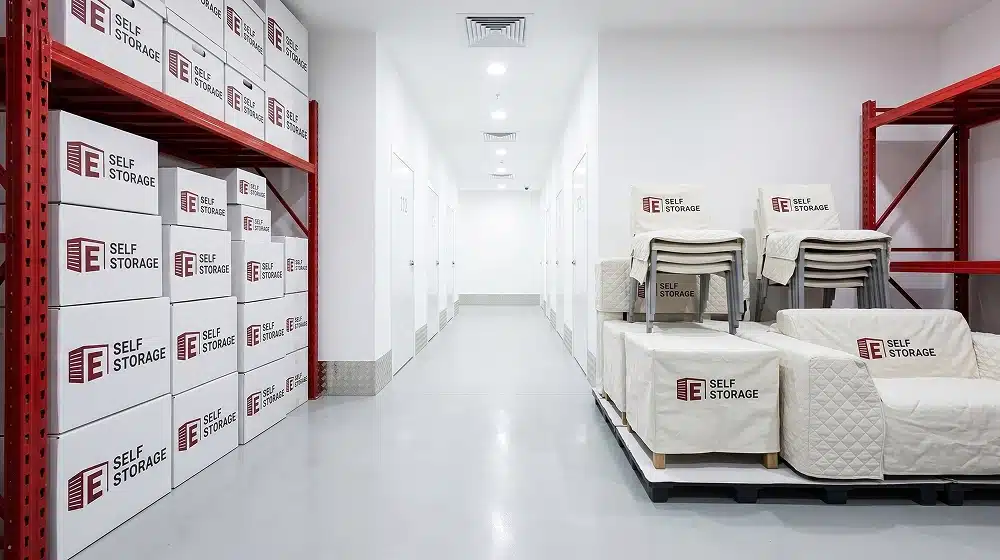
Box storage in Dubai has 3 primary failure modes: transit breakage, cataloguing errors, and size limitations.
Transit breakage occurs because each box passes through 4 handling points — customer pickup, warehouse intake, retrieval dispatch, and delivery return. Fragile items packed without double-wall corrugated boxes are at higher breakage risk than items in reinforced packaging. The International Safe Transit Association establishes packaging test protocols (ISTA 2A) that define how packaging must perform across multiple handling cycles. Items not packed to these standards — glassware, ceramics, and loose electronics — face the highest breakage risk at warehouse-to-truck transfer points.
Cataloguing errors arise when boxes are mis-scanned or mislabelled during intake. Incorrectly catalogued boxes require a manual warehouse search to locate before retrieval can be fulfilled. Users storing identical or unlabelled boxes face the highest error risk.
Size limitations exclude furniture, white goods, bicycles, and any single item that exceeds standard box dimensions. Box storage does not suit Dubai residents storing sofas, refrigerators, washing machines, or framed artworks.
Box storage suits Dubai users storing seasonal clothing, books, documents, and small household items.
What Are the Failure Modes of Traditional Self-Storage Units in Dubai?
Traditional self-storage in Dubai has 3 documented failure modes: heat and humidity damage, customer packing errors, and access restrictions.
Heat and humidity damage is the primary risk in non-climate-controlled storage units. According to Weather Atlas climate data for Dubai, average daily temperatures reach 39.4°C during June–August, with July peaks regularly hitting 42–45°C. Dubai’s relative humidity averages 55–65% year-round, with coastal areas seeing spikes approaching 90% on summer nights. Non-climate-controlled units expose stored items directly to these conditions. Wood warping begins at sustained temperatures above 38°C. Metal corrosion accelerates above 70% relative humidity. Mould growth on textiles and paper occurs within weeks under combined high-heat and high-humidity conditions. Climate-controlled storage units maintain temperatures between 13°C and 29°C (55°F–85°F) and humidity at approximately 55%, eliminating these risks for sensitive items.
Customer packing errors account for the second most common failure mode. The facility provides secure infrastructure; the customer determines packing quality. Items stacked directly on concrete floors absorb ground-level moisture. Textiles stored without vacuum-seal bags develop mildew in units without active dehumidification. Electronics stored without anti-static packaging are susceptible to electrostatic discharge damage during Dubai’s dry-season months (November–March), when indoor humidity can drop below 30%.
Access restrictions affect a portion of Dubai self-storage facilities that operate fewer than 12 access hours per day. Business users requiring after-hours stock retrieval or weekend access face operational delays at restricted-access facilities. Confirm access hours in writing before signing any contract.
What Are the Failure Modes of Mobile Pod Storage in Dubai?
Mobile pod storage in Dubai has 3 primary failure modes: heat exposure in standard pods, load shifting in transit, and scheduled-access delays.
Heat exposure in standard (non-climate-controlled) pods is the most critical failure mode in Dubai. Dubai’s average summer maximum reaches 41°C in August, with enclosed metal containers reaching significantly higher internal temperatures when parked in direct sun. According to IEC 60068-2-2 — the international standard for dry heat environmental testing of electronic equipment — the recommended maximum storage temperature for consumer electronics is 35°C (95°F). Standard mobile pods in Dubai’s summer exceed this threshold, making them unsuitable for electronics, synthetic textiles, adhesives in flat-pack furniture, and vinyl records without climate control. Climate-controlled mobile pods eliminate this risk but carry a higher monthly cost than standard pods.
Load shifting in transit occurs when items are not secured with furniture strapping or internal padding. Glass panels, ceramics, and unsecured shelving units sustain breakage during transport when heavy items are stacked on lighter ones without brace boards between layers. The FIDI Global Alliance — the international quality standard for professional moving and storage — recommends securing all items with strapping before any container moves.
Scheduled-access delays are structural to the mobile pod model. UAE mobile pod providers require advance notice for retrieval, compared to same-day walk-in access at traditional self-storage facilities. Users requiring frequent access — more than twice per month — suit traditional units over mobile pods.
How Does Storage Liability Work Under UAE Law?
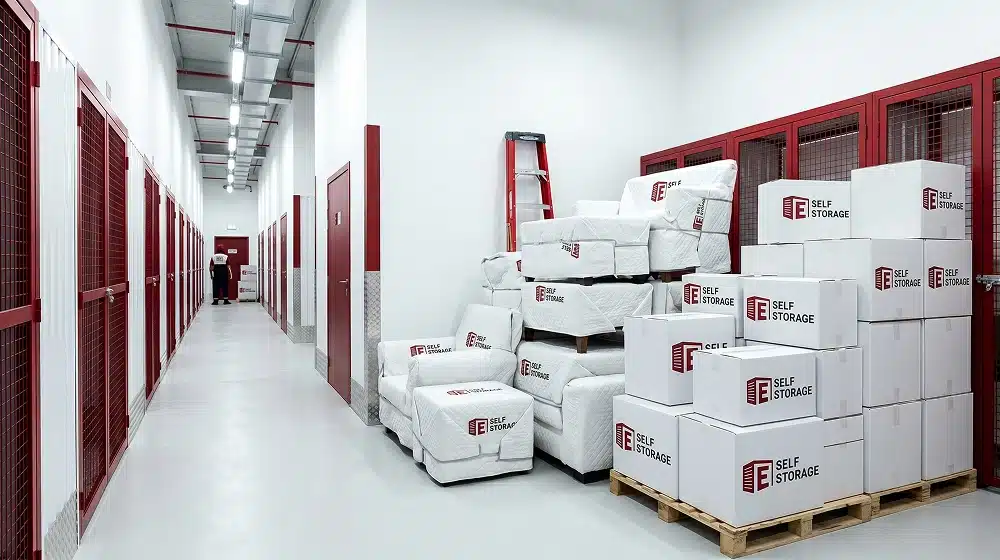
UAE storage liability follows 3 separate frameworks based on storage type. The governing legislation is Federal Decree Law No. 50 of 2022, the UAE Commercial Transactions Law, which replaced the previous Federal Law No. 18 of 1993 and came into force on 2 January 2023. The law covers commercial obligations, contracts, and deposits in public warehouses.
Box storage liability assigns in-transit responsibility to the provider from collection to delivery return. Long-term warehouse liability defaults to the provider’s maximum declared per-box compensation limit, as specified in the signed storage contract. Always confirm the per-item and per-incident maximum compensation figures before storing high-value items.
Traditional unit liability divides responsibility between the facility operator and the customer. The facility operator carries structural security liability, fire suppression system maintenance, and perimeter access control. These requirements align with Dubai Civil Defence fire protection standards for storage facilities. The customer carries full liability for packing method, internal stacking, and item condition declared at intake. Items not declared or underdeclared at intake receive no compensation from the facility operator in the event of damage.
Mobile pod liability assigns in-transit coverage to the provider. Storage liability at the pod facility reverts to the provider’s terms of service. Most UAE mobile pod contracts exclude weather-related damage from standard coverage unless a climate-controlled pod is specified in writing at booking.
UAE personal goods insurance is not automatic under any storage contract type. Dubai residents must arrange third-party goods-in-storage coverage independently. Confirm coverage period, exclusion clauses for acts of nature, and per-item value caps before signing.
Which Storage Type Best Fits Each UAE User Profile?
The table below matches 6 UAE user profiles to the optimal storage type based on load size, access frequency, storage duration, and item sensitivity.
| User Profile | Recommended Storage Type | Reason |
|---|---|---|
| Studio or 1-bedroom apartment resident | Box storage | Per-box pricing eliminates payment for unused space |
| Family relocating within Dubai | Climate-controlled mobile pod | Doorstep loading removes multiple warehouse trips |
| SME holding e-commerce inventory | Climate-controlled traditional unit | Direct access, scalable sizing, documented intake records |
| Expat on 3–12 month assignment | Box storage | No long-term lease commitment required |
| Family renovating a villa | Mobile pod | On-site loading during renovation phases; choose climate-controlled for sensitive items |
| Industrial user with heavy machinery stock | Large traditional unit (ground floor) | Floor-load capacity and forklift access available at most Dubai facilities |
UAE users storing electronics, medical documents, artworks, or temperature-sensitive goods across any duration require climate-controlled storage regardless of storage type selected.
What Are the Best Practices for Storage in Dubai?
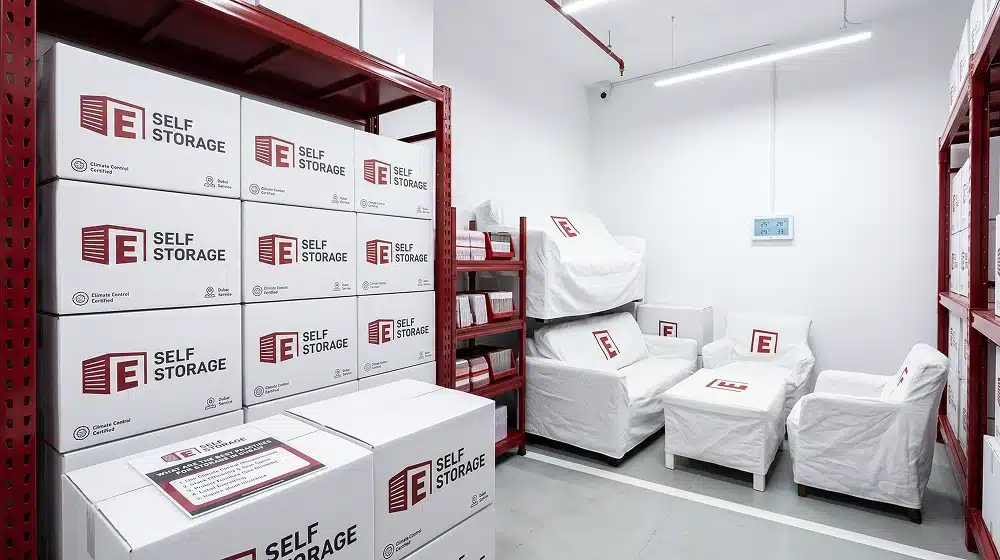
There are 6 evidence-based storage practices for UAE users applicable across all 3 storage types.
Choose climate-controlled storage for temperature-sensitive items. Dubai outdoor temperatures exceed 40°C from June to September. Climate-controlled units maintain 13–29°C (55–85°F) and approximately 55% relative humidity year-round, protecting electronics, documents, leather goods, and artworks from permanent heat and moisture damage.
Photograph and inventory all items before storage. A written and photographic inventory supports insurance claims and reduces retrieval disputes. Number every box and maintain a corresponding item list.
Place all items on pallets or shelving, not directly on the floor. Ground-level moisture in Dubai storage facilities is a persistent risk. A pallet height of 10 cm eliminates direct moisture transfer to cardboard boxes and fabric items.
Use double-wall corrugated boxes for all fragile items. Single-wall boxes compress under stacking weight. Wrap individual fragile items in bubble wrap with a minimum 3 cm coverage layer before boxing. Reinforce box bases with packing tape across both seams.
Read the liability clause before signing any storage contract. Confirm in writing whether weather-related damage, pest damage, water ingress, and consequential loss are included or excluded. Request the per-item and per-incident maximum compensation figures.
Match storage type to access frequency. Users requiring weekly or unscheduled access suit traditional self-storage units. Users accessing stored items fewer than once per month suit box storage or standard mobile pods.
What Is Driving Growth in Dubai’s Self-Storage Market?
The UAE self-storage sector reached USD 602.5 million in market value in 2024, growing at 6.3% annually through 2030 according to Grand View Research. 4 structural drivers sustain this growth.
E-commerce inventory demand is the largest single growth driver. According to the State of the UAE Retail Economy 2023 report published by Majid Al Futtaim, e-commerce consumer spending in UAE retail grew 15% in 2023. This directly increases demand for short-term inventory storage accessible to SMEs without full warehouse lease commitments.
Expat population mobility sustains consistent box storage and mobile pod demand. According to the Federal Competitiveness and Statistics Centre (FCSC), the UAE population reached 11.3 million at end of 2024. The United Nations Department of Economic and Social Affairs estimates approximately 88% of UAE residents are expatriates. Relocation cycles among this population generate recurring short-to-medium-term storage demand.
Decreasing residential unit sizes in Dubai’s new-build developments push household storage offsite. Studio and one-bedroom apartments in Dubai’s newer developments average below 50 m², reducing in-unit storage capacity for growing households.Digital storage management tools — including app-based unit access, barcode inventory systems, and real-time tracking — reduce the operational friction of off-site storage. Facilities offering digital access logs and inventory tracking report higher customer retention than facilities without digital tools, according to the Self Storage Association.
Hayyan is a logistics veteran with over 15 years of experience in facility management and spatial optimization. He specializes in warehouse security, climate-controlled storage protocols, and the technical logistics of large-scale moving. His focus is on helping clients maximize their square footage while ensuring the long-term preservation of their inventory and belongings.
Thuraya is a specialist in home organization and residential transition management. With a background in interior space planning, she helps individuals navigate the complexities of downsizing and relocation. She provides expert advice on packing fragile items, choosing optimal storage unit sizes, and turning the stress of moving into a seamless, organized experience.
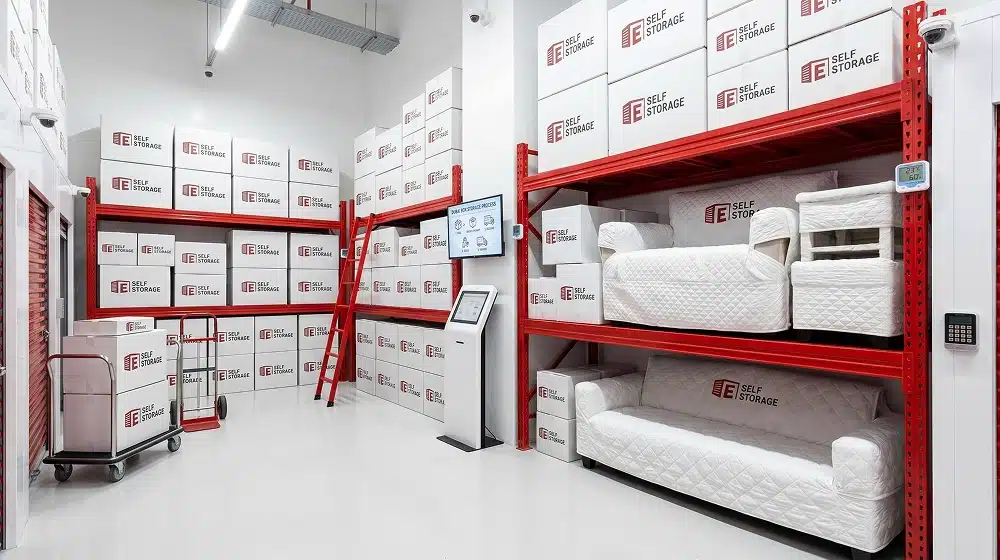 Box Storage
Box Storage in Dubai: Pickup, Costs, Safety, Box Sizes, and Storage Tips
Written by Hayyan Al-Jasmi | Reviewed by Thuraya Al-Mansoori | Published on September 11, 2025 | Updated on June 1, 2026 Box storage in…
Read More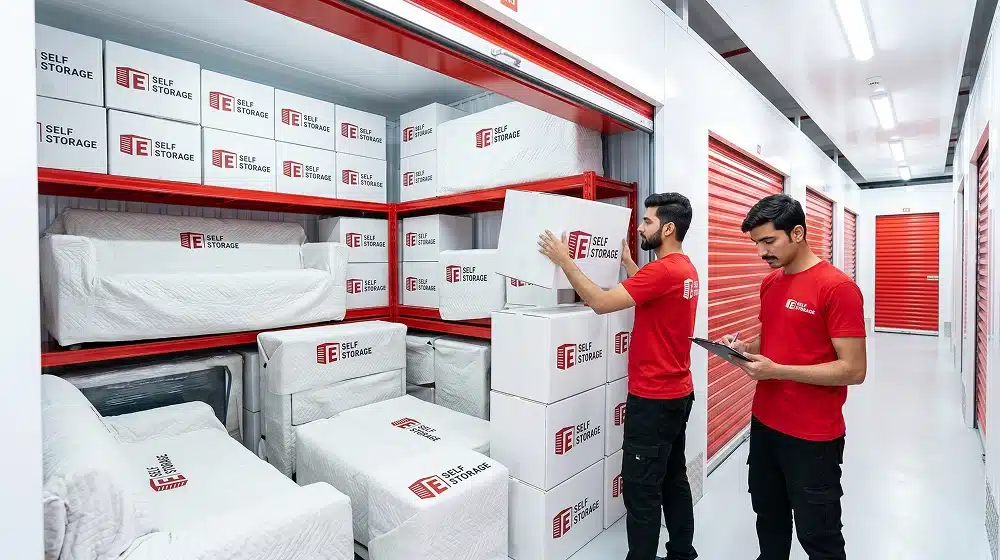 Personal Storage
Expat Guide to Organizing Personal Belongings in Storage Dubai
Written by Hayyan Al-Jasmi | Reviewed by Thuraya Al-Mansoori | Published on September 11, 2025 | Updated on June 1, 2026 Moving to Dubai…
Read More Self Storage
What are the penalties for violating Dubai no-entry rules during commercial vehicle restricted timings?
Written by Hayyan Al-Jasmi | Reviewed by Thuraya Al-Mansoori | Published on September 11, 2025 | Updated on June 1, 2026 Penalties include cash…
Read More