
Seasonal storage in Dubai: How to protect furniture, luggage, clothes and holiday items

Seasonal storage is important in Dubai because many residents own items they use only during specific months, trips, events, holidays or weather conditions. Winter clothes, patio furniture, luggage, camping gear, festive décor and spare household items take up valuable space when they stay inside apartments and villas all year.
Dubai’s housing space is also under stronger pressure as the city grows. The Dubai 2024 population estimate placed the emirate’s population at 4,248,200 people at the end of 2024. More residents means more demand for apartments, villas, wardrobes, cupboards, parking space, storage rooms and moving services.
Rent also makes unused space expensive. The Dubai Land Department’s rental index lets customers calculate average rental values in the real estate market by entering property details. That matters because many households do not want to pay for a larger home only to store items they use twice a year.
Secure self storage in Dubai gives residents extra space without changing homes. It keeps seasonal items safe, clean and accessible while daily living areas stay clear.
What are seasonal items in Dubai homes?
Seasonal items are belongings used during limited periods, such as winter months, travel seasons, celebrations, school breaks, outdoor gatherings, renovations or relocation gaps. These items are useful, but they do not need to occupy daily living space throughout the year.
Common seasonal items in Dubai include:
- Winter jackets, hoodies, blankets, duvets and heavy bedding
- Eid decorations, Diwali lights, Christmas trees, party décor and gift boxes
- Patio chairs, foldable tables, garden tools, barbecue equipment and balcony furniture
- Suitcases, cabin bags, backpacks, travel accessories and sports luggage
- Camping chairs, coolers, desert trip gear, beach umbrellas and picnic items
- Baby items, guest mattresses, spare curtains, archived papers and extra kitchenware
The problem is not ownership. The problem is poor space placement. A family can need all these items at the right time, but those same items create clutter when stored in wardrobes, under beds, balconies, spare rooms and corridors during off-season months.
Research on household clutter and stress-related home experience shows that dense household possessions can affect how people describe and experience their homes. Dubai households face a different local setting, but the storage lesson is similar: when items lose their correct place, the home becomes harder to manage.
How does seasonal clutter affect daily living space?
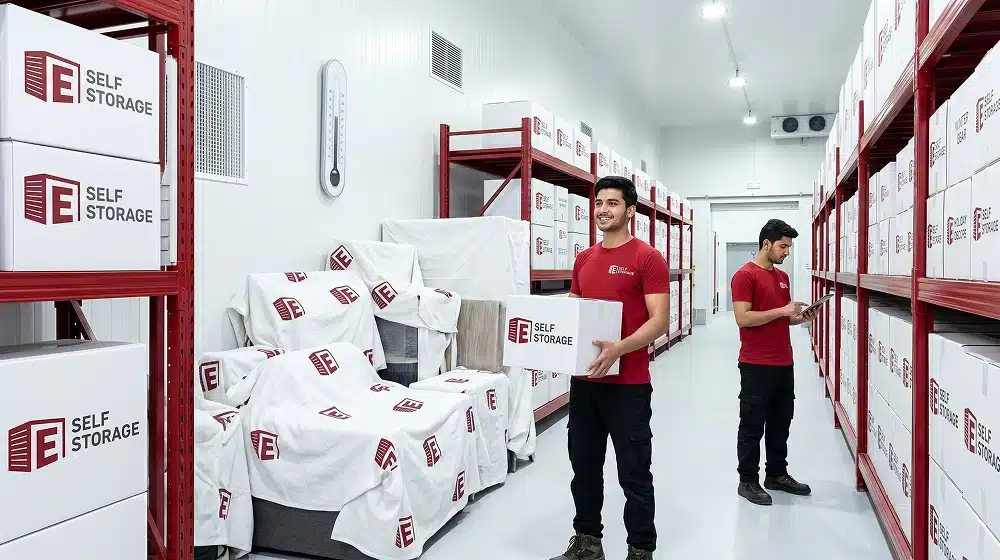
Seasonal clutter reduces usable space by filling areas meant for daily movement, clothing, rest, work and storage access. In Dubai apartments, this usually appears inside wardrobes, laundry rooms, balcony corners, under-bed areas and spare bedrooms.
Seasonal clutter creates 5 practical problems:
- Wardrobe pressure: Winter clothes, jackets and duvets occupy space needed for daily clothing.
- Balcony crowding: Outdoor furniture, boxes and old décor reduce usable balcony space.
- Harder cleaning: Dust gathers around boxes, luggage, loose bags and unused equipment.
- Slow retrieval: Unlabelled storage makes holiday items, trip gear and bedding difficult to find.
- Material damage: Heat, humidity, pressure and dust reduce the condition of fabrics, furniture, paper and luggage.
A dedicated storage unit solves the placement problem. Daily-use items stay at home. Seasonal items move into a protected space until needed.
Which seasonal items need storage the most?
The best items for seasonal storage are bulky, fragile, heat-sensitive, rarely used or difficult to replace. These items create the most pressure inside Dubai homes and often need better protection than a cupboard or balcony can offer.
The table below shows common seasonal items, their storage risk and the best storage method.
| Seasonal item | Main home storage problem | Better storage method |
|---|---|---|
| Patio furniture | Heat exposure, dust and balcony crowding | Clean, cover and store in a protected furniture unit |
| Winter clothes | Wardrobe pressure, odour and fabric compression | Wash, dry and pack in labelled clothing bags |
| Holiday decorations | Breakage, tangled wires and crushed boxes | Use clear boxes, dividers and cable ties |
| Luggage | Lost wardrobe space and under-bed clutter | Store empty suitcases together in a secure unit |
| Camping gear | Sand, fabric smell and rust on metal parts | Dry fully, separate tools and label by trip type |
| Bedding and duvets | High volume and dust exposure | Use vacuum bags or sealed bedding bags |
| Sports equipment | Shape damage and scattered storage | Group by activity and store upright where possible |
| Documents and keepsakes | Paper curling, moisture and misplacement | Use sealed archive boxes and climate-aware storage |
This storage map helps residents decide which items can stay at home and which items belong in seasonal storage. The decision depends on item size, replacement value, material type and access frequency.
How does Dubai’s climate affect seasonal items?
Dubai’s climate affects seasonal items through heat, sunlight, dust, humidity and temperature fluctuation. These conditions can fade fabric, dry leather, warp wood, damage paper, create odour and increase corrosion risk on metal parts.
The mean daily maximum temperature in Dubai rises above 38°C in June, July, August and September. Official tourism guidance on Dubai summer weather also describes August as a hot month with an average temperature around 35°C. These conditions make balconies, parking areas, garages and non-cooled storage corners poor choices for sensitive belongings.
Heat-sensitive items include:
- Wooden tables, wardrobes, cabinets and bed frames
- Leather sofas, leather chairs and upholstered seating
- Mattresses, cushions, rugs and curtains
- Photographs, paper files, certificates and books
- Electronics, small appliances and travel accessories
- Decorative lights, plastic ornaments and framed art
Residents storing sofas, beds, cabinets, patio sets or dining tables during the hot months can use furniture storage in Dubai instead of leaving bulky items in balconies, garages or crowded rooms.
Why is climate-controlled storage useful for seasonal belongings?
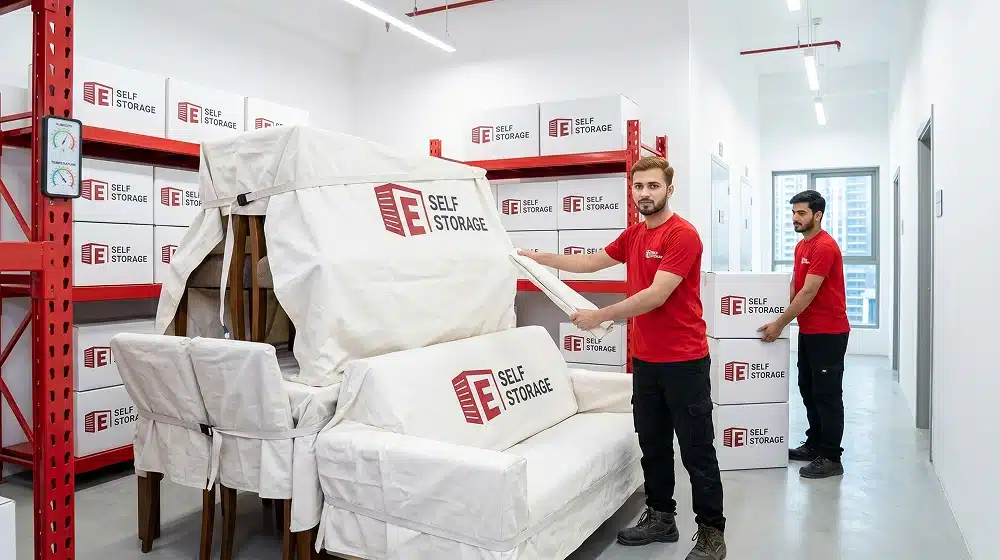
Climate-controlled storage is useful for seasonal belongings because it gives heat-sensitive and humidity-sensitive items a more stable environment than standard home corners. It is especially useful for wood, leather, fabric, electronics, books, documents, artwork and personal keepsakes.
Dubai’s climate makes this feature more than a premium add-on. A hot spare room can protect items from theft, but it may not protect them from heat, odour, humidity or dust. A storage area with controlled indoor conditions reduces these risks when items stay packed for weeks or months.
Choose climate-controlled storage for:
- Leather sofas, upholstered chairs and wooden furniture
- Family photographs, school files, certificates and documents
- Books, paper records and archived household files
- Electronics, speakers, monitors, printers and small appliances
- Clothes, duvets, curtains, rugs and premium fabrics
- Holiday décor, fragile ornaments and stored gift items
Climate control works best with correct packing. Clean the item first. Dry it fully. Use the right cover. Leave airflow space around furniture and boxes.
Why does luggage storage matter in Dubai?
Luggage storage matters in Dubai because residents, tourists, students and business travellers often own several travel bags that are not used every week. Suitcases are rigid, wide and difficult to compress, so they quickly fill wardrobes, spare rooms and under-bed space.
Dubai is also one of the world’s busiest travel cities. A report on Dubai airport passenger traffic stated that Dubai International Airport handled 95.2 million passengers in 2025 and was forecast to handle about 99.5 million passengers in 2026. This travel volume supports strong demand for secure luggage storage among residents, stopover travellers and frequent flyers.
Luggage storage is useful for:
- Families with several large suitcases
- Expats travelling between Dubai and their home country
- Students leaving Dubai during breaks
- Business travellers with extra bags, samples or event materials
- Tourists with long layovers or early checkout times
- Residents storing sports bags, duffel bags and travel accessories
Secure luggage storage in Dubai keeps suitcases, backpacks, travel bags and accessories outside daily living areas while keeping them accessible for the next trip.
How should seasonal clothes and bedding be stored?
Seasonal clothes and bedding should be washed, dried, folded, labelled and packed before storage. This prevents odour, dust, moisture marks, insects and fabric compression damage.
Use this process for clothes and bedding:
- Wash before storage: Store only clean jackets, bedding, duvets, curtains and clothes.
- Dry fully: Moisture trapped inside bags creates odour and mould risk.
- Fold by category: Keep jackets, bedding, duvets and blankets in separate groups.
- Use breathable bags: Use breathable covers for delicate fabric and vacuum bags for bulky bedding.
- Label every bag: Write the item type, room name and season on each bag.
- Avoid overpacking: Too much pressure can damage zips, seams and fabric shape.
- Store off the floor: Keep fabric bags on shelves, pallets or raised surfaces.
Small items such as books, shoes, accessories, décor pieces and light household goods can go into box storage in Dubai when a full storage room is not needed.
How should outdoor furniture be stored during summer?
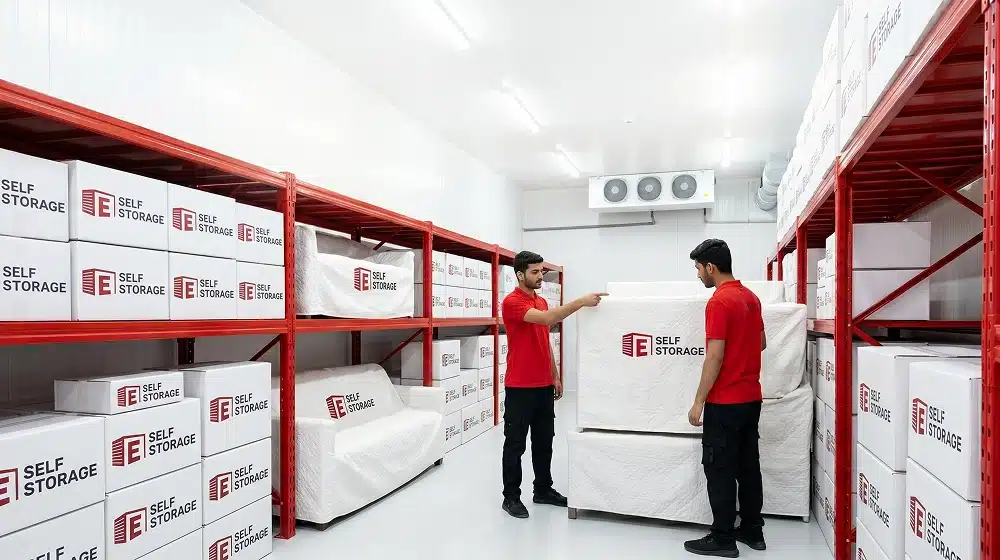
Outdoor furniture should be cleaned, dried, wrapped and stored away from direct sunlight during Dubai’s summer months. This protects surfaces from fading, cracking, dust buildup and heat stress.
Use this method for patio and balcony furniture:
- Clean dust, sand and stains before storage.
- Dry cushions, fabric covers and umbrella material fully.
- Remove glass tops, loose screws and detachable legs where possible.
- Wrap wooden and metal parts with breathable protective covers.
- Keep cushions in sealed bags or fabric storage covers.
- Store furniture upright if the shape allows it.
- Avoid placing heavy items on top of woven, leather or cushioned surfaces.
Outdoor furniture looks durable, but repeated heat and dust exposure can reduce its condition. Storing patio chairs, loungers, balcony tables and garden accessories in a protected unit keeps them ready for cooler months.
How can residents choose the right storage unit size?
Residents can choose the right storage unit size by counting boxes, measuring furniture, grouping belongings by season and deciding how often they need access. Storage size depends on item volume, not only the number of rooms in the home.
The table below gives a simple storage planning guide.
| Home situation | Typical seasonal items | Suitable storage option |
|---|---|---|
| Studio apartment | Suitcases, winter clothes and small boxes | Box storage or small personal unit |
| 1-bedroom apartment | Luggage, bedding, décor and small furniture | Small to medium storage unit |
| 2-bedroom apartment | Seasonal furniture, sports gear and multiple boxes | Medium storage unit |
| Villa | Patio furniture, garden tools, large décor and spare mattresses | Furniture storage or larger unit |
| Frequent traveller | Suitcases, backpacks and travel accessories | Luggage storage |
| Renovating household | Furniture, appliances, curtains, boxes and fragile items | Climate-controlled storage |
This table helps readers avoid choosing a unit that is too small or paying for space they do not need. A good storage plan leaves enough room for airflow, safe stacking and a small access path.
For mixed seasonal items, personal goods storage in Dubai fits clothing, boxes, décor, household goods, personal items and compact furniture.
What features matter in a Dubai self-storage facility?
A Dubai self-storage facility should offer security, climate control, clean units, pest control, flexible rental terms and practical access. These features protect seasonal belongings and make retrieval easier.
Check these storage features before booking:
- 24/7 CCTV: A monitored facility gives stronger security visibility.
- Controlled access: Entry should be limited to authorised users and staff.
- Climate control: Sensitive items need protection from heat and humidity.
- Pest control: Fabrics, paper, wood and boxes need pest-managed storage.
- Clean units: Dust-free storage protects furniture, luggage, clothes and documents.
- Flexible sizes: Different items need different storage volumes.
- Short-term and long-term plans: Seasonal storage may last weeks or months.
- Pickup and delivery: Bulky furniture and many boxes are easier to move with support.
- Clear pricing: Transparent rental terms reduce confusion and hidden cost concerns.
The right facility depends on the item. Luggage needs access. Furniture needs space and protection. Documents need dryness. Holiday decorations need labelled boxes and careful stacking.
What mistakes damage seasonal items in storage?
The most common storage mistakes are packing dirty items, storing damp fabrics, using weak boxes, skipping labels and stacking heavy items on fragile belongings. These errors create odour, scratches, crushed boxes, missing items and material damage.
Avoid these mistakes:
- Storing winter clothes before washing them
- Packing camping gear while it still holds sand or moisture
- Leaving batteries inside lights, toys or small electronics
- Using thin cardboard boxes for fragile decorations
- Placing paper files near damp items
- Wrapping leather furniture in non-breathable plastic for long periods
- Stacking heavy boxes on ornaments, lamps or glassware
- Bending mattresses or fabric items into unnatural shapes
- Keeping frequently used items at the back of the unit
- Forgetting to create a storage inventory
A simple storage rule works well: clean first, dry fully, group by item type, label clearly and keep access items near the front.
Is seasonal storage worth it in Dubai?

Seasonal storage is worth it in Dubai when off-season belongings take over useful home space or face damage from heat, dust, humidity and poor packing. It is especially useful for apartment residents, villa households, frequent travellers, families, expats, students and residents preparing for renovations.
Seasonal storage gives 4 practical benefits:
- More usable home space: Wardrobes, balconies, spare rooms and under-bed areas stay clear.
- Better item protection: Stored items face less exposure to heat, dust and crowding.
- Faster seasonal access: Labels and grouped boxes make retrieval easier.
- Lower relocation pressure: Residents avoid changing homes only for extra storage space.
Seasonal storage is not only a moving solution. It is a home organisation system for residents who want cleaner rooms, protected belongings and easier planning throughout the year.
Final thoughts on seasonal storage in Dubai
Seasonal storage in Dubai helps residents protect useful belongings without letting those items crowd daily living space. Winter clothes, holiday décor, patio furniture, luggage, camping gear, bedding and spare household items stay organised until they are needed again.
The best storage plan depends on item type. Furniture needs protected space. Luggage needs easy access. Clothes and bedding need clean, dry packing. Decorations need labelled boxes. Documents and keepsakes need climate-aware storage.
A secure storage unit turns seasonal clutter into a managed system. It protects belongings, frees home space and keeps Dubai residents ready for travel, celebrations, cooler months and home changes.
FAQs about seasonal storage in Dubai
Winter clothes, patio furniture, luggage, holiday decorations, camping gear, bedding, sports equipment and spare household goods are best for seasonal storage in Dubai.
Furniture benefits from climate-controlled storage in Dubai because heat, dust and humidity can affect wood, leather, fabric, metal and upholstery.
Yes, luggage can be stored between trips in a secure storage unit, especially when suitcases take up wardrobes, bedrooms or under-bed space.
Winter clothes should be washed, dried, folded and packed in labelled breathable bags or vacuum bags before storage.
Box storage is enough for small seasonal items such as clothes, books, documents, shoes, decorations, accessories and compact household goods.
Outdoor furniture can be stored during summer after cleaning, drying and covering it to reduce heat, dust and surface damage.
Clean items before packing, dry fabrics fully, avoid damp boxes and use breathable covers or moisture-control packets where suitable.
The right storage size depends on the number of boxes, furniture dimensions, luggage volume and how often items need to be accessed.
Yes, labels help residents find seasonal items faster and avoid opening every box during holidays, trips or weather changes.
Seasonal storage is useful for Dubai apartments because it clears wardrobes, cupboards, balconies, spare rooms and under-bed areas without requiring a larger rental home.
Hayyan is a logistics veteran with over 15 years of experience in facility management and spatial optimization. He specializes in warehouse security, climate-controlled storage protocols, and the technical logistics of large-scale moving. His focus is on helping clients maximize their square footage while ensuring the long-term preservation of their inventory and belongings.
Thuraya is a specialist in home organization and residential transition management. With a background in interior space planning, she helps individuals navigate the complexities of downsizing and relocation. She provides expert advice on packing fragile items, choosing optimal storage unit sizes, and turning the stress of moving into a seamless, organized experience.
 Personal Storage
Expat Guide to Organizing Personal Belongings in Storage Dubai
Written by Hayyan Al-Jasmi | Reviewed by Thuraya Al-Mansoori | Published on July 16, 2025 | Updated on June 9, 2026 Moving to Dubai…
Read More Self Storage
What are the penalties for violating Dubai no-entry rules during commercial vehicle restricted timings?
Written by Hayyan Al-Jasmi | Reviewed by Thuraya Al-Mansoori | Published on July 16, 2025 | Updated on June 9, 2026 Penalties include cash…
Read More Self Storage
Heavy Vehicle No-Entry Timings By Emirate: Fujairah
Written by Hayyan Al-Jasmi | Reviewed by Thuraya Al-Mansoori | Published on July 16, 2025 | Updated on June 9, 2026 A self storage…
Read More