
Climate Controlled Storage Sharjah: Setpoints, Stability Logs, and Item-Safety Rules
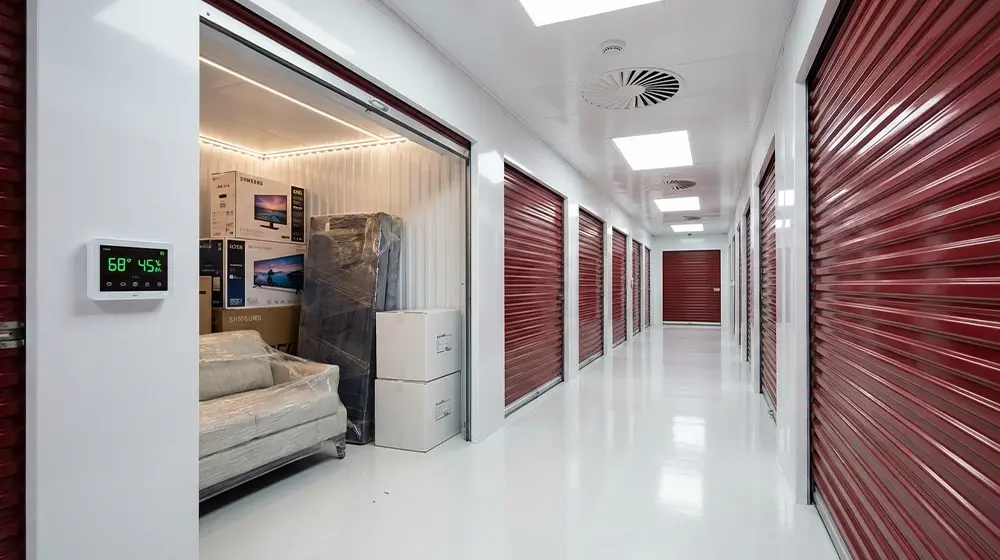
Climate controlled storage in Sharjah protects furniture, electronics, and documents by stabilizing temperature and relative humidity inside an indoor unit. This matters because Sharjah’s environment combines high heat with measured humidity variation, and both variables change how materials behave over time. Humidity is not an abstract idea in the UAE; it is tracked through official meteorological systems such as the National Center of Meteorology (NCM) relative humidity mapping and national indicator datasets.
Moisture risk becomes practical when it creates measurable outcomes: mold growth, odor retention, corrosion on metal contacts, paper curl, and surface condensation. U.S. government mold guidance treats humidity control as a primary prevention method and uses numeric thresholds like keeping indoor humidity below 60% RH (with 30–50% RH described as an ideal band). University environmental health guidance adds a time variable: mold can begin within 24–48 hours after water exposure, which makes short humidity spikes relevant when ventilation is low.
This article explains the storage system using measurable terms: setpoints, drift bands, monitoring evidence, and item sensitivity classes, so the decision stays technical and repeatable.
What is climate controlled storage in Sharjah?
Climate controlled storage is indoor storage that uses HVAC and humidity management to keep temperature and relative humidity within a controlled band.
A climate controlled unit contains 6 measurable system entities:
- HVAC cooling + air handling (thermal load control)
- Thermostat setpoints (target temperature)
- Dehumidification (moisture removal)
- Ventilation + air circulation (air mixing and stagnant-zone reduction)
- Sensors (temperature + %RH measurement)
- Monitoring evidence (alerts, logs, maintenance records)
A “climate controlled” spec becomes measurable through 4 attribute values:
- Temperature setpoint (°C)
- Temperature drift band (±°C)
- Relative humidity setpoint (%RH)
- RH drift band (±%RH)
Why do Sharjah heat and humidity increase storage risk?

Heat and humidity increase storage risk by accelerating material change and increasing mold and condensation probability in moisture-favorable zones.
What humidity numbers define mold-risk control?
EPA training guidance defines a mold-control humidity threshold as “below 60% RH,” with an “ideal” band of “30%–50% RH.”
That numeric band matters in storage because porous materials absorb moisture and cool surfaces collect condensation when RH rises.
What time window defines “fast mold growth” after moisture exposure?
University environmental health guidance reports mold growth within 24–48 hours after clean water damage.
A U.S. government facilities page also states the first 24–48 hours are critical for mold prevention after water infiltration.
Which items use climate controlled storage in Sharjah?
Items use climate controlled storage when temperature swings and humidity exposure change material properties or increase mold, corrosion, warping, and odor retention risk.
There are 6 high-sensitivity groups, with examples after each plural noun:
- Wood and engineered furniture: solid wood tables, veneer cabinets, MDF wardrobes
- Leather and upholstery: leather sofas, fabric sofas, rugs
- Mattresses and foam items: mattresses, cushions, foam toppers
- Electronics and appliances: TVs, computers, routers, kitchen appliances
- Documents and books: contracts, business records, books, paper files
- Photos, artwork, and specialty items: printed photographs, negatives, artwork, antiques, musical instruments
What temperature and humidity ranges define climate-controlled conditions?
Climate-controlled conditions are defined by setpoints and stability across time, not by the label alone.
What RH range appears in preservation guidance for sensitive media?
Library of Congress photo care guidance lists “30–50% RH” as part of a good storage environment for photographic materials and also notes “cool (70°F or below) and stable.”
A Library of Congress leaflet adds a stability constraint:
A mixed photo collection uses a set point between 30% and 50% RH without cycling more than ±5% RH per day.
What RH range appears in third-party preservation leaflets?
A preservation leaflet from NEDCC echoes the same numbers for mixed photo collections: 30–50% RH with fluctuations less than 5% a day, and a temperature setpoint at least 70°F or below.
What definition works for general household storage (furniture + textiles + cartons)?
EPA mold training guidance uses <60% RH (ideal 30–50% RH) as a practical indoor humidity control band.
That band functions as a general storage target for mold risk reduction.
How does temperature control protect stored goods?
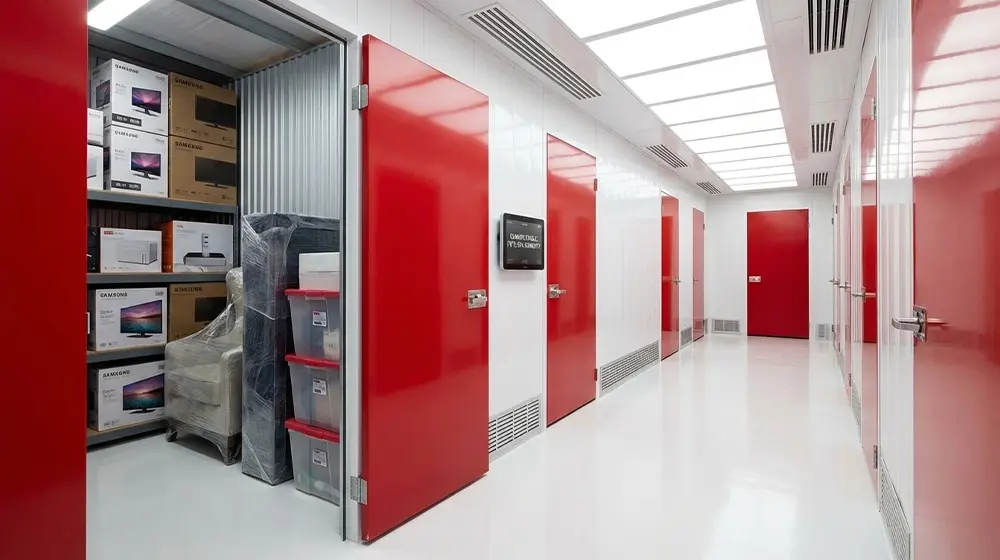
Temperature control protects stored goods by reducing heat-driven deterioration and reducing thermal cycling stress.
Temperature stability maps to 4 outcomes:
- Furniture finish stability
Stable temperature reduces repeated softening and re-hardening cycles in finishes and coatings. - Adhesive and laminate stability
Layered materials (veneer panels, edge-banding, laminated boards) depend on adhesive interfaces. Temperature swings increase interface stress. - Document and media stability
LOC guidance describes the storage environment as a primary preservation measure for photographs and highlights “cool” and “stable” conditions. - Electronics exposure reduction
Electronics risk increases when moisture and heat interact. Stable indoor conditions reduce variability in exposure.
How does humidity control reduce mold, mildew, corrosion, and odor?
Humidity control reduces mold and mildew risk by keeping RH below mold-favorable thresholds and reducing condensation events that create surface wetness.
What is the numeric humidity band used by authorities?
EPA mold training guidance states “below 60% RH,” ideally “30%–50% RH.”
What failure modes track humidity exposure?
- Mold and mildew on porous items
Porous materials include fabric, paper, and foam. EPA lists humidity control as a primary mold control method. - Corrosion on metal surfaces and contacts
Moisture films increase oxidation risk at connectors, fasteners, and exposed metal edges. - Odor retention in textiles
Humidity increases odor absorption and retention pathways in fabric and foam.
What proves climate stability inside a storage unit?
Climate stability is proven by time-stamped measurement and drift tracking.
A practical stability record uses 5 fields:
- Daily temperature min/max
- Daily temperature drift (max − min)
- Daily RH min/max
- Daily RH drift (max − min)
- Excursion count (events per week or per month)
A “climate controlled” claim becomes stronger when logs show low drift and low excursion count.
How do storage unit sizes map to inventory counts?
Unit sizing is an inventory math step based on carton count, bulky-item count, and retrieval clearance.
One published size menu for climate controlled storage in the UAE lists 30, 50, 70, 80, 100, 120, 150, 200 sqft.
Use 3 counts for sizing consistency:
- Cartons: 10 / 20 / 40 / 60 / 80
- Bulky items: sofa / bed / wardrobe / desk
- Long items: mirrors / frames / standing lamps
Inventory sizing table
| Unit tier | Cartons band | Bulky items band | Use-case profile |
|---|---|---|---|
| 30–50 sqft | 10–40 | 0–6 | documents, seasonal boxes, small electronics, partial overflow |
| 70–120 sqft | 40–90 | 6–15 | 1–2 bedroom contents, mixed furniture + cartons |
| 150–200 sqft | 90–140 | 15–25 | villa overflow, business cartons, inventory staging |
Clearance impacts stability. Tight packing reduces airflow. Airflow affects moisture distribution.
What packing methods fit climate controlled storage?
Packing quality is defined by abrasion control, deformation control, and moisture-pocket control.
There are 8 packing controls, each mapped to one failure mode:
- Dry surface control → moisture pockets reduce
- Breathable covers → trapped humidity reduces on upholstery
- Rigid cartons → crush resistance increases
- Archive boxes → paper edges protect
- Shelf or pallet elevation → floor-contact moisture exposure reduces
- Desiccant inside sealed boxes → micro-humidity control increases for electronics/photos
- Label + manifest → handling time reduces
- Inspection interval → early detection increases
Example list after a plural noun:
There are 6 high-friction contact points during storage moves: corners, stair edges, door frames, lift thresholds, trolley platforms, and loading bay ramps.
What facility features signal climate controlled storage quality?
Facility quality is visible through measurable security, cleanliness, pest control, and climate monitoring signals.
A quality feature set contains 7 markers:
- Access control model (restricted entry)
- CCTV coverage (coverage zones and monitoring)
- Indoor loading practicality (reduced weather exposure during access)
- Insulation and dust control (reduced heat load and particulate entry)
- Pest control cadence (scheduled control)
- Cleanliness routine (dust load reduction)
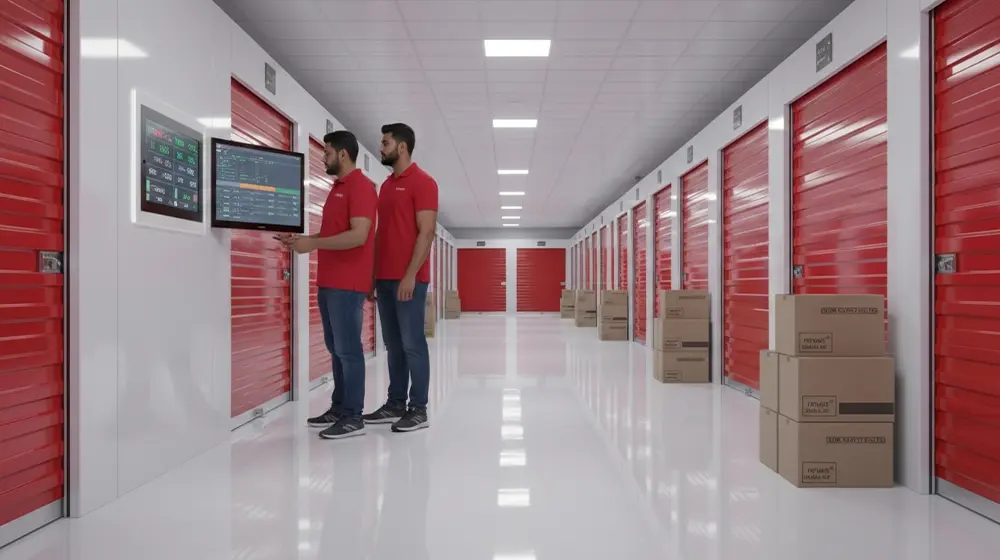
- Climate monitoring evidence (sensors + alerts + logs)
What does climate controlled storage cost in the UAE, and how does the number scale by size?

Storage cost varies by unit size and location, and climate control adds operating cost through HVAC operation and monitoring.
A published UAE example reports climate-controlled storage starting around AED 350/month for about 16 sq ft in a high-demand area and rising with size.
A comparison method uses price per sq ft per month, plus:
- Term length (months)
- Access frequency (visits/month)
Which Sharjah location patterns connect to storage searches?
Sharjah storage searches cluster around residential density and road access.
Common modifier patterns:
- Neighborhood searches (near home)
- Business corridor searches (near office)
- Industrial access searches (loading and vehicle access)
(Exact neighborhood targeting aligns with facility access routes.)
Conclusion
Climate controlled storage in Sharjah reduces mold and condensation risk by controlling temperature and relative humidity and by limiting excursions that cause material damage. The most reliable decision uses measurable inputs: temperature setpoint, RH setpoint, drift bands, and monitoring evidence over time. Government guidance links mold prevention to humidity control, using thresholds such as RH below 60% and an ideal band around 30–50% RH for indoor environments. University and government facility guidance also highlights the 24–48 hour window after moisture exposure as a critical period for prevention, which explains why stable indoor conditions and quick response to humidity spikes matter in storage.
A climate controlled unit fits best when stored items contain moisture-sensitive materials (paper, fabric, foam, wood) or corrosion-sensitive components (electronics). Stable climate plus correct packing and airflow clearance produces the lowest risk profile.
Frequently Asked Questions
What is climate controlled storage in Sharjah?
What humidity level reduces mold risk in storage?
How fast can mold start after moisture exposure?
Which items benefit most from climate controlled storage in Sharjah?
What is the best RH range for photo and media storage?
What is the difference between temperature controlled and climate controlled storage?
What evidence proves a unit is truly climate controlled?
What packing reduces humidity problems inside storage?
What storage unit size works for climate controlled storage?
Which UAE sources track humidity and climate signals?
Hayyan is a logistics veteran with over 15 years of experience in facility management and spatial optimization. He specializes in warehouse security, climate-controlled storage protocols, and the technical logistics of large-scale moving. His focus is on helping clients maximize their square footage while ensuring the long-term preservation of their inventory and belongings.
Thuraya is a specialist in home organization and residential transition management. With a background in interior space planning, she helps individuals navigate the complexities of downsizing and relocation. She provides expert advice on packing fragile items, choosing optimal storage unit sizes, and turning the stress of moving into a seamless, organized experience.
 Climate Controlled Storage
Climate-Controlled Storage for Marina Apartment Downsizing
Written by Hayyan Al-Jasmi | Reviewed by Thuraya Al-Mansoori | Published on February 5, 2025 | Updated on February 23, 2026 Downsizing a Dubai…
Read More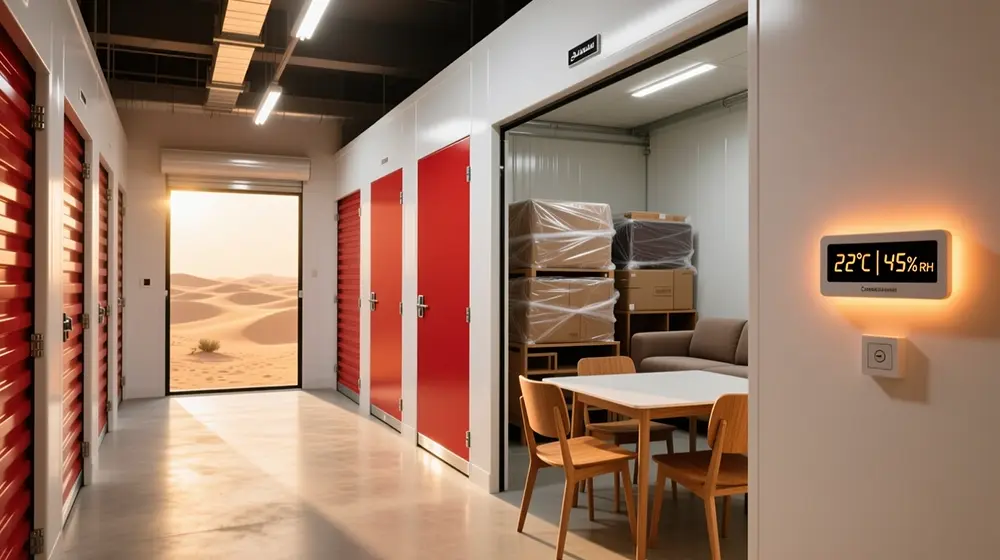 Climate Controlled Storage
How Climate Controlled Storage Protects Furniture in Dubai’s Heat and Humidity
Written by Hayyan Al-Jasmi | Reviewed by Thuraya Al-Mansoori | Published on February 5, 2025 | Updated on February 23, 2026 Dubai furniture faces…
Read More Climate Controlled Storage
The Unit Economics Of Climate-Controlled Self Storage In Dubai: CAPEX, OPEX & 5-Year Payback
Written by Hayyan Al-Jasmi | Reviewed by Thuraya Al-Mansoori | Published on February 5, 2025 | Updated on February 23, 2026 Climate-controlled self storage…
Read More