
Self Storage in Dubai During Renovation: How to Protect Furniture, Appliances, and Space
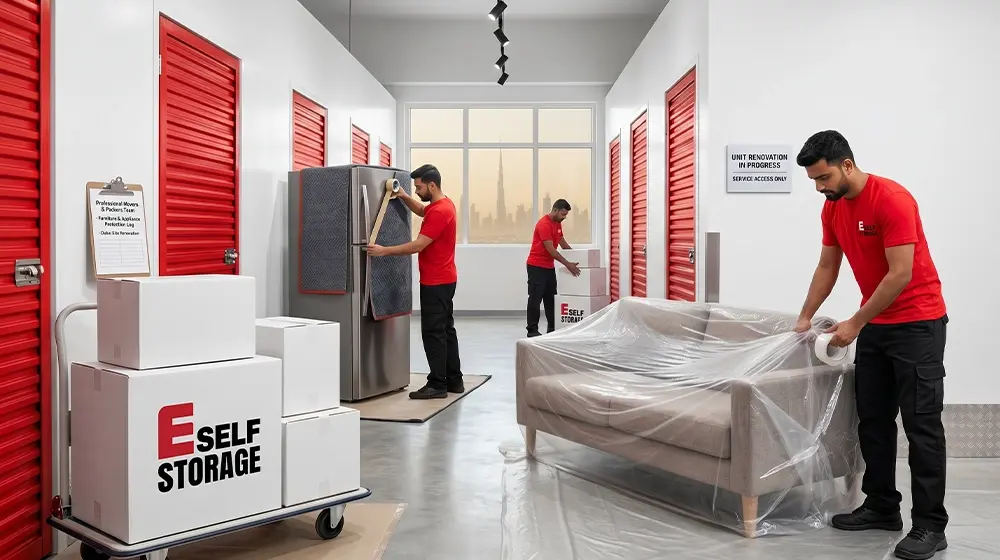
Renovation storage in Dubai protects furniture, appliances, electronics, décor, and boxed items from dust, paint, debris, scratches, and repeated handling. That is the main reason people move belongings into storage before renovation starts. A renovation site is not a normal living or working space. It becomes a temporary work zone with tools, movement, waste, noise, dust, and limited walking space. When household contents stay inside that zone, the project becomes slower and the risk of damage rises.
Storage during renovation is not only about clearing a room. It is about controlling the work environment. Contractors need access to walls, ceilings, flooring, cabinets, and utility points. Homeowners need order. Businesses need continuity. Storage helps all three. It creates open floor area, reduces daily disruption, and keeps valuable items out of direct exposure. That matters in apartment renovation, villa renovation, office refurbishment, retail fit-out, and partial upgrades such as kitchen replacement, bathroom repair, ceiling work, repainting, or flooring changes.
Many renovation delays start with small problems inside the unit. A sofa blocks access. A dining table becomes a dust trap. Electronics stay exposed during sanding. Boxes of kitchenware sit in hallways where workers need to move materials. These issues look minor at the start, but they slow work every day. Renovation storage removes that friction. It moves non-essential contents out first, so the site works like a project site, not a crowded home.
Why is storage useful during renovation in Dubai?
Storage is useful during renovation because it protects belongings and creates a cleaner, safer, and more workable site. That is the direct benefit. The second benefit is control. When items are packed and moved out in an organized way, renovation becomes easier to manage from demolition to final setup.
There are 6 clear reasons people use storage during renovation:
- Storage clears floor space for labor, tools, and material movement.
- Storage protects furniture from dust, paint, plaster, and broken edges.
- Storage reduces accidental impact during lifting and shifting inside the property.
- Storage keeps fragile pieces away from children, workers, and waste piles.
- Storage makes room-by-room renovation easier to phase.
- Storage simplifies the move-back process after cleaning and finishing.
That matters even in a small project. A one-room renovation still creates dust in nearby spaces. A partial office upgrade still affects files, desks, and electronics. Renovation activity spreads beyond the exact room being repaired. Dust settles. Small hardware gets misplaced. Furniture gets dragged instead of lifted. Soft furnishings absorb odor. A clean storage plan prevents those small losses from turning into replacement costs.
Storage also improves visibility inside the project. When the room contains only the surfaces under repair, it becomes easier to inspect wall condition, measure flooring, protect corners, and track progress. Contractors work faster in open space. Homeowners also make decisions faster because the site is easier to assess without household clutter covering the real condition of the room.
What items should move into storage before renovation starts?

Any item that blocks work or can be damaged by dust, moisture, paint, vibration, or repeated movement should move into storage before renovation starts. That is the practical rule. If the item is not needed every day and the renovation can affect its surface, structure, or function, it belongs outside the work zone.
The most common items moved into storage are:
- Sofas, beds, chairs, tables, side units, wardrobes, and shelves
- Rugs, curtains, cushions, and bedding
- TVs, monitors, routers, speakers, printers, and gaming systems
- Refrigerators, microwaves, coffee machines, and small appliances
- Mirrors, lamps, framed art, wall décor, and fragile accessories
- Books, files, documents, kitchenware, toys, and room accessories
- Office chairs, desks, archive boxes, and light stock
Bulky furniture usually moves first because it blocks access. Fragile décor moves second because it breaks easily. Boxed items move next because they create clutter and attract dust. Daily-use essentials should stay separate from the main storage group. That prevents the common mistake of packing everything together and then reopening half the boxes during the renovation.
A better method is to split belongings into 3 categories:
- Essential use items
- Storage items
- Disposal or donation items
Essential use items are the small group you still need while living through the project. Storage items are the belongings that must stay protected until work ends. Disposal or donation items are the items not worth moving back in. This sorting step matters because renovation is one of the best times to reduce unused volume. It lowers storage size, lowers packing time, and reduces move-back work later.
Which storage type fits a renovation project?
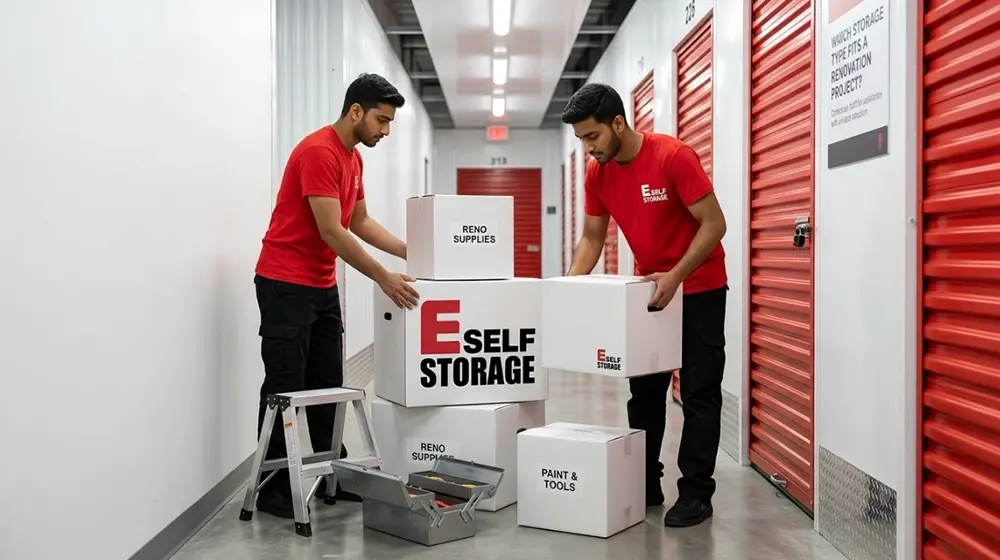
The right storage type depends on 3 things: item volume, project scale, and access needs. A small apartment repainting job does not need the same solution as a full villa upgrade or an office fit-out. The correct storage format starts with the item mix.
Box storage fits small renovation projects with loose, light, and easily packed contents. Books, clothing, files, kitchenware, toys, small décor, and room accessories fit this format well. For projects where the main problem is scattered household items rather than large furniture, box storage in Dubai is a practical choice. It works well for studio apartments, one-room upgrades, partial repainting, and document-heavy office cleanup.
Standard self storage fits mixed renovation contents. It is the most balanced option for sofas, beds, tables, electronics, cartons, and light appliances stored together in one unit. This format suits apartment renovation, family homes, and medium-size projects where several rooms need to be cleared at the same time. For projects with mixed household volume, self storage in Dubai matches renovation needs better than box-only solutions because furniture and boxed contents stay together in one controlled space.
Warehouse-style storage fits high-volume projects. Full villa renovation, showroom changes, and large furniture sets need more floor area and more organized stacking. This option becomes more relevant when the property contains oversized pieces, multiple room sets, or long-term renovation timelines. It also helps when a full move-out is needed before structural work, plumbing replacement, or heavy flooring changes.
Commercial storage fits office renovation because office contents differ from household contents. The item mix includes desks, chairs, files, boxed stock, display materials, cables, light equipment, archive records, and meeting-room furniture. That requires cleaner grouping and more controlled retrieval. For workspace projects, commercial storage in Dubai supports office refurbishment without crowding the active fit-out zone.
The storage choice should not be made only by price. It should be made by matching the storage format to the contents and the renovation sequence. A cheaper option becomes expensive when furniture is packed poorly, access is difficult, or the wrong unit type forces double handling.
How much storage space do you need during renovation?
Storage space depends on how many rooms are under renovation and how much furniture must leave the site. That sounds obvious, but many people estimate storage by floor area only. That causes overbooking or underbooking. A better method is to estimate by content groups.
Start with the largest furniture pieces:
- Beds and bed frames
- Sofas and sectionals
- Dining tables
- Wardrobes
- Office desks
- Shelving units
Then count mid-size pieces:
- Chairs
- Side tables
- Coffee tables
- TV units
- Cabinets
- Appliance stands
Then count box volume:
- Books and files
- Kitchenware
- Décor
- Clothing
- Electronics
- Toys and household accessories
After that, separate fragile items and sensitive materials. Mirrors, artwork, lamps, screens, polished wood, leather, and glass need better placement inside the unit. They should not be counted like ordinary cartons.
A simple renovation storage estimate often works like this:
- One room renovation usually needs box storage or a small unit
- A studio or compact apartment usually needs a small self storage unit
- A one-bedroom apartment usually needs a medium unit
- A two- or three-bedroom project usually needs a larger unit
- A full villa or full office renovation may need warehouse-scale space or multi-unit storage
The best estimate also considers access frequency. If you need some items during the project, the unit must be packed with a walkway and a front-access zone. If you will not open the unit until the project ends, denser packing becomes easier. Storage planning is not only about how much space you need. It is also about how the space will be used during the renovation period.
How do you pack furniture and household items for renovation storage?
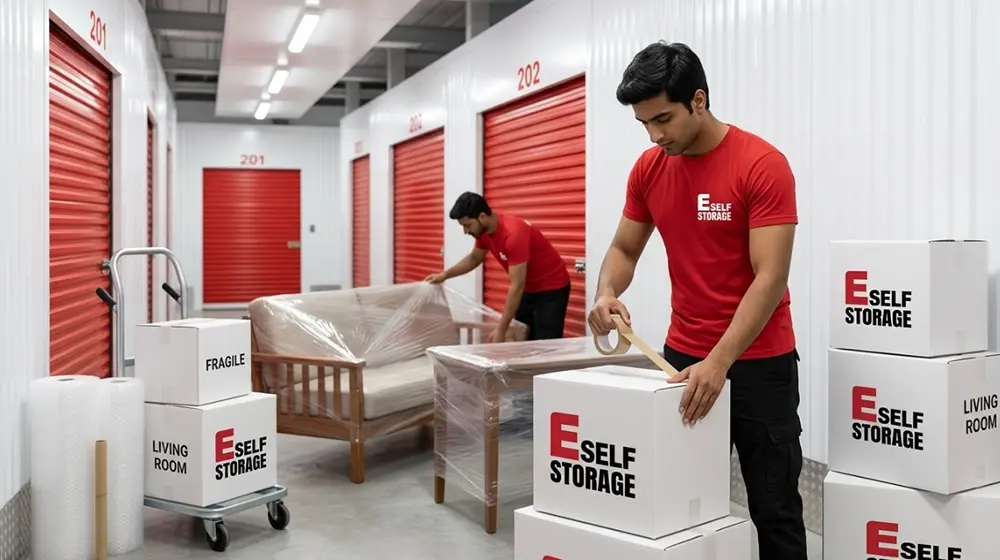
Pack renovation storage items by cleaning, drying, disassembling, wrapping, labeling, and stacking them in a controlled order. That sequence matters because poor packing causes damage before the unit even becomes a factor.
Use this 8-step packing method:
1. Clean every item before packing
Dust, food residue, grease, and moisture get harder to manage in storage. Clean surfaces, drawers, and undersides before wrapping.
2. Dry every item fully
Damp surfaces create odor, fabric issues, and damage risk. This matters most for rugs, upholstery, wood furniture, and kitchen items.
3. Disassemble large furniture
Remove legs, shelves, handles, glass panels, and detachable hardware where possible. This reduces pressure points and makes stacking safer.
4. Pack hardware in labeled bags
Do not leave screws, bolts, and brackets loose. Label each hardware bag by item name and tape it to the correct furniture piece or keep all hardware in one marked box.
5. Wrap fragile and polished surfaces
Use moving blankets, corrugated sheets, bubble wrap, edge guards, and furniture covers. Protect corners first. Corners take the first hit during transport and stacking.
6. Use strong cartons for loose contents
Kitchenware, books, files, and electronics need cartons that can handle weight. Heavy items belong in smaller boxes. Light items can go into larger cartons.
7. Label all boxes clearly
Add room name and content type on at least two sides. Do not write only “miscellaneous.” That label helps no one.
8. Stack by weight and access need
Heavy cartons stay at the bottom. Fragile boxes stay on top. Daily-use items stay near the front. Leave a narrow access path if the unit may need to be opened before the project ends.
Furniture requires material-specific care. Wood furniture should be clean, dry, and covered in breathable protective layers. Upholstered items should be vacuumed and wrapped carefully without crushing the fabric. Leather should stay clean and dry and should not be packed where moisture can get trapped. Electronics should be packed upright where possible and cushioned against movement. Mirrors and framed pieces should stand vertically with edge protection, not laid flat under other items.
Mattresses need special care. They should be fully dry before packing, covered with a mattress bag, and stored upright only if the material and support structure allow it. Poor mattress storage causes distortion, surface staining, and odor buildup.
Rugs should be cleaned, rolled, and wrapped. Do not fold them tightly if the project will last long. Curtains and soft furnishings should be packed clean and dry in sealed textile-safe bags or labeled cartons.
How do you protect sensitive materials during renovation storage?
Sensitive materials need stable packing, low handling, and the correct storage environment. That is the full answer. Some materials do not fail at once. They fail slowly through pressure, trapped moisture, dust accumulation, and repeated contact.
The most sensitive categories are:
- Wood furniture
- Leather seating
- Upholstered items
- Electronics
- Glass and mirrors
- Framed artwork
- Paper records
Wood reacts badly to poor wrapping and rough stacking. Veneer edges chip easily. Leather picks up odor and surface damage when packed carelessly. Upholstery absorbs dust and paint residue if left exposed too long. Electronics collect fine particles and can suffer cable loss or screen damage during improper movement. Paper records get disorganized fast unless packed in labeled, upright cartons.
Sensitive items should be grouped by type, not mixed randomly. Fragile décor should not sit with books. Electronics should not be buried under hardware boxes. Paper files should not be stacked below kitchen cartons. Grouping by risk level makes both storage and retrieval safer.
How long should renovation storage last?
Renovation storage should cover the project timeline plus a delay buffer. That buffer is important because renovation schedules change often. Tile arrival gets delayed. Paint correction adds days. Contractor sequencing changes. Inspection issues appear late. A storage booking that ends exactly on the expected finish date often creates pressure at the worst stage of the project.
A practical storage timeline includes:
- The planned renovation period
- Extra days or weeks for delay risk
- A short move-back window after final cleaning
This matters because move-back should happen after dust control, deep cleaning, snag correction, and final touch-up work. Moving furniture back too early creates a second round of exposure. Storage is most useful when it covers the renovation properly, not only the demolition phase.
For short projects, monthly flexibility is still useful because even a small delay changes the return date. For long projects, access policy and billing clarity matter more. A good renovation storage plan anticipates delay instead of reacting to it at the last minute.
How do you choose the right storage facility for renovation use?

Choose the right storage facility by checking protection, access, contract flexibility, and handling support. A storage unit is not only a box with a door. For renovation use, the facility must also support loading, retrieval, protection, and planning changes.
Check these 8 points before choosing a provider:
1. Unit size suitability
The unit should match your content volume without forcing unsafe stacking.
2, Cleanliness
A clean facility reduces contamination and gives a better indicator of maintenance standards.
3. Security
Look for controlled access, monitoring, and a clear intake process.
4. Access terms
Check opening hours and retrieval rules, especially if the renovation is phased.
5. Contract flexibility
Renovation timelines change. Monthly flexibility matters more than an aggressive starting rate.
6. Pickup and delivery support
This is useful when bulky furniture and multiple boxes need to move at once.
7. Packing and handling quality
Improper handling causes damage before items even reach the unit.
8. Insurance or liability clarity
Terms should be easy to understand before storage starts.
Location also matters, but only in relation to access and handling. A slightly less central unit can still work well if pickup, retrieval, and scheduling are efficient. Convenience should be measured by how the service works, not only by distance.
What mistakes cause damage during renovation storage?
The most common storage mistakes are poor sorting, wet packing, weak labeling, overstacking, and choosing the wrong storage type. These problems are preventable.
Avoid these 10 mistakes:
- Packing everything without sorting essentials from storage items
- Storing dirty or damp furniture
- Using thin cartons for heavy contents
- Leaving hardware loose
- Stacking fragile items under heavy boxes
- Packing electronics without cable labels
- Mixing décor with tools or sharp hardware
- Blocking access to needed items
- Choosing box-only storage for full furniture volume
- Ending the storage period before the project is truly finished
Another common mistake is keeping too much inside the property because it “might still be needed.” That usually turns into repeated shifting, more dust exposure, and slower work. The better rule is simple. Keep daily-use essentials inside. Move renovation-risk items out.
Final thoughts
Storage during renovation in Dubai protects belongings, clears the work zone, and keeps the project organized from start to finish. That is the core value of renovation storage. It is not a luxury step. It is a planning step. When furniture, electronics, documents, décor, and boxed household items move out before renovation begins, the site becomes easier to work in and easier to protect.
The strongest renovation storage plan does 5 things well. It sorts items early. It chooses the right storage type. It packs by material and weight. It leaves a buffer for delay. It moves items back only after cleaning and finishing are complete.
That approach reduces dust exposure, lowers breakage risk, cuts daily disruption, and makes the renovation easier to manage.
Frequently asked questions
Yes. Furniture storage protects sofas, beds, tables, chairs, and cabinets from dust, paint, scratches, and repeated movement during renovation.
Box storage is enough for books, files, clothing, décor, kitchenware, and loose household items. It is not enough for full furniture sets or appliance-heavy projects.
A standard self storage unit is usually the best option for apartment renovation because it handles mixed contents such as furniture, cartons, electronics, and soft furnishings together.
Commercial storage is the better fit for office renovation because it separates workstations, files, chairs, light stock, and meeting-room items from the fit-out area.
Yes. Electronics collect fine dust easily and can suffer screen damage, cable loss, and impact damage during active renovation work.
Clean it, dry it, disassemble removable parts, protect edges and surfaces, label hardware, and stack it in a controlled order.
Storage should start before demolition, sanding, drilling, or paint work begins. The goal is to clear the site before the first dust-producing activity starts.
Only essential daily-use items should stay inside. Keep them in one controlled area away from the active work zone.
Hayyan is a logistics veteran with over 15 years of experience in facility management and spatial optimization. He specializes in warehouse security, climate-controlled storage protocols, and the technical logistics of large-scale moving. His focus is on helping clients maximize their square footage while ensuring the long-term preservation of their inventory and belongings.
Thuraya is a specialist in home organization and residential transition management. With a background in interior space planning, she helps individuals navigate the complexities of downsizing and relocation. She provides expert advice on packing fragile items, choosing optimal storage unit sizes, and turning the stress of moving into a seamless, organized experience.
 Self Storage
What are the penalties for violating Dubai no-entry rules during commercial vehicle restricted timings?
Written by Hayyan Al-Jasmi | Reviewed by Thuraya Al-Mansoori | Published on July 9, 2025 | Updated on April 21, 2026 Penalties include cash…
Read More Self Storage
Heavy Vehicle No-Entry Timings By Emirate: Fujairah
Written by Hayyan Al-Jasmi | Reviewed by Thuraya Al-Mansoori | Published on July 9, 2025 | Updated on April 21, 2026 A self storage…
Read More Self Storage
2026 Heavy Vehicle No-Entry Timings In Ras Al Khaimah
Written by Hayyan Al-Jasmi | Reviewed by Thuraya Al-Mansoori | Published on July 9, 2025 | Updated on April 21, 2026 Self storage in…
Read More